

More news on this day
A high-profile finance summit in Beijing has drawn senior policymakers, academics and industry leaders from across the developing world, with emerging economies using the platform to call for stronger cooperation, more resilient financial safety nets and greater independence from traditional Western-dominated systems.
Get the latest news straight to your inbox!
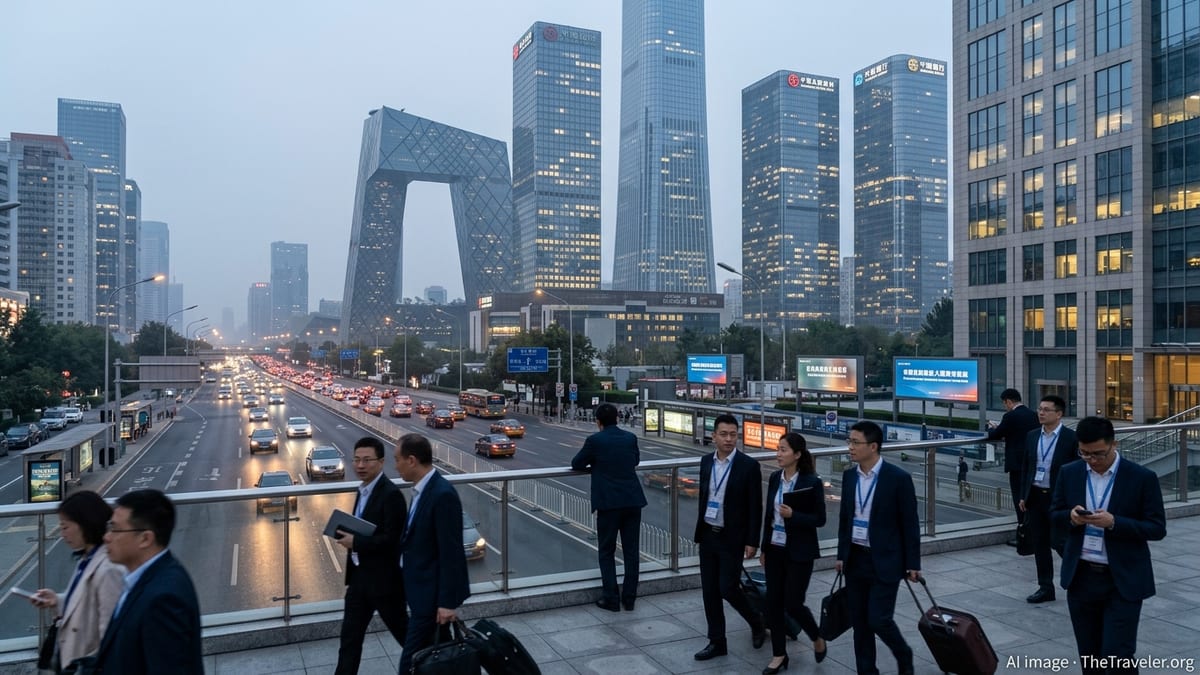
Image by Travel and Tour World – Tourism, Airline, Destination, MICE, Gobal Travel Market, Hotel news that you will find only over here.
Beijing Positions Itself as a Hub for Financial Governance Debate
The Beijing summit comes at a moment when global growth is slowing and capital costs remain elevated, creating renewed pressure on emerging markets already grappling with debt, currency volatility and climate-related shocks. Publicly available analyses from multilateral institutions indicate that growth in many large emerging economies is projected to ease in 2026, even as financing needs for infrastructure, energy transition and social protection continue to rise.
Against this backdrop, Beijing is presenting itself as a venue where alternative ideas on global financial governance can be aired. Recent events in the Chinese capital, including the 2025 International Monetary Forum and a series of finance-focused conferences, have placed issues such as digital currencies, cross-border payment systems and international monetary reform at the center of the agenda. The latest summit builds on those debates but with a sharper focus on coordination among emerging economies themselves.
Speakers at the gathering have highlighted how technological change, especially in digital finance and artificial intelligence, is reshaping capital flows and regulatory frameworks. Reports from Chinese and international research institutes emphasize that digital currencies and new payment platforms are becoming critical variables in any prospective restructuring of the global monetary system. In Beijing, these themes are being woven into a broader discussion about how developing countries can reduce their exposure to external shocks and policy shifts in major reserve-issuing economies.
Participants are also examining how regional financial centers in China, from Beijing to Shanghai and Shenzhen, can align more closely with counterparts in other emerging markets. Recent policy discussions in China signal plans to deepen reforms in its financial system, expand inclusive finance and strengthen support for the real economy, developments that many delegates view as potential models for other countries seeking to upgrade their own financial architectures.
Emerging Economies Call for Deeper South-South Cooperation
The push for stronger cooperation among emerging economies is a defining feature of the Beijing summit. Publicly available conference programs and policy papers connected to the event point to a shared recognition that traditional global safety nets and development finance channels are stretched, especially as many advanced economies confront fiscal constraints and slower growth. This situation is reinforcing interest in South-South platforms that can mobilize resources, exchange expertise and coordinate positions in multilateral forums.
Officials and experts from across Asia, Africa, Latin America and the Middle East are using the summit to explore how regional development banks and sovereign wealth funds can play larger roles in blended finance and risk-sharing arrangements. Research circulated in connection with the meeting underscores that emerging markets face a persistent gap between investment needs and available long-term finance, particularly for energy transition and resilient infrastructure. Delegates are examining whether new regional mechanisms, backed by larger emerging economies, can help crowd in private capital by providing guarantees, first-loss tranches or co-financing structures.
The Beijing discussions also reflect the gradual shift in China’s own overseas development finance from direct project lending toward support for intermediary institutions, including national and regional development banks. Analysts note that this evolution could give partner countries more flexibility in designing and sequencing projects, while reducing concentration risks. At the summit, representatives from several emerging regions are studying these approaches and weighing how they might adapt similar models to their own circumstances.
In parallel, participants are reviewing recent cooperation experiences, such as China–Central Asia initiatives, the expansion of groupings that include major emerging economies, and new policy dialogues organized by international financial institutions specifically for emerging market finance ministers and central bank leaders. Together, these developments point to a more networked ecosystem of South-South cooperation in which Beijing seeks to serve as a central node.
Alternative Payment Systems and Digital Currencies Gain Traction
One of the most closely watched strands of the Beijing summit is the debate over payment infrastructure and digital currencies. Academic and policy research circulating around the event documents how concerns about sanctions, financial surveillance and the weaponization of existing messaging systems have spurred interest in alternative networks in recent years. Emerging economies are now exploring how to expand cross-border payment channels that reduce costs and settlement times while diversifying away from any single system.
China’s progress in building digital payments infrastructure and experimenting with central bank digital currency is a prominent reference point in these conversations. International financial institutions and analysts have highlighted how modern payment platforms in China have expanded access to finance for hundreds of millions of users, offering lessons for other markets with low levels of financial inclusion. Delegates in Beijing are reviewing case studies on how similar technologies might be deployed in other emerging economies, from mobile wallets to instant payment rails and cross-border remittance corridors.
The summit is also examining technical and regulatory questions associated with cross-border digital currencies, including interoperability, data protection, cybersecurity and monetary sovereignty. Publicly available documentation from recent forums in Beijing points to growing interest in regional experiments that link national fast payment systems or pilot multi-currency settlement platforms. Such initiatives could, in time, support a more diversified reserve landscape and reduce transaction costs for trade and investment flows among emerging economies.
Nonetheless, experts caution that alternative payment systems will only gain traction if they are underpinned by credible governance, transparent rules and robust safeguards. Discussions in Beijing therefore touch not only on technology but also on the legal and institutional arrangements needed to maintain trust, prevent fragmentation and avoid regulatory arbitrage. Many participants argue that this is an area where coordinated standard-setting among emerging economies could significantly influence the future architecture of global finance.
From Climate Finance to Debt: Independence Without Fragmentation
Another thread running through the Beijing summit is how emerging economies can pursue greater financial independence without accelerating global fragmentation. Public policy debates at the event highlight that many developing countries are simultaneously confronting high debt burdens, climate vulnerabilities and pressing social needs. As a result, access to predictable, affordable finance is central to their economic and political stability.
Reports presented in Beijing identify climate and energy transition as especially urgent arenas for cooperation. International research shows that despite rising commitments, the world remains off track to meet most sustainable development goals, with climate finance gaps particularly wide in emerging and frontier markets. Delegates are therefore exploring how new coalitions of public development banks, sovereign investors and private capital can be structured to deliver large-scale green infrastructure while reducing currency and policy risks.
Debt sustainability is another priority. Analyses shared in connection with the summit argue that global debt resolution mechanisms have struggled to keep pace with changing creditor landscapes, in which emerging economies themselves have become important bilateral lenders and bond issuers. Participants in Beijing are debating how to improve transparency, streamline restructuring processes and design instruments that link debt relief to investments in resilience and sustainability. Some policy papers suggest that emerging economies could coordinate more closely when negotiating collective positions on global debt frameworks.
Throughout these discussions, there is an undercurrent of caution about creating parallel systems that might deepen geopolitical divides. Commentaries surrounding the summit stress that calls for greater autonomy and policy space are not necessarily synonymous with disengagement from existing institutions. Instead, many emerging economies appear to favor a gradual rebalancing in which they secure stronger representation, more tailored instruments and a larger voice in rule-making, while still engaging with established multilateral bodies.
Beijing’s Role in a More Multipolar Financial Order
The Beijing summit reflects a broader shift toward a more multipolar financial order in which emerging economies wield greater influence over rules, norms and capital flows. Economic research on recent trends suggests that regionalization is likely to continue, with trade and investment patterns increasingly anchored in clusters centered on large emerging markets. In this environment, the policies adopted in Beijing and other major emerging capitals will have growing systemic implications.
China’s domestic agenda, including plans for its next five-year program and ongoing efforts to reform its financial system, is therefore closely watched by summit participants. Analysts point out that commitments to support the real economy, foster green and digital development, and expand inclusive finance could help anchor wider regional stability. At the same time, questions remain about how quickly structural reforms can advance and how effectively risks in areas such as real estate and local government debt can be contained.
For many attendees, the value of the Beijing summit lies in its role as a testing ground for ideas that may later filter into global negotiations. Proposals discussed in the Chinese capital, from new reserve-sharing mechanisms to standardized sustainability disclosure frameworks, could inform positions that emerging economies bring to gatherings such as meetings of major economies, international financial institutions and regional forums.
As the summit’s sessions continue, observers note that its impact will ultimately be judged not only by communiques or declarations but by the concrete initiatives that follow. Whether in the form of new payment linkages, expanded roles for regional development banks or coordinated stances in global debt talks, emerging economies are signaling from Beijing that they intend to play a more assertive role in shaping the future of finance, while seeking a balance between greater independence and constructive engagement with the existing system.