

More news on this day
Brussels South Charleroi Airport has suspended all flights for Thursday, 12 March, as a nationwide strike in Belgium brings air travel to a standstill and leaves thousands of tourists scrambling to salvage trips to iconic cities including Brussels, Bruges, Ghent and Antwerp.
Get the latest news straight to your inbox!
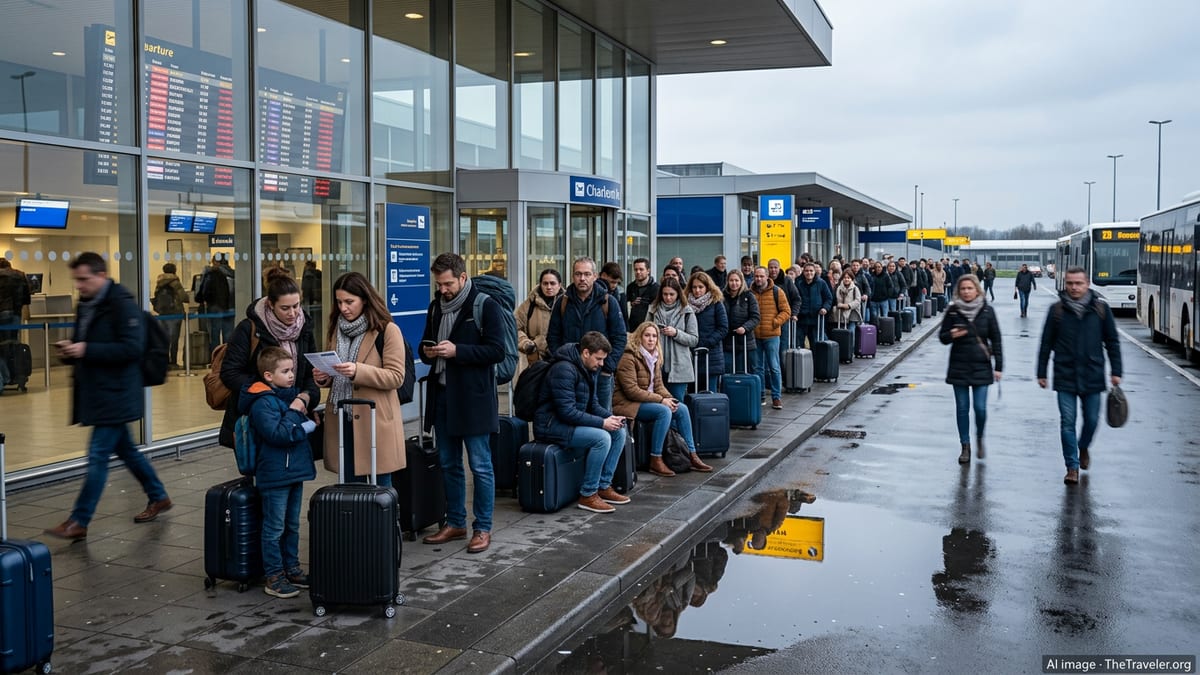
Charleroi Grinds to a Halt as National Strike Bites
Charleroi, Belgium’s second-largest passenger airport and a major low-cost gateway to the country, confirmed it will cancel all departures and arrivals for the full 24 hours of the national strike on 12 March. Airport officials say they cannot guarantee safe operations amid widespread walkouts by ground staff, security workers and other support personnel, prompting a rare, total shutdown of the budget hub.
The move follows days of warnings from unions and transport authorities that industrial action over public spending cuts and wage conditions would severely disrupt travel. While Brussels Airport has already halted all departing passenger flights for the day, the decision by Charleroi to suspend both outbound and inbound services has dramatically intensified the impact on tourists and residents alike.
Typically handling dozens of low-cost flights each day across Europe and North Africa, Charleroi functions as the principal entry point to Belgium for budget-conscious travelers. Airlines are now racing to rebook customers on alternative dates or via nearby airports, but capacity is limited and disruption is expected to ripple across the region for days.
Passengers with tickets on 12 March are being urged to wait for direct communication from their carriers regarding rebooking or refunds, as call centers and digital channels come under heavy strain. Travel experts caution against heading to the airport in person, stressing that terminals will be effectively closed to normal operations.
Tourists Stranded and Itineraries in Ruins
The shutdown has left holidaymakers stranded at hotels and short-term rentals around Belgium, as well as in transit in other European cities, while their meticulously planned itineraries unravel. Many had chosen Charleroi precisely because of its extensive network of low-cost connections and easy onward links to Brussels and Flemish cities renowned for their medieval architecture, canals and museums.
Would-be visitors to Bruges, Ghent and Antwerp report last-minute cancellations and rapidly shrinking options for re-routing, with some scrambling to secure replacement flights to Amsterdam, Paris or regional airports like Liège and Ostend. Others are opting for overnight buses and international trains to reach Belgium by land, only to confront warnings of parallel disruptions on domestic rail lines and urban transport.
In Brussels, hotels that had expected a busy early-spring week are instead fielding a surge of calls from guests seeking to cut stays short, shift dates or clarify whether they will be charged for missed nights. Smaller guesthouses in Bruges and Ghent say they are bracing for a wave of no-shows, particularly from weekend-break travelers who can no longer justify long, complicated detours for short stays.
Travel advisers note that city tourism boards have been quick to stress that Belgium remains open to visitors who can reach it by alternative routes. However, with one of its key budget air gateways offline and the capital’s main airport heavily constrained, the country faces an abrupt, if temporary, downturn in arrivals at the very moment it was courting early-season city-break traffic.
Ripple Effects Across Brussels, Bruges, Ghent and Antwerp
Beyond airports, the national strike is set to disrupt multiple layers of Belgium’s transport network, complicating movement between cities that are marquee draws for international visitors. In Brussels, local authorities have warned of reduced metro, tram and bus services alongside anticipated road closures linked to protest marches, making it harder for tourists to navigate the capital’s historic center and European quarter.
In Flanders, visitors heading to Bruges’ canals, Ghent’s riverside quays and Antwerp’s fashion and diamond districts could face curtailed train timetables and patchy urban transport. Previous nationwide strikes have seen significant reductions in intercity rail frequencies and intermittent cancellations, leaving travelers reliant on irregular services and crowded carriages during peak protest hours.
Operators of guided tours and excursion companies that typically ferry day-trippers from Brussels to Bruges, Ghent or Antwerp say they are reassessing schedules for 12 March, with some choosing to cancel or consolidate departures amid uncertainty over staff availability and road access. Museums and attractions in the major cities are preparing to open as normal where possible, but warn that staffing and visitor numbers may fluctuate sharply throughout the day.
The combined effect is a travel environment that, while not entirely shut, has become unpredictable enough to deter many short-stay visitors. Tourism analysts suggest that even a single day of severe disruption can carry outsized reputational consequences for a small, highly connected country that relies heavily on seamless movement between its compact urban centers.
Airlines, Travellers and the Battle Over Compensation
As airlines activate disruption plans, the question of passenger rights and compensation is moving rapidly to the forefront. Carriers serving Charleroi are offering a mix of free rebooking, travel vouchers and, in some cases, refunds, in line with European air passenger regulations that apply when flights are cancelled within the bloc.
Consumer advocates emphasize that travelers whose flights are cancelled have a right to choose between re-routing at the earliest opportunity, travel at a later date or reimbursement of the unused ticket. However, eligibility for additional financial compensation is more complex, especially when cancellations stem from strikes affecting airport operations and not solely airline staff.
With phone lines overloaded, many stranded tourists are turning to airline apps and social media channels to seek clarity in real time. Some report receiving automated rebooking offers to flights several days later or from alternative airports, which may be impractical if onward accommodation or tour bookings are fixed. Others, particularly those at the start of multi-country itineraries, are weighing whether to abandon Belgium entirely and reconfigure their trips around other European gateways.
Travel insurance policies may provide partial relief, but coverage varies widely, and many plans treat strikes as known events once first announced, limiting eligibility for new bookings made after that date. Advisors urge affected travelers to document all communication with airlines and to keep receipts for unexpected costs such as extra hotel nights, ground transport and meals, which could be claimed later under certain policies or compensation schemes.
Advice for Tourists with Imminent Travel to Belgium
For travelers with upcoming flights into or out of Charleroi, the principal recommendation is to avoid making independent changes until the airline has formally updated the booking. Once a cancellation or schedule change appears in the reservation, passengers are in a stronger position to select alternative dates or routes without incurring additional fees.
Those still determined to reach Belgium during the strike period are being advised to consider neighboring hubs such as Amsterdam and Paris, which offer frequent rail and coach links to Brussels, Bruges, Ghent and Antwerp during normal operations. However, given the likelihood of knock-on disruption on 13 March and the wider pressure on regional transport, extra time and flexibility are essential.
Travel planners suggest that visitors with non-refundable hotel and tour bookings contact providers proactively to explain the situation and explore options for credit or date changes. Many hospitality businesses, particularly smaller independent properties in historic centers, are expected to show goodwill where they can, recognizing that the disruption is beyond guests’ control.
As Belgium navigates yet another high-impact transport strike, tourism officials will be watching closely to see how quickly confidence returns once flights and trains are back on regular schedules. For now, the empty departure boards at Charleroi stand as a stark symbol of a country whose connectivity, and carefully cultivated city-break appeal, can be abruptly curtailed when labour tensions boil over.