

Arkansas has long been a quiet favorite for nature lovers, with its green Ozark hills, clear rivers, and uncrowded trails. But if you have already paddled its scenic waterways or simply want a change of backdrop without losing that down-to-earth, outdoorsy feel, there are plenty of alternatives across the United States that deliver similar experiences. From misty Appalachian ridges to lake-dotted northern forests and high desert canyons, the following destinations offer the hiking, paddling, wildlife watching, and relaxed pace travelers love about Arkansas, each with its own distinct personality.
What Nature Lovers Usually Seek in Arkansas
Before choosing an alternative, it helps to understand what draws people to Arkansas in the first place. Many travelers are looking for accessible wilderness rather than extreme adventure. They want places where you can spend a morning on a forest trail, an afternoon by a river or lake, and an evening under clear stars, all without driving for hours or navigating complicated permits.
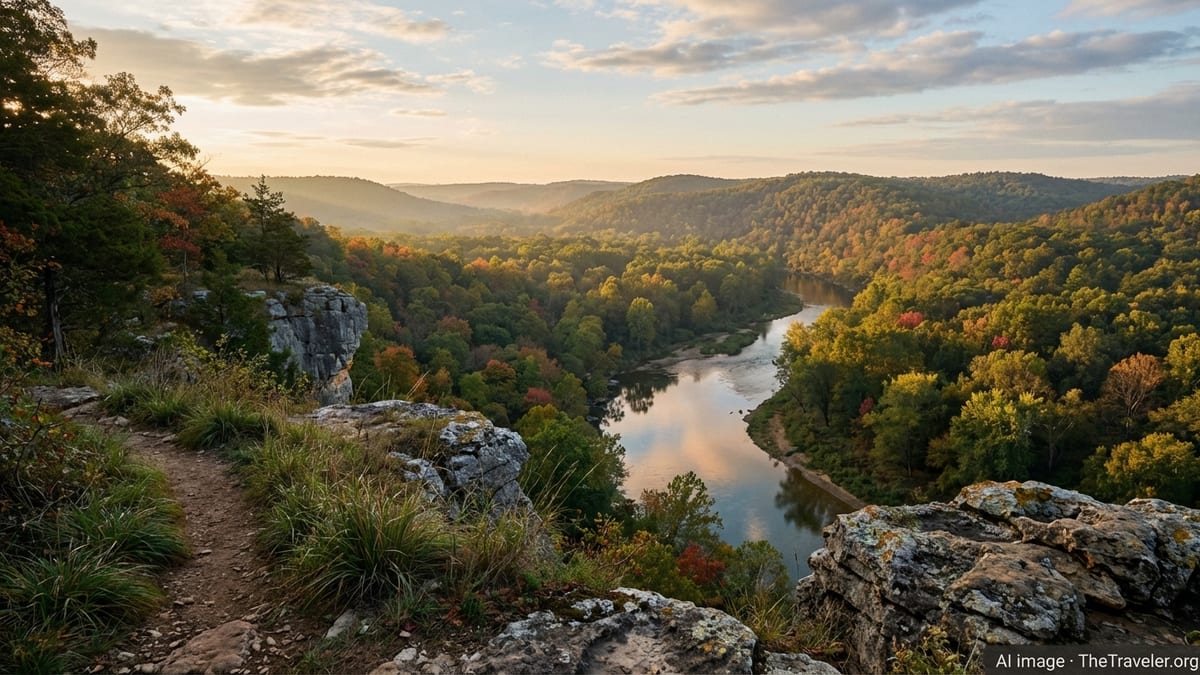
Arkansas combines low, rugged mountains with thick hardwood forests, spring-fed rivers, waterfalls, and a generally mild climate. Hikers find plenty of short to moderate trails with rewarding views. Paddlers gravitate toward meandering rivers and clear streams. Wildlife watchers appreciate regular sightings of deer, wild turkey, songbirds, and, with some luck, black bears. Above all, the atmosphere is usually unpretentious and budget-friendly.
Good alternatives, then, are places with a similar mix of approachable terrain, varied water and forest landscapes, and smaller crowds than headline national parks. The destinations that follow provide that balance. Each offers enough infrastructure for an easy trip, while still feeling rooted in the natural world rather than resort culture.
Whether you are driving from nearby states or planning a dedicated outdoor road trip, these locations can satisfy the same craving for rivers, trees, and quiet that Arkansas does so well, while giving you fresh vistas and regional character.
Missouri’s Ozark Highlands and Scenic Riverways
For travelers who love northern Arkansas, crossing into southern Missouri is an obvious next step. The Ozark Plateau does not recognize state borders, and the same folded hills, limestone bluffs, and clear streams continue into Missouri with a slightly different flavor. It feels familiar yet new, like exploring the next valley over from a favorite campsite.
A centerpiece of this region is Ozark National Scenic Riverways, which protects portions of the Current and Jacks Fork rivers. These spring-fed waterways are renowned for their clarity, cool temperatures, and gentle gradients that make them ideal for canoeing and kayaking. You can float past towering dolomite bluffs, pull off at gravel bars for lunch, and see water bubbling straight from cave mouths where massive springs feed the rivers.
Surrounding public lands, including Mark Twain National Forest and various Missouri state parks, add extensive hiking options. Trails wind through oak and hickory woods, climb to overlooks, and pass sinkholes, caves, and natural bridges shaped by the region’s karst geology. The terrain can be rugged in spots, but distances are manageable and there are plenty of shorter loop hikes suitable for relaxed days on the trail.
Small towns scattered through the Ozarks offer outfitters for float trips, rustic cabins, classic river resorts, and local diners. The pace here is slow, and prices tend to be modest. In many ways, it feels like an extension of Arkansas’s outdoor culture, making it a near-seamless alternative for repeat visitors who want fresh stretches of river to explore.
Tennessee’s Smoky Foothills and Mountain Rivers
If you enjoy the forested hills of western and northern Arkansas but want taller mountains and richer biodiversity, eastern Tennessee is a compelling choice. The valleys and ridges leading into Great Smoky Mountains National Park, along with surrounding state parks and national forests, offer a landscape of misty summits, dense hardwood forests, and tumbling streams.
Unlike Arkansas’s relatively low peaks, the Smoky foothills rise to higher elevations with cooler air and distinct ecosystems. Trails weave through rhododendron tunnels, past big-leaf magnolia and old hemlock groves, and along creeks lined with mossy boulders. Waterfalls are plentiful. Many trailheads are near small communities, which means you can spend a morning on a steep hike and be back in town for a hearty meal that same afternoon.
The region can be busy in peak seasons, especially inside the national park, but there are many quieter alternatives nearby. State parks and national forest recreation areas just outside the park boundaries often receive fewer visitors while sharing the same forest types and stream networks. They provide camping, cabins, and picnic areas reminiscent of Arkansas state parks, only with a dramatic Appalachian backdrop.
Rivers such as the Clinch, Hiwassee, and Ocoee offer rafting and paddling on everything from gentle riffles to legitimate whitewater. Even if you stick to easier sections, you will find that the combination of cool mountain water, steep wooded banks, and occasional wildlife sightings gives a wilder feel than many lowland float trips. For Arkansas travelers who love rolling hills and rivers but want to push slightly more into real mountains, this part of Tennessee is a natural upgrade.
West Virginia’s New River Gorge and Appalachian Backroads
Those drawn to the rugged side of Arkansas’s nature, including its cliff lines and remote hollows, often find a kindred spirit in West Virginia. The state’s central and southern mountains hold deep river gorges, thick forests, and a culture built around the outdoors, especially near New River Gorge National Park and Preserve.
The New River carves a dramatic canyon through layers of sandstone and shale, creating sheer cliffs beloved by rock climbers and photographers. Trails range from casual rim walks with panoramic overlooks to steeper routes that descend toward the river. The mix of open views and enclosed forest paths will feel familiar to anyone who has hiked Arkansas’s more demanding trails, just on a larger scale.
Beyond the main gorge, a web of backroads leads to state parks, wildlife management areas, and national forest tracts. Here, hikers can find solitary ridgelines, rhododendron-filled ravines, and quiet campsites beside trout streams. The terrain can be steep and rocky, but distances are often short, allowing for satisfying half-day outings.
What sets this region apart as an Arkansas alternative is the sense of discovery. Old mining towns, repurposed rail lines, and small communities turned rafting hubs give the landscape a layered human history. Outfitters offer whitewater trips, climbing instruction, and bike rentals, yet many trailheads still see relatively light traffic outside of peak weekends. For nature lovers seeking more dramatic elevation changes while keeping that approachable, lived-in feel, West Virginia delivers.
Minnesota’s North Woods and Boundary Waters
Travelers who associate Arkansas with secluded lakes, serene campsites, and starry skies may find their northern counterpart in Minnesota’s North Woods. This is a landscape dominated by water and forest, with thousands of lakes scattered among spruce, fir, birch, and pine. It is cooler, wilder, and often quieter than many southern destinations.
The crown jewel here is the Boundary Waters Canoe Area Wilderness, a vast network of interconnected lakes and portage trails along the Canadian border. Instead of floating downstream, paddlers glide across still waters, threading through islands and granite shorelines. Campsites are generally reached only by canoe, rewarding effort with real solitude and dark skies that reveal the Milky Way on clear nights.
For visitors who prefer more conventional access, nearby state parks and national forest campgrounds provide drive-up sites, rustic cabins, and shorter day paddles. Many lakes have simple canoe launches and beginner-friendly routes along sheltered shorelines. Hiking trails wind through mixed forest, across exposed bedrock, and up modest ridges with views over chains of lakes.
The feel is different from Arkansas’s Ozarks yet satisfies the same desire to be surrounded by nature rather than development. Instead of limestone bluffs and hardwood hollows, you get lichen-covered rocks, loons calling at dusk, and cool summer evenings even in July. For nature lovers willing to trade southern warmth for northern quiet, the North Woods are a powerful alternative.
Texas Canyons and High Plains Escapes
At first glance, Texas might not seem like a substitute for Arkansas’s leafy hills, but its canyon country offers a surprisingly compatible experience for travelers who love big views and uncrowded trails. In the Texas Panhandle and high plains, deep red-rock gorges cut into otherwise flat landscapes, creating dramatic contrasts and wide horizons.
Palo Duro Canyon State Park is a standout example. Often called the second-largest canyon in the United States, it has layered cliffs in shades of red, orange, and tan that evoke the American Southwest. Unlike crowded national parks, it generally sees thinner crowds, especially outside midsummer. Hikers can follow established trails along the canyon floor or climb to viewpoints on the rim, while mountain bikers and horseback riders use a network of multiuse routes.
Elsewhere on the high plains and in West Texas, additional canyons and mesas offer more low-key exploration. Trails traverse sage and juniper scrub, cross dry washes, and lead to overlooks where raptors ride afternoon thermals. Wildlife is different from Arkansas’s forests, with more open-country birds and desert-adapted mammals, yet the sense of big sky and quiet is similar to standing on an Ozark overlook with a river valley below.
For nature lovers who appreciate Arkansas’s uncrowded feel but want a complete change of scenery, the canyonlands of Texas provide that while still staying within a day’s drive from much of the central United States. The hiking can be as relaxed or strenuous as you like, and cooler seasons bring manageable temperatures ideal for exploring.
Oregon’s Green Mountains and Wild Coast
For those looking to trade Arkansas’s interior highlands for a completely different climate and coastline, Oregon is a compelling option. It combines dense conifer forests, snow-capped volcanic peaks, and a rugged Pacific shoreline in a relatively compact area, all threaded with trails and scenic byways.
In the Cascade Range, hikers can explore slopes covered in Douglas fir and western hemlock, with alpine meadows above treeline exploding in wildflowers during summer. Many trailheads are reachable from small towns or mid-size cities, making it realistic to pair a few hours on the trail with local food and drink afterward. Lakes formed by glacial activity or volcanic dams add swimming and paddling opportunities in a cooler, crisper environment than Arkansas summers usually provide.
On the coast, public access is a defining feature. Long beaches, rocky headlands, and tide pools are protected in a patchwork of state parks and recreation areas. While some viewpoints attract bus tours and day trippers, many stretches of sand and cliff-top trail feel surprisingly wild, especially in shoulder seasons when storms send dramatic waves crashing into sea stacks.
For nature lovers used to Arkansas’s rivers and forests, Oregon delivers a similarly immersive experience with more variety packed into a shorter distance. You might hike among moss-draped trees one day, stand above the surf the next, and then drive inland to a high lake ringed by evergreens. It is a longer journey for many travelers, but the payoff is a sense of living inside a nature calendar for the duration of your trip.
Michigan’s Lakes, Forests, and Quiet Shores
Michigan is dominated by water, and that makes it a particularly satisfying alternative for Arkansas travelers who gravitate toward rivers and lakes. With shoreline on four of the five Great Lakes and countless inland waters, the state offers freshwater scenes that feel almost oceanic in scale while remaining accessible and relatively affordable.
In the northern Lower Peninsula and across the Upper Peninsula, forests of maple, beech, pine, and hemlock surround deep, clear lakes and slow rivers. State parks and national forest campgrounds are widespread, giving travelers an Arkansas-like mix of drive-in campsites, rustic cabins, and short-to-moderate hiking trails. Many campgrounds sit directly on lakeshores, meaning you can watch sunset over the water from your site and slip a canoe into the shallows at dawn.
Along the Great Lakes, sandy beaches and dune systems provide a different kind of outdoor experience. Some stretches are busy in midsummer, but others feel surprisingly remote once you walk a short distance from parking areas. On calmer days, the waters of Lake Michigan and Lake Superior appear glassy and inviting. When weather changes, waves crash along rocky headlands with a drama you will not find on Arkansas rivers.
Wildlife watching here tends to focus on birds, including migratory species that funnel along the coasts, and in some regions, the chance to see moose or black bear. The climate brings crisp autumn foliage and cool nights even in summer, making Michigan appealing to visitors who find southern humidity draining. If your favorite Arkansas memory is a quiet evening by a lake, you may feel immediately at home in the north woods.
The Takeaway
Arkansas has earned its reputation as a nature lover’s state. Its blend of accessible trails, clear rivers, dense forests, and modest crowds is a combination that is not easy to replace. Yet travelers do not need to give up those qualities to explore new horizons. From Missouri’s nearby Ozark rivers and Tennessee’s Smoky foothills to the deep canyons of Texas, the water-laced forests of Minnesota and Michigan, and the mountain-and-coast pairings of Oregon, you can find landscapes that echo what you love about Arkansas while expanding your sense of the American outdoors.
Choosing the best alternative depends on which aspect of Arkansas speaks to you most. If it is the limestone bluffs and clear streams, Missouri and West Virginia may call your name. If it is quiet lakes and campfires under vivid stars, look north to Minnesota or Michigan. If you crave big views and drier air, the canyonlands of Texas or the peaks and surf of Oregon may be the right fit.
Whichever direction you choose, the key is the same: prioritize regions with strong public access, a range of low-key trails and paddling options, and communities that still revolve around the land. In those places, you will find the same spirit that makes Arkansas so special to nature lovers, filtered through new forests, new waters, and new skies.
FAQ
Q1. What is the closest alternative to Arkansas for similar scenery?
The Ozark regions of southern Missouri are the closest match, with comparable hills, clear rivers, and small-town river culture that feels very familiar.
Q2. Where should I go if I love Arkansas’s rivers and floating trips?
Ozark National Scenic Riverways in Missouri is ideal for multi-day canoe or kayak floats on spring-fed rivers that resemble Arkansas streams in clarity and character.
Q3. Which destination is best if I want bigger mountains than Arkansas?
The foothills around Great Smoky Mountains National Park in Tennessee and the gorge country of West Virginia both offer steeper terrain and higher elevations.
Q4. I prefer quiet lakes and starry skies. What is my best bet?
Minnesota’s Boundary Waters region and Michigan’s lake country provide remote-feeling lakes, dark skies, and campsites that emphasize solitude and simple comforts.
Q5. Is there a good winter alternative to Arkansas with mild weather?
Texas canyon country, including parks in the Panhandle and West Texas, often has sunny, cool winter conditions that suit hiking better than midsummer heat.
Q6. Which of these alternatives is most family-friendly for beginners?
Michigan’s state parks and many Tennessee and Missouri recreation areas have short trails, accessible swimming spots, and well-developed campgrounds suited to families new to camping.
Q7. Where can I find the fewest crowds while still having good facilities?
Less publicized state parks in Texas canyon regions, many Minnesota and Michigan forest campgrounds, and some West Virginia state parks often remain quieter than major national parks.
Q8. Are these destinations generally affordable compared with Arkansas?
Most of the highlighted areas remain relatively budget-conscious, with public campgrounds, modest cabin rentals, and small-town dining that are often comparable to Arkansas prices.
Q9. Which place offers the biggest contrast in scenery from Arkansas while staying nature-focused?
Oregon delivers the most dramatic change, replacing interior highlands with ocean cliffs, tall conifers, and volcanic peaks while keeping nature at the center of the experience.
Q10. How should I choose between these alternatives for a one-week trip?
Start by deciding whether you prefer mountains, lakes, or canyons, then factor in driving distance, typical weather during your travel dates, and your comfort level with remoteness.