

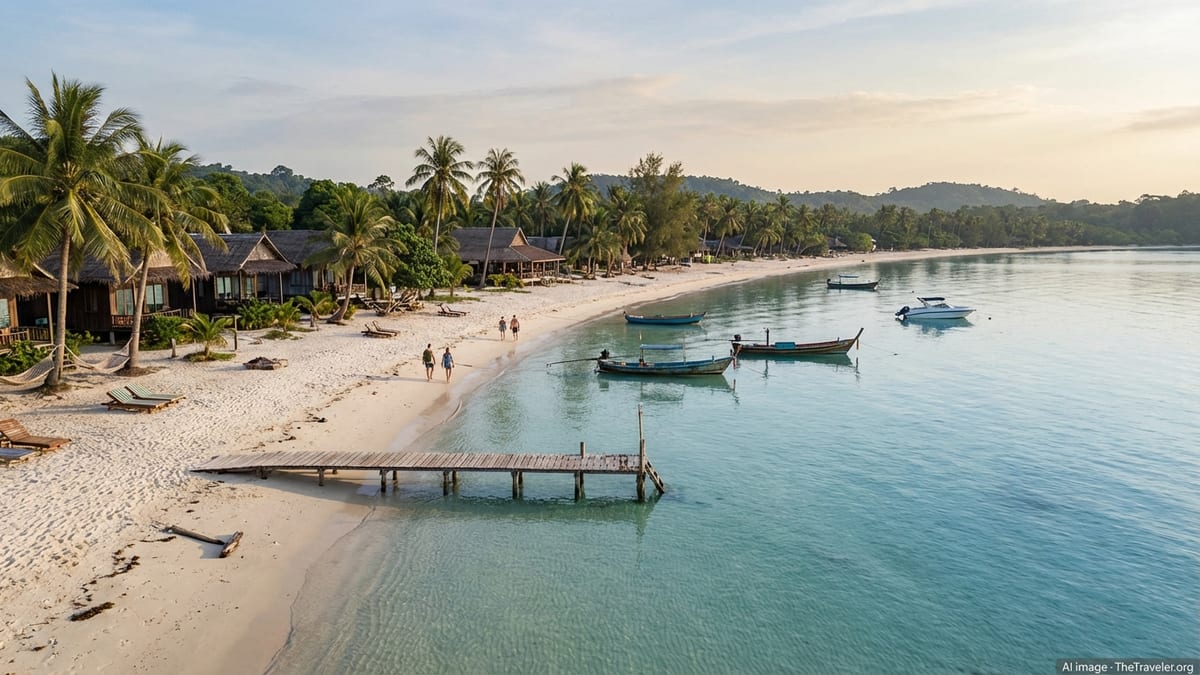
Koh Rong Sanloem, the quieter sister to Cambodia’s better-known Koh Rong, has rapidly become one of Southeast Asia’s most alluring island escapes. Powdery white sand, water that shifts from glass-clear turquoise to deep cobalt, and a pace of life that slows to a gentle sway all define this small island in the Gulf of Thailand.
Among its shores, a handful of beaches stand out for their beauty, atmosphere, and ease of access, most notably Saracen Bay and Lazy Beach, but also more offbeat stretches such as Sunset Beach, M’Pai Bay, and smaller coves tucked behind short jungle trails. This guide takes a close look at the best beaches in Koh Rong Sanloem, what makes each one special, and how to choose the right stretch of sand for your style of travel.
Understanding Koh Rong Sanloem’s Beach Landscape
Before diving into the individual bays and coves, it helps to get a sense of the island’s layout. Roughly 25 kilometers off the coast of Sihanoukville, Koh Rong Sanloem is long and irregularly shaped, with wide, sweeping beaches on the east and more secluded, rocky coves on the west. Most travelers arrive at Saracen Bay on the eastern side, then either stay put or transfer by boat or jungle path to more remote spots like Lazy Beach and Sunset Beach on the west coast, or M’Pai Bay in the north.
The beaches differ not only in scenery but also in infrastructure. Saracen Bay and M’Pai Bay offer the widest choice of accommodation, restaurants, and activities, while places like Lazy Beach and Sunset Beach keep things intentionally low-key with limited resorts, little to no nightlife, and patchy or nonexistent Wi-Fi. Together they create a mix that suits everyone from barefoot backpackers and honeymooners to families seeking calm water and soft sand for small children.
East Coast vs West Coast: Key Differences
The easiest way to think about Koh Rong Sanloem’s beaches is to split the island into east and west coasts. The east, dominated by Saracen Bay, is where the main ferry piers are located. Waters are typically calmer here, especially during the dry season from November to April, and the bay offers gentle, shallow entry points that are ideal for swimming and paddling.
The west coast, by contrast, faces open sea and is better known for sunsets, surf, and snorkeling. Lazy Beach and Sunset Beach both fall along this side and are a little harder to reach, which keeps crowds low. Trails through the jungle link these beaches to Saracen Bay, so adventurous visitors can walk across the island in less than an hour, swapping quiet dawn on one side for evening light displays on the other.
When to Visit the Beaches of Koh Rong Sanloem
The island follows the typical coastal Cambodian weather pattern, with a dry season roughly from November to April and a wetter, more unpredictable monsoon season from May to October. In the dry months, seas are usually calm, the water is clear, and beach days are a near guarantee. This is also when speedboat schedules run most reliably between Sihanoukville and Koh Rong Sanloem, and when snorkeling visibility is highest.
In the wet season, some resorts scale back operations and boat services are more vulnerable to delays or cancellations due to rough seas. That said, those willing to gamble on the weather can be rewarded with quieter beaches, greener jungle interiors, and lower room rates. Trails to the western beaches can be muddy at this time of year, so sturdy footwear is more important than ever.
Saracen Bay: The Heart of Koh Rong Sanloem
Saracen Bay is the main gateway to Koh Rong Sanloem and, for many visitors, the only beach they see during their stay. It stretches in a long, wide arc of white sand along the eastern side of the island, with shallow, clear water that looks almost unnaturally turquoise on sunny days. Ferries from Sihanoukville typically drop passengers at one of several piers along the bay, making arrival straightforward and transfers to nearby resorts very simple.
Once a sleepy string of wooden bungalows, Saracen Bay now offers a range of accommodation from simple huts to midrange boutique resorts with air-conditioned rooms and swimming pools. Despite this growth, the bay still feels relaxed and walkable, with much of the action taking place along the sand itself, where travelers drift between beach bars, small dive shops, and shaded loungers under palm trees.
Why Saracen Bay Stands Out
Saracen Bay’s biggest appeal is its balance between comfort and castaway charm. The sand here is soft and fine, and the water remains shallow for quite a distance, making it a safe choice for families with young children and for travelers who want to float or wade rather than swim in deeper water. During calm weather, it can resemble a giant natural lagoon, with barely a ripple along shore.
From a practical perspective, Saracen Bay offers the widest range of amenities on Koh Rong Sanloem. There are several dive and snorkel operators, casual restaurants serving both Khmer and Western dishes, and a small but sufficient lineup of mini-marts and travel desks that can assist with onward tickets or boat transfers. Power reliability has improved in recent seasons, and many properties now offer around-the-clock electricity and decent mobile coverage.
Best Areas Along Saracen Bay
Although Saracen Bay reads as one long sweep, it has subtle variations in atmosphere from one end to the other. Central sections near major piers tend to be busier, with more foot traffic, water taxis, and music from beach bars. Those looking for a quieter ambiance often walk north or south along the sand, where the development thins out and the shore becomes more tranquil.
The southern part of the bay is particularly appealing for travelers seeking a sense of space. A short walk away from the main pier area, this stretch features fewer resorts, clearer sightlines across the water, and some of the best sunrise views on the island. Newer boutique accommodations and small, well-run bungalows are scattered here, with little in the way of late-night noise.
Activities and Experiences on Saracen Bay
Saracen Bay serves as the island’s activity hub. Snorkeling day trips, scuba diving excursions, and island-hopping boat tours typically depart from here, making it easy for travelers to sample other beaches and reefs without changing hotels. The nearby underwater sites support colorful coral patches, schools of reef fish, and, at certain times of year, excellent visibility just off shore.
One of the most memorable experiences available from Saracen Bay is nighttime boat trips to see bioluminescent plankton. On dark, moonless nights, movement through the water can disturb microscopic organisms that glow an electric blue, creating an unforgettable light show beneath the surface. Simple sunset cruises and fishing trips are also popular, with local crews taking visitors around the island in traditional longtail boats.
Lazy Beach: A Secluded West Coast Classic
On the western side of Koh Rong Sanloem, Lazy Beach has long enjoyed a reputation as one of the island’s most special spots. Accessible either by a roughly 30 to 40 minute jungle walk from Saracen Bay or by private boat in suitable sea conditions, this deep golden strip of sand faces open water and benefits from sweeping views and fiery sunsets. The sheltered bay and backdrop of thick green forest give Lazy Beach a quietly dramatic feel, even as its name signals the pace of life here.
Development at Lazy Beach remains intentionally limited. A small, long-standing resort occupies one end of the shore, with simple wooden bungalows tucked into the trees and a central bar and restaurant that functions as a communal living room for guests. There are no shops, no independent nightlife venues, and no large-scale infrastructure, so those who come are usually seeking disconnection and slow days with few obligations beyond swimming, reading, and watching the sky change color in the evening.
The Appeal of Going Off-Grid
Part of Lazy Beach’s charm lies in how removed it feels, despite being only a short trek from the busier Saracen Bay. There are no loud beach parties, and with limited connectivity, guests often leave phones and laptops in their rooms for long stretches of the day. The horizon is typically dotted only with a few fishing boats, and on many afternoons, travelers can wander long sections of sand without seeing anyone else.
The water here tends to deepen more quickly than on the eastern side of the island, which experienced swimmers appreciate. Snorkeling along the rocky headlands can be rewarding when visibility is good, with a chance to spot schools of reef fish and healthy coral patches just a short swim from shore. Because there is little light pollution, stargazing is particularly impressive on clear nights.
Getting to and From Lazy Beach
Most travelers reach Lazy Beach on foot from Saracen Bay. The trailhead is easy to find from the main bay, and the well-trodden path cuts through dense jungle and climbs over a low ridge before descending to the western shore. The walk typically takes 30 to 40 minutes, depending on fitness and how often one stops to photograph the forest or coastal views.
Sturdy footwear is recommended, especially during or after rain, when roots and rocks can become slippery. Those with heavy luggage sometimes opt to coordinate private or resort-organized boats during periods of calm sea, though services can be irregular and subject to weather conditions. For this reason, travelers are generally advised to bring all necessary supplies with them and plan to stay at least a couple of nights, rather than treating Lazy Beach as a brief stop.
Who Lazy Beach Is Best For
Lazy Beach is especially well suited to couples and solo travelers who value solitude and a simple, back-to-nature setting. It works well for those who are comfortable with limited choices in dining and accommodation and who see the absence of nightlife as a benefit rather than a drawback. The beach can also be a romantic choice for honeymooners seeking a more rustic, unplugged experience than what is available in larger resort areas elsewhere in Southeast Asia.
Families can enjoy Lazy Beach too, but should keep in mind the relative isolation and the lack of convenience stores or medical facilities. Children comfortable with short hikes and swimming in slightly deeper water are likely to enjoy the adventure, while those who need more structured facilities or easy access to shops may be better served staying in Saracen Bay and visiting Lazy Beach as a day trip.
Sunset Beach: Rustic Charm and Fiery Evenings
Another highlight of Koh Rong Sanloem’s western coast is Sunset Beach, a compact but beautiful bay known for its amber-hued sand, rustic accommodations, and, true to its name, impressive evening skies. Less developed than Saracen Bay yet slightly more varied in lodging than Lazy Beach, Sunset Beach has cultivated a loyal following among travelers seeking somewhere quiet but social, where days are filled with swimming and snorkeling and nights center around shared meals and conversation.
Reaching Sunset Beach still requires a bit of effort. There is no regular direct ferry service from Sihanoukville, so visitors typically arrive first at Saracen Bay or M’Pai Bay and then transfer via jungle trail or private boat. The journey, however, tends to reinforce the sense of arrival; emerging from the trees to find a strip of sand backed by low-slung bungalows and open-air bars feels like stepping into a self-contained world.
Beach Atmosphere and Scenery
Sunset Beach has a raw, natural feel. The sand is soft but slightly coarser than in Saracen Bay, and scattered rocks and coral fragments at either end of the bay create excellent snorkeling spots. The forest comes close to the waterline in places, providing natural shade, and the bay opens westward to uninterrupted views over the Gulf of Thailand.
Despite its small size, the beach often feels spacious, as accommodation numbers remain relatively modest. Visitors tend to spend their days lazing in hammocks, exploring the nearby reef with masks and snorkels, or walking the length of the shore. When the sun begins to drop, much of the beach seems to gather at a handful of bars and terrace areas, watching as the sky shifts through bands of orange, pink, and deep purple.
Simple Comforts and Dining
Accommodation on Sunset Beach leans toward eco-style bungalows and guesthouses, with wooden structures raised slightly off the sand, fans instead of full air conditioning in many rooms, and intermittent Wi-Fi that encourages a break from constant connectivity. Most properties house their own restaurants, serving a mix of Cambodian dishes, seafood, and international favorites to a largely in-house crowd.
Given the logistical challenges of transporting supplies across the island, prices for meals are typically higher than on the mainland and modestly above what you might pay in mainland Cambodian towns. Travelers should budget accordingly and accept that part of the experience involves supporting small, remote businesses that operate with slim margins and complex supply chains.
Who Will Love Sunset Beach
Sunset Beach tends to attract a friendly blend of backpackers, digital nomads on semi-digital detox, and couples who appreciate an informal atmosphere. It is social without being rowdy, with communal seating areas that make it easy to strike up conversations but few late-night parties that continue into the early hours.
Those who enjoy snorkeling, relaxed sunset drinks, and days that naturally fall into a rhythm of swim, eat, nap, repeat are likely to fall in love with this bay. It is less suitable for visitors seeking polished resorts, air-conditioned comfort, or easy road access, as everything here is reached on foot or by boat and facilities remain intentionally basic.
M’Pai Bay and the North Coast: Village Vibes and Local Life
In the north of Koh Rong Sanloem, M’Pai Bay offers a different kind of beach experience. Rather than a single resort-dominated strip of sand, this area combines a working fishing village with a cluster of guesthouses, small hotels, and local eateries. The shoreline is more fragmented than in Saracen Bay, with short sandy stretches tucked between piers and rocky outcrops, but the atmosphere is full of character and distinctly more local.
Ferries connect M’Pai Bay directly with Sihanoukville on a daily basis, and boat taxis and slow supply boats link it with Koh Rong and the rest of Koh Rong Sanloem. As a result, it has become increasingly popular with budget-conscious travelers and those who want to experience everyday Cambodian life alongside the beach holiday elements.
Beaches Around M’Pai Bay
The main village front is more functional than picture-perfect, lined with jetties, fishing boats, and simple waterside cafes. For swimming and sunbathing, visitors typically walk a short distance to nearby sandy patches along the north coast, where shallow, clear waters make for pleasant dips.
Some guesthouses sit close to quieter mini-beaches that can feel almost private during the day, especially outside peak season. Short boat trips and kayak rentals also make it easy to explore neighboring coves, which may only see a handful of visitors at a time.
Local Culture and Community Feel
M’Pai Bay’s main strength is its village ambiance. Narrow lanes lined with local homes, simple shops, and family-run restaurants give visitors a sense of place that can be missing from more insulated resort areas. Travelers can sample home-style Cambodian cooking, chat with residents, or simply watch as fishing boats head out at sunset and return with the next morning’s catch.
This community-centered side of the island tends to appeal to long-stay visitors, budget backpackers, and anyone who values cultural immersion as much as postcard scenery. The area has a small but growing number of eco-conscious businesses and social enterprises that emphasize low-impact tourism and local employment, contributing to a more sustainable island economy.
Pros and Cons of Staying in M’Pai Bay
Staying in M’Pai Bay has clear advantages. Accommodation prices are generally lower than on the more resort-focused beaches, dining options are varied and often more affordable, and the village layout makes it easy to handle practicalities like laundry, small purchases, and arranging transport without walking long distances along the sand.
At the same time, it is not the most polished beach area on Koh Rong Sanloem. The central waterfront is busy and can feel less pristine than the sweeping bays of the east and west coasts. Those who dream of uninterrupted white sand right outside their bungalow may prefer Saracen Bay, Lazy Beach, or Sunset Beach, using M’Pai Bay as a day-trip destination instead.
Smaller Coves and Hidden Corners
Beyond the main beaches that draw the majority of visitors, Koh Rong Sanloem is ringed by smaller coves and semi-secret stretches of sand that reward the curious. Many can be reached by boat from Saracen Bay or M’Pai Bay, while a few are accessible by short walks from existing trails. These lesser-known spots lack the full spectrum of facilities found on the island’s headline beaches, but their relative emptiness is precisely what some travelers are seeking.
Because infrastructure is limited and conditions can change from season to season, the best way to discover these corners is often to talk with boat drivers, local guides, or staff at your accommodation, who can offer up-to-date advice on access, safety, and current levels of development.
Southern Saracen Bay and Quiet Points
At the far ends of Saracen Bay, the density of accommodation drops and long, quiet stretches of sand appear between resorts. Walking south or north from the busier central piers for 15 to 20 minutes can lead to near-empty shorelines, especially in the early morning, when the light is soft and the water calm.
These areas do not always have independent restaurants or shops directly behind the beach, so visitors often bring water and snacks with them or plan for a return walk by midday. Those staying at adjacent resorts, however, can enjoy something close to private beach conditions just a short stroll from their rooms.
Reef Pockets and Snorkel Spots
Scattered around the island are small bays prized more for what lies beneath the surface than for wide expanses of sand. Some west coast coves close to Lazy Beach and Sunset Beach feature coral gardens and rocky formations that support vibrant marine life, while even certain sections of Saracen Bay and the northern coastline can surprise snorkelers with schools of fish and occasional rays or cuttlefish.
As snorkeling conditions depend heavily on season, recent weather, and currents, visitors are best advised to consult local dive shops or boat operators for recommendations. Organized snorkel trips often combine several of these small coves in a single excursion, maximizing time in the water and minimizing guesswork.
How to Choose the Right Beach for Your Trip
With multiple appealing beaches to choose from, deciding where to base yourself on Koh Rong Sanloem can feel like a pleasant dilemma. Each area offers a distinct mix of atmosphere, convenience, and scenery, and the right choice depends on your priorities, budget, and travel style. Many visitors opt to split their time between two beaches, spending a few nights in Saracen Bay for ease of access and activities, then transferring to a more remote coast for a quieter finale.
Thinking through a few key questions in advance can make the decision easier. How important are amenities like air conditioning, 24-hour electricity, and consistent Wi-Fi? Do you prefer to walk to a variety of restaurants, or are you happy eating at your guesthouse each night? Is swimming with children or less confident swimmers a major part of your plan, or are you primarily visiting for snorkeling and sunset views?
Best Beach for First-Time Visitors
For a first visit to Koh Rong Sanloem, Saracen Bay is often the most practical choice. It is the central hub for fast ferries, offers the largest selection of accommodation at a range of price points, and provides easy access to tours, snorkel trips, and onward connections to other beaches. The shallow, calm water and wide sandy shore also suit almost every type of traveler, from solo guests to families.
From a base in Saracen Bay, it is simple to organize day trips to Lazy Beach, Sunset Beach, or nearby snorkeling reefs, allowing visitors to sample the island’s variety before committing to a more remote overnight stay on a future visit.
Best Beach for Sunsets and Seclusion
Travelers who place a premium on sunsets and a sense of separation from the busier beach scene gravitate to Lazy Beach and Sunset Beach on the west coast. Both require some effort to reach, but both reward that effort with wilder scenery, fewer people, and clear views of the sun dropping into the Gulf of Thailand each evening.
Of the two, Lazy Beach feels more isolated and self-contained, with very limited accommodation and a stronger sense of being off-grid. Sunset Beach, by contrast, offers a slightly wider choice of lodgings and a gently social atmosphere, making it a better fit for those who like to meet fellow travelers over dinner without sacrificing peace and quiet.
Best Beach for Culture and Budget Travel
If your priority is to keep costs lower while gaining insight into daily life on a Cambodian island, M’Pai Bay is a strong candidate. Its blend of local village, small-scale tourism, and accessible mini-beaches provides a distinctive alternative to purely resort-oriented bays. Accommodation runs from dorms and budget rooms to simple guesthouses and a few more comfortable options, and food choices include local eateries and Western-run cafes.
This area does not deliver the endless, uninterrupted sand of Saracen Bay, but it compensates with character, community, and a more diverse mix of residents and visitors. It is an especially good choice for longer stays and for those who value interaction with locals as much as sea views.
Getting To, From, and Around the Beaches
Reaching Koh Rong Sanloem almost always involves a journey from Sihanoukville, the coastal town that serves as the main ferry gateway to both Koh Rong and Koh Rong Sanloem. From there, high-speed ferries connect the mainland to Saracen Bay and M’Pai Bay several times a day, with journey times typically around 40 to 60 minutes depending on sea conditions and the number of stops.
Once on the island, moving between beaches is a matter of arranging boat transfers or walking along jungle trails where they exist. There are no cars or conventional roads, and the lack of motorized land traffic is part of the island’s enduring appeal.
Ferry Services from Sihanoukville
Several companies operate high-speed ferries from Sihanoukville to Koh Rong Sanloem, with most departures now leaving from the main port area rather than older beachside piers. Tickets are widely available through online booking platforms, hotel desks, and agents in town, and prices generally include an open return, giving travelers flexibility on their departure date.
Schedules can change due to weather, and sailings may be delayed in rough seas, especially outside the peak dry season months. It is wise to plan journeys with a buffer if you have onward flights or long-distance buses, and to reconfirm departure times at least a day in advance. During busy holiday periods, booking seats ahead of time is strongly recommended.
Boat Transfers and Island Transport
From Saracen Bay and M’Pai Bay, local boats, water taxis, and organized services connect to smaller beaches around the island. Prices depend on destination, sea conditions, and demand, and are often quoted per boat rather than per person. Many resorts assist guests with arranging transfers, bundling costs into overall stay packages or offering regular shuttle times.
Where marked trails exist, such as between Saracen Bay and Lazy Beach or Sunset Beach, walking can be an enjoyable and cost-effective way to move between coasts. Travelers should carry water, wear appropriate footwear, and avoid setting out too close to dusk, when visibility drops quickly in the jungle. During or after heavy rain, paths can become muddy and slippery, so additional caution is needed.
Responsible Travel and Beach Etiquette
The relative remoteness of Koh Rong Sanloem’s beaches means that waste management and freshwater resources are ongoing challenges. Visitors can help by minimizing single-use plastics, refilling bottles at their accommodation where possible, and carrying any trash back to areas with proper collection.
Respecting local communities and ecosystems is equally important. This includes observing posted guidelines about coral protection and snorkel behavior, dressing modestly away from the beaches in village areas, and keeping noise levels reasonable, especially at night in quieter bays.
The Takeaway
From the calm, family-friendly shallows of Saracen Bay to the hushed, sunset-facing shores of Lazy Beach and Sunset Beach, Koh Rong Sanloem offers a compact but remarkably varied collection of beaches. Each area has its own rhythm, from the village energy of M’Pai Bay to the near-silent nights of the island’s smaller coves, and together they create a destination that can be as social or as solitary, as comfortable or as off-grid, as you choose.
For first-time visitors, basing yourself in Saracen Bay and taking exploratory trips to the west coast and north shore provides an ideal introduction. Return travelers often go one step further, committing to several nights on a more remote beach where days blur into each other in a satisfying pattern of swims, hikes, and sunsets. Whatever combination you choose, the key to enjoying Koh Rong Sanloem is to embrace its slower pace, accept the quirks and occasional logistical challenges, and let the island’s still relatively unspoiled shores work their quiet magic.
FAQ
Q1. What is the best time of year to visit the beaches on Koh Rong Sanloem?
The most reliable beach weather typically runs from November to April, when conditions are drier, seas are calmer, and ferry services are more predictable. During these months you can expect plenty of sunshine, clearer water for snorkeling, and easier access to remote beaches like Lazy Beach and Sunset Beach. The wet season from May to October brings heavier rain and rougher seas, but also fewer visitors and lower room rates.
Q2. Which beach should I choose if I am visiting Koh Rong Sanloem for the first time?
Saracen Bay is usually the best base for first-time visitors. It is the primary ferry hub, offers the widest choice of accommodation and dining, and provides easy access to tours and boat transfers. From Saracen Bay you can visit Lazy Beach, Sunset Beach, and M’Pai Bay on day trips before deciding whether to spend a future visit based somewhere more secluded.
Q3. How difficult is the hike from Saracen Bay to Lazy Beach or Sunset Beach?
The jungle trails from Saracen Bay to Lazy Beach and Sunset Beach are relatively short but can feel strenuous in heat and humidity. Most people complete the walk in about 30 to 40 minutes at a steady pace. The paths involve some uneven terrain, roots, and short steep sections, so sturdy footwear and a bottle of water are important. In wet conditions, allow extra time and take care on slippery rocks and mud.
Q4. Are the beaches on Koh Rong Sanloem suitable for families with children?
Yes, particularly Saracen Bay, which has shallow, calm water and soft sand ideal for children to paddle and play. The bay’s gentle gradient means adults can wade out some distance while still standing, which adds a sense of safety. More remote beaches like Lazy Beach and Sunset Beach are better suited to older children who enjoy light hikes and are comfortable swimming in deeper water with occasional waves.
Q5. Can I find budget accommodation on Koh Rong Sanloem, or is it mainly midrange resorts?
The island offers a mix of price points. M’Pai Bay has the broadest range of budget options, including guesthouses and simple rooms at relatively low rates. Saracen Bay also has some affordable bungalows alongside more polished midrange resorts. The west coast beaches tend to have fewer properties overall, and their prices often reflect the extra logistics involved in supplying remote locations.
Q6. Is internet and mobile coverage reliable on the island’s beaches?
Connectivity has improved across Koh Rong Sanloem, but it still varies by beach and by individual resort. Saracen Bay generally has the most consistent mobile signal and Wi-Fi access, though speeds can slow during busy periods. On Lazy Beach and some parts of Sunset Beach, Wi-Fi may be limited, intermittent, or intentionally absent, which is part of the appeal for travelers seeking to disconnect.
Q7. Do I need to book accommodation in advance, or can I find a place after arriving?
In the high season between November and April, booking ahead is strongly recommended, especially for popular west coast beaches with only a handful of bungalows. Saracen Bay has more capacity and sometimes can absorb last-minute arrivals, but even there, the best-value rooms and most sought-after properties often fill in advance over holiday periods and long weekends.
Q8. What should I pack for a beach stay on Koh Rong Sanloem?
In addition to typical beachwear, pack sturdy walking shoes or sandals for jungle trails, a light rain jacket if visiting outside the driest months, and a headlamp or small flashlight for use at night. Reef-safe sunscreen, insect repellent, and a reusable water bottle are also useful, as are basic medications and any specific toiletries you rely on, since choices at small island shops can be limited.
Q9. Are there ATMs on Koh Rong Sanloem, or should I bring cash?
Travelers are generally advised to bring sufficient cash from the mainland to cover accommodation balances, meals, and activities. While some properties accept card payments, this is not universal, and card machines can fail when connections are poor. Having a mix of small and larger US dollar notes and Cambodian riel is helpful for paying for boat transfers, snacks, and small purchases.
Q10. Is it possible to visit both Koh Rong Sanloem and Koh Rong on the same trip?
Yes, many visitors combine time on both islands. Fast ferries connect Sihanoukville with each island, and boat taxis, slow boats, and scheduled services run between Koh Rong and Koh Rong Sanloem. A common pattern is to spend a few nights on quieter Koh Rong Sanloem and then transfer to livelier Koh Rong, or vice versa. When planning, allow extra time for inter-island transfers, as schedules and sea conditions can change.