


I had been hearing about Koh Rong for years before I finally went. The phrases were always the same: “untouched paradise,” “Maldives on a budget,” “quieter than Thailand but just as beautiful.” I arrived with fairly high expectations, a backpack full of DEET and motion sickness pills, and a rough idea that I would divide my time between the busier Koh Toch area and a quieter beach like Long Set.
What I actually found was more complicated: a place that was often beautiful, occasionally frustrating, and definitely not the right island for everyone. If you are considering whether Koh Rong is worth visiting, my experience might help you calibrate your expectations before you commit the time and logistics it takes to get there.
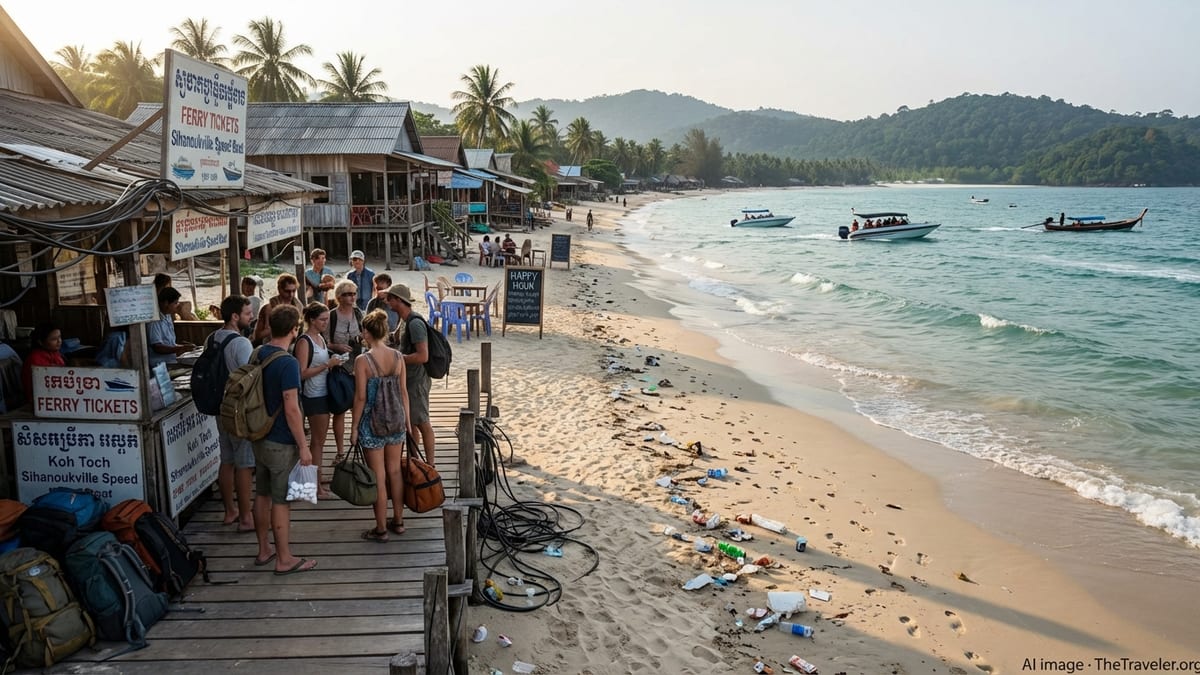
Getting There: Ferries, Delays, And The Mental Cost Of “Island Time”
On paper, getting to Koh Rong is straightforward. I made my way to Sihanoukville and bought a return ferry ticket to Koh Toch, the island’s main pier. Several companies run speedboats, with typical prices in the range of a modest restaurant meal and travel times generally advertised at 30 to 60 minutes depending on the route. In reality, “60 minutes” can easily become two or three hours when you factor in late departures, additional stops, and the general elasticity of Cambodian schedules.
I learned very quickly that the crossing is at the mercy of the weather and sea state. In the dry season, the ride is bumpy but manageable. In the wet season, boats are more likely to be delayed or canceled outright because of rough seas. I spoke to a couple who had been stuck an extra day on the island because their ferry back was canceled, and they missed an onward bus to Phnom Penh as a result. I did not personally get stranded, but my own boat left almost an hour late and stopped at several piers along the way, turning a quick hop into a meandering island shuttle.
The boat itself was functional but cramped. Luggage piled in the front, life jackets available but not actively handed out, and staff moving a bit chaotically while loading and unloading passengers at each pier. I felt mostly safe, but not in a rigidly regulated, Western sense of the word. Seas were choppy on one of my crossings and more than one person ended up sick over the side. If you suffer from motion sickness or anxiety about boats, the crossing is something to think about carefully, especially in the rainy months when cancellations and rough conditions are more common.
I will say that once I accepted that everything took longer than scheduled and stopped checking the time, my stress level dropped. The view of Koh Rong appearing on the horizon, a green bulk with bright white sand arcs, did feel like a small reward for the hassle. Still, compared to more polished island connections elsewhere in Southeast Asia, the journey to Koh Rong felt like work, not a trivial commute.
First Impressions Of Koh Toch: Party Hub With Rough Edges
Most people, including me, first land at Koh Toch, which is less a town and more a stretched-out strip of guesthouses, small hotels, bars, and restaurants clustered around the pier. When I stepped off the boat, my immediate impression was that the “untouched paradise” marketing language was very selective about its vantage point. From certain angles, Koh Toch is a pleasant little beach settlement; from others, it looks like a chaotic backpacker hub with exposed concrete, haphazard wiring, and a line of bars pushed right up to the sand.
The sand itself is soft and white in places, but parts of the main beach near the pier had litter at the high-tide line: plastic bottles, wrappers, and random debris that nobody had gotten around to collecting yet that day. In the water I occasionally spotted floating bits of trash. It was not horrific, but it certainly did not match the pristine postcard image I had arrived with. When I walked a few minutes away from the pier, the beach became cleaner and more appealing, but it still had the feel of a settlement that grew faster than its waste management systems.
On the plus side, Koh Toch is where the practicalities are easiest. There are several small minimarts, a range of places to eat from basic local rice dishes to Western-style burgers and pizza, and a few ATMs or cash advance options. It is not cheap by Cambodian standards, but it is manageable. If you need to book onward ferries, snorkel trips, or transfers to more remote beaches, every second storefront seems to double as a small travel agency. For my first night, it was actually reassuring to be based where things were available and boats came and went regularly, even if the atmosphere was more “lively backpacker enclave” than idyllic escape.
Beaches, Water, And That “Paradise” Question
The heart of the “Is Koh Rong worth it” debate is the beaches, so I made a point of visiting several different spots. Koh Toch beach itself is fine for a quick swim and sunset beer, but if I had only seen that stretch, I would have left disappointed. The water is swimable but not crystal clear right in front of the densest development, and the general vibe is more social than serene.
Things improved noticeably when I moved to Long Set Beach, also known as 4K Beach. Ferries now stop there directly, which makes it far more accessible than it used to be, and the difference compared to Koh Toch was immediate. The sand felt cleaner, the water clearer, and the buildings were more spaced out. Walking barefoot along that long curve of almost empty beach in the late afternoon did finally give me that “I am on a tropical island” feeling I expected when I booked my trip. I could see small fish in the shallows, and the sea was a swimmable turquoise instead of a murky blue-green.
That said, even the better beaches are not immune to occasional trash that washes up from the mainland or from passing boats. On one morning at Long Set, I joined a spontaneous informal cleanup started by a few other travelers because the overnight high tide had deposited a fresh line of plastic and Styrofoam. It took only half an hour of work to transform that stretch of shore back into something photo-worthy, but it drove home the point that Koh Rong is not a closed system. It is part of a region struggling with waste management, and some days the ocean reminds you of that.
I also took a boat trip to more remote snorkeling spots and a longer beach on the western side of the island. The snorkeling was pleasant but not spectacular. I saw some coral and small fish, but overall the reefs looked stressed and patchy, with broken coral in places. Water clarity varied by site and by day; sometimes it was reasonably clear, other times suspended particles made it feel cloudy. Again, this is not unique to Koh Rong, but if you are coming for world-class snorkeling or diving, I would temper those expectations. For casual swimmers and people happy to float, paddle, and enjoy bright blue water from a beach chair, it is enough. For hard-core underwater enthusiasts, it might not be.
Day-To-Day Reality: Comforts, Irritations, And Island Logistics
Living on Koh Rong for several days revealed a pattern of small comforts and small annoyances that added up to a very mixed impression. There is more 24-hour electricity now than there used to be, especially in the more developed areas, and most of the midrange places I stayed had reliable power and working fans or air conditioning. Wi-Fi, while not lightning fast, was good enough for messaging, uploading some photos, and basic browsing. I would not want to rely on it for remote work that required video calls or large file transfers, but it was better than I expected for a relatively remote island.
Water pressure in showers ranged from acceptable to weak, and hot water was unpredictable. In one bungalow I had hot showers whenever I wanted; in another, the temperature fluctuated from warm to cool with no clear pattern. None of this ruined my trip, but it did give the sense that Koh Rong operates in a space between rustic and comfortable, not fully in either category. If you are the type of traveler who expects consistent hotel-level standards, you might find the gap irritating. If you are used to rougher backpacking setups, you might consider it a sweet spot.
Food was reasonably varied. Along the main strip at Koh Toch, I could find Khmer dishes, basic seafood grills, Western breakfasts, and the usual pizza-and-burger fare. Prices were inflated compared to the mainland and Siem Reap or Phnom Penh, but not outrageous. On quieter beaches the choice narrowed significantly; in one spot I essentially rotated between three restaurant menus that all started to feel similar after a few days. Fresh seafood was generally good but not memorably outstanding, and not every place handled food hygiene equally well. I did have one episode of mild stomach trouble after a seafood barbecue, although to be fair, that can happen anywhere in the region.
There were also the usual island irritants: sandflies, mosquitoes, and the constant need for repellent. Sandflies in particular were more noticeable on some beaches than others. On one seemingly perfect stretch of sand, I sat without long clothing and ended up with clusters of small bites that itched intensely for days. I learned to bring a sarong or towel to sit on, avoid lying directly on the sand at dawn and dusk, and rinse off after being in the water. It is manageable if you are prepared, but if biting insects really ruin your mood, Koh Rong will test your patience.
Atmosphere, Safety, And The Human Side Of The Island
Atmosphere on Koh Rong is extremely dependent on where you base yourself. Koh Toch has a party-friendly, transient feel. There are fire shows on the beach, bars advertising drink specials and “happy” options, and music that sometimes tips from fun into intrusive. I saw more than a few very drunk backpackers weaving along the sand late at night. Personally, I did not feel threatened, but I did become more aware of my surroundings after dark and avoided walking alone down poorly lit paths after midnight.
Outside the main strip, the mood is considerably calmer. On Long Set and a couple of other beaches I visited, evenings were quiet, with people reading in hammocks, chatting softly over dinners, or walking the shoreline under the stars. If you want a romantic or peaceful atmosphere, you can absolutely find it by staying away from Koh Toch itself. That said, even on the quieter stretches, sound from occasional parties or boats can carry over the water, so total silence is rare.
I did not experience any crime personally, but I heard enough secondhand reports of petty theft, mostly involving unattended bags or phones, that I treated Koh Rong like any other backpacker destination. I kept valuables locked away in my room, used a basic travel lock, and did not leave things on the beach while I swam. Local staff and long-term expats I spoke to generally described the island as safe, but with the caveat that excessive drinking and drugs can attract opportunistic theft and occasional altercations.
On the positive side, most of the Cambodians I met were friendly in an understated way. English was widely enough spoken in tourism roles that communication was never a major problem. A few small interactions, like a guesthouse owner helping me reschedule a ferry when the weather looked dicey, or a boat captain quietly pointing out bioluminescent plankton during a night swim, were reminders that the human side of Koh Rong can be quietly generous. Those moments balanced out some of the more transactional, “tourist conveyor belt” experiences on the busier parts of the island.
When To Go, How Long To Stay, And Who It Suits
Timing matters a lot more on Koh Rong than in many other destinations I have visited. The dry season, roughly from November to April, is objectively the easier and more pleasant time to go. Skies are generally clear, rains are infrequent, and the sea is calmer, which reduces the risk of canceled ferries and makes snorkeling or island-hopping more enjoyable. Temperatures can still be very hot, especially from March onward, but you trade that heat for reliable beach weather and better visibility in the water.
The rainy season, from around May to October, is cheaper and quieter but involves more risk. Heavy downpours, especially from June to September, can disrupt your days, turn paths muddy, and make the sea rougher. On the plus side, accommodation prices drop, vegetation turns lush and green, and the beaches are less crowded. If you are the sort of traveler who is flexible with plans, does not mind occasional days “lost” to bad weather, and actively prefers emptier places, there is an argument for Koh Rong in the off-season. Personally, I was glad I timed my visit in the drier months; seeing boats canceled and seas turned brown and choppy would probably have colored my overall impression more negatively.
In terms of trip length, I found that three to four days was enough to get a good sense of the island: a night or two near Koh Toch to sort logistics and do a boat trip or two, followed by a couple of nights somewhere quieter to actually relax. If you have more time and enjoy doing very little, you could easily stretch that to a week, but beyond that you will want to be someone who genuinely likes slow days and limited variety in food and activities. This is not an island packed with cultural sights or day-trip variety; the main draws remain the beaches, the sea, and a general deceleration of life.
As to who Koh Rong suits, I would break it down this way. Budget to midrange backpackers, couples, and solo travelers who have already spent some time in Cambodia and are comfortable with imperfect infrastructure will probably enjoy it the most. If you are looking for a break after temple-hopping in Siem Reap or city time in Phnom Penh, and you are fine with a bit of grit along with your white sand, Koh Rong can be rewarding. Families with small children, travelers with very limited time, or people who need reliable connectivity and comfort might be better served by more developed beach destinations in neighboring countries.
The Takeaway: Is Koh Rong Worth Visiting?
After several days of ferries, sand, sun, and insect bites, I left Koh Rong with a complicated answer to the original question. Is it worth visiting? For me, the answer was “yes, but” rather than a resounding “absolutely” or a clear “no.” The island did give me some lovely moments: floating in warm, clear water on a quiet bay, watching plankton sparkle around my hands on a dark night, walking along nearly empty sands as the sun went down. Those memories feel real and not manufactured, and they are hard to get in more heavily commercialized resort areas.
At the same time, quite a few aspects did not live up to the Instagram-level hype. The trash problem on some stretches of beach was noticeable. Infrastructure was uneven, and minor hassles like ferry delays, weak showers, and patchy Wi-Fi added up. The snorkeling was pleasant but not outstanding. If I compare Koh Rong with some of the better islands in Thailand or parts of Indonesia, it feels less polished, less organized, and in some cases less naturally intact below the waterline.
If I were to do it again, I would skip staying right on Koh Toch and head straight to one of the quieter beaches, only passing through the main pier area for boat connections and basic errands. I would plan my visit firmly within the drier part of the season, avoid overly tight connections to flights or long-distance buses on either side of the trip, and pack more long, light clothing to reduce sandfly exposure. With those adjustments, I think I would enjoy Koh Rong more and be less distracted by the friction points.
In the end, I think Koh Rong is worth it if you go for what it actually is: a still-developing Cambodian island with pockets of real beauty, a mix of party and peace, and a fair share of rough edges. If you expect a flawless paradise, you may be disappointed. If you are prepared for a bit of mess, can tolerate occasional discomfort, and value a sense of place that has not yet been fully homogenized into generic beach tourism, then Koh Rong can still be a rewarding stop on a wider Cambodia itinerary.
FAQ
Q1. How long should I stay on Koh Rong to get a good experience?
I found three to four days to be a good balance: one or two nights near the main pier area for logistics and boat trips, and another couple of nights on a quieter beach to actually relax. Longer stays suit slow travelers who are happy with limited activities and food options.
Q2. Is Koh Rong safe for solo travelers, including women?
I personally felt generally safe, especially on the quieter beaches, but I was cautious at night around the party areas on Koh Toch. Basic precautions apply: avoid walking alone on dark paths very late, watch your drinks, and keep valuables locked up in your room.
Q3. What is the best time of year to visit Koh Rong?
In my experience, the dry season from November to April offers the most reliable beach weather, calmer seas, and clearer water. The rainy season can be cheaper and quieter but brings more boat disruptions, muddy paths, and frequent downpours.
Q4. Do I need to book accommodation and ferries in advance?
During the peak dry months and around holidays, I would definitely book both accommodation and ferry tickets in advance to avoid stress. Outside of those times, it is more flexible, but I still preferred having at least my first couple of nights and one ferry leg confirmed.
Q5. How bad are sandflies and mosquitoes on the island?
On some beaches, especially at dawn and dusk, sandflies were a real nuisance and their bites itched for days. Mosquitoes were also present. I managed by using strong repellent, avoiding lying directly on the sand, and wearing light long sleeves and trousers in the evenings.
Q6. Is Koh Rong suitable for families with children?
Personally, I think Koh Rong is better suited to flexible adults and older kids rather than families with very young children. The boat crossings can be rough, infrastructure is basic in places, and medical services are limited, which might worry parents.
Q7. How does Koh Rong compare to other Southeast Asian islands?
Compared to popular Thai islands or parts of Indonesia, Koh Rong feels less polished and more improvised. You trade some comfort, infrastructure, and variety for a slightly wilder, more “in progress” atmosphere and, in some places, fewer crowds.
Q8. Can I work remotely from Koh Rong for a week or more?
I would not rely on Koh Rong as a serious remote work base. While I did find usable Wi-Fi in several guesthouses, speeds and reliability were inconsistent, and power can occasionally cut out. It is fine for casual browsing and messaging, not ideal for regular video calls.
Q9. Is snorkeling and diving worth it on Koh Rong?
I enjoyed being in the water and saw some coral and fish, but I would describe the snorkeling as decent rather than spectacular. Some reefs looked stressed and visibility varied. If underwater life is your top priority, I would not choose Koh Rong for that alone.
Q10. Would I personally go back to Koh Rong?
I would consider returning as part of a broader Cambodia trip, but with adjusted expectations and a clearer plan: skipping Koh Toch for accommodation, staying longer on a quieter beach, and treating the island as a simple place to slow down rather than a pristine, world-class beach destination.