


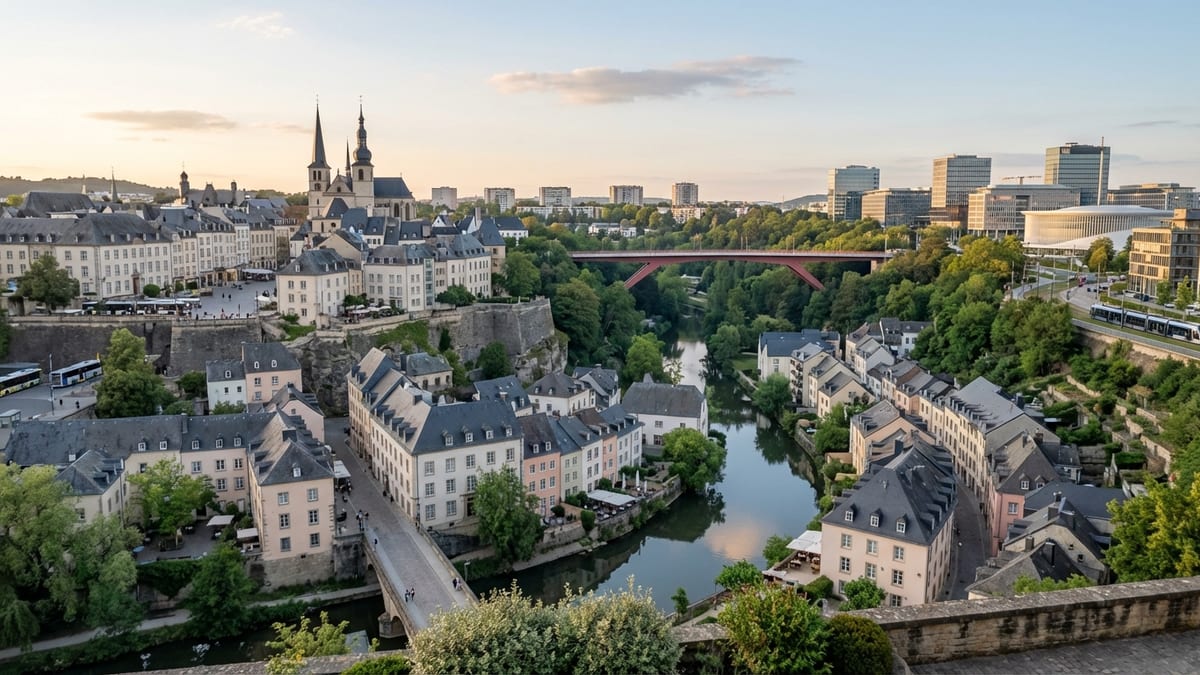
Luxembourg City might be small in size, but choosing where to stay can dramatically shape your experience. From the storybook streets of the Old Town to the glassy towers of Kirchberg and the nightlife of Clausen, each district has its own atmosphere, price point, and practical pros and cons. This guide breaks the city down by area, then highlights standout hotels in each neighborhood so you can match your base to the kind of trip you have in mind.
How to Choose the Best Area in Luxembourg City
Luxembourg City is compact and well connected by free public transport across the entire country, which makes hotel location slightly less stressful than in many capitals. Still, every district offers a different balance of charm, convenience, nightlife, and budget.
Understanding these contrasts will help you land in the right place, whether you want early morning walks past the Grand Ducal Palace or easy tram rides to the European institutions. Choosing accommodation is easier once you know the main things to do in Luxembourg City and where they are located.
Most first-time visitors gravitate to Ville Haute, the historic upper town, where you are within walking distance of major sights and atmospheric squares. Grund and Clausen sit in the lower city along the Alzette River, offering quieter, more romantic settings and a strong nightlife scene.
Kirchberg serves business travelers and culture lovers with sleek hotels near major EU institutions, while the Gare quarter around the train station tends to offer more wallet-friendly stays. Leafy residential districts like Limpertsberg and Belair round out the options for those who prefer a quieter, neighborhood feel. If you are still deciding whether the country fits your travel style, this breakdown of Luxembourg worth visiting helps set expectations.
Ville Haute: Historic Heart and Classic Luxury
Ville Haute, or the Upper Town, is the oldest and most central part of Luxembourg City. This is where you find cobbled streets, stone ramparts, grand squares, and many of the city’s headline attractions, including the Grand Ducal Palace, Notre Dame Cathedral, Place d’Armes, and the city’s main museums. Hotels here are typically on the higher end of the price scale, but the payoff is being able to step straight out of your lobby into the historic core.
This area suits first-time visitors, short city breaks, and anyone who values atmosphere over saving a few euros. Even at night, the old town feels safe and lively without being rowdy, and eateries range from fine dining to relaxed brasseries. The tram does not run directly through the pedestrian center, but buses and short walks connect you quickly to other districts.
Le Place d’Armes
Overlooking one of Luxembourg City’s most emblematic squares, Le Place d’Armes is a refined boutique hotel that puts you front and center in the historic core. Guests stay steps from cafés, outdoor terraces, markets, and seasonal events that regularly animate the square, especially in summer and around Christmas. Inside, the style leans toward classic European elegance, with individually designed rooms and suites that mix period details with modern comforts.
Service is attentive, and the hotel’s own dining options typically include an upscale restaurant and a more casual brasserie. This makes it an attractive choice for travelers who prefer to keep evenings close to home. It is well suited to couples, travelers celebrating special occasions, and anyone who wants to stay somewhere that feels woven into the fabric of the old town rather than on its fringes.
Hotel Parc Beaux-Arts
For a smaller-scale, characterful stay, Hotel Parc Beaux-Arts offers an intimate base in a historic building near the main museums of Ville Haute. Its location is ideal if your priority is to spend your time wandering narrow lanes, visiting cultural institutions, and enjoying the old fortress views. Many rooms incorporate exposed beams, period-style furniture, and architectural quirks that echo the neighborhood’s history.
This hotel appeals to culture-focused visitors and repeat guests who appreciate a sense of place more than comprehensive onsite amenities. Although it is not a large resort-style property, the immediate surroundings compensate, with easy access to cafés, galleries, and walking routes along the old city walls.
Sofitel Luxembourg Le Grand Ducal
Technically perched just beyond the absolute center, Sofitel Luxembourg Le Grand Ducal still serves as a convenient luxury option for visiting Ville Haute while offering sweeping panoramic views of the old town and the Pétrusse valley. Its hilltop setting lets many rooms and the rooftop bar look back over the fortress city, especially dramatic at night when monuments are illuminated.
Inside, the atmosphere is contemporary and international, blending French influences with modern design. Business facilities, a fitness room, and professional service make it a reliable choice for work trips, yet couples also choose it for the views and upscale feel. A short walk or quick bus ride connects you to the heart of Ville Haute, allowing you to enjoy the city without sacrificing modern comforts.
Grund and Clausen: Riverside Charm and Nightlife
Below the cliffs of the old town, the districts of Grund and Clausen nestle along the Alzette River. Grund is known for its quiet, picturesque streets and atmospheric views back up to the ramparts, while Clausen combines riverside heritage with a cluster of lively bars and restaurants that draw a younger crowd after dark. Both areas offer a more intimate, almost village-like feel compared with the upper town.
These neighborhoods work particularly well for romantic breaks, longer stays, and travelers who want to balance daytime sightseeing with evenings by the water. Elevators, footpaths, and buses connect the lower town to Ville Haute, so you can easily move between tranquil riverbanks and the bustle of the main squares above.
Melia Luxembourg
Situated at the edge of Kirchberg but within walking distance of the lower town and river valley, Melia Luxembourg often appeals to travelers who want a foot in both worlds. From many rooms and public areas, you can gaze across to the old fortress and the Alzette valley, which creates a striking contrast with the hotel’s contemporary glass-and-steel design.
Inside, rooms tend to be bright and functional with a business-friendly layout, while shared spaces like the bar and restaurant lean into wide views and modern decor. It suits couples and business travelers who appreciate the feeling of staying in a sleek, international hotel while remaining close to historic walking routes, including those that meander toward Grund.
Luxembourg City Youth Hostel (Grund)
For budget-conscious travelers who want a unique location, Luxembourg City Youth Hostel sits in the lower town near the river, offering simple but well-maintained rooms and dorms. Its position at the base of the cliffs means you wake up with the dramatic backdrop of the old fortifications rising above, and scenic trails start almost from the doorstep.
The hostel has practical amenities such as communal areas, a restaurant, and outdoor terraces, which make it particularly attractive to solo travelers, small groups, and families working with a tighter budget. Free public transport and the elevator up to Ville Haute mean that even without a car, guests are not isolated in the valley.
Hotels and Guesthouses in Clausen
Clausen is one of the city’s oldest districts and today is closely associated with nightlife, thanks to its concentration of stylish bars and restaurants in former brewery buildings. Accommodation here tends to be smaller hotels and guesthouses rather than large international brands, which lends the area a more local, slightly bohemian edge.
This is a strategic area to stay if you plan to enjoy Luxembourg’s bar scene without worrying about late-night transport, or if you simply like the energy of a neighborhood that stays lively after dark. At the same time, Clausen’s riverside setting and historic lanes ensure it never feels like a generic entertainment district; medieval and industrial heritage remain visible around almost every corner.
Kirchberg: Modern District for Business and Culture
On a plateau northeast of the city center, Kirchberg is Luxembourg’s forward-looking district, home to major European Union institutions, financial firms, and some of the country’s most important contemporary cultural venues. Wide avenues, bold modern architecture, and efficient public transport characterize the area. A tram line runs straight through Kirchberg into the city center, making trips to Ville Haute fast and straightforward.
Kirchberg is most popular with business travelers, conference delegates, and visitors who value easy access to the Philharmonie concert hall, the Mudam modern art museum, and shopping centers. Weekend stays can sometimes be better value than midweek nights, and many hotels here are designed with both work and leisure in mind.
Novotel Luxembourg Kirchberg
Novotel Luxembourg Kirchberg is a dependable mid-to-upscale option set close to many European institutions and major offices. Its rooms are designed for comfort and flexibility, often with space to work as well as relax. Families appreciate the brand’s typical focus on practical details, such as sofa beds and kid-friendly facilities, while business guests make heavy use of the meeting spaces and reliable connectivity.
The hotel’s location allows you to walk or take a short tram ride to cultural sites and shopping areas in Kirchberg, then continue onward into the old town for sightseeing. It is a logical base if you are attending events in the district or prefer to return at night to a quieter, modern environment rather than a busy historic center.
Melia Luxembourg (Kirchberg Edge)
Melia Luxembourg also belongs firmly in the Kirchberg category, given its proximity to the Philharmonie and Mudam. From here, you can reach European institutions and corporate offices in minutes on foot. At the same time, its position near the edge of the plateau gives it more character than some business hotels further inland, thanks to those sweeping views toward the old city.
The hotel’s design underlines its contemporary setting, with clean lines, glass frontage, and a bright, open lobby. After work or museum visits, guests often retreat to the restaurant or bar to watch the light fade over the valley. This dual focus on business convenience and visual drama makes it a standout in the district.
Mama Shelter Luxembourg
Among Kirchberg’s more playful accommodation options, Mama Shelter Luxembourg brings a colorful, design-driven take on the business hotel. Public areas feature quirky decor, social seating, and an atmosphere that feels more like an urban hangout than a traditional lobby. Rooms mix functional layouts with bold touches, appealing to younger travelers and anyone who dislikes anonymous corporate spaces.
The hotel is well-positioned for the tram and the area’s main attractions, making it practical as well as fun. Onsite dining typically emphasizes convivial shared spaces and casual menus, encouraging guests to mingle. Mama Shelter suits creative professionals, digital nomads, and visitors who like their business trips to feel a little more relaxed and social.
Gare Quarter: Transport Hub and Budget-Friendly Stays
South of Ville Haute across the Pétrusse valley, the Gare quarter surrounds Luxembourg’s main train station. Unlike many big cities where station areas can be chaotic or feel unsafe, Luxembourg’s Gare district is a functional, reasonably well-kept hub that still offers quick access to the historic center, generally within about 15 to 20 minutes on foot or a short bus ride.
Accommodations here range from budget and mid-range chains to a handful of more stylish options, making it a prime zone for travelers who want to control costs while remaining central. The location is especially convenient if you plan day trips by train to other parts of Luxembourg or nearby countries, or if you arrive late and prefer a short walk to your hotel.
Park Inn by Radisson Luxembourg City
Park Inn by Radisson Luxembourg City sits within easy walking distance of the train station and offers bright, modern rooms at a mid-range price point. Typical of the brand, the design is uncluttered and contemporary, with an emphasis on comfort, strong Wi-Fi, and functional workspaces. It works well for short city breaks, business overnights, and anyone who values predictable standards.
Guests can walk to Ville Haute via bridges over the Pétrusse valley or use nearby buses to save time. The hotel’s neighborhood features a mix of everyday local services and eateries, which can be handy if you prefer simple dining and quick snacks rather than elaborate restaurant experiences every night.
Ibis Styles and Other Budget Chains
The area around Luxembourg Gare includes several Ibis and Ibis Styles properties and similar chains that prioritize value for money. Rooms are compact but efficiently laid out, with essential comfort and modern decor. Breakfast is usually offered as a buffet, and lobbies often double as relaxed co-working spaces during the day.
These hotels are particularly practical for solo travelers, rail enthusiasts, and visitors on tighter budgets who still want private rooms in a central location. Thanks to Luxembourg’s compact size and free public transport, staying here rarely feels like a compromise, as you can reach most city sights within a few minutes.
Auberge Gaglioti
Auberge Gaglioti is a small, family-run option near the station that offers character and simplicity rather than high design. Rooms vary in size and layout, but the atmosphere tends to be warm and personal, with staff able to provide tailored suggestions for restaurants and day trips. For travelers who appreciate a more old-fashioned European guesthouse feel, it can be more appealing than a larger chain.
The location, close to both Gare and the bridges into Ville Haute, makes it straightforward to balance sightseeing with onward rail journeys. It is best suited to travelers who are comfortable with a more traditional style and who value location and hospitality over extensive facilities.
Limpertsberg, Belair, and Other Leafy Districts
Northwest of the old town, districts such as Limpertsberg, Belair, and Merl offer a residential counterpoint to the busier central areas. These neighborhoods are known for their elegant villas, apartment blocks, parks, and local schools. They appeal to families, long-stay visitors, and anyone who prefers quieter evenings and green spaces over nightlife and crowds.
While hotel density here is lower than in Ville Haute or Gare, the accommodations that do exist often take the form of aparthotels or small, discreet properties. Public buses run frequently into the center, and some routes allow you to reach Ville Haute or Kirchberg in a short ride, making these areas practical for travelers who do not mind a brief commute.
Aparthotels and Serviced Apartments
Limpertsberg and Belair feature a handful of serviced apartments that are particularly attractive for longer stays or family trips. These properties combine the privacy and space of an apartment with services such as cleaning, reception, and sometimes breakfast. Kitchens or kitchenettes allow guests to self-cater, which can significantly reduce costs in an otherwise expensive city.
Such options work well for business travelers on multi-week assignments, digital nomads, and families who prefer living more like locals. Proximity to parks like Parc Merl or the municipal park offers easy access to playgrounds and green walking routes, helping balance work obligations with downtime in nature.
Small Boutique Hotels in Leafy Streets
Scattered through Belair and nearby districts are small boutique hotels that operate on a quieter, more residential scale. These properties often occupy renovated townhouses or low-rise buildings, with limited room counts and personalized service. Interiors may favor warm, homey decor rather than bold design, mirroring the calm feel of the streets outside.
Staying in one of these hotels suits travelers who value rest and a sense of retreat. After days spent among crowds in Ville Haute or the European quarter, it can be relaxing to return to a neighborhood where the main evening sounds are local residents walking dogs or chatting on balconies rather than bar music.
Family-Friendly Neighborhood Stays
Limpertsberg in particular has a reputation as a family-friendly neighborhood, thanks to its schools, playgrounds, and proximity to central attractions without sitting directly in the busiest tourist corridors. When combined with an aparthotel or family-oriented boutique property, it can be an ideal compromise for parents who want to explore Luxembourg City at a slower pace.
Families benefit from easy bus links into the center and relatively short taxi rides back in the evening. Green pockets and residential squares provide places for children to burn energy between museum visits, and local bakeries and cafés give a taste of everyday Luxembourg life away from souvenir stands.
How Many Nights to Stay and When to Book
Despite its modest size, Luxembourg City rewards at least two to three nights, which allows time to explore the historic fortifications, museums, and lower town districts while still taking one or two day trips into the countryside. With free nationwide public transport, it is easy to reach destinations such as Vianden, Echternach, or the Moselle Valley without a car, and basing yourself in the capital keeps logistics simple.
Hotel prices tend to rise during major European Union meetings, business conferences, and peak summer weekends. If your dates are fixed, booking well in advance usually yields more choice, especially in small character hotels in Ville Haute and the most popular properties in Kirchberg. Weekends can sometimes be better value in business-heavy districts, while midweek deals occasionally appear in leisure-oriented neighborhoods when there are no big events.
When choosing a hotel, consider not only price and star rating but also your preferred atmosphere and daily routine. Night owls might gravitate to Clausen or the central squares of the old town, early risers may favor quieter lower town or residential streets, and business travelers should weigh the convenience of Kirchberg or Gare against the pleasure of spending evenings among the terraces and narrow alleys of Ville Haute.
The Takeaway
Luxembourg City’s compact size and strong public transport network mean that no well-located hotel is ever truly far from the action. Yet each district offers a distinct take on the capital: Ville Haute provides cobblestones and classic luxury, Grund and Clausen deliver riverside romance and nightlife, Kirchberg caters to business and culture lovers, the Gare quarter helps keep budgets in check, and residential neighborhoods such as Limpertsberg and Belair promise leafy calm.
Choosing where to stay is ultimately about matching these environments to the way you like to travel. If you want to walk out of your lobby into history, look to the old town. If modern architecture and museums are your priority, Kirchberg stands out. For value, convenience, or family-friendly space, the station area and residential districts play their part. With careful planning and early booking during busy periods, you can secure a base that turns Luxembourg City from a brief stopover into a memorable destination in its own right.
FAQ
Q1. What is the best area to stay in Luxembourg City for first-time visitors?
For most first-time visitors, Ville Haute, the historic upper town, is the best base because you can walk to major sights such as the Grand Ducal Palace, main squares, and key museums while enjoying plenty of cafés, restaurants, and a lively but not overwhelming atmosphere.
Q2. Where should I stay if I am visiting Luxembourg City for business?
Business travelers often prefer Kirchberg, which is close to European institutions, corporate offices, and conference venues, and offers modern hotels with strong business facilities and easy tram connections to the old town for evenings out.
Q3. Is the area around Luxembourg’s main train station safe to stay in?
The Gare quarter is generally considered a practical and acceptable place to stay, especially for those using the train frequently, and while it may feel more functional than the old town, it is not typically associated with the level of disruption seen in some major European station districts.
Q4. Which neighborhoods are best for nightlife?
Clausen and Grund are popular for nightlife, with Clausen in particular known for its concentration of bars and restaurants along the river, while Ville Haute also offers a broad choice of restaurants and more low-key bars around its central squares.
Q5. Are there good budget options in Luxembourg City’s center?
Yes, while Luxembourg can be expensive, more affordable hotels and hostels cluster around the Gare quarter and in Grund, including international budget chains and the well-regarded youth hostel, all still within easy reach of the historic center.
Q6. What is a good area for families with children?
Residential districts such as Limpertsberg and Belair suit families thanks to their parks, quieter streets, and family-friendly serviced apartments, yet they remain only a short bus ride from the old town and main attractions.
Q7. Do I need to stay in the old town to enjoy Luxembourg’s historic sights?
You do not have to stay in Ville Haute, but doing so maximizes convenience; from Kirchberg, the Gare area, or residential districts you can still reach the old town quickly by tram, bus, or on foot, though you will trade immediate doorstep access for slightly longer daily walks or rides.
Q8. How many nights should I plan in Luxembourg City?
Two to three nights is ideal for exploring the city’s main sights, wandering both the upper and lower towns, and fitting in at least one day trip to the countryside or the Moselle Valley using the country’s free public transport.
Q9. When is it most important to book hotels in advance?
Advance booking is most important in summer, during major European Union meetings or conferences in Kirchberg, and over popular event periods such as Christmas markets, when smaller character hotels and central properties can sell out quickly.
Q10. Is it easy to move between different districts during a stay?
Yes, Luxembourg’s free public transport system, including buses and trams, makes it straightforward to move between areas like Kirchberg, Gare, and Ville Haute, and many routes run frequently enough that you can change districts several times a day without difficulty.