

Choosing where to go on a first trip to Italy can feel overwhelming. From Alpine peaks to volcanic islands, the country offers more remarkable regions than most travelers can fit into a single vacation. The key is to focus on areas that combine famous landmarks with easy logistics, good transport connections and a mix of big cities and smaller towns. The regions below offer that balance, giving first time visitors a classic taste of Italian history, food, landscapes and everyday life without trying to see the entire country at once.
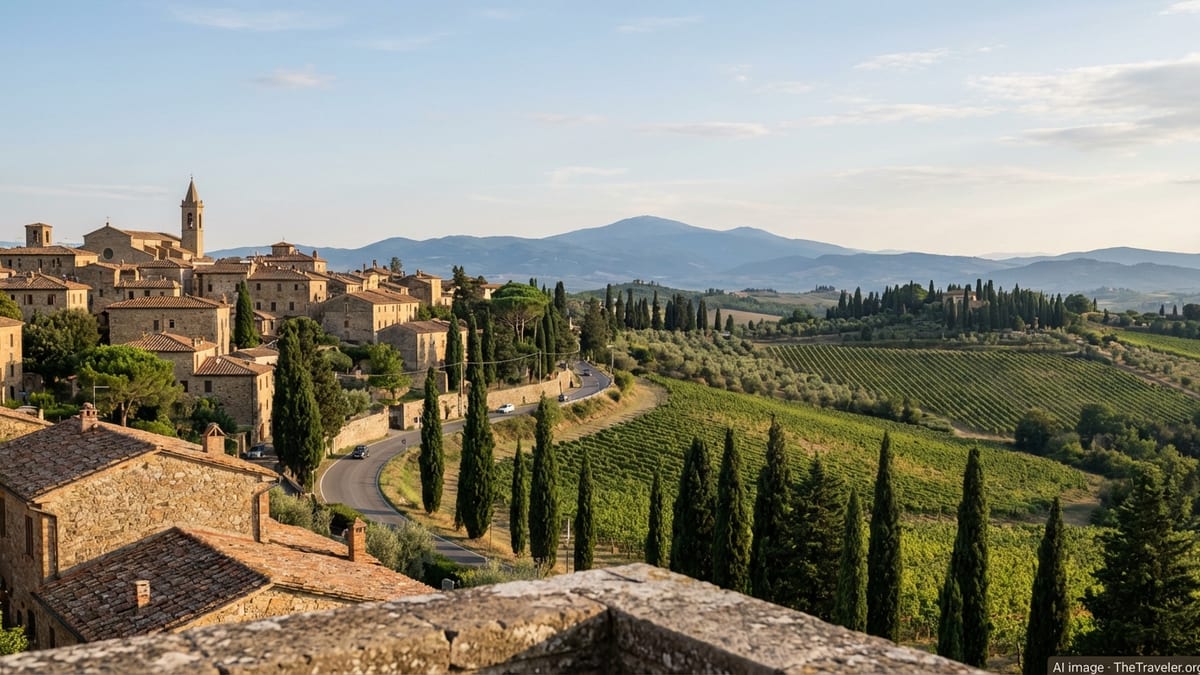
Tuscany: Renaissance Cities and Classic Countryside
Tuscany is often the first region many travelers picture when they imagine Italy, and with good reason. Its capital Florence is one of the country’s most accessible entry points, with an airport, fast train links and a compact historic center that is easy to explore on foot. Within a relatively small area you can experience world class art, Romanesque churches, Renaissance palaces and the Arno River framed by terracotta roofs and distant hills. For a first time visitor, Florence alone can comfortably fill several days without the stress of complex logistics.
Beyond the capital, Tuscany’s smaller cities and hill towns offer an approachable introduction to regional Italy. Siena, with its fan shaped main square and Gothic cathedral, feels atmospheric yet walkable, while Lucca’s intact Renaissance walls and pedestrian lanes suit travelers who prefer quieter evenings. Even Pisa, known for its Leaning Tower and busy day tour scene, can be rewarding if you stay overnight and experience the city once the crowds have gone. Train connections between these cities are frequent, making it realistic for a new visitor to explore without renting a car.
For many, the Tuscan countryside is just as compelling as its cities. Rolling vineyards in Chianti, cypress lined drives near the Val d’Orcia and medieval stone villages give a gentle, almost cinematic introduction to rural Italy. Agriturismi, or farm stays, provide comfortable bases to enjoy local food and wine while still having access to nearby towns. First time visitors who want a taste of the countryside can add two or three nights outside Florence without needing to navigate long distances or unfamiliar mountain roads.
In practical terms, Tuscany strikes a good balance between popularity and comfort. It is well prepared for international visitors, with English spoken widely in the tourism sector, yet it retains plenty of authentic daily life in its markets, neighborhood bars and smaller towns. Prices vary, but travelers have a wide range of options, from simple guesthouses to luxury hotels. For a first Italian itinerary of 7 to 10 days, combining Florence with one smaller city and a short countryside stay is both realistic and rewarding.
Lazio: Rome and the Heart of Classical Italy
Lazio, home to the capital city Rome, is the region that many first time visitors feel they simply cannot skip. Rome’s iconic landmarks, from the Colosseum and Roman Forum to the Trevi Fountain and the Spanish Steps, provide a crash course in Italian history and culture. The city is a major European air hub, with frequent transatlantic and regional flights, which makes it one of the most straightforward gateways for international travelers. Once you arrive, much of the historic center is walkable, and clear signage and established tour infrastructure help first timers navigate the main sights.
Rome can feel intense, especially in peak season, but Lazio offers easier going escapes that are still within the same region. Nearby hill towns such as Frascati and Castel Gandolfo, or the lakeside town of Bracciano, reveal a calmer side of central Italy while remaining connected to Rome by commuter trains. These make excellent day trips or even short overnights if you want to experience local life beyond the capital’s constant movement. For a first time visitor who is still finding their footing, having such options within an hour of the city can be very reassuring.
Lazio also offers access to important archaeological and religious sites that round out a first encounter with Italy. The ancient port of Ostia Antica, often described as a quieter alternative to Pompeii, gives a vivid glimpse of Roman daily life without requiring a long journey south. The region’s many churches and basilicas, including major sites of pilgrimage, give cultural context to the Vatican Museums and Saint Peter’s Basilica. This concentration of history means new visitors can see multiple aspects of Italian heritage in a short stay without constantly changing hotels.
From a practical standpoint, Rome’s extensive public transport network, range of accommodations and numerous food options suit a wide spectrum of travelers and budgets. It does require some patience, as crowds and traffic are part of daily life, but planning early starts for major sights and leaving time for simple neighborhood walks can make the experience far more pleasant. For many first timers, Lazio is the anchor of their trip, often combined with one or two additional regions that are easy to reach by high speed train.
Veneto: Canals, Lakes and an Easy Rail Hub
Veneto is best known for Venice, one of the most visited cities in Italy and a place that often sits at the top of first time itineraries. The historic center, built on a lagoon and crossed by canals instead of roads, offers a visual experience unlike anywhere else. While the city does face issues related to crowding and seasonal surges in visitors, smart timing and planning can still make a visit rewarding for newcomers. Staying at least one night, rather than visiting only on a day trip, allows you to see the quieter side of Venice in the early morning or later evening when cruise excursions and many tour groups have left.
Beyond Venice, Veneto gives first time visitors a varied set of destinations that are well connected by rail. Verona, known for its Roman arena and compact historic center, offers an elegant yet relaxed atmosphere that many find more manageable than larger cities. Padua and Vicenza add to the region’s appeal with important art, architecture and lively student populations that keep their centers vibrant year round. Since these cities are all on main train lines, it is realistic for someone unfamiliar with Italy to base in one place and make easy day trips.
Veneto also acts as a convenient gateway to some of northern Italy’s lake and mountain landscapes. While the Dolomites themselves can require more advanced planning and careful timing due to popularity, the southern reaches of Lake Garda are simple to access from Verona and other regional hubs. Here, waterfront promenades, small towns and boat services give a gentle introduction to Italian lake culture without demanding challenging hiking or long drives. This variety within a relatively compact area makes Veneto a strong choice for visitors who want a mix of urban and natural scenery in their first Italian journey.
In logistical terms, Venice’s international airport and high speed train connections make arriving and departing straightforward, especially when pairing Veneto with Tuscany, Lazio or Emilia Romagna in a multi stop itinerary. Accommodation ranges from boutique guesthouses in historic palazzi to modern hotels near train stations or in mainland districts. New travelers who plan ahead, especially for peak months, will find plenty of options that let them experience famous sights while still having quiet corners to retreat to at the end of the day.
Campania: Coastlines, Islands and Ancient Ruins
For first time visitors drawn to dramatic coastal scenery and archaeological sites, Campania in southern Italy is an appealing choice. The regional capital Naples has a long history, a powerful street culture and easy connections by air, rail and ferry, making it a practical base. From here it is relatively straightforward to reach Pompeii and Herculaneum, two of the country’s most significant archaeological sites, which together offer an unusually clear window into ancient Roman life. Seeing these sites in person gives a depth to Italy’s past that complements what many travelers experience in museums further north.
Campania’s coastline is another major draw, particularly the Sorrento Peninsula and the Amalfi Coast. Towns such as Sorrento, Amalfi and Positano attract visitors with their cliffside views, pastel colored houses and winding lanes. These areas are popular and can become congested, especially from late spring through early autumn, so first time visitors benefit from choosing travel dates and accommodations carefully. Staying in slightly less crowded towns, traveling outside the highest peak weeks, or relying on ferries instead of coastal buses when possible can all make the experience more comfortable.
The region’s islands add yet another layer of interest. Capri and Ischia are well known, each with their own character and pace. Capri tends to be glamorous and busy during the day, with quieter evenings once many day trippers leave. Ischia is larger and known for thermal spas and a somewhat more local feel. Reaching these islands usually involves at least one ferry ride, but the routes from Naples and Sorrento are well established and familiar with international visitors. For a first time traveler who is open to a bit of maritime logistics, a one or two night stay offshore can be a highlight.
Safety and comfort are important considerations, and Campania rewards those who arrive prepared. Naples has improved significantly in recent years in terms of tourism services, yet it still requires typical big city awareness, especially around busy transport hubs and crowded streets. On the positive side, the region’s food traditions, from pizza to seafood and pastries, are extraordinarily strong, and many visitors find that shared meals in neighborhood trattorie become some of their best memories. For a first trip, pairing three or four nights in Naples and the surrounding area with time in a quieter coastal town lets travelers enjoy both energy and relaxation.
Emilia Romagna: Food, Friendly Cities and Relaxed Pace
Emilia Romagna is not always the first region that comes to mind for new visitors, yet it is one of the easiest for understanding everyday Italian life. Its cities, including Bologna, Parma, Modena and Ferrara, are known for their universities, portico lined streets and strong culinary traditions. For someone visiting Italy for the first time, the region’s relaxed atmosphere and relatively moderate tourist numbers can feel like a welcome contrast to the intensity of the biggest hubs. You can still enjoy impressive historic centers, but with more space to linger in markets, cafes and local food shops.
Bologna, the regional capital, makes an excellent base thanks to its central location on Italy’s high speed rail network. From here, first time visitors can easily reach Florence, Venice, Milan or Verona on day trips while returning each night to a city that feels lively but not overwhelming. The presence of a large student population keeps prices more balanced than in some of the country’s most famous destinations, and food lovers in particular often rank Emilia Romagna as one of the best regions to deepen their understanding of Italian cuisine.
The region also presents a gentle introduction to smaller towns and rural areas. Parma and Modena, associated with well known food products, combine elegant architecture with a manageable size that is ideal for walking. The Adriatic coast, with resorts around Rimini and smaller seaside towns, offers a wide range of accommodations and long beaches that families often find comfortable. Compared with more dramatic coastlines, this shoreline is flatter and more built up, but it can be a less daunting place for first timers to experience an Italian seaside holiday.
From a practical perspective, Emilia Romagna’s transport links and relatively predictable prices make planning straightforward. English is widely understood in tourism and hospitality, yet the region remains focused primarily on Italian life rather than on international visitors. For a first time traveler who wants to balance well known stops with some quieter, more local experiences, including several days in Emilia Romagna alongside a more famous region can create a well rounded itinerary that feels both exciting and grounded.
Liguria and the Italian Riviera: Compact Coast for First Timers
For travelers dreaming of colorful seaside towns and cliffside trails, Liguria on the northwestern coast provides an accessible version of the Italian Riviera. The most famous part of the region is the Cinque Terre, five small villages connected by walking paths, trains and boats. These villages have become popular worldwide, and at peak times they can feel crowded, yet their compact size and clear infrastructure still make them feasible for first time visitors. Staying in one of the villages or in nearby towns like Levanto or La Spezia allows you to explore at a more relaxed pace, especially if you plan early morning or late afternoon hikes.
Beyond the Cinque Terre, Liguria offers many other towns that showcase classic Riviera scenery with fewer day trippers. Portovenere, Santa Margherita Ligure and the area around Portofino combine seaside promenades, historic centers and easy boat access to nearby bays. The regional capital Genoa, once a powerful maritime republic, has a large historic center and a gritty but fascinating character that appeals to travelers who enjoy port cities. Good rail connections along the coast make it possible for new visitors to move between towns without needing a car, which is important given the region’s winding roads and limited parking.
The appeal of Liguria for first timers lies in its mix of manageable size and strong vacation identity. Distances between key towns are short, and the pattern of spending days walking, swimming and taking short train or boat rides is simple to understand. At the same time, visitors have access to excellent seafood, local pesto and regional wines, all of which help introduce the diversity of Italian cuisine. Many travelers choose to pair a few nights on this coast with time in nearby Tuscany or Piedmont, reachable in a few hours by train.
As with other heavily photographed destinations, expectations need to be managed. Some trails or viewpoints may be busier than images suggest, and weather can affect boat schedules, especially shoulder season. Building flexibility into your plans, considering travel in late spring or early autumn, and choosing accommodations slightly away from the most famous spots can significantly improve the experience. With thoughtful timing, Liguria can become one of the most memorable parts of a first trip, combining the relaxation of a seaside break with the charm of older fishing villages.
How to Choose the Right Region Mix for Your First Trip
With more than a dozen major regions that appeal to international visitors, deciding where to go on your first trip to Italy often comes down to personal interests and time. A helpful approach is to choose one anchor city that is easy to reach, such as Rome, Florence, Venice, Milan or Naples, and then add one or two nearby regions that complement it. For example, pairing Rome with a few days in Tuscany offers a balance of big city history and countryside quiet, while combining Venice with Emilia Romagna or the Italian lakes creates a northern itinerary that is logistically simple.
Travel time is another key factor. Italy’s high speed trains connect major cities in as little as 1 to 3 hours, which allows you to experience different regions without devoting full days to transit. However, rural and coastal areas often require slower regional trains or buses, and road travel can be slower than maps suggest, especially on winding or congested routes. For a first trip of about 10 to 14 days, limiting yourself to two or three regions usually leads to a more relaxed experience than trying to “see it all.” Leaving some places for a future visit can make this first journey more enjoyable.
Season and crowd levels also play a role. Popular regions such as Tuscany, Lazio, Veneto and Campania see the highest visitor numbers from roughly May through September, with especially busy periods around major holidays and summer breaks. Shoulder seasons like April and October often offer more comfortable temperatures and slightly thinner crowds, though weather can be less predictable. Regions that are less dominated by seasonal tourism, including much of Emilia Romagna or parts of Piedmont and Lombardy, can feel more balanced even in busier months.
Finally, consider your comfort with different kinds of logistics. If you prefer not to drive, look for regions where trains and ferries cover most of your planned routes. If you are comfortable renting a car, you might include more rural areas or smaller villages in your plans, but keep in mind that Italian city centers often have restricted driving zones and limited parking. Being realistic about pace and transportation will help you choose a set of regions that fits your style and leaves room for the unplanned moments that often become the highlight of a first journey.
The Takeaway
Italy is not a single experience but a mosaic of regions, each with its own pace, flavors and landscapes. For first time visitors, the goal is not to check every famous name off a list, but to choose a few areas that together offer a balanced introduction. Regions such as Tuscany, Lazio, Veneto, Campania, Emilia Romagna and Liguria stand out because they combine strong infrastructure, iconic sights and accessible day trips, all within journeys that are manageable for someone still learning how the country fits together.
Instead of rushing across the entire peninsula, allowing enough time in each chosen region lets you notice the details that give Italy its enduring appeal: morning markets setting up in small squares, late evening walks along riverfronts and simple meals that linger in the memory long after the trip ends. With thoughtful planning and realistic expectations, a first visit built around these key regions can feel both comprehensive and surprisingly calm. It will almost certainly also plant the seed for a return, when you can delve into the many other corners of the country that your first itinerary could not yet include.
FAQ
Q1. How many regions should I visit on my first trip to Italy?
For a trip of about 10 to 14 days, most travelers are happiest focusing on two or three regions. This allows time to adjust to a new country, enjoy unhurried days and avoid spending too many hours on trains or transfer days. Trying to fit in more regions often leads to fatigue and a sense of only skimming each place.
Q2. Is it better to start in Rome, Florence or Venice for a first visit?
All three are good entry points, so the best choice usually depends on flight options and your interests. Rome offers the most concentrated ancient history, Florence is ideal for Renaissance art and a smaller city feel, while Venice delivers a visually striking setting that is unlike anywhere else. Many travelers choose whichever city has the most convenient flight and build the rest of the itinerary around that.
Q3. Do I need a car to explore these regions?
In most cases, you do not need a car for a first visit focused on major cities and well known towns. High speed and regional trains connect much of Tuscany, Lazio, Veneto, Emilia Romagna and Liguria, and ferries cover important routes in Campania. A car can be useful for deeper countryside stays, but first time visitors often find it easier to rely on public transport and occasional taxis.
Q4. Which region is best if I am most interested in food?
Every Italian region has strong food traditions, but Emilia Romagna and Tuscany are particularly rewarding for first time visitors. Bologna, Parma and Modena are known for their markets and regional specialties, while Tuscan towns combine hearty local cuisine with excellent wines. Naples and the surrounding area in Campania are also exceptional if you want to experience pizza and southern Italian flavors where they originated.
Q5. What is the best time of year to visit these regions?
Late spring and early autumn are generally the most comfortable periods for first time visitors. Months such as April, May, late September and October usually bring mild temperatures and somewhat smaller crowds than midsummer. July and August can be very hot and busy, especially in cities and along the coasts, while winter has fewer tourists but shorter daylight and some reduced services in smaller resorts.
Q6. Are coastal regions like the Amalfi Coast and Cinque Terre too crowded for first timers?
These areas can become very busy in peak season, yet they are still manageable with planning. Choosing travel dates outside the highest summer weeks, staying overnight rather than visiting only on day trips and using early morning or late afternoon for popular viewpoints can greatly improve the experience. If you prefer quieter places, consider pairing these spots with less crowded towns in the same region.
Q7. How much time should I spend in the countryside compared with cities?
A common balance for a first trip is to spend about two thirds of your time in cities or larger towns and one third in smaller towns or rural settings. Cities like Rome, Florence or Venice provide museums, landmarks and transport hubs, while a few days in the countryside or on the coast give space to slow down. Adjust this ratio based on whether you prefer cultural sightseeing or relaxation.
Q8. Which regions are best if I am traveling with children?
Tuscany, Emilia Romagna and parts of Liguria and Campania work particularly well for families. These regions offer a mix of walkable towns, beaches or countryside stays and child friendly food. Larger cities like Rome and Venice can also be enjoyable for children when balanced with downtime in parks, on the coast or at family oriented accommodations.
Q9. Is Italy safe for first time visitors?
Italy is generally considered safe for tourists, including those visiting for the first time. Most issues encountered are minor, such as pickpocketing in crowded areas or confusion around transport and tickets. Using normal city awareness, keeping valuables secure and following local advice is usually sufficient to avoid problems. Checking current travel advisories before departure is also a sensible step.
Q10. How far in advance should I book accommodations in popular regions?
In well known regions such as Tuscany, Lazio, Veneto, Campania and the Italian Riviera, booking several months ahead is wise, especially for travel in late spring, summer or early autumn. Early planning gives you more choice of location and price range, and it is particularly important for small towns or coastal villages where rooms can be limited. For off season travel, there is often more flexibility, but it is still best to reserve at least main city stays in advance.