

Staying connected in the United Kingdom has never been easier, but the flood of SIM cards, eSIMs and roaming offers can quickly become confusing for visitors. With the UK now outside the European Union, roaming rules have changed for many travellers, and providers constantly adjust tariffs and fair use limits. This guide brings together the latest information so you can choose the best option for your trip, whether you are visiting for a long weekend or several months.
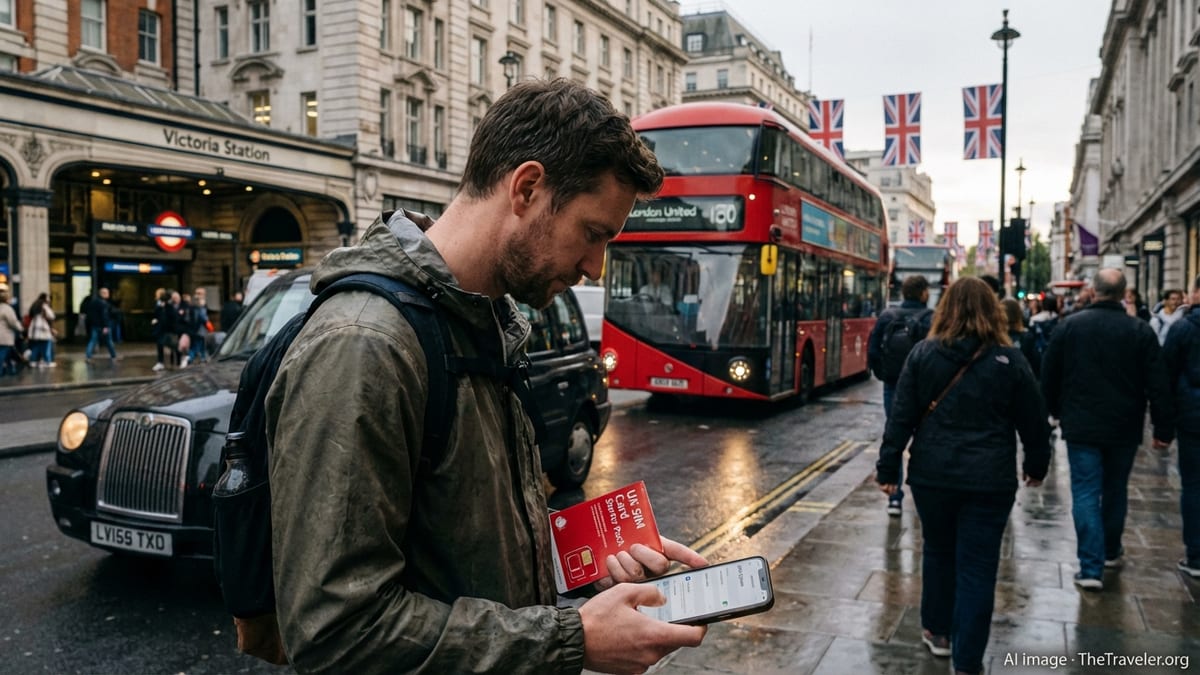
How Mobile Networks Work in the United Kingdom
To understand which SIM card will work best for your trip, it helps to know how the UK mobile market is structured. Four main network operators run the physical infrastructure: EE, O2, Vodafone and Three. Most other brands you see on supermarket shelves or online are mobile virtual network operators, or MVNOs, which rent capacity from one of these bigger networks and then sell their own plans on top. For travellers, that means a budget brand can often provide the same coverage and speeds as a premium provider, at a lower cost.
Coverage across the United Kingdom is generally strong in cities and large towns, with expanding 5G service in dense urban areas and along major transport corridors. Rural and coastal regions, Scottish Highlands and some parts of Wales still see patchy service, although ongoing investment by operators such as Virgin Media O2 and EE aims to fill remaining gaps over the next few years. Travellers planning self-drive trips in remote areas should check coverage maps in advance and avoid relying on a single network for critical navigation.
There is a very active low cost segment powered by MVNOs. Brands such as giffgaff, SMARTY, Lebara, Lyca Mobile, Tesco Mobile and Asda Mobile run on one of the big four networks and compete aggressively on data allowances and short term plans. For visitors, these providers often offer the simplest, best value prepaid bundles with generous data and rolling 30 day terms that can be cancelled at any time. Many now support eSIM as well as physical SIM cards, which makes it easy to get connected on arrival.
Another important trend is the growing role of digital only providers and global eSIM platforms. Services such as easySim.global and international eSIM apps provide data coverage across dozens of countries, including the United Kingdom, designed especially for travellers. These options can be particularly attractive if your trip to Britain is part of a longer multi country itinerary across Europe, as they allow you to manage connectivity from a single app without visiting a local shop.
Roaming to the UK vs Buying a Local SIM
Many travellers first consider using their existing mobile plan when visiting the United Kingdom. If you are coming from the European Union or a country that still offers inclusive UK roaming, this can be straightforward, but policies vary considerably between operators. Since the UK left the EU roaming framework, individual carriers are free to add surcharges or fair use caps for roaming in Britain, and many have quietly tightened their terms over the last few years. Always check the latest roaming section of your provider’s website or app before relying on this option.
Fair use policies can matter even when roaming is advertised as included. Operators may allow a large but finite amount of data at domestic rates before applying an extra per gigabyte fee. Others limit how long you can roam continuously before they reserve the right to switch you to a more expensive plan. Regulatory guidance in Europe sets ceilings for these surcharges and explains how fair use limits should be communicated, but the detail of each plan still differs, so it is safer to assume that “roam like at home” has some caveats in practice.
For many visitors, especially those coming from outside Europe, a local UK SIM or eSIM is still the most cost effective and predictable solution. Buying a local SIM means you pay domestic UK rates for data, calls and texts, rather than premium roaming prices. It also makes it easier to control spending, since prepaid bundles will simply stop working when the allowance is used up. On the downside, you will have a UK number that friends or services back home may not instantly recognise, and some banks or secure apps might still send codes to your original number.
An increasingly popular compromise is to combine options. One approach is to keep your home SIM in the phone for calls and authentication codes, with roaming switched on but data restricted, and then add a UK eSIM that handles most of your data needs at local prices. Dual SIM and eSIM capable phones make this straightforward, and many travellers find that this mixed setup gives them the best of both worlds: the security of their home number plus the value of a domestic UK plan.
Best Local SIM and eSIM Options for Short Stays
For trips of up to a month, several UK based prepaid brands stand out as particularly traveller friendly. These providers generally offer 30 day rolling bundles with a fixed amount of data, plus unlimited or generous domestic calls and texts. Prices and exact data allowances change frequently, but the overall shape of the market has been consistent: heavy competition in the budget segment, with especially strong value for moderate and heavy data users.
One reliable option is a prepaid plan on a network using Three’s infrastructure, such as SMARTY. These brands tend to focus on simplicity and value, with straightforward monthly data packages, Wi Fi calling, hotspot tethering on most plans and no credit checks. Recent promotions from SMARTY and similar providers have included double data offers and large data bundles at mid range prices, which are attractive for visitors who expect to use maps, streaming and social media throughout the day. Some allowances include a modest amount of EU roaming data, useful if your trip continues on to nearby countries.
Another strong choice for many travellers is an O2 based MVNO such as giffgaff or Tesco Mobile. O2’s network is generally well regarded for coverage, and these brands run on flexible rolling contracts that are easy to top up online. Giffgaff, in particular, has built a reputation for pay as you go style “goodybags” that bundle data with calls and texts, all managed via an app rather than in store customer service. Tesco Mobile combines the reach of O2 with the practicality of being sold through a major supermarket chain, meaning you can pick up a SIM while shopping for groceries shortly after landing.
Vodafone based MVNOs, such as Asda Mobile and some newer digital first brands, also provide good short stay options. These services benefit from Vodafone’s extensive 4G and growing 5G network, while offering clear, low commitment bundles. Because these brands compete so directly on price, it is worth checking the most recent offers shortly before you travel. Seasonal promotions, extra data bonuses and short term discounts are common, and a plan that was not the best value last year may suddenly be very competitive this season.
International eSIMs and Multi Country Travel
Travellers who are visiting the United Kingdom as part of a wider European or around the world itinerary often find that an international eSIM is more convenient than juggling multiple local SIM cards. A number of global providers now specialise in travel focused eSIMs that work in dozens or even hundreds of destinations. These services generally offer data only plans, delivered instantly through an app, which can be installed before you depart and activated on arrival in the UK.
International eSIM providers differ in coverage, customer support and pricing, but most follow a similar model. You buy a regional or worldwide data package valid for a set number of days or a specific amount of gigabytes. Once installed, the eSIM connects automatically to one or more partner networks in each country you visit, often piggybacking on the same UK infrastructure used by local brands. Some providers now include trial offers or small free allocations to let new users test network quality before committing to a larger bundle.
One development worth noting is the emergence of travel focused eSIM services launched by well known consumer brands, including airlines and financial technology companies. For example, British based easySim.global provides app managed data plans tailored to international travellers, with coverage across multiple regions including Europe and the UK. Some digital banks are also moving into this space, bundling domestic mobile service with travel data options for their account holders. This convergence of connectivity and financial services aims to simplify life for frequent travellers who already rely heavily on these apps.
However, international eSIMs are not always the cheapest choice if you only plan to stay in the United Kingdom. Because they are designed for flexibility across many destinations, price per gigabyte can be higher than that of a purely domestic UK SIM. They also typically do not include local voice minutes or a UK mobile number as standard. If you just need data for maps, messaging apps and email, that may not matter, but travellers who expect to make or receive voice calls from UK numbers should consider whether a local SIM or hybrid setup would work better.
Where and How to Buy a UK SIM Card
Getting hold of a SIM card in the United Kingdom is relatively straightforward, particularly in larger cities and transport hubs. At major airports such as London Heathrow, Gatwick, Manchester and Edinburgh, you will usually find dedicated mobile stands or convenience stores selling starter packs from some of the main networks and MVNOs. These airport bundles are convenient but can be slightly more expensive than similar packages bought in town, so it may be worth purchasing the minimum you need for the first day and then shopping around once you reach your accommodation.
In city centres and residential areas, supermarkets, corner shops and electronics retailers stock a wide range of prepaid SIMs. Chains such as Tesco and Asda sell their own branded mobile products alongside big name networks, while independent newsagents often carry multi network racks where you can choose between several low cost providers. Staff in these outlets can usually help with basic questions, although activation and top ups are increasingly handled through apps and automated systems rather than over the counter.
For eSIMs, the purchasing process is fully digital. Many UK and international providers allow you to sign up through their website or app, pay with a credit card or digital wallet, and receive a QR code by email or within the app. You scan this code with your phone to install the eSIM profile, then activate it once you arrive in the United Kingdom. It is generally safer to complete the installation shortly before or after landing, as some local eSIMs expect to see a UK network before they will fully activate.
Regardless of whether you choose a physical SIM or eSIM, it is worth confirming that your phone is unlocked before you travel. Many handsets sold by operators in some countries are tied to that provider, and will not accept a foreign SIM without an unlock code. Contact your home carrier several weeks ahead of departure if you are unsure. You should also check your phone’s compatibility with UK frequency bands and 5G networks, especially if you are bringing a device from North America or Asia where spectrum use differs slightly from Europe.
Data Needs, Coverage and Practical Tips
Choosing the best UK SIM card depends heavily on your personal data needs and travel style. City break visitors who rely on hotel Wi Fi and only need maps and messaging when out exploring can often get by with modest data bundles. In contrast, digital nomads, social media creators and travellers who stream music or video on the move will want significantly larger allowances. As a rough guide, casual users might be comfortable with five to ten gigabytes for a week, while heavier users might prefer twenty gigabytes or more over the same period.
Coverage considerations should also guide your decision. If your itinerary focuses on London, Manchester, Glasgow or other major cities, almost any of the big four networks and their MVNO partners will offer strong 4G and growing 5G service. Those planning hiking trips in national parks, road journeys through rural England or Scotland, or visits to smaller coastal towns should pay closer attention to coverage maps. In some regions, one network has a clear advantage, and choosing an MVNO that uses that underlying infrastructure can make a real difference to your experience.
Several practical tips can help you keep costs under control. Turn off background app refresh for data hungry apps, especially social media and cloud services, or restrict them to Wi Fi. Use offline maps by downloading relevant regions to your phone before travel. Where possible, make voice and video calls over Wi Fi rather than mobile data, especially on group calls. Keep an eye on your provider’s usage alerts, as most send automatic messages when you reach 80 percent and 100 percent of your data allowance.
Finally, remember that policies and promotions change regularly, often with only a few weeks’ notice. Regulatory bodies provide high level rules on roaming protections and fair use, but individual networks still have freedom to set their own prices and bundle structures. Before committing to a particular SIM, check the most recent information directly from the provider, and be prepared to adjust your choice if a better value deal appears shortly before your departure.
The Takeaway
For visitors to the United Kingdom in 2026, there is no single best SIM card that suits everyone. Instead, there is a spectrum of strong options, from budget friendly local MVNOs and flexible eSIMs to mixed setups that combine your home number with a UK data plan. The right decision depends on how long you are staying, how many other countries you plan to visit, and how heavily you use data when travelling.
If you are on a short city break and want something simple, a prepaid bundle from a mainstream UK MVNO running on one of the big four networks will usually be both easy and cost effective. Longer trips or multi country itineraries might benefit more from a regional or global eSIM, perhaps combined with a small local plan for voice calls. Whichever route you choose, checking that your phone is unlocked, compatible and ready to install a new SIM or eSIM before you depart will save you time at the airport.
Above all, think carefully about your connectivity priorities. If you mainly need maps, messaging and email, you can safely focus on mid range data plans and strong coverage in the regions you will visit. If constant streaming, uploads and remote work are part of your travel routine, prioritise reliability, generous data allowances and efficient customer support. With a little preparation and a realistic view of your needs, staying connected in the United Kingdom can be straightforward, affordable and stress free.
FAQ
Q1. Do I really need a local UK SIM card, or can I just roam on my home plan?
For some travellers, especially from the European Union or countries with inclusive UK roaming, using a home plan can work well. However, fair use limits and potential surcharges mean costs can rise quickly on longer stays or heavy data use, so a local SIM or eSIM is often better value and gives you clearer control over spending.
Q2. Which UK network has the best coverage for tourists?
Coverage is generally strong from all four main operators in cities and on major transport routes. Differences become more noticeable in rural areas, coastal regions and parts of Scotland and Wales. It is wise to check the latest coverage maps from EE, O2, Vodafone and Three for the specific places you plan to visit, then choose a provider or MVNO that uses the strongest network in those areas.
Q3. Is an eSIM or a physical SIM better for travel in the United Kingdom?
Both options work well. An eSIM is more convenient if your phone supports it, since you can install it digitally without visiting a shop and keep your home SIM active for calls or security codes. A physical SIM is universally compatible and can be bought easily in UK supermarkets, phone shops and convenience stores. The right choice mostly depends on your device and how comfortable you are with digital activation.
Q4. Can I buy and activate a UK eSIM before I arrive?
Many international travel eSIM providers allow you to install the eSIM profile before you depart and then activate it once you land in the UK. Some purely local UK eSIMs may expect to see a British network signal before full activation, so in those cases it is safer to complete the process after arrival. Always follow the specific instructions in your provider’s app to avoid activating the plan too early.
Q5. How much data do I need for a one week trip to the UK?
For light use focused on maps, messaging apps and occasional browsing, five to ten gigabytes is often enough for a week. If you stream music or video on mobile data, upload lots of photos and use social media heavily, you may want twenty gigabytes or more. Downloading offline maps and saving media for offline use can significantly reduce your data needs.
Q6. Will a UK SIM card give me free roaming across Europe?
Some UK providers include limited roaming in European countries, but this is not universal and often comes with fair use caps. Since the UK is no longer part of the EU roaming framework, each operator sets its own rules for using UK plans abroad. If European roaming is important, check whether your chosen UK SIM includes it and how many gigabytes are covered before any surcharges apply.
Q7. Can I keep my usual messaging apps and contacts when using a UK SIM?
Yes. Apps such as WhatsApp, Signal, Telegram and similar services are tied to your account rather than your current SIM. When you switch to a UK SIM, your existing chats and contacts remain in place. Some apps may ask you to confirm your number again, so keep your home SIM accessible in case you need to receive a verification code by text.
Q8. What identification do I need to buy a SIM card in the UK?
At present, most visitors can buy prepaid SIM cards in the United Kingdom without extensive registration. However, some providers may ask for basic details such as a name, email address or payment method when you activate a bundle, especially for online and app based services. Requirements can change, so be prepared to show a passport or other ID if requested in a specialist phone shop.
Q9. How do I avoid unexpected charges when using mobile data in the UK?
To minimise surprises, ensure you understand what is included in your chosen bundle and what happens when the allowance runs out. Turn off data roaming for any SIM you do not intend to use for data, especially your home card. Use your provider’s app to track consumption, and consider disabling automatic top ups if you prefer hard spending limits. Connecting to secure Wi Fi networks where available will also keep mobile data usage lower.
Q10. Is it easy to keep my UK number for a future trip?
Some providers will keep a prepaid UK number active for several months without use, while others expect periodic top ups or activity. If you plan to return to the United Kingdom, check your provider’s rules on inactivity and number recycling. Keeping a small balance on the account or sending an occasional text between trips may be enough to retain the number for your next visit.