

On the south coast of Kos, the resort town of Kardamena is best known for its long sweep of sand and high-energy nightlife. Yet behind the sunbeds and cocktail bars lies a far richer story of ancient sanctuaries, medieval castles, island traditions and fragrant pine forests.
Venture a little inland or along the coast and you will find that Kardamena is an ideal base for exploring Kos beyond the beach, from atmospheric ruins and working fishing harbours to mountain villages where time moves more slowly than the Aegean breeze.
Step Back in Time at Ancient Alasarna
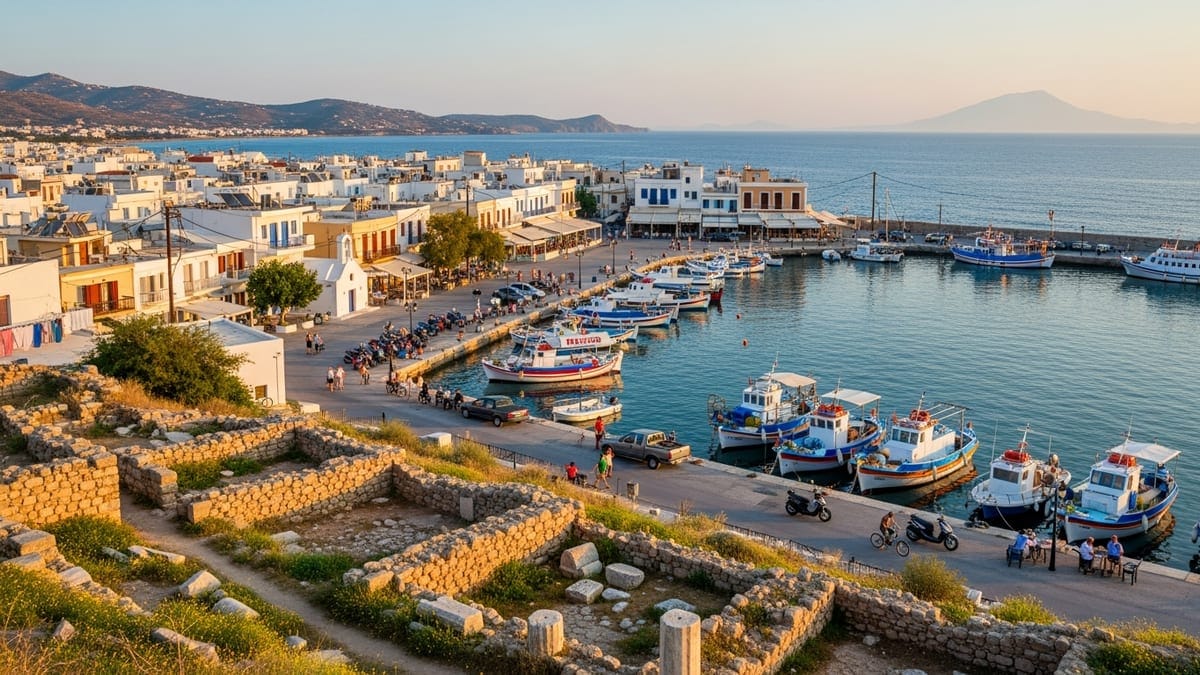
Kardamena sits on the site of Alasarna, one of the six classical communities of Kos. Today, low stone walls and scattered columns lie just back from the resort’s modern streets, but they reward anyone with an interest in archaeology or local history. Excavations have revealed a sanctuary to Apollo, several early Christian basilicas and traces of a once-thriving urban center that flourished during the Hellenistic, Roman and early Byzantine periods.
Walking the site, you can trace the outlines of temples and churches and imagine the processions and rituals that once animated this stretch of coastline. The sanctuary of Apollo would have drawn pilgrims from neighboring settlements, while the later basilicas reflect the spread of Christianity across the Dodecanese. Simple objects found here, from millstones to household vessels, paint a more intimate picture of daily life two thousand years ago.
Even without extensive signage, the combination of coastal light, wild grasses and scattered marble gives the site a quietly powerful atmosphere. Schedule a visit in the early morning or late afternoon to avoid the strongest sun and to appreciate the way the ruins emerge from the landscape. For travelers used to highly manicured archaeological parks, Alasarna’s slightly rough edges only add to its sense of discovery.
Afterwards, a coffee in Kardamena’s main square makes an easy transition back to the present day. It is here, more than on the busy seafront, that you can see how the modern town overlays its ancient foundations, with local families, shopkeepers and fishermen moving through streets that have been inhabited in one form or another for centuries.
Climb to the Castle of Antimachia
Rising on a plateau above the bay, the Venetian Castle of Antimachia is one of the most evocative historical sites within easy reach of Kardamena. Built in the Middle Ages and later reinforced by the Knights Hospitaller in the 15th century, the fortress once guarded the sea route between Kos and the volcanic island of Nisyros. Its thick walls and crescent-shaped bastion still convey a sense of power, even though the interior has largely fallen into ruin.
A short drive from Kardamena brings you up to the castle’s entrance, where winds carry the smell of thyme and sea salt. Inside, you find the remains of cisterns, houses and two small churches, Agios Nikolaos and Agia Paraskevi, which hint at the self-contained settlement that once huddled behind these walls. The churches retain simple frescoes and icons, a reminder that this was not just a military structure but a living community until it was abandoned in the 19th century.
The real drama, however, comes from the views. From the ramparts, you look down over the shimmering coastline, across to Kardamena and out to Nisyros on the horizon. The angle makes it easy to understand why this site was so strategically important. Come in the late afternoon and you may have most of the walls to yourself, with the low sun turning the stonework golden and long shadows stretching across the interior.
Back in the nearby village of Antimachia, traditional stone houses and a well-preserved windmill round out the feeling of stepping into another era. Many visitors combine the castle with a stop in the village for local cheese, honey or a simple taverna lunch. As a half-day outing from Kardamena, it offers a satisfying blend of landscape, architecture and island life off the resort strip.
Discover Kardamena’s Fishing Heritage and Harbour Life
Despite its reputation as a nightlife hub, Kardamena still retains something of its origins as a fishing village. To see this side of the town, set your alarm early and head to the harbour just after sunrise. Small wooden boats return with the morning catch, and you can watch as nets are untangled, boxes of fish are hauled ashore and quiet deals are struck with taverna owners along the quay.
These connections between local fishermen and family-run restaurants mean that the seafood on your plate in the evening often came out of the water only hours earlier. Grilled octopus, red mullet, calamari and filets of the day’s catch appear on menus around the harbour, sometimes simply labeled as “fresh fish” because the exact species depends on what the sea has provided. For travelers who enjoy understanding where their food comes from, this is island life at its most authentic.
Between morning and late afternoon, the harbour softens into a relaxed social space. Elderly men debate politics over tiny cups of thick Greek coffee, children race bicycles along the promenade and visitors linger on benches watching excursion boats come and go. The rhythm here feels very different from the nearby bars; even in high season, you can usually find a quiet corner to sit and simply absorb the sense of place.
In the evening, as lights reflect off the water and restaurants fill with a mix of locals and visitors, the harbour becomes one of the most atmospheric places in Kardamena for a drink or dinner. If you are used to seeing the town only in full party mode, an evening spent lingering by the fishing boats and talking with long-time residents can change your perspective on what Kardamena is really about.
Escape to Plaka Forest and the Island Interior
A short drive inland from Kardamena, Plaka Forest offers a completely different side of Kos. Here, tall pines and cypresses shade a series of walking paths, picnic clears and natural ravines where peacocks strut across the undergrowth and the air smells of resin and wild herbs. On hot summer days, locals come here precisely because the forest is cooler and quieter than the beaches.
The main paths are easily accessible and suitable for families. Children in particular are fascinated by the free-roaming peacocks, which fan their feathers in iridescent displays or perch in unlikely spots in the trees. Smaller birds flit through the canopy, and if you are lucky and patient, you may spot rabbits or other small mammals rustling through the undergrowth.
For many visitors, the attraction of Plaka lies less in wildlife-spotting than in the simple pleasure of shade and silence. Spread out a picnic on one of the rustic tables, bring a book and let the hours drift by beneath the trees. The filtered light and gentle breeze feel worlds away from the heat and music of Kardamena’s waterfront, even though you are only a short drive from town.
Driving to and from the forest also reveals parts of Kos that most beach-focused visitors never encounter. You pass through farmland with low stone walls, olive groves, fields of tomatoes and squash, and small whitewashed chapels. These glimpses of the island’s agricultural heartland underscore that away from the resorts, Kos is still a working island where traditional rhythms of planting, harvesting and herding shape everyday life.
Visit Mountain Villages and Sunset Viewpoints
Using Kardamena as a base, it is easy to climb into the hills that form the spine of Kos and explore older villages where tourism feels more like a supplement than the main event. One of the most popular is Zia, a mountain settlement known for its whitewashed alleys, artisan shops and panoramic views over the island and the sea beyond. Many people come here specifically for sunset, when the sky turns from orange to violet over the Aegean.
Arriving in Zia well before sunset lets you experience the village at a slower pace. Browse small shops selling local honey, herbs, ceramics and textiles, then duck into courtyards where vines heavy with grapes shade simple wooden tables. Although Zia is no secret, especially in high season, stepping off the main view terraces into the back lanes still reveals glimpses of daily life: grandmothers gossiping on doorsteps, cats stretched along white walls, the smell of bread baking in village ovens.
Other nearby villages, including Pyli and traditional Antimachia, offer a more low-key experience. Old stone houses, village squares shaded by plane trees and centuries-old churches create a sense that time has slowed. Cafes here serve thick coffee and simple snacks to local customers who might look up with curiosity when visitors pass through, then quickly invite them to sit and share a drink.
From the higher roads above Kardamena, you can also find pullouts and viewpoints that few visitors bother to stop at. Pausing for ten minutes to watch the changing colors on the landscape, or to photograph the line of coast that curves away toward Kefalos, helps reframe Kardamena not only as a resort but as part of a larger island tapestry of hills, forests, farmlands and small communities.
Boat Trips to Nisyros and the South Coast
Kardamena’s port is a natural springboard for exploring beyond Kos itself. The most celebrated excursion is to the nearby island of Nisyros, whose active volcanic crater offers one of the most unusual landscapes in the Dodecanese. Boats depart Kardamena in the morning during the summer season, crossing the narrow channel so you can spend several hours on Nisyros before returning by late afternoon or evening.
Standing on the rim of the crater and then descending to its floor, you can literally feel the heat underfoot and smell the sulfur released from the earth. The pale, mineral-streaked terrain surrounded by hills feels more like another planet than a sleepy Aegean island. Small hillside villages with white houses and stone streets add charm to the geological drama and give a sense of how locals live with their volcanic neighbor.
Closer to home, Kardamena’s boats also offer trips along the south coast of Kos, including to well-known beaches such as Paradise Beach and to quieter coves only accessible from the sea. Even if you have already spent days by the water, seeing the island from offshore gives a fresh perspective on its contours, cliffs and hidden bays. Some operators combine swimming stops with simple on-board lunches or fishing experiences that echo the area’s maritime heritage.
For those who prefer a slower pace, half-day fishing excursions from Kardamena introduce visitors to the practical side of island life. Learning about seasonal species, bait, weather patterns and traditional techniques, then tasting a portion of the catch, gives travellers a more grounded connection to the sea than a quick dip from a hotel jetty ever could.
Savor Local Flavors and Island Hospitality
Spending time away from the beach in and around Kardamena naturally leads to another of Kos’s great pleasures: its food. While the seafront is lined with menus catering to international tastes, a short walk inland or a short drive to nearby villages reveals tavernas and family restaurants that focus on traditional Greek and Dodecanese dishes. Fresh fish is a given, but so too are slow-cooked lamb and goat, stuffed vegetables, stewed beans and tangy local cheeses.
In Kardamena itself, some long-established restaurants are known for using produce from their own family gardens or from small-scale farmers in the island interior. Dishes such as moussaka, yemista (baked stuffed tomatoes and peppers), oven-baked lamb with herbs, and simple grilled vegetables dressed with local olive oil showcase ingredients rather than complicated techniques. Sharing a table of meze plates is a relaxed way to taste widely and linger over conversation.
Traditional drinks are part of the experience. Alongside ouzo and local wines, Kardamena and Kos more broadly are known for a cinnamon-flavored soft drink called kanellada, which you will see in small bottled form in village shops and harbor-front kiosks. Sipping it over ice on a warm evening feels distinctly local, even if you try it just once for curiosity’s sake.
Equally memorable as the food and drink is the hospitality with which they are offered. Many tavernas remain family-run, with one generation in the kitchen and another working the tables. It is common to be offered a complimentary dessert or digestif at the end of a meal, or to find yourself drawn into a spontaneous conversation about island life, the year’s harvest or the changing face of Kardamena as tourism has grown. These small interactions can become some of the most enduring memories of a trip.
The Takeaway
Seen from a sunbed, Kardamena can seem like a classic beach resort whose life begins and ends with the shoreline. Yet a short walk inland, an early morning at the harbour, a half-day to the castle or a drive into the hills reveals a different destination. Ancient Alasarna, the wind-shaped walls of Antimachia, the cool paths of Plaka Forest and the working fishing community behind the neon all tell stories that reward slower travel.
Using Kardamena as your base, you can explore the broader character of Kos: an island shaped by ancient sanctuaries and medieval knights, by farmers and fishermen, by mountain villages that watch the sunset over the Aegean and by volcanic neighbors like Nisyros steaming gently on the horizon. The beaches and nightlife will always be here, but if you look beyond them, Kardamena becomes not just a place to stay, but a lens onto the layered history and living culture of the Dodecanese.
FAQ
Q1: Is Kardamena a good base for exploring Kos beyond the beach?
Kardamena is well positioned for wider exploration, with easy road access to Antimachia, Plaka Forest and the interior villages, as well as regular boat trips to Nisyros and the south coast. Its central south-coast location and proximity to the airport make day trips straightforward while still allowing you to return each evening to a wide choice of dining and accommodation.
Q2: Do I need a car to enjoy activities beyond the beach in Kardamena?
Having a car or scooter offers the most flexibility for visiting places such as the Castle of Antimachia, Plaka Forest and mountain villages at your own pace. However, local buses and organized excursions can still get you to major sights if you prefer not to drive, and many boat trips depart directly from Kardamena’s harbour.
Q3: When is the best time of day to visit the Castle of Antimachia?
The castle is most enjoyable in the early morning or late afternoon, when temperatures are lower and the light is softer. Late afternoon in particular offers striking views over Kardamena, the south coast and Nisyros, with the stone walls glowing in the low sun and fewer visitors on the ramparts.
Q4: Are there family-friendly things to do in Kardamena besides the beach?
Families can enjoy easy walks and picnics in Plaka Forest, boat trips along the coast or to Nisyros, and a visit to the castle and windmill at Antimachia. The gentle paths, wildlife in the forest and the simple drama of exploring a real medieval fortress tend to appeal to children as much as adults.
Q5: How much time should I allow for visiting ancient Alasarna in Kardamena?
The archaeological remains of Alasarna can be explored in an hour or two, depending on your level of interest. Combining a visit with a coffee in the town square or a stroll along the harbour creates a relaxed half-day that introduces both the ancient and modern faces of Kardamena.
Q6: Is a day trip from Kardamena to Nisyros worth it?
A day trip to Nisyros is one of the most distinctive experiences available from Kardamena, thanks to the island’s active volcanic crater and characterful villages. Standing on the crater floor, then wandering through hillside streets with views back toward Kos, makes for a memorable contrast with typical beach days.
Q7: Can I experience traditional village life without going far from Kardamena?
Yes. Nearby Antimachia and other villages in the island interior retain traditional architecture, working farms and a slower rhythm of daily life. Even a short visit to a village square, local café or small church offers a taste of how Kos functions away from the main resorts.
Q8: What local foods and drinks should I try in and around Kardamena?
Fresh seafood, slow-cooked lamb or goat, stuffed vegetables, local cheeses and honey are all specialties in the Kardamena area. For drinks, try local wines and the island’s cinnamon soft drink, kanellada. Many tavernas highlight dishes made with produce from nearby farms or their own gardens.
Q9: Are there cultural events or festivals near Kardamena?
During the summer months, Kardamena and surrounding villages host a variety of cultural events, from music and dance performances to religious festivals and local celebrations. Dates and programs vary year by year, so check locally once you arrive to find out what is happening during your stay.
Q10: How can I avoid the party scene if I want a quieter stay in Kardamena?
Choosing accommodation slightly away from the main bar streets and focusing your time on early morning harbour walks, inland excursions, forest picnics and village visits will naturally steer you toward a calmer experience. Kardamena can be lively at night, but its surroundings offer plenty of quiet corners for travelers seeking a more relaxed, culturally focused stay.