

Planning a trip to France in 2026 means thinking beyond flights and hotels. The credit card you carry will shape everything from what you pay in fees to how smoothly you buy a metro ticket or settle a café bill. With contactless payments now standard and some American cards still misbehaving at French kiosks, choosing the right plastic before you go can save money and frustration once you land.
How Cards Work in France Today
France is one of the most card-friendly destinations in Europe. Visa and Mastercard are widely accepted at hotels, chain stores, supermarkets, intercity trains and most restaurants, especially in cities and tourist areas. Smaller establishments may still prefer cash, but it is increasingly common to see “CB / Visa / Mastercard” stickers even on neighborhood bakeries and cafés, particularly in Paris and other major urban centers.
The technical standard in France is chip-and-PIN, not the chip-and-signature model that many U.S. travelers are used to. Terminals expect you to insert your card and enter a four-digit PIN for verification. For low-value transactions, terminals may skip verification entirely or allow contactless payment without a PIN, but for larger purchases the system is designed around entering a code rather than signing a receipt.
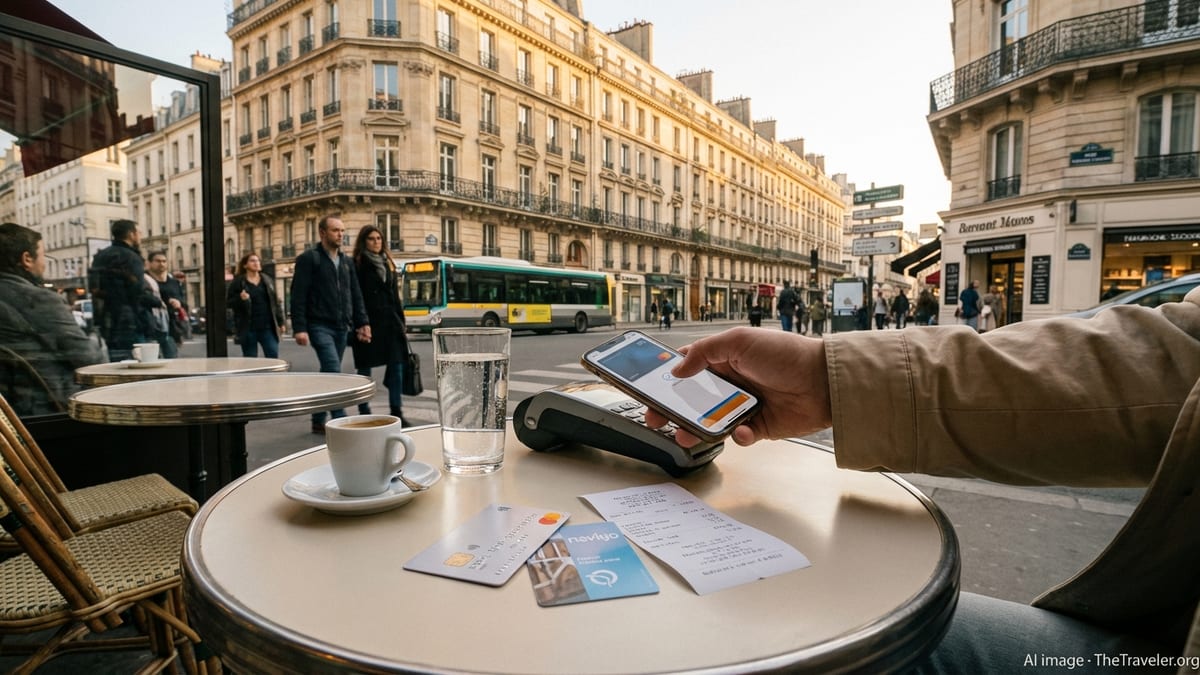
Contactless payments are now the norm. Most French merchants accept tap-to-pay with physical cards and digital wallets like Apple Pay and Google Pay, typically without requiring a PIN up to a certain limit, often around 50 euros per transaction. Above that threshold, the terminal usually asks for a PIN even if you tap. This makes it important for U.S. travelers to have at least one card with a functioning PIN and tap capability before traveling.
American Express has meaningful but more selective acceptance. You are likely to be fine at major hotels, upscale restaurants and luxury retailers, but smaller merchants often decline Amex because of higher processing costs. Discover and other niche networks have more limited reach. For most travelers, that makes a mainstream Visa or Mastercard from a major U.S. issuer the primary workhorse for spending in France.
Key Features to Look For in a France-Friendly Card
The best travel credit cards for use in France share a few core traits: no foreign transaction fees, broad global acceptance, and competitive rewards for travel and dining. Foreign transaction fees typically run around 3 percent per purchase on cards that still charge them, meaning every 1,000 euros in spending could cost you roughly 30 dollars or more in added fees. Choosing a card that waives these charges is one of the simplest ways to cut your trip budget without sacrificing comfort.
Network acceptance should be your next priority. A Visa or Mastercard branded as a travel card by a major U.S. bank is a safer bet for seamless use across France than more specialized networks. Check that the card is enabled for chip-and-PIN, or at least supports PIN verification in automated kiosks, even if it still prefers signature in the United States. This can make the difference between successfully buying a train ticket from a machine and having to queue at a staffed window.
Rewards structures matter, especially if you travel often. Many leading travel cards offer elevated points or miles on travel and dining purchases, both of which you are likely to make heavily in France. Others provide flat-rate rewards on all spending. Since card acceptance is strong across travel categories in France, you can realistically channel the bulk of your trip spending through a single primary card and accumulate meaningful rewards.
Finally, consider travel protections and side benefits. Some of the better travel credit cards provide trip delay and cancellation coverage, lost luggage insurance, rental car collision damage waivers and purchase protection when you pay with the card. Premium cards may also offer airport lounge access or statement credits for travel purchases. While these perks should not outweigh core acceptance and fee considerations, they can add real value on a complex or long European itinerary.
Recommended U.S. Travel Cards for Use in France
Several well-known U.S. travel credit cards align particularly well with spending patterns in France. Mid-tier travel cards issued on the Visa or Mastercard network, such as those in the Sapphire and Venture families, regularly appear on lists of top options for international trips because they combine no foreign transaction fees with solid travel and dining rewards. These cards typically carry a moderate annual fee that many frequent travelers recoup through rewards and benefits.
General-purpose travel cards that earn transferable points can be especially powerful for a France trip. Points earned on flights, trains, meals and museum tickets can later be transferred to airline and hotel partners or redeemed directly through bank travel portals. Cards in this category often offer enhanced earning on travel and dining purchases and provide useful protections like primary rental car coverage, which can matter if you are driving in the French countryside.
Flat-rate travel cards, including those that earn a fixed number of miles or points per dollar on all purchases, are appealing if you prefer simplicity. A card that earns a uniform rate on everything you buy in France removes the need to track bonus categories. Many of these products also charge no foreign transaction fees and include basic travel protections, making them solid one-card solutions for occasional international travelers.
If you are fee-averse, a no-annual-fee card with no foreign transaction fees can still serve you well in France, though the rewards and benefits tend to be less generous than on premium products. These cards can be a good backup option in case your primary card is lost or flagged, and they are also useful for travelers who make only infrequent international trips but still want to avoid foreign transaction charges.
Special Considerations for Paris and Public Transit
Public transportation in Paris and across the Île-de-France region relies on smart cards and ticketing systems that expect chip-enabled payments. Paper tickets have largely been phased out in favor of reloadable travel cards and digital passes. To buy or recharge these at station kiosks, you will typically use a touchscreen machine that accepts cash and card, though some locations are now card-only.
Automated ticket machines for regional trains, metro and suburban lines often accept Visa and Mastercard with chip functionality. Historically, magnetic stripe cards and older U.S. chip-and-signature cards have struggled with these machines. While modern kiosks increasingly support tap-to-pay, transaction limits mean that larger purchases, such as higher-value passes or multiple tickets, may trigger a PIN requirement. Having a card with a working PIN or using a mobile wallet can help you avoid stalls at the machine.
Contactless limits around 50 euros are common in France, which means many routine transit and small retail transactions can be completed with a simple tap. However, when you cross that threshold, the terminal may automatically prompt for a PIN. Some travelers report that their U.S. cards are occasionally approved without additional verification for smaller amounts, but you should not rely on this behavior, especially at crowded stations where a declined payment can cause delays.
For added flexibility, consider loading your transit card or tickets through official transport apps that accept major credit cards and mobile wallets. These apps often mirror station pricing and allow you to complete purchases on your phone before you reach the gates, reducing your dependence on specific kiosk hardware. When you do need to use a machine, carrying a small reserve of euros in cash is still wise in case of technical issues or card compatibility problems.
Managing Fees, Currency Conversion and Cash
Even with a strong travel card, your final cost in France depends heavily on how you handle currency conversion. When paying by card, you may be offered a choice between being charged in euros or in your home currency. This is known as dynamic currency conversion. It can look convenient because it shows you a total in familiar dollars at the point of sale, but it typically involves unfavorable exchange rates and extra service fees layered on top of your bank’s processing.
To keep costs low, you should almost always choose to pay in euros and decline any conversion offered by the merchant or terminal. Your card issuer will then convert the transaction at its own rate, which is usually much closer to the interbank rate, especially on cards that already waive foreign transaction fees. This simple habit can prevent you from paying noticeably more on everything from hotel bills to restaurant tabs.
Although France is highly card-friendly, you should not rely exclusively on plastic. Small amounts of cash remain useful for certain situations, including public restrooms, some small market stalls, coin-operated lockers and donations. Many advisers suggest carrying a modest euro cushion, often in the range of 100 to 150 euros, to cover these gaps and to have a fallback if card systems experience a temporary outage.
To obtain cash, use a debit card at bank-operated ATMs rather than currency exchange counters, which tend to offer weaker rates and higher service charges. If possible, choose a debit card from a bank that reimburses or waives foreign ATM fees and does not impose its own foreign transaction charge on withdrawals. As with card purchases, decline any offered ATM currency conversion and insist on being debited in euros to avoid hidden markups.
American Express, Mobile Wallets and Backup Plans
Travelers who favor American Express can absolutely bring it to France, but it should rarely be the only card in your wallet. Acceptance has expanded significantly in major cities and tourist-facing businesses, yet small cafés, independent shops and some rural establishments still reject Amex. Using it as a secondary or tertiary card for hotels and larger restaurant bills, while relying on a no-foreign-fee Visa or Mastercard for everyday spending, creates a more resilient setup.
Mobile wallets such as Apple Pay and Google Pay are now mainstream in France, particularly in urban areas. When you load a compatible travel credit card into these wallets, you gain the ability to pay contactlessly even if your physical card’s chip is temperamental. In many cases, mobile wallet transactions bypass some of the contactless limits and can be more reliable at machines and retail terminals that are finicky with foreign plastic.
Because your smartphone becomes a critical payment tool in this setup, protect it accordingly. Use strong screen locks and enable the ability to remotely locate and disable the device if it is lost or stolen. It is also prudent to keep at least one physical card separate from your main wallet and phone, such as in a hotel safe or money belt, so that a single theft or misplacement does not cut you off from funds.
A layered approach, with one or two primary no-foreign-fee cards, an Amex or other secondary network card, a mobile wallet and a dedicated travel debit card for ATM withdrawals, gives you redundancy. If one bank flags a transaction as suspicious or one network experiences an outage, you can quickly pivot to an alternative without disrupting your trip. Before departure, notify your card issuers of your travel plans and ensure your contact details are up to date to reduce the risk of unnecessary fraud blocks.
The Takeaway
Using the right travel credit cards in France in 2026 is as much about avoiding friction as it is about maximizing rewards. A modern Visa or Mastercard with no foreign transaction fees, strong acceptance and reliable chip-and-PIN or PIN-capable functionality will carry you smoothly through most purchases, from metro tickets and café lunches to hotel stays and intercity train journeys.
Layering in a solid rewards strategy lets you earn meaningful points or miles on the trip you are already taking. Choosing cards that bonus travel and dining, or that provide straightforward flat-rate rewards, turns your French spending into future flights, hotel nights or statement credits. Travel protections, mobile wallet compatibility and generous customer support further tip the scales in favor of specialized travel products.
Equally important are the small tactical choices you make along the way. Declining dynamic currency conversion, paying in euros, keeping a modest euro cash cushion and using bank ATMs with a fee-friendly debit card can collectively save you a surprising amount over the course of a long holiday. Combined with the right cards, these habits help you spend with confidence, minimize avoidable costs and focus on experiencing France instead of worrying about payment logistics.
FAQ
Q1. Do I really need a credit card with no foreign transaction fees for France?
Yes, in most cases it is wise. Many U.S. cards still charge around 3 percent on foreign purchases, which quickly adds up on hotels, trains and meals. A no-foreign-fee card helps you avoid paying extra for the same transactions you would be making anyway.
Q2. Will my U.S. chip-and-signature card work on French ticket machines?
It might, but not always. Some modern kiosks accept tap or chip transactions without a PIN for low amounts, yet others still expect chip-and-PIN for certain purchases. Having a card that supports PIN verification, or using a mobile wallet, increases your chances of success.
Q3. Is American Express widely accepted in France?
American Express is commonly accepted at major hotels, upscale restaurants and larger retailers, especially in tourist areas. However, many small shops, cafés and rural businesses still do not take Amex, so you should carry at least one Visa or Mastercard as your primary card.
Q4. Should I choose to pay in euros or in U.S. dollars when asked?
Choose euros almost every time. Dynamic currency conversion that charges you in U.S. dollars usually comes with worse exchange rates and added fees. Let your card issuer handle the conversion instead, especially if your card already has no foreign transaction fees.
Q5. How much cash should I carry in France if I mainly use cards?
If you rely primarily on cards, a cushion of roughly 100 to 150 euros in cash is often enough for small purchases, public restrooms, some market stalls and as a backup if card systems are temporarily unavailable.
Q6. Are contactless payments reliable in France for tourists?
Yes. Contactless payments with physical cards and mobile wallets are widely supported, especially in cities. They typically work smoothly for purchases up to a local limit, often around 50 euros, after which the terminal may request a PIN or ask you to insert the card.
Q7. Is it safe to use airport or hotel currency exchange desks instead of ATMs?
They are generally safe but frequently more expensive. Airport and hotel exchange counters often offer less favorable rates and higher service fees than bank ATMs. Using a debit card at a reputable bank ATM and avoiding currency conversion add-ons is usually more cost-effective.
Q8. Do I need a separate debit card for ATM withdrawals in France?
You do not strictly need one, but a travel-friendly debit card can be very helpful. Banks that waive or reimburse foreign ATM fees and do not charge foreign transaction fees can make it cheaper and easier to withdraw euros as needed.
Q9. What should I do if my card is declined in France even though I have funds?
First, try the transaction again by inserting the card and using your PIN or by using a mobile wallet if available. If it still fails, call the number on the back of your card to check for fraud blocks or technical issues, and switch temporarily to a backup card or cash if necessary.
Q10. Is it better to bring multiple travel credit cards or just one strong option?
Carrying at least two cards from different banks or networks is safer. If one card is lost, stolen or blocked, the other can keep you going. A combination of a primary no-foreign-fee Visa or Mastercard and a secondary card, plus a debit card for ATMs, offers resilient coverage.