


More news on this day
Bahrain has joined Kuwait, Oman, Qatar, Saudi Arabia, and the UAE in warning that regional tensions and the widening Middle East conflict could wipe out billions of dollars in tourism revenue across the Gulf.
Get the latest news straight to your inbox!
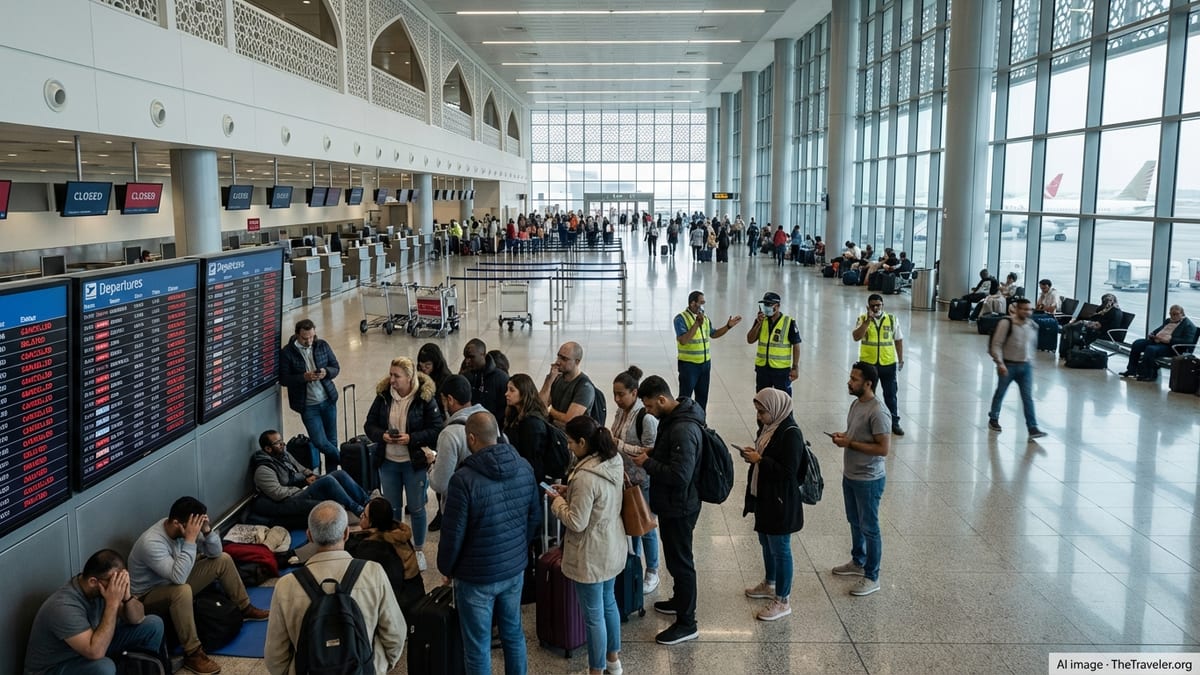
GCC Sounds Unified Alarm on Tourism Revenue
Tourism ministers from the six Gulf Cooperation Council countries convened virtually in early April to assess the impact of the escalating conflict on one of the region’s fastest growing non-oil sectors. According to publicly available information from the Gulf secretariat and regional business outlets, their latest estimates point to potential losses of between 13 billion and 32 billion dollars in visitor spending if current instability persists.
Bahrain, which chaired the extraordinary ministerial session through its current presidency of the GCC tourism portfolio, formally aligned with its neighbors in projecting a sharp downturn in arrivals. Aggregated data presented at the meeting indicated that the bloc welcomed more than 72 million tourists in 2024, generating close to 120 billion dollars in tourism receipts. Officials now expect that between 8 million and 19 million of those visitors could be at risk under downside scenarios modeled for 2026.
The new warning underscores how far the outlook has shifted from pre-crisis forecasts that saw Gulf destinations building on post-pandemic momentum. Analysts note that while the six member states vary in size and exposure, they are increasingly tied together in the eyes of international travelers, meaning a security shock affecting one hub can quickly ripple across the entire region.
Travel and hospitality companies in the Gulf are already reporting a visible softening in forward bookings, particularly from long-haul markets in Europe, North America, and East Asia. Industry tracking firms cited in recent media coverage point to rising cancellation rates, lengthening booking windows, and increased demand for flexible fare conditions as travelers hesitate to commit to trips in and around the Gulf.
Bahrain’s Tourism Growth Faces Sudden Reversal
The shift in tone from Manama is striking given Bahrain’s strong tourism rebound in 2023 and 2024. Public data released during recent investment forums shows that the kingdom’s tourism revenues rose by about 13 percent in 2024 compared with the previous year, while visitor numbers climbed by nearly 20 percent. Officials have consistently highlighted tourism as a pillar of the country’s diversification agenda and fiscal repair strategy.
Hotel development, waterfront regeneration, and marketing campaigns targeting both regional and international visitors had positioned Bahrain as a boutique alternative to larger Gulf hubs. The country leveraged its Formula One Grand Prix, island resorts, and cultural festivals to attract higher spending visitors, while also banking on intra-GCC weekend travel by residents of Saudi Arabia and Kuwait.
The new regional risk calculations suggest that this growth trajectory could be interrupted. Publicly available macroeconomic assessments from multilateral institutions already flag Bahrain’s relatively high public debt and modest foreign reserve buffers, which increase the importance of steady non-oil revenue streams such as tourism. A prolonged dip in arrivals could therefore complicate fiscal consolidation plans and delay new tourism projects.
Market analysts note that Bahrain’s heavy reliance on regional visitors is a mixed blessing. On one hand, proximity and familiarity may cushion the blow if long-haul travelers stay away but Gulf residents continue to move within the bloc. On the other, any broader deterioration in regional security that affects cross-border road and air travel would quickly show up in Bahrain’s hotel occupancy and retail sales data.
Regional Tensions Undermine Traveler Confidence
The GCC projections come against a backdrop of overlapping crises that have unsettled global tourism flows since late 2023. The ongoing war in Gaza, repeated missile and drone incidents involving Iran and its allies, and attacks on commercial shipping in the Red Sea have combined to darken perceptions of travel safety across the wider Middle East. Travel intelligence firms cited by international media report that bookings to multiple destinations in the region have fallen compared with pre-crisis trends.
Recent travel advisories by Western governments, including broad warnings about increased security risks in Bahrain, Kuwait, Oman, Qatar, Saudi Arabia, and the UAE, are reinforcing that caution. Airlines serving key Gulf hubs have adjusted schedules, trimmed capacity on some routes, and offered more lenient change policies as they navigate volatile demand patterns and higher insurance and operating costs linked to the Red Sea and Gulf air corridors.
Research groups such as Tourism Economics and ForwardKeys, whose data has been widely reported, indicate that the Middle East could see an outright decline in international arrivals in 2026, compared with earlier expectations of solid growth. The gap between those pre-crisis forecasts and current baseline scenarios helps explain the 8 million to 19 million visitor shortfall now being discussed at GCC level.
Industry observers stress that perception often lags reality in tourism markets. Even if major incidents remain geographically limited, apprehension about potential escalation can be enough to redirect tour operators and individual travelers toward destinations considered less exposed. This dynamic is particularly relevant for Gulf countries that have spent heavily to brand themselves as safe, modern hubs for leisure, business, and mega-events.
Diversification Strategies Confront a New Stress Test
The warning from Gulf tourism ministers also highlights a broader concern about the resilience of the region’s diversification efforts. Over the past decade, Saudi Arabia, the UAE, Qatar, Oman, Kuwait, and Bahrain have all designated tourism and hospitality as key engines of non-oil growth, job creation, and foreign investment. Ambitious masterplans featuring giga-projects, new airports, and entertainment districts assumed a stable or improving security environment.
The present tensions are forcing governments and investors to revisit timelines, risk premia, and return expectations. Analysts following the region note that while large sovereign-backed projects may proceed, smaller private investments in boutique hotels, tour operations, and supporting services are more vulnerable to sudden swings in demand and financing conditions.
At the same time, Gulf states are under pressure to maintain progress on diversification to reduce exposure to commodity price cycles. This creates a policy dilemma: cutting back on tourism investment in response to heightened geopolitical risk could slow long-run transformation, yet pressing ahead without adjustment may strain budgets if visitor flows underperform for several seasons.
In this context, Bahrain’s alignment with its GCC peers in publicly projecting tourism revenue risks can be read as an attempt to set realistic expectations while lobbying for coordinated regional responses. Shared marketing campaigns, harmonized travel facilitation measures, and joint crisis communications are among the tools being discussed to partially offset negative headlines and reassure potential visitors.
Gulf States Pivot to Regional and Niche Markets
Facing uncertainty in traditional long-haul source markets, Gulf tourism planners are increasingly looking to regional and specialized segments to bridge the gap. Public commentary from regional trade bodies points to a renewed emphasis on intra-GCC travel, with proposals to streamline border procedures, expand low-cost flight networks, and promote weekend city breaks within the bloc.
Bahrain’s position on the causeway linking it to Saudi Arabia and its established reputation as a short-stay leisure destination give it a particular stake in such initiatives. Travel industry analysts suggest that targeted campaigns aimed at Gulf residents, including loyalty programs and bundled offers, could help sustain occupancy rates even if European and Asian arrivals soften.
At the same time, niche segments such as sports tourism, business events, and luxury wellness travel remain in focus. The Gulf’s extensive pipeline of sporting fixtures, exhibitions, and conferences offers opportunities to anchor demand, provided organizers can demonstrate robust security and contingency planning. Bahrain and its neighbors are also exploring ways to extend visitor stays by packaging events with cultural and heritage experiences.
Despite the current headwinds, many observers argue that the underlying drivers of Gulf tourism, from improved infrastructure to year-round air connectivity, remain intact. The key question for Bahrain, Kuwait, Oman, Qatar, Saudi Arabia, and the UAE is how quickly traveler confidence can be rebuilt and how effectively regional coordination can limit the potential 32 billion dollar tourism revenue loss now looming over the bloc.