

Moving around Greece can feel straightforward when you look at a map and surprisingly complex once you start joining the dots between islands and mainland cities. Ferries, domestic flights, buses, trains, rental cars and local taxis all play a role, and the right choice often depends on your budget, season of travel and how much time you are willing to spend in transit. This guide walks you through the best ways to travel between Greek islands and cities today, highlighting realistic options, typical travel patterns and what first timers often overlook.
Understanding Greece’s Transport Network Today
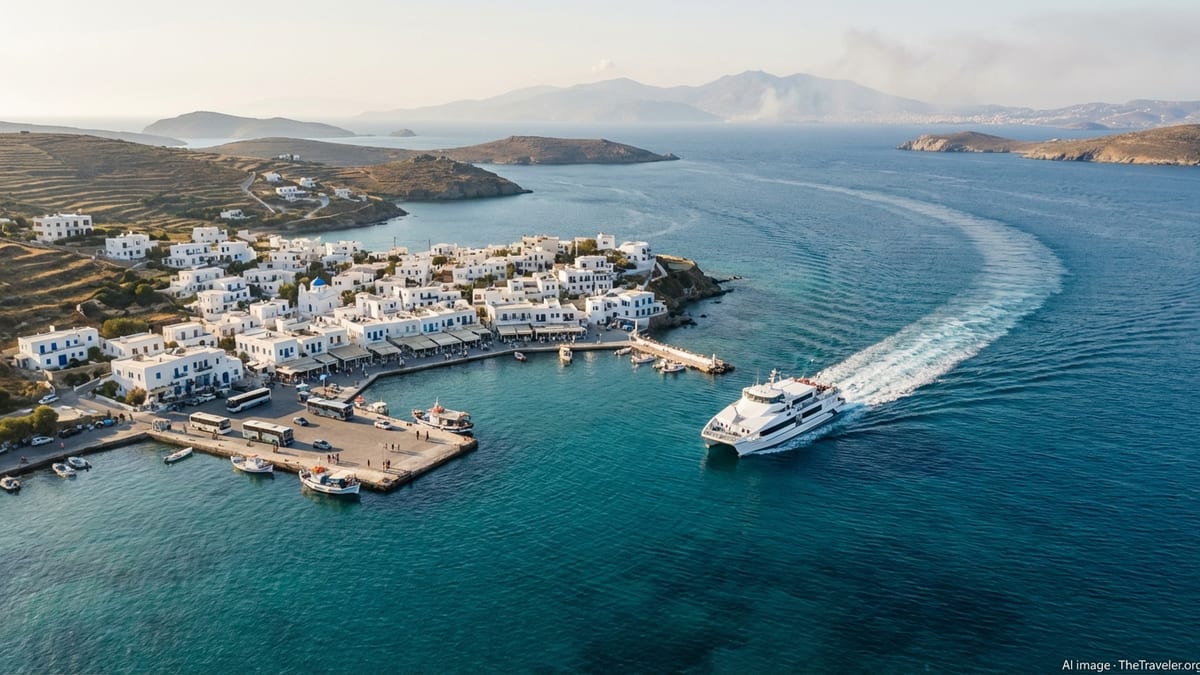
Greece’s transport network is built around the sea. Ferries still carry the majority of leisure travellers between islands, linking them to the mainland ports of Piraeus, Rafina and Lavrio near Athens, as well as to regional hubs such as Heraklion in Crete and Rhodes in the Dodecanese. Routes and frequencies peak in summer, especially from June to early September, when high speed catamarans supplement conventional ferries on heavily travelled lines in the Cyclades and other popular archipelagos.
On the mainland, intercity buses operated under the KTEL system form the backbone of public transport between cities and many ferry ports. These coaches run year round and connect Athens, Thessaloniki and Patras with smaller towns and coastal departure points. The commuter rail network known as Proastiakos supplements this grid around major urban centres, linking Athens and Thessaloniki to airports, ports and outer suburbs where travellers often begin or end island itineraries.
Domestic airlines, including Aegean Airlines and Sky Express, tie the network together with frequent flights between Athens or Thessaloniki and large islands such as Crete, Rhodes, Corfu, Mykonos and Santorini. In peak months there are also links between certain islands and international destinations, which can be helpful when you want to avoid backtracking through Athens. The combination of ferries, flights, buses and trains means that almost any route is possible, but not every route is efficient, so planning around hubs is essential.
Seasonality is a defining feature of Greek transport. In July and August you can move between popular islands daily or even several times a day, while in April, May, September and October services remain good but slightly less frequent. Outside this window, connections shrink, especially to smaller islands, and your options narrow to a handful of ferries per week or a single daily flight. When designing an itinerary, always check schedules for the exact year and month of travel and include buffer time for delays, especially when seas are rough.
Ferries Between Islands and From Mainland Ports
Ferries remain the quintessential way to travel between Greek islands and between islands and the mainland. Conventional ferries are large, roll on roll off vessels that carry passengers, vehicles and freight. They tend to be slower but more stable in rough seas, making them a good choice if you are prone to seasickness or travelling in shoulder season when weather can be changeable. These ships usually have indoor lounges, simple cabins on overnight routes, open decks and cafes serving basic meals and snacks.
High speed ferries and catamarans cut journey times significantly on popular routes such as Piraeus to Mykonos or Santorini, and between islands in clusters like the central Cyclades. They usually cost more per ticket, have reserved aircraft style seating and limited outdoor space. In strong summer winds some high speed services are cancelled before conventional ferries, so a faster scheduled time does not always translate into a faster overall journey if weather disrupts operations. Flexibility, especially in August, is worth more than shaving one hour off a crossing on paper.
Mainland departures concentrate around Piraeus, which is effectively the port of Athens, and around Rafina and Lavrio further along the Attica coast. From these ports ferries fan out towards the Cyclades, Crete, the Dodecanese, the eastern Aegean islands and the Saronic Gulf. Other key hubs include Patras in western Greece for sailings towards the Ionian islands and Italy, and Kavala in the north for routes to the northern Aegean. When your aim is to island hop, it is often wiser to fly into Athens, spend a night if needed, and sail from Piraeus the following morning rather than aim for a same day connection with tight margins.
Booking strategies depend heavily on season. For July and August departures to headline destinations such as Santorini, Mykonos and Paros, advance booking is strongly recommended, particularly for high speed ferries and for vehicles on board. In May, June, September and October you have more freedom to adapt plans en route. Shoulder season ferries still fill up on weekends and around public holidays, so checking availability a few days ahead remains sensible. Printed or digital boarding passes are the norm, and check in times vary from about half an hour for foot passengers to more for cars. Arrive early enough to find your gate, as big ports can feel confusing on a first visit.
Domestic Flights Linking Islands and Cities
Domestic flights are the fastest way to cover longer distances between Greek islands and cities, particularly when travelling from north to south or when the sea route would involve a lengthy overnight ferry. Athens International Airport serves as the primary hub, offering connections to a wide network of islands including Crete, Rhodes, Kos, Lesvos, Chios, Corfu, Zakynthos, Mykonos, Santorini and several smaller destinations. Thessaloniki Airport functions as a secondary hub, with flights to larger islands and regional cities that can save considerable travel time if you arrive in northern Greece.
Airlines typically add capacity and routes in summer, when demand for island holidays peaks. Schedules for the coming season are usually released several months in advance, and prices tend to rise closer to departure, especially for peak weekends in July and August. For travellers planning complex multi island trips within a limited time, a strategic mix of ferries and flights can prevent excessive backtracking. For example, you might take ferries across a chain of islands in the Cyclades and then fly directly from a final island such as Santorini back to Athens or onward to another city.
Direct flights between islands are comparatively rare and tend to operate only on a few high demand routes or as seasonal charters. More commonly, you will connect via Athens or occasionally Thessaloniki. This indirect routing can still be worthwhile if it replaces an overnight ferry and allows you to gain an extra day on the ground. Take into account minimum connection times and allow a buffer when combining separate tickets, especially if your onward leg is an international flight. Weather disruptions are less common for flights than for ferries, but strong winds can still cause delays.
When choosing between air and sea, consider more than just the timetable. Factor in transfer times from city centres to airports or ports, possible overnight stays, baggage policies and your tolerance for early morning departures. Domestic flights within Greece are generally short, but you will still pass through security and boarding procedures. For some routes, especially Athens to Crete or Athens to Rhodes, flying is an efficient option that frees up several extra hours for sightseeing. On shorter routes such as Athens to Mykonos, the time savings may be modest once you account for transfers, and the ferry can be more enjoyable.
Trains, Buses and Overland Links Between Cities and Ports
While the islands attract most attention, many trips begin and end on the mainland, and understanding overland travel will make your movements smoother. Greece’s intercity bus network is dominated by regional KTEL companies, which cooperate to run frequent services between major cities and smaller towns. Coaches link Athens with Thessaloniki, Patras, Ioannina, Kalamata and many more destinations, and they also connect cities to ferry ports such as Rafina, Lavrio and Kyllini. Buses are usually modern and air conditioned, with allocated seating and places for luggage underneath.
Rail services play a smaller role than in many European countries but can still be useful. The Proastiakos commuter rail runs from Athens Airport through central stations towards Piraeus, Kiato and other suburbs, providing a straightforward option for reaching the port or connecting to intercity trains towards northern Greece. Around Thessaloniki, suburban rail lines support bus networks to cover the wider metropolitan area. Long distance trains connect Athens, Thessaloniki and a handful of other cities, offering an alternative to buses on some corridors and a more spacious, if sometimes slower, journey.
Within cities, local public transport can be an efficient way to move between bus terminals, train stations, ports and accommodation. Athens has a metro system, trams and buses, while Thessaloniki relies primarily on its bus network, coordinated by the local urban transport organisation. In both cities, taxis remain widely available and comparatively affordable for short hops, especially if you are sharing the fare among two or three people or carrying heavy luggage that is awkward on a crowded bus.
When planning an island to city route, think of each journey as a chain. For example, travelling from Naxos to Delphi might involve a morning ferry to Piraeus, a metro or taxi to a central bus station in Athens, and an afternoon coach onwards to the archaeological site. Allow generous gaps between each segment, because Greek transport, while generally reliable, is not always punctual to the minute. Building in time to absorb a delayed ferry or traffic jam will make the trip less stressful and reduce the risk of missed connections.
Renting Cars, Scooters and Using Local Transport on Islands
Once you reach an island, local transport becomes the next question. Most inhabited islands operate bus services that radiate from the main town or port towards beaches, villages and archaeological sites. In peak summer these services are bolstered with extra departures, especially on popular routes such as Fira to Oia in Santorini or Chora to main beaches on Naxos and Paros. Buses are usually the most economical way to get around, and they suit travellers who are happy to work within published timetables and do not mind walking the last stretch to more remote coves.
For greater independence, many visitors rent cars, scooters or quad bikes. Car rental is widely available on larger islands and at major airports and ports. An international driving permit may be required depending on your licence and nationality, and rental companies can be strict about age limits and years of driving experience. Roads on islands vary from well maintained coastal routes to narrow mountain switchbacks with limited guardrails. Driving can be highly rewarding, opening up quiet bays and hilltop villages beyond the main tourist routes, but it demands concentration and realistic assessment of your skills.
Scooters and quad bikes appeal to many first time visitors, but they bring safety considerations. Road surfaces can be uneven, summer traffic is heavy around ports and popular beaches, and protective gear is often limited to a basic helmet. If you are not already comfortable handling a two wheeled vehicle, island holidays are not the ideal time to learn. For some travellers, a small car or relying on buses and taxis is a safer and still very practical choice. Whatever you rent, check insurance terms carefully and inspect the vehicle before signing documents.
Taxis and local transfer services fill the gaps where buses are infrequent, especially at night or very early in the morning. On busy islands, queues can form at ports and airports when multiple ferries arrive within a short period, so pre arranged transfers from your accommodation can be worth the extra cost. Some islands also offer water taxis that link neighbouring beaches or villages along the coast, which can be a scenic way to avoid winding inland roads. Combining different local options will often give you the right balance between convenience, cost and the spontaneity that makes island life so appealing.
Planning Island Hopping Itineraries by Region and Season
Designing a smooth journey between Greek islands and cities is easier if you think in terms of regional clusters rather than trying to crisscross the entire country in a single trip. The Cyclades, including islands such as Mykonos, Santorini, Paros, Naxos and Milos, have dense ferry connections between each other and to Piraeus and Rafina, especially from late spring to early autumn. This makes them ideal for classic island hopping, where you move in stages every few days without needing to return to the mainland between hops.
The Dodecanese, anchored by Rhodes and Kos, and the North Aegean islands, such as Lesvos and Chios, are more spread out and often linked by longer ferry routes that may operate only a few times per week outside high season. Here, careful attention to timetables becomes crucial, and you may find that combining a domestic flight with a ferry shortens the journey significantly. The Ionian islands on the west coast, including Corfu and Zakynthos, are generally served via mainland ports such as Igoumenitsa and Kyllini, with buses linking those ports to major cities.
Seasonality shapes not only frequency but also the feel of travel. In April, May, September and October, you can enjoy relatively mild temperatures, fewer crowds and reasonably frequent ferries on main lines, though some smaller islands may have limited services. From June to August, almost every conceivable route in popular regions operates regularly, but sailings and flights can sell out and prices tend to be highest. In winter, many tourist focused routes wind down to a skeleton service. If you plan to travel in the off season, structure your itinerary around larger islands that retain year round links and be prepared for plans to change due to weather.
Whatever the season, travelling from city to island or between two distant regions usually works best if you choose a single entry point and a distinct endpoint. For instance, you might arrive in Athens, take ferries through the Cyclades and then fly from Crete to Thessaloniki to continue exploring the mainland north. This approach avoids retracing your steps and makes the most of both air and sea connections. Technology can assist, but many smaller operators publish information relatively late, so remain flexible and always cross check exact departure days and times close to your travel date.
The Takeaway
Travelling between Greek islands and cities is less about finding a single best method and more about matching the right mode of transport to each leg of your journey. Ferries provide the classic experience and connect most destinations if you have the time to enjoy the voyage. Domestic flights offer speed, especially over long distances or when your itinerary spans northern and southern Greece. Buses and trains quietly knit the mainland together and link cities with the ports and airports where island adventures begin.
Successful itineraries tend to respect the geography and rhythms of the country. They cluster islands logically, route through key hubs such as Athens, Thessaloniki, Heraklion or Rhodes, and allow enough time between segments for the inevitable late ferry or traffic delay. They balance the freedom of rental vehicles with the safety and simplicity of public transport, and they adapt to the season rather than fight it. With a realistic plan and a little flexibility, moving between Greek islands and cities can become one of the most rewarding parts of your trip, offering shifting horizons, glimpses of everyday life and the slow satisfaction of watching the map come alive.
FAQ
Q1. What is the easiest way to travel between Greek islands for a first time visitor?
The easiest way for most first time visitors is to focus on one island group, such as the Cyclades, and use frequent ferries between neighbouring islands, starting and ending in a major hub like Piraeus or a large island with an airport.
Q2. Should I book Greek ferries in advance or buy tickets on the spot?
In July and August, and on popular routes to islands like Santorini and Mykonos, it is wise to book in advance, especially for high speed ferries and vehicle spaces. In shoulder seasons you can often buy tickets a few days before departure, though checking availability early is still sensible.
Q3. When does it make more sense to fly instead of taking a ferry?
Flying usually makes more sense when the ferry crossing would take many hours or overnight, such as from Athens to Rhodes or Crete, or when you are short on time and want to avoid backtracking through multiple islands or ports.
Q4. How reliable are Greek ferries in summer, and do they get cancelled often?
Greek ferries are generally reliable, but in mid to late summer strong winds in the Aegean can cause delays or cancellations, particularly for high speed vessels. Conventional ferries are more likely to sail in rough conditions, so building buffer time into your schedule is important.
Q5. Can I take a rental car on ferries between islands?
Many ferry routes allow vehicles, and locals regularly transport cars between islands and the mainland. However, taking a rental car across usually requires permission from the rental company and added insurance, and it may be cheaper to rent separate cars on each island instead.
Q6. What is the best way to get from Athens Airport to the ferry ports?
From Athens Airport you can use the metro or suburban rail to reach central Athens and Piraeus, or take express buses and taxis directly to Piraeus or Rafina. The choice depends on your budget, arrival time and how much luggage you are carrying.
Q7. Are there direct connections between different island groups?
Some routes link different island groups, especially in high season, but many connections still funnel through hubs such as Piraeus, Rhodes or Crete. If you want to visit widely separated regions, combining at least one domestic flight with ferries can save considerable time.
Q8. How far in advance should I book domestic flights within Greece?
For peak summer travel, booking domestic flights a few months ahead usually secures better prices and more choice of departure times. Outside high season you can often wait longer, but flights around weekends and holidays can still sell out.
Q9. Is public transport on the islands sufficient, or do I need to rent a car?
On many popular islands, public buses are sufficient if you are staying near main towns and beaches and are happy to follow fixed timetables. If you want to explore remote villages, hidden coves or travel late at night, renting a car or arranging taxis will give you more flexibility.
Q10. What is the safest way to get around islands if I am not confident on a scooter?
If you are not confident on two wheels, the safest options are to rely on local buses, taxis and pre arranged transfers, or to rent a small car instead of a scooter or quad bike. This combination still allows plenty of freedom without the added risk of handling an unfamiliar vehicle.