

More news on this day
A powerful nor’easter known as the Blizzard of 2026 paralyzed the northeastern United States on Monday, dumping up to two feet of snow from Philadelphia to Boston, shutting schools, triggering emergency declarations and forcing millions of residents and travelers to stay home as road bans and flight cancellations rippled across the region.
States of Emergency and Travel Bans Stretch Along I‑95
By February 23, governors in at least seven states, including New York, New Jersey, Pennsylvania, Delaware, Connecticut, Rhode Island and Massachusetts, had declared states of emergency as the storm’s snow and wind intensified over the densely populated corridor. Officials urged residents to remain off the roads while allowing plows and emergency vehicles to operate, warning that whiteout conditions and drifting snow were making even short trips hazardous.
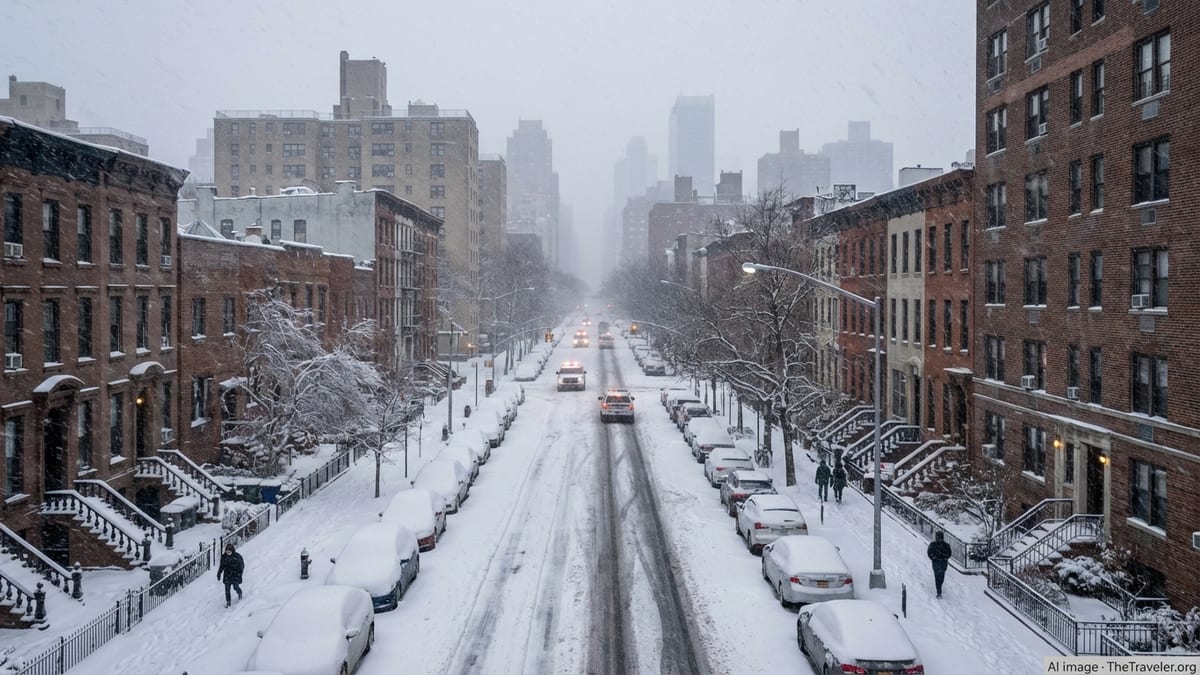
New York City’s travel ban, first imposed Sunday night, remained in place into Monday afternoon as sanitation crews worked in rotating shifts to clear streets buried under more than a foot of snow, with higher drifts in open areas. Similar restrictions were in effect in much of New Jersey and southern New England, where sustained winds and gusts nearing hurricane force pushed snow into towering ridges across highways, neighborhood streets and waterfront promenades.
Forecasters with the National Weather Service described the system as a classic bomb cyclone off the Northeast coast, rapidly intensifying as it spun just southeast of Cape Cod. Heavy snow bands continued to pivot inland through the day, keeping visibility near zero at times across the New York metropolitan area, Long Island, coastal Connecticut, Rhode Island and eastern Massachusetts.
In Boston, Providence and Hartford, local officials urged people to treat Monday as an at‑home emergency day, with many city offices closed, jury trials postponed and only essential workers ordered to report in person. In smaller coastal communities from New Jersey’s barrier islands to Cape Cod, police departments reported near-empty roads as residents heeded the warnings.
Flights Grounded and Rail Networks Disrupted
The storm delivered a major blow to air travel at the height of the Monday morning rush. Airlines canceled nearly 9,000 flights across Sunday and Monday, with New York’s JFK, LaGuardia and Newark Liberty among the hardest hit, alongside Boston Logan and Philadelphia International. Hundreds more flights were delayed as carriers repositioned aircraft and crews around the storm’s sprawling impact zone.
Inside cavernous but mostly quiet terminals, stranded travelers slept on benches or queued at rebooking counters while departure boards filled with red “canceled” notices. Airlines waived change fees, but with runways repeatedly closing for plowing and visibility checks, many passengers were told to expect to be rebooked days out rather than hours.
The storm also hobbled the region’s extensive rail and transit networks. New Jersey Transit suspended most rail and bus services, Amtrak curtailed or canceled routes along key stretches of the Northeast Corridor, and portions of Metro-North and Long Island Rail Road operations were halted. In New York City and Boston, limited subway and local bus service continued, but with significant delays and temporary suspensions on above-ground segments where snow and wind were most intense.
For many would-be commuters, the combination of grounded planes, shuttered rail lines and snow-choked highways effectively locked the region in place, turning what might have been a typical workday into an improvised snowbound pause.
Schools Close as Cities Shift to Emergency Schedules
From Philadelphia to Boston, school districts pivoted quickly into storm mode as forecasts solidified over the weekend. New York City’s public schools were closed Monday without remote learning, marking the first traditional citywide snow day in several years and a symbolic return to an old winter ritual for students who spent much of the early 2020s online.
In Boston and its suburbs, districts announced closures or remote schedules, citing treacherous side streets and concerns about students waiting at bus stops in blizzard conditions. Many colleges and universities across the region shifted classes online, advising students and staff to stay off campus except for essential services such as residence life and dining halls.
Philadelphia, which had only recently cleared snow from a January winter storm, shuttered in-person classes and moved much of the district to virtual learning, while city officials opened warming centers and expanded outreach to residents experiencing homelessness. Similar measures were taken in New Jersey and Connecticut, where local governments emphasized that keeping people indoors was as much about cold and wind as snow depth.
Office-based employers largely followed suit, reverting to remote work arrangements that have become familiar since the pandemic. Many downtown business districts across New York, Boston and Philadelphia saw only a fraction of their usual weekday crowds, with most storefronts dark and sidewalks carved into narrow, foot-worn trenches between towering snowbanks.
Power Outages, Coastal Flooding and Trail of Disruption
The Blizzard of 2026 also exacted a heavy toll on infrastructure across the Northeast. At the height of the storm on Monday, more than 600,000 customers were without power from New Jersey through New England as wet, wind-driven snow dragged down limbs and transmission lines. Utilities in New York, Massachusetts and Rhode Island warned that full restoration could take several days in the hardest-hit pockets, especially where roads remained impassable for repair crews.
Along the coast, the storm’s low pressure and intense onshore winds drove water into harbors and bays, producing coastal flooding in parts of New Jersey, Long Island and eastern Massachusetts. Seawalls were overtopped in some communities, and emergency services responded to reports of flooded basements, submerged parked cars and localized evacuations in vulnerable low-lying neighborhoods.
Although comprehensive damage estimates have yet to be tallied, early reports pointed to widespread minor structural damage, collapsed awnings and roofs, and significant economic disruption from closed businesses, halted construction projects and lost travel revenue. Insurance analysts said the storm’s eventual cost would depend not only on snowfall totals but on how quickly transportation and power systems could be brought back online.
Despite the severity of the conditions, officials reported a relatively low number of confirmed storm-related fatalities as of Monday afternoon, crediting aggressive preemptive measures such as road bans, early school closures and extensive public messaging.
Travelers and Residents Brace for a Slow Reopening
With snow still falling and winds expected to remain gusty into Monday night, Northeastern cities were already planning for a gradual, cautious reopening. Transportation officials in New York, Boston and Philadelphia said major highways and key transit routes would be prioritized for plowing before less-traveled local roads, and warned that full restoration of normal schedules could take several days.
For travelers, that means continued uncertainty. Airlines indicated that they would begin rebuilding their schedules once runway conditions and crew availability allowed, but advised passengers to monitor their flight status frequently and to be prepared for ongoing disruptions well into the workweek. Some long-haul and international flights were diverted to airports outside the storm zone, adding further complexity to recovery plans.
Residents, meanwhile, dug out stoops, sidewalks and driveways in a familiar winter ritual, even as they navigated snowdrifts that in some places reached chest height. In neighborhoods across New York, Boston and Philadelphia, children turned the unexpected snow day into an outdoor celebration, sledding down improvised hills and building snow forts in quieted streets.
For the travel industry and local tourism officials, the Blizzard of 2026 serves as a stark reminder of how quickly one storm can freeze the circulatory system of the Northeast. As skies gradually clear in the days ahead, the region will focus on restoring its vital networks of roads, rails and runways, and on welcoming visitors back to cities that, for a brief and extraordinary spell, fell almost completely silent under the snow.