

More news on this day
A historic blizzard sweeping the northeastern United States has effectively frozen one of the country’s busiest tourism corridors, as New Jersey joins Massachusetts, Rhode Island, Connecticut, Maryland and Delaware in shuttering roads, curbing rail services and forcing mass flight cancellations at John F. Kennedy International, LaGuardia and Newark Liberty airports.
States of Emergency Stretch Along the Northeast Corridor
From the New York metropolitan area south through Maryland and Delaware and north into coastal New England, governors have declared states of emergency as the February 2026 blizzard delivers hurricane-force gusts and snow totals approaching or exceeding three feet in some locations. The storm, rapidly intensifying off the Atlantic seaboard, has been described by meteorologists as a classic nor’easter, with conditions severe enough to trigger full travel bans in parts of Rhode Island and driving restrictions in several neighboring states.
New Jersey, which had initially hoped to avoid the worst of the coastal flooding and wind, has now reported widespread whiteout conditions, downed trees and power lines and mounting reports of stranded motorists. Emergency officials have urged residents and visitors to stay off the roads except for essential travel, warning that plows and emergency vehicles are struggling to keep up with the pace of the snowfall and fierce drifting.
Farther north, Massachusetts, Rhode Island and Connecticut are contending with some of the heaviest snow totals, with Providence and surrounding communities seeing record-breaking accumulations. To the south and west, Maryland and Delaware have closed or severely limited access to major highways and coastal routes as blowing snow and near-zero visibility make even short journeys hazardous.
Collectively, the declarations effectively place most of the Northeast’s core tourism belt in crisis mode, freezing discretionary travel at the very moment many cities had been promoting late-winter cultural events and school-break getaways.
Major New York Airports Brought to a Standstill
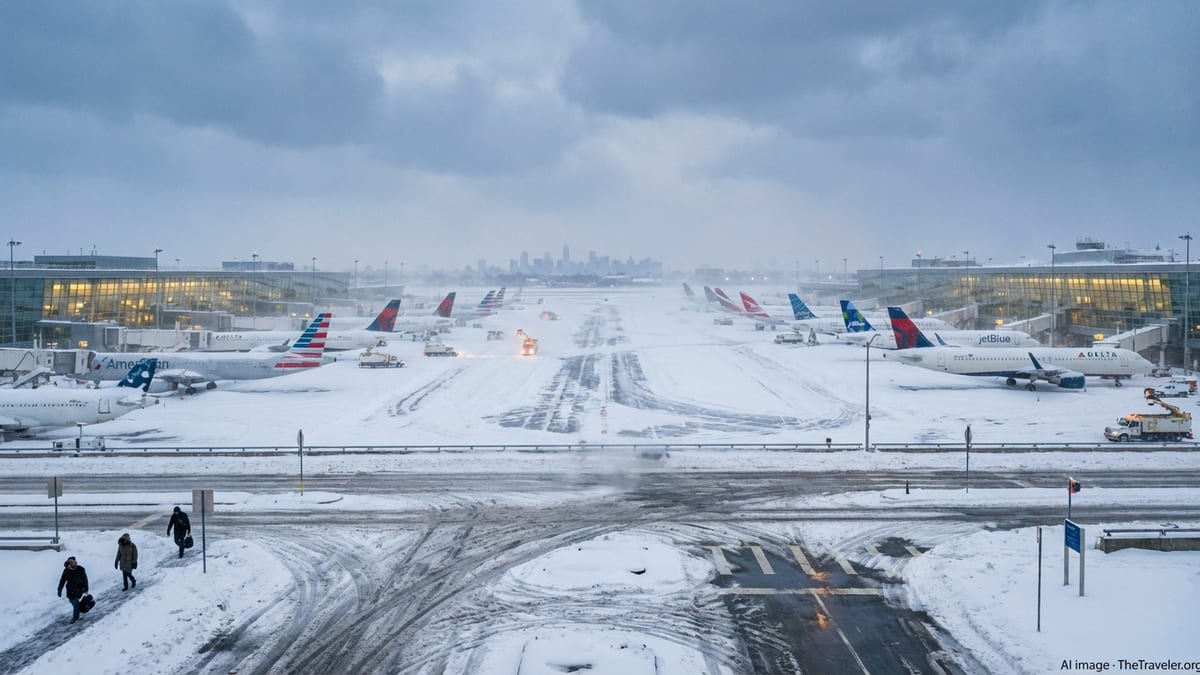
The storm’s most visible blow to travel has been at the three main New York area gateways: John F. Kennedy International, LaGuardia and Newark Liberty International. Airlines began preemptive cancellations over the weekend as forecasts for the so-called Blizzard of 2026 sharpened, but by the morning of February 24 operations at all three hubs had been reduced to a trickle.
At JFK, heavy, wet snow and crosswinds have repeatedly closed runways for de-icing and plowing, with terminal departure boards dominated by red banners for canceled and delayed flights. Ground crews have battled not only accumulation on runways and taxiways but also drifting snow and gusts strong enough to periodically suspend ramp operations for safety.
LaGuardia, with its shorter runways and tight airfield layout, has been particularly vulnerable. Flight banks serving key domestic markets up and down the East Coast and into the Midwest have been wiped out, leaving aircraft and crews out of position and raising the likelihood of a prolonged ripple effect on schedules even after the storm exits the region.
Across the Hudson River at Newark Liberty, where snowfall totals have climbed into the upper twenties of inches, terminal access roads and parking structures have been clogged by snow and immobilized vehicles. Airlines have warned passengers not to head to the airport without confirmed rebooked itineraries, noting that same-day standby travel is effectively impossible as carriers work through a backlog of stranded travelers.
Tourism Destinations Face Sudden, Costly Shutdown
For the tourism sector, the timing could hardly be worse. The affected states collectively anchor a vast network of city-break, coastal and cultural destinations that rely on both domestic and international visitors to fill hotels and restaurants through the late-winter lull. New York City, Boston, Providence, Atlantic City, coastal New Jersey towns and historic enclaves in Maryland and Delaware had all been marketing winter festivals, restaurant weeks and museum programming aimed at boosting off-season occupancy.
Instead, hotel operators across the region are now grappling with a wave of cancellations as visitors abandon weekend and week-long plans amid the shutdown of air and rail links. Industry groups report that many properties in Manhattan, northern New Jersey and New England cities have pivoted to offering emergency rates for stranded passengers and essential workers rather than leisure guests.
In seaside communities from Cape Cod to the Delaware beaches, officials say businesses that had stocked up for winter events will be left with surplus inventory and lost revenue. While some coastal areas have been spared the worst of the flooding early in the storm, the combination of road closures and power outages has kept visitors away, darkening normally busy waterfront districts.
Tour operators, motorcoach companies and attraction operators have also been forced to suspend operations. Multi-day itineraries linking New York, Philadelphia, Washington and New England’s historic cities have been canceled or cut short, leaving inbound groups scrambling for shelter and revised travel plans.
Ground Transport Disrupted as Rail and Highways Struggle
Even travelers hoping to bypass the skies have few options. Along the busy Northeast Corridor, intercity rail services have been curtailed or suspended on several stretches, with snow, ice and downed branches complicating operations. Commuter rail lines feeding Boston, New York and Philadelphia have announced limited schedules at best, while some branches in Rhode Island, Connecticut and New Jersey have shut down entirely.
On the highways, state transportation departments from Maryland through Massachusetts are reporting jackknifed trucks, stranded vehicles and reduced visibility that periodically drops to near zero. Plow crews are working in continuous rotations, but drifting snow and high winds are quickly erasing their progress, particularly on exposed sections of interstates and coastal parkways.
Bus companies have canceled most long-distance routes, and rideshare platforms in several cities have temporarily restricted operations in response to municipal warnings. Visitors who arrived before the storm are being strongly advised to stay in place until conditions improve, while those with pending arrivals are being urged to postpone trips into next week.
For many travelers, the combined shutdown of air, rail and road networks has effectively marooned them in hotels and short-term rentals, where they are relying on limited local services and, in some cases, emergency shelters as power outages spread.
Uncertain Outlook for Recovery and Spring Bookings
As the blizzard’s core begins to pull away from the Mid-Atlantic and New England on February 24, attention is shifting to the speed of the cleanup and the longer-term impact on tourism demand. Airports will need time to clear runways, reposition aircraft and restore full staffing, while cities dig out streets and sidewalks and assess damage to infrastructure and coastal areas.
Travel analysts caution that even once flights resume, it may take several days to absorb stranded passengers and normalize schedules across the national network. With thousands of flights already canceled over the course of the storm and more disruptions expected as airlines recover, some visitors may abandon trips altogether or delay them into March.
Tourism boards are preparing to relaunch marketing campaigns highlighting snow-draped cityscapes and winter activities once conditions are safe, but they acknowledge that images of buried cars, shuttered airports and emergency alerts may temporarily dampen enthusiasm, particularly among international travelers who are sensitive to disruption.
Still, many in the industry are banking on pent-up demand and flexible rebooking policies to salvage at least part of the late-winter and early-spring season. As the skies clear and plows push back towering snowbanks from city streets and runways, destination managers across New Jersey, New England and the Mid-Atlantic will be racing not only to reopen but to reassure visitors that the northeastern United States tourism engine can quickly roar back to life.