

More news on this day
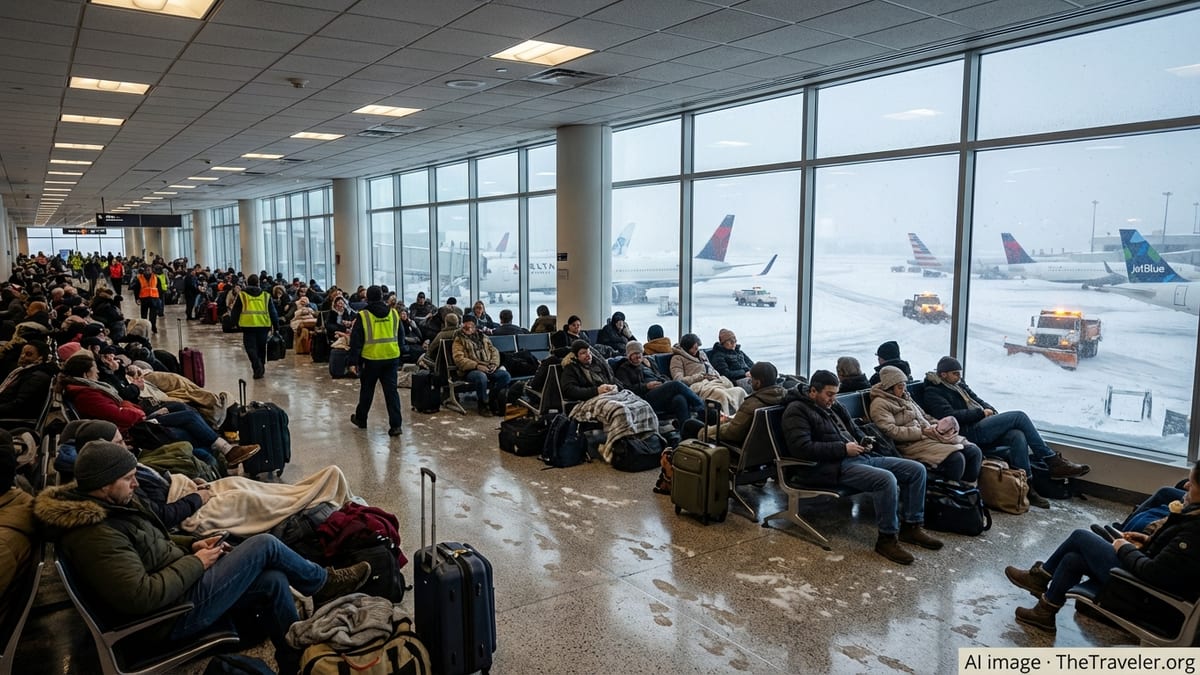
A historic late‑February blizzard has brought New York and Boston air travel to a standstill, forcing more than 8,000 flight disruptions and leaving thousands of stranded passengers sleeping in terminal chairs and on terminal floors as major airports transformed into de facto overnight shelters.
Air Travel Grinds to a Halt Across the Northeast
From Sunday into Monday, the powerful nor’easter battering the U.S. Northeast has effectively frozen one of the world’s busiest air corridors. Flight tracking data show that more than 8,000 flights to, from and within the United States were canceled or delayed as the storm intensified over New York, New Jersey and New England, with the bulk of those disruptions centered on New York City and Boston.
New York’s three major airports, John F. Kennedy, LaGuardia and Newark Liberty, saw nearly all Monday departures wiped from the boards, while Boston Logan reported cancellations for more than 90 percent of its schedule at peak impact. Airlines preemptively grounded operations as whiteout conditions, fierce crosswinds and near zero visibility made runway operations unsafe.
The chaos has rippled throughout domestic and international networks. Flights that were not outright canceled faced rolling delays, aircraft and crew dislocations, and diversions to unaffected hubs further south and west. For many carriers, it is the second major system shock of the winter after earlier storms snarled operations in January.
With more than 40 million people under blizzard warnings from Maryland to Maine, transportation authorities urged travelers to avoid trips altogether. Rail operator Amtrak suspended or curtailed numerous services along the busy Northeast Corridor between New York and Boston, compounding the squeeze on already limited options for stranded passengers.
Terminals Become Ad Hoc Overnight Shelters
Inside the region’s largest airports, packed concourses took on the look and feel of emergency shelters as the storm peaked. At JFK and LaGuardia, families spread blankets beside baggage carousels, business travelers tried to sleep upright in rows of connected chairs, and children curled up on jackets along the windows facing snow covered ramps.
In Boston, passengers described scenes of long, snaking lines at rebooking counters and food outlets remaining open around the clock to serve those with nowhere else to go. With road travel bans in effect in New York City and parts of New Jersey and New England, many travelers could not reach hotels or friends in the city and opted to stay put in the terminals.
Airport authorities deployed cots in some quiet zones and coordinated with local agencies to provide bottled water, basic snacks and charging stations where possible. Public address announcements urged calm and reassured travelers that airlines would honor rebooking commitments once operations could safely resume.
For international passengers who had already cleared immigration and customs only to see connections vanish from the departure screens, language barriers and uncertainty added to the stress. Volunteer staff and airline ground teams moved through crowds offering guidance on vouchers, future travel credits and where to find the few remaining open restrooms and seating areas.
Record Snow, Fierce Winds and Widespread Power Outages
The aviation disruption is part of a broader regional emergency triggered by what forecasters describe as a classic bomb cyclone. Heavy snow bands stacked up more than two feet of accumulation in parts of the tri state region and southern New England, with Long Island MacArthur Airport reporting over 20 inches and neighborhoods across New York City measuring more than a foot.
Boston and surrounding communities in eastern Massachusetts faced some of the harshest conditions as the storm’s center crawled off the New England coast. Blizzard warnings remained in place longer there than in New York, with hurricane force gusts along exposed capes and barrier islands and whiteout conditions persisting into early Tuesday.
Across the Northeast, winds exceeding 30 miles per hour combined with heavy, wet snow to bring down trees and power lines. Utilities reported hundreds of thousands of customers without electricity from coastal New Jersey through Rhode Island and Massachusetts, complicating both airport operations and ground transportation efforts.
Officials cautioned that even as the heaviest snow tapers, blowing and drifting will continue to reduce visibility around runways and access roads. Plow crews working to clear airport aprons, taxiways and parking lots face the dual challenge of deep accumulation and ongoing windblown snow, delaying any swift return to normal schedules.
Travel Bans, Waivers and What Stranded Flyers Can Expect
Authorities across the region moved quickly ahead of the storm to limit non essential movement, a step that has further constrained options for air travelers caught in the blizzard’s path. New York City imposed a ban on non emergency road travel through midday Monday, while Rhode Island, New Jersey and parts of Connecticut announced similar restrictions as conditions deteriorated.
Major U.S. airlines responded with broad travel waivers for affected airports, allowing passengers to rebook trips without change fees or fare differences within specified windows. Some carriers are also offering refunds for canceled flights where no reasonable rebooking options are available within the next several days.
Even with these policies in place, the sheer scale of the disruption means recovery will take time. With aircraft and crews scattered around the country and thousands of flights already preemptively canceled for Tuesday, aviation analysts warn that schedules could remain constrained well into the week, especially on transatlantic routes originating in New York and Boston.
Travel experts advise stranded passengers to rebook through airline apps or websites rather than waiting in terminal queues, to monitor flight status frequently, and to keep receipts for food and accommodation in case carriers or travel insurance policies offer reimbursement. Those with flexible plans are being urged to delay non essential trips until airlines and airports can clear backlogs and restore more predictable operations.
Tourism and Business Travel Face a Costly Setback
The blizzard’s timing at the tail end of the winter travel season is dealing a fresh blow to tourism operators and business travelers who rely on the busy New York Boston corridor. Hotels in central Manhattan and downtown Boston have reported a surge in last minute cancellations and no shows as conferences, client meetings and city breaks are postponed or shifted online.
For inbound visitors, particularly from Europe, the storm has upended carefully planned itineraries that often connect through New York or Boston to ski resorts in New England, cultural trips in the Mid Atlantic or onward flights to the Caribbean. Tour operators say they are scrambling to rework packages, with some guests opting to cut trips short rather than wait days for replacement flights.
Local businesses inside the airports have experienced a mixed impact. While some restaurants and convenience outlets have seen brisk sales from stranded travelers, retailers selling discretionary goods report a sharp drop in footfall as passengers focus on essentials and conserve cash in case of extended delays.
City officials in both New York and Boston say they will assess the economic fallout once the storm passes and transportation networks begin to stabilize. For now, the priority remains clearing snow choked streets and runways, restoring power and giving travelers a safe way out of terminals that, for one extraordinary winter stretch, have become overnight homes away from home.