

More news on this day
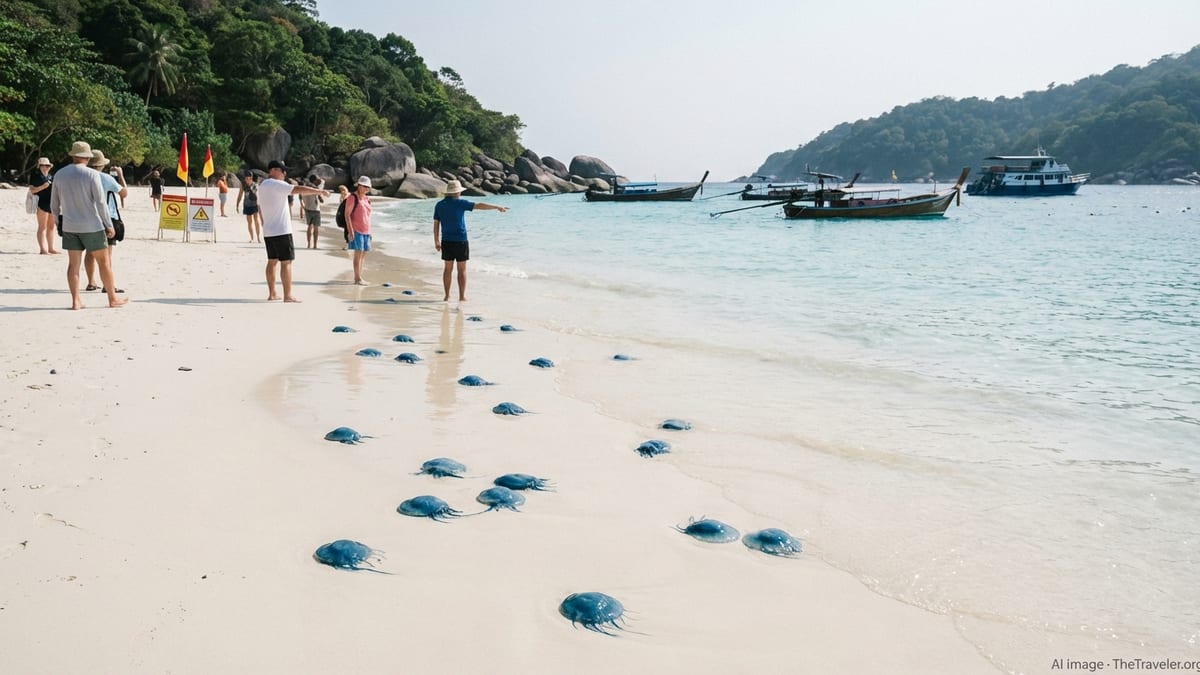
Thai authorities have extended the closure of Princess Beach in Similan Islands National Park after a massive swarm of bright blue button jellyfish washed ashore, prompting fresh safety alerts for visitors heading into one of the country’s most popular marine tourism zones.
Extended Beach Closure in a Flagship Marine Park
Officials at Mu Ko Similan National Park in Phang Nga province confirmed this week that Princess Beach, also known locally as the eastern or front beach on Island No. 4, will remain closed for swimming after large numbers of blue button jellyfish continued to appear along the shoreline. The move follows an initial temporary shutdown of the designated swimming zone on the eastern side of Ko Si, announced on February 22, after park rangers reported clusters of the vivid blue organisms in the shallows and on the sand.
The extended closure affects one of the park’s most photographed stretches of sand, a favorite stop on day trips and liveaboard itineraries out of Phuket and Khao Lak. While boats are still permitted to anchor offshore and some tour operators continue to land guests for short visits on the dry beach, swimming and snorkeling directly off Princess Beach remain suspended until marine officials deem the area safe.
Park managers say they are monitoring currents and wind patterns that can push surface-dwelling organisms like blue button jellyfish into bays and coves. Rangers have been ordered to patrol the eastern beaches more frequently, checking both the waterline and high-tide debris for fresh arrivals and clearing areas where visitors might walk barefoot.
The shutdown comes during the peak dry-season tourism window, when calm seas and clear visibility usually draw divers, snorkelers and beachgoers from around the world. Tour companies are now reshuffling routes to alternative sites within the Similan archipelago that remain open, while warning guests that conditions and access can change at short notice.
What Exactly Are Blue Button Jellyfish and How Dangerous Are They?
Despite the name, the blue button is not a true jellyfish but a floating colonial organism known scientifically as Porpita porpita. Each disc is made up of many tiny animals living together, with a central button-shaped float surrounded by radiating tentacles that drift at the sea surface. Driven by winds and currents rather than by their own movement, they can suddenly appear in huge numbers when conditions align offshore.
On the sand or in shallow water they are easy to spot: coin-sized, electric blue or turquoise discs that resemble glassy buttons or alien eyes. This striking appearance, and their tendency to gather in rafts with other species, often leads tourists to confuse them with box jellyfish or the more painful bluebottle. Marine biologists stress that the venom of blue buttons is significantly milder than Thailand’s notorious box jellyfish, but they still advise against any physical contact.
People who brush against the tentacles typically experience an immediate burning or stinging sensation, followed by redness, itching, mild swelling or small fluid-filled blisters. Sensitivity varies and children or those with allergies may suffer stronger reactions. Crucially, even stranded organisms that look dried out on the sand can still sting, a point park staff are emphasizing as visitors bend down to photograph or touch the unusual creatures along the tideline.
Authorities note that the current event in the Similan Islands is notable for the sheer density of blue buttons reported in a confined swimming zone, rather than for severe medical cases. So far there have been no confirmed life-threatening incidents linked to this swarm, but officials say the closure is a precaution to reduce the risk of multiple stings and to prevent panic in crowded beach areas.
Safety Alerts Across the Similan Islands and Beyond
Following the initial discovery of blue button jellyfish near Princess Beach, Mu Ko Similan National Park issued island-wide advisories instructing visitors to stay alert for the organisms at other beaches and snorkeling spots. Warning boards in Thai and English have been updated at landing points, and many tour boats now include a brief jellyfish safety talk before passengers enter the water.
The alerts coincide with a broader seasonal reminder from Thailand’s Public Health Ministry urging swimmers around the country to take jellyfish risks seriously during the busy beach months. Officials say that while blue buttons are usually mild, Thailand’s coasts are also home to more venomous species, including box jellyfish and Portuguese man-of-war, which have been linked to serious stings in recent years on popular beaches such as Patong in Phuket and stretches of the Gulf of Thailand.
Health authorities are encouraging resort operators, local guides and lifeguards in Andaman destinations to refresh their emergency protocols, check first-aid supplies and ensure that staff can recognize the main dangerous species. At key sites, beach management teams have been advised to review whether existing warning flags and information boards adequately reflect current marine conditions and to update messaging as needed.
Regional tourism offices are also using the latest incident in the Similans to remind travelers that national parks routinely adjust access for reasons ranging from stormy weather to wildlife protection. Visitors are being urged to confirm current opening status, marine safety advisories and any temporary swimming bans shortly before travel, rather than relying on outdated information from social media or guidebooks.
What Travelers Should Do If They Are Stung
Medical guidance circulated by park officials in the Similan Islands outlines a clear first-aid protocol for blue button and similar jellyfish stings. The first step is to exit the water calmly and move to a safe area onshore. The affected area should then be rinsed thoroughly with seawater, not fresh water, which can cause undischarged stinging cells to fire and worsen symptoms.
Any visible tentacles or tissue fragments should be carefully removed using tweezers, the edge of a card or gloved hands, avoiding direct skin contact. Victims are advised not to rub the sting site with sand or towels, as friction can drive stinging cells deeper into the skin. For most mild cases, monitoring the reaction and applying cool compresses can help ease discomfort over the following hours.
Officials stress that anyone experiencing intense or spreading pain, difficulty breathing, dizziness, nausea or other unusual symptoms should seek medical attention immediately and inform park staff or lifeguards on duty. Travelers with a history of severe allergies are encouraged to carry their usual medication and to let companions or guides know about their condition before entering the water.
Tourists planning boat trips around the Similan Islands in the coming days are being urged to pack lightweight long-sleeved swim shirts, reef-safe sunscreen and basic first-aid supplies. Guides say that even simple precautions, such as entering the water from a boat ladder rather than running into surf where organisms may accumulate, can significantly reduce exposure.
Planning a Trip to the Similan Islands During the Alert
Despite the closure of Princess Beach’s swimming zone, the Similan Islands remain open to visitors and retain their status as one of Thailand’s premier marine national parks. Tour operators are shifting focus to alternative mooring spots, deeper snorkeling reefs and scenic viewpoints on islands that are unaffected by the current swarm. Many itineraries are being tweaked day by day, depending on ranger reports and changing currents.
Travel planners recommend that visitors treat the current jellyfish situation in the same way they would approach seasonal storms or temporary trail closures in mountain parks. That means building flexibility into itineraries, listening closely to briefings from park rangers and boat crews, and accepting that certain coves or beaches may be off-limits at short notice if safety conditions change.
Authorities also remind travelers that the Similan Islands already operate under strict environmental rules, including seasonal shutdowns from mid May to mid October to allow reefs to recover and to protect wildlife from overuse. The blue button jellyfish event highlights how dynamic this marine environment is and why park managers sometimes impose rapid restrictions to safeguard both visitors and delicate ecosystems.
For those still keen to experience the archipelago’s famous clear waters and coral gardens in the coming weeks, the key advice is to stay informed, respect safety signage and treat every unusual marine creature with caution, no matter how photogenic it appears on the sand.