

More news on this day
Chinese cruise operator Blue Dream Cruises is confronting a deepening financial crisis, with reports of unpaid crew salaries, office closures in key markets and the company’s main ships being discreetly offered for sale, raising urgent questions about the future of one of China’s most closely watched post-pandemic cruise ventures.
Get the latest news straight to your inbox!
From Post-Pandemic Hopeful to Distress Signal
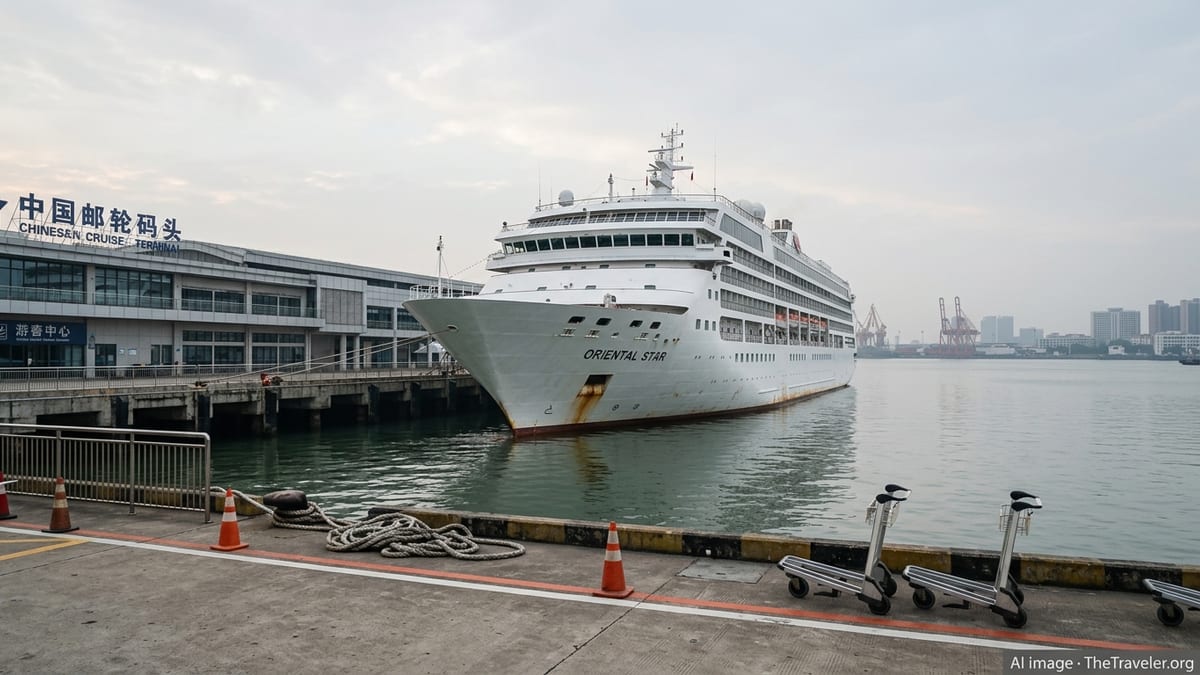
Blue Dream Cruises emerged as part of China’s bid to rebuild its outbound cruise market after the pandemic, positioning itself around mid-size vessels serving Chinese ports with regional itineraries in East Asia. The brand drew attention when its flagship, operating as Blue Dream Star, returned to service from Shanghai after group travel restrictions eased in 2023, signaling fresh optimism for the domestic cruise sector.
That optimism has eroded quickly. Recent regional maritime and business reporting indicates that by late 2025 and early 2026 the company had entered a period of acute financial strain. Publicly available information describes mounting payment arrears across the business, with signs that core operations were no longer being sustainably funded.
In early 2026, industry bulletins in Europe picked up references to Blue Dream Cruises announcing the suspension of operations in January, a decision framed as a response to prolonged financial pressure and weak liquidity. This apparent pivot from cautious expansion to near-standstill has left travelers, crew members and port partners scrambling to understand the line’s next steps.
The situation is further complicated by the opaque nature of privately held Chinese cruise businesses, where official statements tend to be limited and detailed restructuring plans rarely made public. As a result, analysts and prospective passengers have been left to piece together the company’s condition from scattered notices, vessel sale listings and court or creditor disclosures.
Salaries in Arrears and Offices Reportedly Closed
One of the clearest indicators of the depth of Blue Dream Cruises’ financial problems is the pattern of unpaid or delayed salaries reported around its operations. Maritime labor coverage and regional news items point to crew members going without full wages for extended periods, echoing earlier episodes in China’s cruise sector where vessels were detained over claims for unpaid crew compensation.
Unsettled payroll obligations are particularly serious in the cruise industry, where shipboard staff often rely on continuous contracts to support families abroad. When delays extend beyond a single pay period, crew can seek assistance from unions, port state authorities or courts, actions that may trigger detentions, liens or forced sales of vessels.
Around the same time, industry commentary began referencing the closure or downsizing of Blue Dream Cruises’ shore-based offices. Travel trade intermediaries in China and overseas have described difficulty reaching the company, with phone lines reportedly going unanswered and physical offices in some locations said to be shuttered or minimally staffed.
For consumers, these operational red flags materialize as canceled sailings, unanswered refund requests and uncertainty over future departures. Travel agencies that previously promoted Blue Dream itineraries have in many cases removed the line from their active offerings, directing clients instead to other regional brands perceived to be on firmer financial footing.
Fleet Quietly Offered for Sale
Perhaps the starkest signal of Blue Dream Cruises’ precarious position is the growing evidence that parts of its fleet are on the market. Shipbroking notes and vessel databases have linked the company’s key tonnage with sale discussions, including references to ships being marketed for transfer to other operators or even potential scrapping, depending on age and condition.
In practice, cruise lines facing liquidity crises often resort to asset sales as a last resort, using proceeds to cover urgent obligations such as crew wages, port fees and creditor settlements. When a company with only a small number of ships begins to sell or actively market those vessels, it raises doubts about its ability to continue as a going concern in its current form.
For ports in China, Japan and Korea that had scheduled Blue Dream calls into 2025 and 2026, a sale or lay-up of vessels may require rapid adjustments to cruise calendars and tourism promotion plans. Local tourism boards and excursion providers that invested in facilities and marketing for the line’s expected calls could see projected visitor numbers sharply reduced if itineraries are withdrawn.
The resale of any Blue Dream vessel to another operator would not necessarily mean the ship disappears from the region’s cruise landscape. However, it would effectively erase Blue Dream Cruises as a consumer-facing brand unless a restructured entity later emerges with chartered or newly acquired tonnage.
Impact on Passengers, Crew and the Chinese Cruise Market
The most immediate human impact of Blue Dream Cruises’ financial unraveling falls on passengers with existing bookings and on crew whose livelihoods depend on regular sailings. Travelers who paid deposits or full fares for 2025 and 2026 departures now face a patchwork of outcomes, influenced by how they booked and what, if any, consumer protections apply in their jurisdiction.
Those who reserved through established travel agencies or used credit cards with strong chargeback rights may be better positioned to recover funds if sailings are canceled and refunds not processed. By contrast, customers who booked directly and paid by bank transfer or local payment platforms could encounter greater difficulty if the company has limited cash or stops responding to claims.
Crew members face a different set of challenges. When a cruise line suspends operations, seafarers can be repatriated, but unpaid wages and severance may remain unresolved for months or years, depending on legal processes and the outcome of any vessel sales. Labor organizations and maritime charities sometimes intervene to support crew in pursuing claims or securing basic needs during prolonged disputes.
For China’s broader cruise ambitions, Blue Dream Cruises’ predicament serves as a cautionary case study. After the collapse of other China-focused cruise ventures in the late 2010s and early 2020s, policymakers and investors had hoped for a more stable, domestically anchored industry. The apparent failure of another brand underscores how vulnerable smaller operators remain to shifts in demand, financing conditions and regulatory constraints.
What Travelers Should Watch Next
For prospective passengers, the key question is whether any remnant of Blue Dream Cruises will continue operating or whether the brand is effectively winding down. Travelers holding future reservations are monitoring several indicators, including the status of scheduled itineraries, activity on the company’s official communication channels and whether ships remain visible on public sailing schedules.
Travel advisers are broadly encouraging clients to verify the current operating status of any smaller or regional cruise line before placing new deposits, especially in markets where financial disclosures are limited. Comparing options with established brands or those backed by larger travel conglomerates is increasingly seen as a way to reduce exposure to sudden disruptions.
Industry observers are also watching for formal restructuring or insolvency proceedings involving entities linked to Blue Dream Cruises. Public court filings, creditor notices and ship auction announcements tend to provide the clearest confirmation of a company’s fate, even when official statements are sparse or delayed.
Until there is explicit clarity on Blue Dream Cruises’ long-term prospects, the episode is likely to be viewed as another reminder of the cruise sector’s uneven recovery. While many global lines are reporting strong bookings and record revenues, smaller niche operators without deep financial reserves continue to face a far more fragile operating environment.