

More news on this day
Tech-powered hospitality brand Bob W is sharpening its focus on Germany with a new Munich city centre property, extending its fast-growing aparthotel portfolio in one of Europe’s most competitive urban markets.
Get the latest news straight to your inbox!
Strategic Move in a High-Demand Munich Market
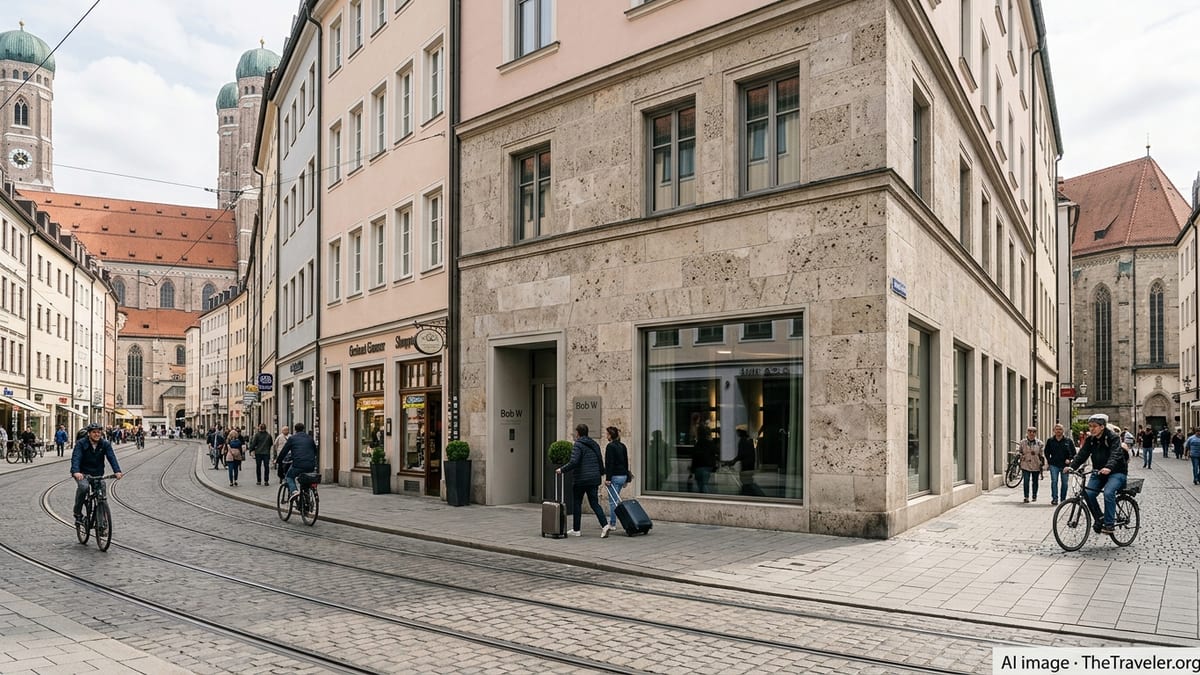
The latest addition, operating as Bob W Munich Old Town, places the company directly in Munich’s historic core, an area characterised by limited development opportunities and sustained visitor demand. Publicly available information indicates the property sits within walking distance of major cultural attractions and business addresses, giving the brand a highly visible urban showcase.
Market reports on Munich’s real estate and tourism performance point to a city centre that remains resilient, with strong domestic and international visitation supporting hospitality demand despite broader economic headwinds. Against that backdrop, adding a centrally located property positions Bob W to capture both short city breaks and extended business trips that require a more residential style of accommodation.
The move also complements the company’s existing presence in the Bavarian capital, where it already operates in established neighbourhoods outside the core. By layering a city centre address onto that network, the brand can offer guests a broader choice of locations while deepening its relationship with local owners and investors.
For the wider Munich market, the opening underlines how international aparthotel operators are continuing to view the city as a safe bet, even as new construction slows and financing conditions tighten. Converting and repositioning existing buildings into serviced apartments is emerging as a preferred route to growth.
Expanding German Footprint Through Hybrid Hospitality
Bob W has identified Germany as one of its key growth territories, building out a portfolio that already spans Berlin, Bonn, Lübeck and Munich. Industry coverage describes the company as part of a new wave of hybrid hospitality operators that bridge the gap between traditional hotels and short-term rentals, with fully furnished apartments and a strong digital layer.
In this context, the Munich city centre property is another step in creating a geographically diverse German platform. The brand’s earlier entry into the country followed the acquisition of an existing serviced-apartment specialist, giving it an immediate foothold in several cities. Since then, additional signings and openings have gradually expanded the network.
Germany’s large domestic travel base, strong corporate demand and extensive rail connectivity make it an attractive environment for flexible-stay concepts. Serviced apartments and aparthotels have proved particularly resilient, serving business travellers on long assignments, relocated professionals and leisure guests looking for more space than a standard hotel room.
As travel patterns evolve, hybrid operators such as Bob W are competing directly with both hotels and traditional holiday rentals, using professional management and a consistent brand to appeal to guests who prioritise reliability as much as local flavour.
Tech-Powered, Contactless Stay in the Heart of the City
The Munich Old Town property is being positioned in line with the company’s broader operating model, which centres on a largely contactless guest journey. According to publicly shared material from the brand, guests typically receive digital keys, app-based check-in and access to virtual support rather than a conventional front desk, while still benefiting from hotel-style service standards.
Units are configured as fully equipped studios and apartments with kitchen facilities, targeting travellers who want the option to cook, work and relax in a more residential environment. This approach has resonated with remote workers, project teams and families who require additional space and privacy during their stay.
For Munich’s dense city centre, the format offers a flexible alternative to traditional hotels, which can be constrained by room size and layout in historic buildings. Serviced apartments allow operators to make more efficient use of floorplates while appealing to guests staying several nights or weeks rather than just a weekend.
The digital-first model also helps manage operating costs in a high-wage, high-rent city, where labour efficiency and careful space planning are critical to making centrally located properties commercially viable.
Local Context: Heritage Setting and Urban Connectivity
Munich’s Old Town, framed by landmarks such as Marienplatz and the Viktualienmarkt, is a tightly knit district where heritage buildings, retail streets and cultural venues sit side by side. The Bob W property is located within this urban fabric, in a streetscape that combines historic facades with newer interventions.
From a guest perspective, the address offers immediate access to public transport, including nearby S-Bahn and U-Bahn connections that link the city centre with the airport, the exhibition grounds and outer districts. This connectivity is a key draw for business travellers who might have meetings scattered across the metropolitan area but prefer to base themselves downtown.
The Old Town location also taps into Munich’s strong leisure appeal. Visitors can explore museums, beer halls and riverfront paths on foot, which reduces reliance on cars and aligns with broader efforts to encourage more sustainable urban mobility. For the operator, this urban lifestyle offer is a core part of the value proposition.
By adapting an existing central building for serviced apartments, the project reflects a wider trend in Germany’s major cities, where owners are repurposing commercial or mixed-use properties to accommodate new hospitality concepts rather than pursuing large-scale new builds.
Signals for Europe’s Evolving Serviced Apartment Landscape
The addition of a city centre property in Munich contributes to the continued maturation of Europe’s serviced apartment and hybrid hospitality sector. Operators such as Bob W are building pan-European platforms that rely on a mix of leases, management agreements and conversions of existing assets to grow quickly while limiting exposure.
Analysts point out that corporate travel policies are increasingly favouring accommodation that combines space, privacy and clear duty-of-care standards, which has translated into growing interest in branded serviced apartments. Cities like Munich, with a high concentration of technology, finance and industrial employers, are prime beneficiaries of this shift.
For local stakeholders, the arrival of additional branded aparthotel capacity in the city centre may help ease some pressure on the traditional hotel market during major trade fairs and events, when occupancy and room rates typically spike. At the same time, the focus on medium and long stays means these properties play a role in accommodating project workers and relocating staff, a segment that has historically struggled to find suitable housing.
As Bob W continues to expand across Germany and other European markets, the Munich city centre location will serve as a reference point for how tech-enabled serviced apartments can be woven into dense, historic districts while responding to contemporary travel and living patterns.