

More news on this day
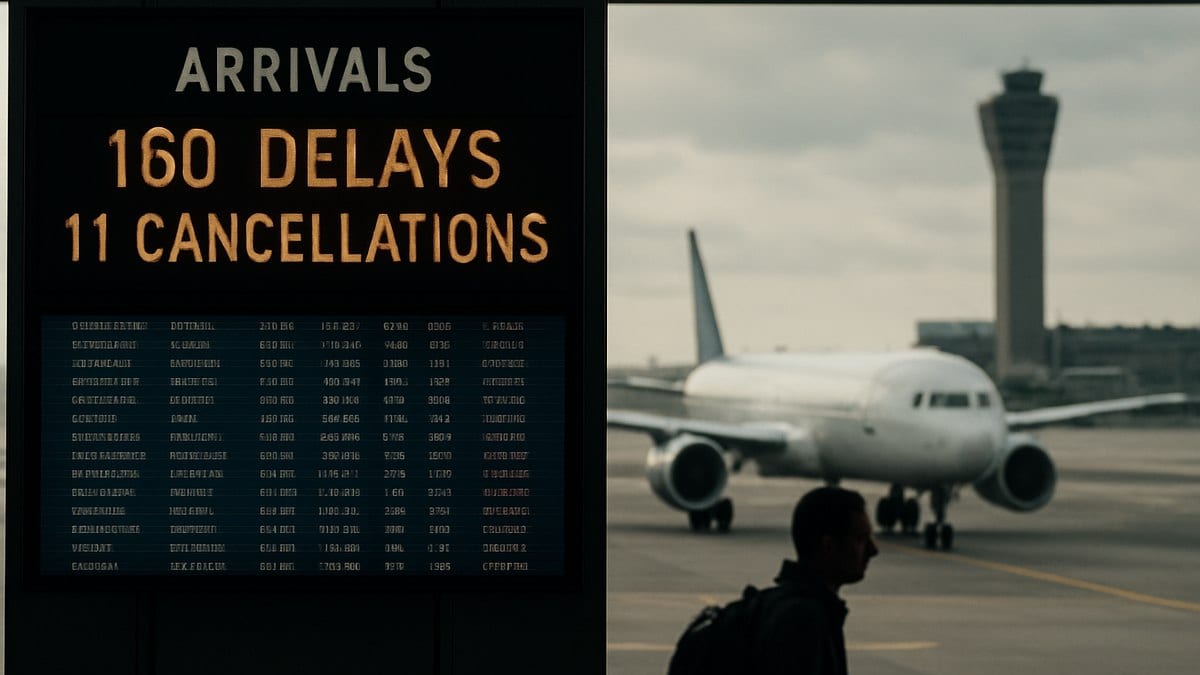
Boston Logan International Airport experienced a fresh wave of disruption in early April, with more than 160 delayed flights and at least 11 cancellations reported on April 3, 2026, affecting travelers across the United States and on key transatlantic routes.
Get the latest news straight to your inbox!
High Disruption Levels at a Key New England Hub
Publicly available flight tracking data and airport status boards for April 3 indicate that disruption at Boston Logan built steadily through the day, with delays accumulating across all major terminals. The tally of more than 160 delayed flights and at least 11 cancellations marked one of the most challenging days of the spring so far for the region’s primary international gateway.
Reports show that the impact was felt on both arrivals and departures, with domestic connections to major hubs mixing with a busy roster of international services. Travelers moving through Logan encountered extended waits at gates, rebookings at airline counters and congested departure areas as the day’s schedule slipped behind plan.
The pattern of disruption aligned with Logan’s peak travel periods. Afternoon banks serving connections from secondary U.S. cities into Boston and onward to evening transatlantic departures were particularly affected, creating pressure on closely timed itineraries. Missed connections and re-routed journeys became a recurring feature of the day for passengers heading to Europe and other long haul destinations.
Although Boston Logan has seen heavier operational stress in past winter storms and blizzards, the April 3 figures stand out because they occurred during a shoulder season period when large scale cancellations are less common, underscoring the sensitivity of the current air travel system to even moderate disruptions.
Weather, Airspace and Network Strain Converge
Published aviation coverage of early April 2026 points to a combination of weather conditions, regional airspace constraints and tight airline schedules as central factors behind the spike in delays and cancellations at Boston Logan. While the day did not feature a headline making blizzard or hurricane, a mix of low clouds, unsettled regional conditions and air traffic management measures contributed to slower throughput.
Analyses of national flight data for the same period describe a broader pattern in which several major U.S. hubs, including Chicago Midway, Philadelphia, Nashville, Reagan National, Atlanta and San Francisco, also reported significant delays and cancellations. In that context, disruption at Boston Logan formed part of a multi airport event in which storms in one region and staffing or runway constraints in another rippled through the wider network.
Historically, Logan’s coastal location and dense New England airspace have made it vulnerable when weather reduces available runway configurations or when federal air traffic initiatives cap arrival and departure rates. Studies of delay performance show that the airport consistently carries a meaningful share of national delay minutes in challenging conditions, a pattern that appears to have been echoed during the April 3 episode.
Observers of 2026 travel trends note that airlines are operating fuller schedules and utilizing aircraft more intensively compared with earlier in the decade. In such an environment, even modest weather or airspace limitations can cascade quickly, leaving little slack to reabsorb late arriving aircraft and crews once a day’s operation begins to unravel.
Impact on Domestic and Transatlantic Travelers
The disruption at Boston Logan affected a wide cross section of travelers, from short haul business passengers on shuttle style routes to leisure travelers embarking on spring holidays. Publicly compiled flight status tallies indicate that major U.S. carriers with significant Boston operations experienced delays on routes to prominent domestic hubs, contributing to knock on effects across their networks.
Transatlantic services bore a particular share of the strain. Coverage of the April 3 disruptions describes how evening departures to London, Dublin, Frankfurt and other European destinations faced schedule pressure after feeder flights from smaller U.S. cities arrived behind time. For some travelers, this meant missed onward flights and rebookings through alternative hubs, while others encountered extended ground holds in Boston as operations attempted to recover.
Within the terminals, the operational challenges translated into longer lines at service desks and busy seating areas near departure gates. For travelers whose flights were canceled, the day often ended with last minute searches for hotel rooms or alternative routings, especially as aircraft and crews ended up out of position by late evening.
The disruption also affected those meeting arriving passengers, with publicly visible arrivals boards displaying clusters of late inbound flights from both domestic and international origins. For local businesses and tourism operators that depend on predictable air arrivals, such days can temporarily disrupt ground transportation schedules, hotel check in flows and same day tour arrangements.
Part of a Wider Pattern of Spring 2026 Flight Disruptions
The difficulties at Boston Logan on April 3 form one episode within a broader pattern of early spring 2026 flight disruptions across the United States. Aggregated national data for the period highlights dozens of cancellations and hundreds of delays at multiple major airports in the first days of April, reflecting the combined effects of unsettled spring weather, evolving federal safety initiatives and ongoing staffing challenges in parts of the aviation system.
Transportation research published over the past year has emphasized that several high volume hubs, including Boston, Atlanta, Chicago Midway, Reagan National and San Francisco, account for a disproportionate share of U.S. delay minutes in a typical year. When more than one of these airports encounters operational constraints on the same day, the network wide consequences become more acute.
The April 3 figures also arrive just weeks after significant winter weather events in February and March that disrupted operations in parts of North America. While the conditions on this particular day were less extreme, the system was already operating with little margin after earlier storms, according to public discussions among aviation analysts and travel industry commentators.
As airlines continue to rebuild international networks and add new long haul routes from Boston, including planned future seasonal and year round transatlantic services, the experience of this latest disruption underscores how closely connected global schedules have become. Delays at a single coastal hub can now influence traffic flows and connection windows thousands of miles away.
What Travelers Can Take Away for Upcoming Trips
For travelers planning journeys through Boston Logan in the coming weeks, the April 3 disruptions serve as a reminder that spring remains a volatile period for air travel. Public guidance from regulators and consumer advocates consistently encourages passengers to monitor flight status frequently, use airline and airport apps and allow ample time at the airport when traveling during busy periods.
Travel editors and advisory columns reviewing the 2026 disruption patterns suggest that morning departures often offer a better chance of leaving close to on time, since aircraft and crews are more likely to be in position from the night before. As the day progresses, the risk that an earlier delay will cascade into later flights increases, particularly on complex multi leg itineraries that rely on tight connections.
Flexible planning can also help limit the impact of sudden schedule changes. Many airlines now allow customers to make same day changes or accept alternative routings within a certain window when disruption affects a route. For passengers departing Boston, options may include connecting through different hubs or, in some cases, shifting to nearby airports when that is practical.
While no strategy can eliminate all risk of delay or cancellation, the experience at Boston Logan on April 3, 2026 illustrates how quickly conditions can shift even in the absence of a major storm. For travelers, building in extra time, staying informed and understanding basic passenger rights when flights are disrupted remain essential tools as the busy spring and summer travel seasons approach.