

More news on this day
Unusually high floods across northern Botswana are transforming the classic safari experience in 2026, closing key roads while simultaneously concentrating wildlife along newly charged rivers, channels and pans.
Get the latest news straight to your inbox!
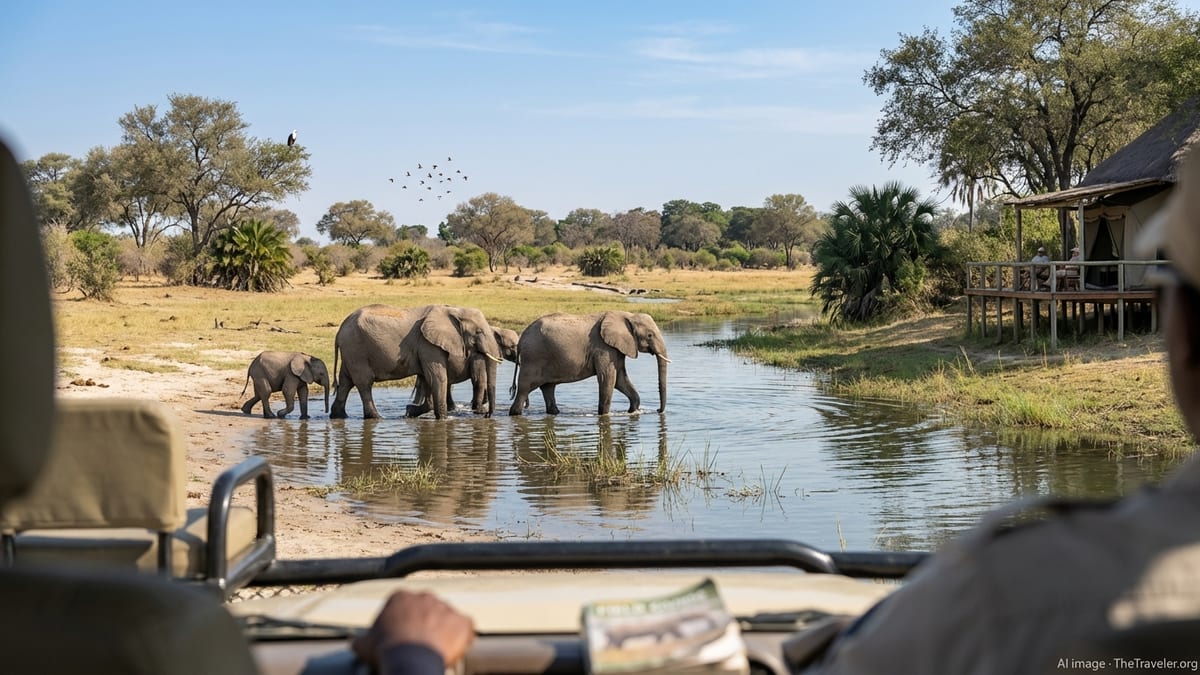
Record Flood Seasons Reshape the Okavango
After several years of concern over low water levels, Botswana’s Okavango Delta has entered a markedly wetter cycle. Travel trade reports and destination marketing updates describe 2025 as a record-breaking flood year that revived long-dry channels and floodplains, setting the stage for an exceptionally wet 2026 across the delta’s core concessions and community areas.
Hydrological assessments available to the public note that the Okavango’s flood typically peaks between June and August, when waters from Angola spread out across northern Botswana’s dry winter landscape. In high-water years, the delta can expand to several times its usual size, pulling in wildlife from a wide radius as grazing improves and permanent water becomes more reliable.
Tourism-focused briefings for 2026 indicate that this season’s flood pulse is again above average, with waterways around Maun, Moremi and the central delta filling earlier than usual. Operators are highlighting a visible rebound in wetland habitats, stronger vegetation cover and replenished lagoons that are expected to carry water later into the dry season than in recent years.
For travelers, this shift means a classic water-focused Okavango experience is firmly back on the calendar. Mokoro excursions, boating and water-level dependent activities are being promoted more prominently, while some long-standing game-drive routes are once again intersecting with deep channels that vanished during the previous drier period.
Road Closures and Changing Access in Moremi
The same floodwaters enhancing the delta’s ecological health are complicating access on land. Public advisories issued in March 2026 confirm that Moremi Game Reserve, one of Botswana’s flagship wildlife areas, temporarily closed road access from early March due to flooding after sustained heavy rains. Notices in late March indicated that reopening would be assessed based on road conditions, underscoring how quickly the situation can change week to week.
Regional travel bulletins and local media coverage describe saturated tracks, impassable black-cotton soils and submerged low-lying crossings in sections of Moremi, especially around popular areas such as Xakanaxa and Third Bridge. While fly-in lodges with airstrips have largely continued operating, self-drive visitors and mobile safaris reliant on road networks have had to re-route or postpone travel plans.
Background information on Moremi’s infrastructure points out that its sandy and seasonally flooded roads are always sensitive to water levels, but the current cycle is making those variations more pronounced. In very wet spells, some interior loops that are mainstays of dry-season itineraries become inaccessible, concentrating vehicle movements on fewer all-weather tracks and around key bridges such as those near Khwai.
Travel planning guides now advise visitors to monitor park notices closely and maintain flexibility on routing. For self-drive safaris, recommendations increasingly emphasize high-clearance four-wheel-drive vehicles, conservative daily distances and willingness to adjust camp sequences at short notice when parks announce temporary closures or detours.
Wildlife Movement Follows New Water Patterns
Across northern Botswana, publicly available ecological notes and safari operator updates point to notable shifts in wildlife movement in response to the renewed inundation. As channels and seasonal pans refill, large herbivores are dispersing more widely into freshly watered grasslands, especially along the interface between the delta, the Mababe Depression and the fringes of Chobe National Park.
The Mababe Depression, a vast seasonal wetland between the Okavango and Chobe systems, is highlighted in conservation and geographic references as a key link in regional migration corridors. In strong flood years, shallow wetlands expand here, drawing elephants, buffalo and plains game away from the main rivers for parts of the year and supporting predator concentrations that track these herds.
Safari reports from late 2025 into early 2026 describe elephants and buffalo following a dynamic pattern between Chobe’s riverfront, interior woodlands and the delta’s floodplains as water and grazing shift. In some sectors, especially around the Chobe River, high water can temporarily reduce accessible sandbars and open flats while still delivering dense afternoon gatherings of elephants at limited drinking points.
In the Okavango itself, guides’ seasonal notes compiled in travel features suggest that predators are responding quickly to the changing landscape. Lions and leopards are being recorded along new water edges and on islands that have effectively become seasonal refuges for antelope. The combination of rejuvenated grass cover and receding pools as the dry season advances is expected to create intense predator-prey interactions from mid-2026 onward.
What Flood-Driven Change Means for Safari Planning
For travelers looking at Botswana in 2026, the evolving flood and wildlife picture is reshaping practical planning decisions rather than deterring visits. Trade commentary and destination marketing campaigns are positioning this as a standout year for “water and wildlife” experiences, but with a clear message that flexibility and up-to-date information are essential.
Specialist safari operators and destination guides recommend combining land and water areas to hedge against local disruptions. Itineraries are increasingly pairing deep-delta concessions, where water-based activities dominate, with drier regions such as the Makgadikgadi Pans or the Boteti River, which act as reliable refuges for wildlife as inland pans dry out later in the season.
Travel advisories also stress timing. While Botswana remains a year-round safari destination, the months around the flood peak from June to August are expected to bring spectacular delta scenery and strong game viewing along channel margins, balanced by the risk of lingering road closures in low-lying areas. Shoulder months at the start and end of the dry season may offer easier access on land as waters stabilise or recede.
Travelers are encouraged, through public-facing guidance, to confirm domestic flight schedules, park access conditions and camp operating status shortly before departure. Booking with operators that can adjust routes at short notice, and budgeting extra time for transfers between Chobe, Moremi, Khwai and the central delta, are being positioned as sensible strategies in a year when water is both the main attraction and the key logistical challenge.
Safety, Sustainability and On-the-Ground Expectations
Recent coverage from regional tourism and conservation outlets underscores that higher floods carry both opportunities and responsibilities. On the safety side, official park notices and industry briefings highlight the importance of respecting temporary closures, avoiding unmarked water crossings and following guidance from experienced guides when tracks are waterlogged or visibility is reduced by tall wet-season grasses.
In terms of sustainability, environmental reporting on the Okavango points out that a stronger flood pulse can help dilute pollutants, revive aquatic vegetation and support fish and bird populations that underpin the broader ecosystem. However, increased tourism interest in a banner year also raises concerns about pressure on fragile wetland edges and off-road driving in saturated soils.
Conservation organisations and tourism companies that publish regular updates are promoting low-impact practices such as staying on designated tracks, limiting vehicle numbers at sightings and supporting camps that invest in community partnerships and habitat restoration. In a hydrologically complex year, these measures are framed as crucial to ensuring that wildlife benefits from the extra water without suffering from overcrowding or habitat damage.
For visitors on the ground, expectations are being recalibrated. Instead of fast-paced game drives across vast dry plains, many 2026 itineraries in Botswana are likely to feature slower explorations around islands, channels and riverfronts, more time on boats or traditional dugout canoes, and a focus on observing how a great African wetland responds when the water finally returns in abundance.