

More news on this day
Hundreds of travelers across Brazil have been left stranded after a wave of disruptions at major airports in Rio de Janeiro, São Paulo, and Florianópolis led to 227 delayed departures and 30 cancellations in a single operational window, significantly affecting LATAM Brasil, GOL Linhas Aéreas Inteligentes, Azul Brazilian Airlines, and other carriers.
Get the latest news straight to your inbox!
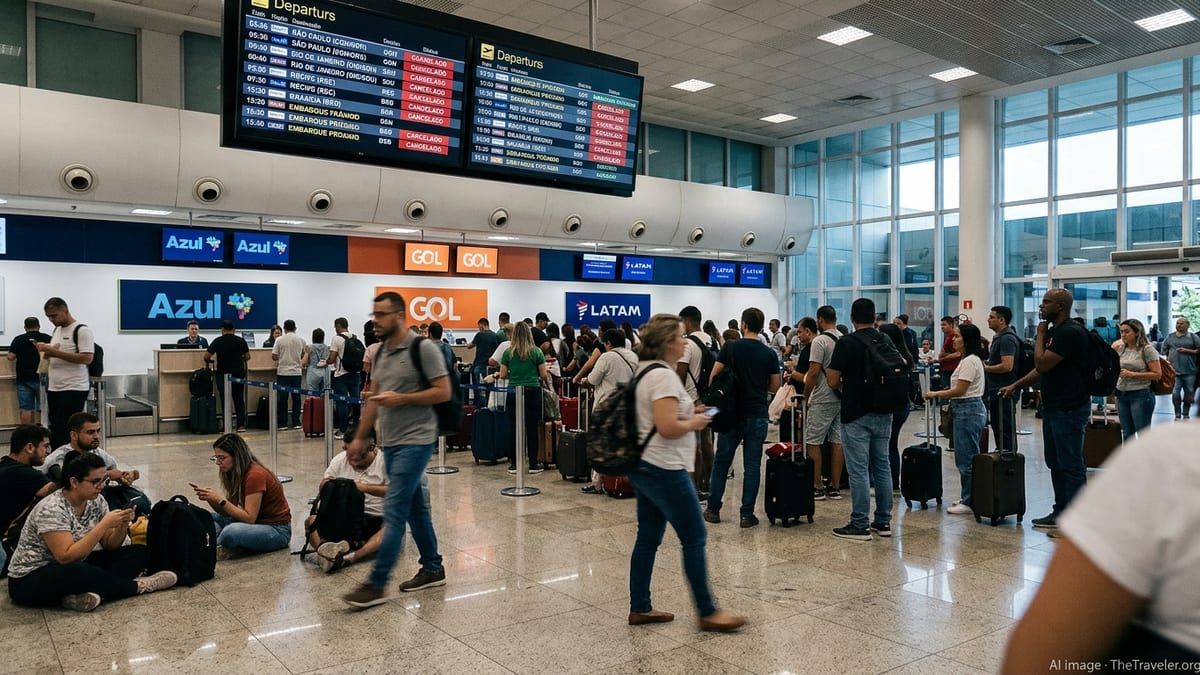
Major Hubs See Operations Strain Under Wave of Disruptions
Publicly available flight tracking data and regional coverage from April 11 indicate that the disruptions were concentrated at Brazil’s busiest coastal hubs, with Rio de Janeiro, São Paulo, and Florianópolis all reporting elevated numbers of late and canceled departures. The scale of the disruption placed particular pressure on domestic routes linking these cities, where frequent shuttle-style services typically underpin both business and leisure travel.
In São Paulo, the impact was felt across both Guarulhos and Congonhas airports, key gateways for domestic and international connectivity. Reports describe rolling delays in which departure times were repeatedly pushed back in small increments, creating uncertainty for passengers and limiting the ability of airlines to recover punctuality as the day progressed.
Rio de Janeiro’s airports and Florianópolis in the state of Santa Catarina also recorded higher-than-normal disruption levels, with late-arriving aircraft from São Paulo and other cities compounding local operational challenges. This pattern mirrors previous episodes in Brazil and overseas, where problems at a single large hub can quickly cascade through a wider network as aircraft and crews fall out of place.
The timing of the disruption, coming during a busy travel period in mid-April, raised concerns among tourism players and travel observers, who monitor punctuality at these airports as a bellwether for broader reliability across Brazil’s air transport system.
LATAM, GOL, Azul and Smaller Carriers Among Those Hit
The day’s 227 delays and 30 cancellations were spread across multiple airlines, but Brazil’s largest carriers, including LATAM Brasil, GOL Linhas Aéreas Inteligentes, and Azul Brazilian Airlines, featured prominently in operational data. Their dense schedules linking Rio de Janeiro, São Paulo, and Florianópolis made them especially exposed to knock-on problems once the first wave of flights began running late.
Coverage of the disruptions notes that LATAM Brasil shouldered a significant share of delayed services, reflecting its strong presence on high-frequency domestic routes. GOL and Azul, which also operate major shuttle traffic between the affected cities, reported a combination of late departures and select cancellations as they attempted to rebalance aircraft rotations and crew duty limits.
Smaller domestic operators and regional carriers were not immune. With airport slots and ground handling capacity already stretched, even airlines with comparatively lighter schedules faced challenges in turning around aircraft and boarding passengers within normal timeframes. In some cases, short-haul flights to secondary cities departed late after being held to accommodate inbound connections that had themselves been delayed from Rio or São Paulo.
Observers highlight that Brazil’s aviation market, which has been rebuilding capacity and demand in recent years, remains vulnerable to days when several factors align against on-time performance. When three major coastal cities all experience disruption within the same period, the effect on carriers’ finely tuned schedules can be immediate and widespread.
Knock-on Effects for Domestic and International Connections
While the majority of the delayed and canceled flights were domestic, the disruption had notable consequences for international travel as well. São Paulo and Rio de Janeiro function as primary gateways for long haul services to North America, Europe, and other parts of Latin America, and late domestic feeder flights risked undermining onward connections.
Reports indicate that some passengers heading for international departures from São Paulo and Rio were unable to make their connections after domestic legs from cities such as Florianópolis arrived behind schedule. Tight transfer windows, combined with the need to clear security and, in some cases, immigration formalities, left little margin once delays extended beyond 30 to 60 minutes.
In practical terms, this translated into missed long haul departures and the need for rebooking over alternative routings or on later flights, with travelers in some instances facing extended waits in crowded terminals. For those attempting multi-stop itineraries across South America, disrupted segments between cities such as Rio, São Paulo, and regional hubs risked unraveling carefully planned schedules.
Industry analysts note that such episodes illustrate how a single day of poor punctuality can reverberate beyond local markets. Late arrivals into international hubs can lead to aircraft being out of position for subsequent rotations, while ground handling and customer service teams must manage a sudden surge in rebooking requests and itinerary changes.
Passenger Frustration Highlights Importance of Preparation
The scale of delay and cancellation across Brazil’s key airports generated significant frustration among those caught in terminals with limited information and uncertain departure times. Accounts shared through consumer platforms and local media described crowded boarding areas, repeated schedule changes on departure boards, and difficulty accessing prompt assistance as airlines triaged the most urgent cases.
Travel advocates frequently emphasize the value of proactive planning in such scenarios, encouraging passengers to monitor flight status through airline apps and airport displays, keep essential items and documents in carry-on bags, and allow additional time when connecting between separate tickets or carriers. The events in Rio de Janeiro, São Paulo, and Florianópolis provided a fresh reminder of how quickly routine travel can be disrupted when multiple flights in a network fall behind schedule.
Publicly accessible guidance on passenger rights in Brazil also gained renewed relevance. Brazilian regulations set out when travelers may be entitled to care such as meals, accommodation, or alternative transport in cases of significant delay or cancellation. Understanding these rules in advance can help travelers navigate options more confidently when faced with long waits or missed connections.
For airlines, the disruption underscored the importance of clear, frequent communication during irregular operations. Even when technical or operational causes lie outside immediate control, timely updates regarding revised departure times, gate changes, and rebooking options can soften the impact on travelers and maintain a degree of confidence in the system.
What the Disruptions Signal for Brazil’s Air Travel Outlook
The wave of delays and cancellations across Rio de Janeiro, São Paulo, and Florianópolis comes at a time when Brazil’s aviation sector is seeking to balance growing demand with operational resilience. Traffic through the country’s main hubs has been trending upward, and airlines have been adding capacity on key domestic corridors to capture both business and leisure travel.
However, the events of April 11 highlight how thin margins can be in a crowded, high-frequency network. Weather variations, technical issues, ground infrastructure constraints, or crew scheduling challenges can quickly combine to push a busy day into significant disruption, particularly when several major airports are affected at once.
Analysts watching the Brazilian market suggest that investment in infrastructure, digital tools for real-time operations management, and more flexible contingency planning will play a key role in improving resilience. Enhanced collaboration between airports, airlines, and air navigation services may also help reduce the risk of cascading delays when initial problems arise.
For travelers planning journeys through Brazil in the coming weeks, the latest disruptions serve as a prompt to build more buffer time into itineraries, especially when relying on tight domestic connections into international flights. While most services continue to operate, the experience of hundreds of passengers grounded in Rio de Janeiro, São Paulo, and Florianópolis demonstrates how a single difficult day can reshape travel plans across an entire country.