

More news on this day
Britain has moved to temporarily suspend its passenger rail franchise system in response to the coronavirus pandemic, stepping in to underwrite revenues and keep core services running as travel demand collapses across the country.
Get the latest news straight to your inbox!
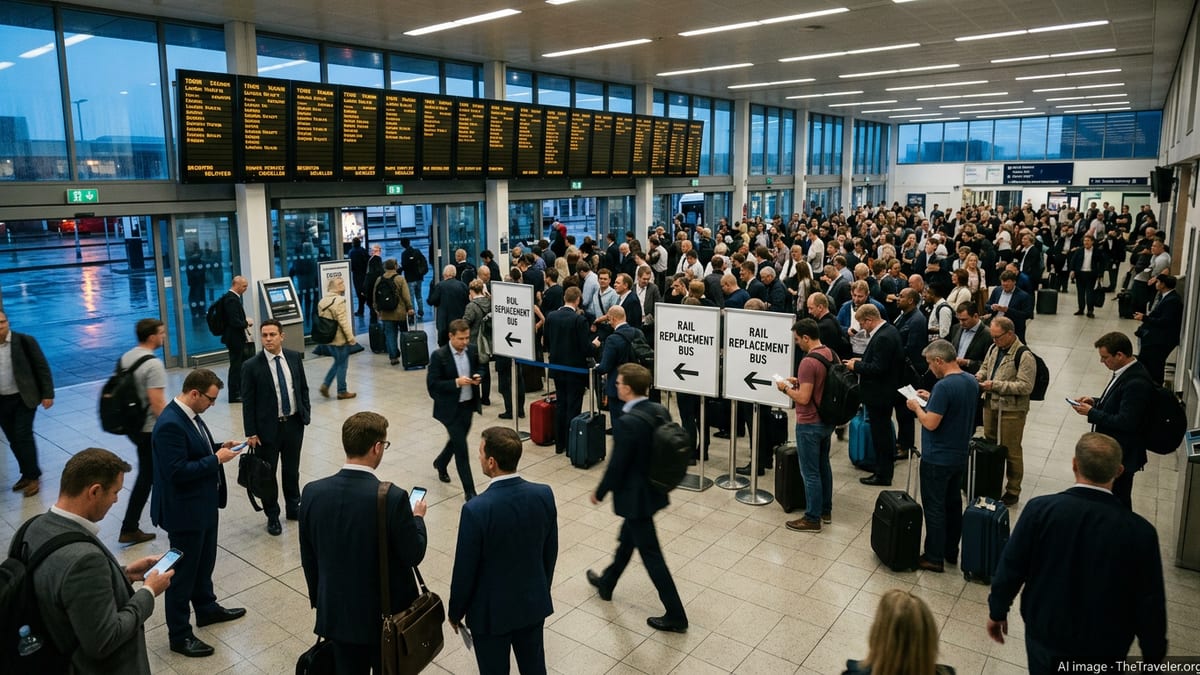
Emergency measures reshape Britain’s rail model
Publicly available information shows that from late March 2020 the UK government invited train operating companies in Great Britain to move onto short term Emergency Measures Agreements. These arrangements effectively paused the normal franchise contracts, transferring revenue and cost risk to the state for an initial six month period. Operators continued to run services, but were paid a management fee instead of relying on fluctuating ticket income.
Reports indicate that the move followed an unprecedented fall in ridership as people heeded public health advice to avoid travel. With fare income plunging and fixed costs remaining high, the existing competitive franchising model, designed for rising passenger numbers, was no longer viable in the short term. Suspending the franchises was presented as a way to prevent abrupt operator failures while keeping trains available for those who still needed to travel.
Under the new structure, the Department for Transport in England and relevant authorities in Scotland and Wales took on financial responsibility for most passenger services. Operators retained day to day responsibilities for staffing, safety and operations, but strategic control over timetables, capacity and revenue effectively shifted towards government. Analysts described the shift as a temporary form of de facto national control, even though ownership of the private operators did not change.
The emergency changes built on earlier interventions on specific routes. Northern, one of the largest commuter operators in the north of England, had already been brought under a public sector operator of last resort from March 2020 following long running performance and financial difficulties. The coronavirus response extended intensive state involvement across almost the entire passenger rail network.
Essential services prioritised as demand collapses
According to published coverage, one of the core aims of suspending the franchises was to protect essential rail links for key workers and necessary journeys. As lockdown measures and work from home guidance took effect, passenger numbers on some routes reportedly fell by more than 90 percent. Running the full pre crisis timetable on a purely commercial basis was no longer financially sustainable.
In coordination with the emergency contracts, a reduced national timetable was agreed. Frequencies were cut on many intercity and commuter services, with priority given to lines serving major hospitals, logistics hubs and key employment centres. The intention was to match capacity more closely to sharply lower demand while preserving enough space on trains to support social distancing requirements.
Refund policies were also adjusted. Government announcements and operator statements confirmed that season ticket holders who were no longer commuting could claim pro rata refunds or change their products, reducing the risk that regular passengers would be left out of pocket. For travel that still needed to take place, flexible ticketing options were expanded in some areas to reflect changing work patterns.
Industry observers noted that the emergency arrangements created a more unified approach to service planning across regions and brands. With revenues pooled at central level rather than allocated by franchise, timetable decisions could be taken with a stronger focus on network coverage and resilience rather than individual operator profitability. For travellers, the immediate impact was fewer trains on many lines but greater certainty that core services would continue to operate.
Financial implications for operators and taxpayers
The suspension of rail franchises during the coronavirus crisis had significant financial implications. Instead of earning profits or bearing losses based on ticket revenue, operators were paid fixed management fees linked to their pre pandemic cost base. Government documentation indicates that these fees were capped at modest levels, with incentives focused on maintaining performance, reliability and customer service despite the challenging conditions.
For private train companies, the approach removed the immediate risk of insolvency caused by the collapse in ridership, while also limiting upside gains. Share price movements around the announcement suggested relief that the sector would be supported, but analysts highlighted that longer term returns would depend on what permanent structure replaced franchising once emergency measures ended.
For the public finances, the impact was substantial. With revenue risk transferred to the state, taxpayers effectively absorbed the shortfall between operating costs and sharply reduced fare income. Estimates in economic analysis and parliamentary briefings pointed to multibillion pound support over the first months of the pandemic, reflecting the cost of keeping a largely fixed rail infrastructure running for a much smaller pool of passengers.
Travel and consumer groups raised questions about the balance between necessary support and value for money. Some argued that if the state was assuming most of the financial risk, future arrangements should deliver clearer public benefits such as integrated ticketing, simplified fares and stronger passenger rights. Others warned that prolonged high subsidies might prompt pressure for future cuts to less used services if demand did not recover quickly.
From temporary suspension to deeper rail reform
While the initial suspension of franchise agreements was framed as a time limited response, it quickly became linked to longer term rail reform. Even before the pandemic, a government commissioned review led by Keith Williams had criticised the complexity of the franchising model, citing failures on several high profile routes and widespread passenger dissatisfaction with punctuality and value.
As the first six month Emergency Measures Agreements approached expiry, the government introduced new Emergency Recovery Measures Agreements and then more durable “recovery style” contracts. These arrangements further reduced commercial risk for operators and, according to official statements, were designed to bring the traditional franchising system to an orderly close. Strategic decisions about revenue, timetables and capacity were drawn closer to government, while private firms continued in a more tightly defined operating role.
Commentary from transport specialists suggested that the coronavirus crisis accelerated changes that had been under consideration for several years. With passenger habits altered by remote working and concerns about crowded public transport, forecasts indicated that rail demand might take years to return to pre pandemic levels, if at all. That uncertainty made it difficult to sustain long term competitive franchises based on specific revenue projections.
For travellers, the emerging model pointed toward more standardised contracts, potentially simplified branding and closer integration across modes. The precise balance between public control and private operation continues to evolve, but the suspension of franchises in early 2020 is widely viewed as a turning point that reshaped how rail in Great Britain is funded and managed.
Impact on future travel patterns and confidence
The pause in franchising during the coronavirus outbreak also influenced expectations about future travel. With rail ridership dropping rapidly during lockdowns and recovering unevenly as restrictions eased, operators and policymakers began to reassess traditional assumptions about five day commuting patterns into city centres. Flexible season tickets and altered peak pricing were explored as tools to adapt to more varied working weeks.
Travel industry analysts observed that restoring confidence in shared transport would require visible safety measures and clear communication. Enhanced cleaning regimes, on board announcements about distancing and face covering policies, and adjusted station management all became part of the operating picture under the emergency contracts. For international visitors and domestic leisure travellers, these steps aimed to reassure that rail remained a practical option once broader travel restrictions began to lift.
Over time, the way Britain chose to support and restructure its railways during the pandemic is expected to shape route investment, service planning and integration with other modes such as regional buses and urban transit. The suspension of franchises was not only a short term response to a public health emergency but also a catalyst for rethinking how a national rail network should serve changing patterns of work, tourism and everyday mobility.