


More news on this day
Emergency responders converged on South Charleston after a freight train derailed near a busy rail corridor, disrupting service and drawing attention to rail safety and infrastructure conditions in the area.
Get the latest news straight to your inbox!
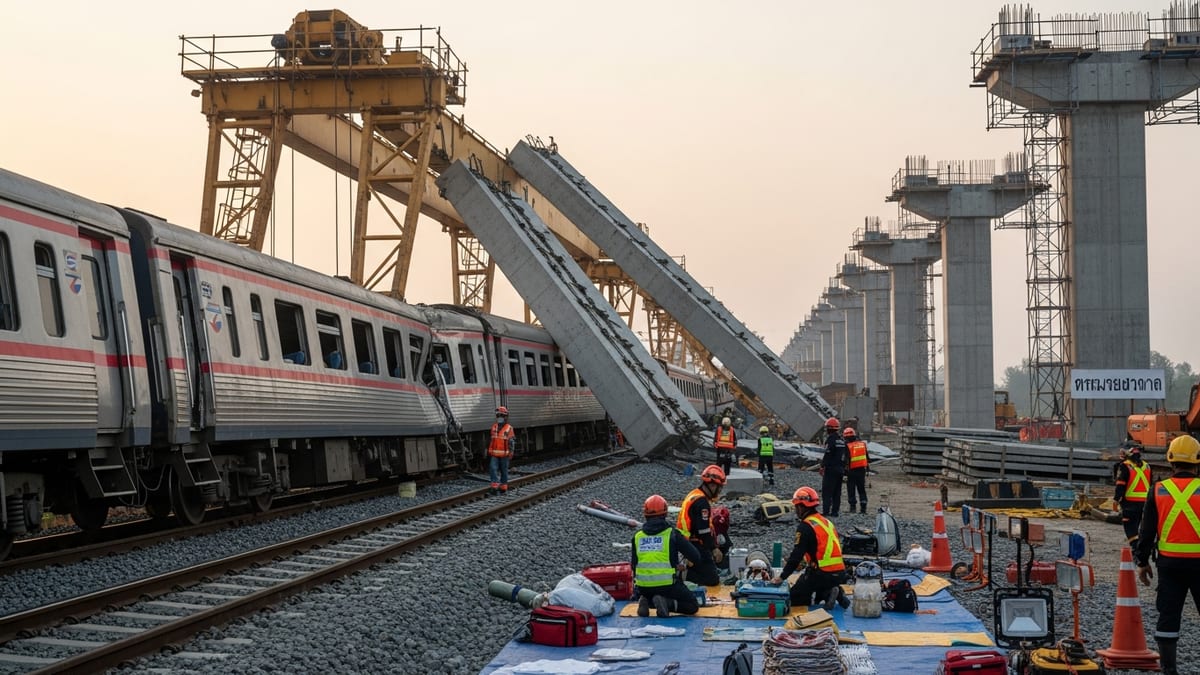
Freight Cars Leave Tracks in South Charleston
Reports from local and regional outlets indicate that multiple freight cars left the tracks in South Charleston, prompting a large response from fire, police, and medical crews. Initial information suggests the incident occurred near an active industrial and residential area, where rail lines carry a mix of general freight through the city.
Early coverage describes several rail cars derailing and coming to rest alongside the track bed. While detailed assessments of damage are still developing, images and videos shared on social media show emergency vehicles positioned along the line, with crews working to secure the scene and assess the railcars.
At this stage, publicly available information does not indicate a large fire or significant hazardous materials release. However, responders appear to be treating the incident cautiously, with containment measures and safety perimeters in place while rail operators and investigators begin documenting the damage.
Rail traffic through the area has been disrupted, with some passenger and freight movements either halted or rerouted while track inspections and cleanup operations get underway.
Emergency Response and Local Disruption
Coverage from regional newsrooms and social media posts shows a coordinated response from multiple agencies converging on the derailment zone. Fire crews are visible checking railcars for leaks, while medical units stage nearby in case of injuries among rail workers or nearby residents.
Nearby streets and crossings appear to have been temporarily closed, affecting vehicle traffic and potentially delaying commutes for residents. Some travelers have reported detours and slower journeys as roadblocks are established around the impacted segment of track.
Rail operators are working alongside public safety teams to stabilize the derailed cars and determine when heavy equipment can begin the painstaking process of rerailing or removing damaged rolling stock. Utility personnel may also be inspecting lines, pipes, or communication cables that run parallel to the tracks to ensure that no secondary infrastructure damage occurred.
Publicly available information indicates that officials are monitoring air quality and runoff in the immediate vicinity as a precaution, a step that has become standard in modern derailment responses even when early signs do not point to a major spill.
Questions Around Cargo and Environmental Risk
In the early hours after a derailment, one of the primary questions for communities and travelers is what the train was carrying. Coverage so far suggests that the consist involved standard freight cars, though details on individual cargoes remain limited while rail companies and regulators complete their initial checks.
In recent years, incidents in places such as East Palestine, Ohio, and other U.S. rail corridors have heightened public sensitivity to hazardous materials shipments. As a result, any derailment now tends to draw close scrutiny of tank cars, placards, and cargo manifests, even when early indications suggest low immediate risk.
Environmental agencies typically review data from the scene, including visual inspections of soil and drainage ditches near the right of way, and may request water testing if there is any sign that fuel, lubricants, or other substances have reached nearby streams or storm drains. For travelers and nearby residents, these checks provide reassurance that longer-term impacts are being evaluated beyond the initial emergency phase.
If freight cars carrying sensitive or hazardous products are confirmed to be involved, it is common for railroads and public agencies to expand monitoring and cleanup measures, including soil removal or the placement of protective barriers during debris removal.
Rail Service, Travel Impact, and Recovery Timeline
While the derailment site is secured, rail traffic in and around South Charleston is expected to experience delays. Freight schedules are often the first to adjust, with trains held outside the affected segment or rerouted over alternate lines where network capacity allows.
Passenger services that share the corridor may experience modified timetables, bus bridges, or cancellations until track and signaling systems are cleared for use. Rail companies typically prioritize inspections of rails, ties, ballast, and nearby bridges to ensure that no hidden structural issues remain after heavy equipment has operated in the area.
The recovery process usually unfolds in phases: emergency stabilization of the scene, removal of damaged cars, repairs to track and supporting infrastructure, and then test runs before regular operations resume. Depending on the extent of damage, this can range from several hours to multiple days of disruption for rail travelers and freight customers alike.
Travelers planning rail journeys through the region are being advised, through publicly available alerts and news coverage, to check schedule updates and be prepared for possible last minute changes while recovery work continues.
Derailment Renews Focus on Rail Safety
The South Charleston derailment is adding to a broader national conversation about rail safety, inspection practices, and infrastructure investment. Data from federal transportation agencies and independent research has shown that while rail remains one of the more efficient modes for moving freight, derailments can have outsized consequences when they occur near communities.
Industry reports describe ongoing efforts to improve track monitoring, increase the use of advanced inspection technologies, and refine operating practices to reduce the likelihood of mechanical failures or track defects. At the same time, recent incidents in several states have prompted calls for more transparency about what trains carry through populated areas.
For local residents and travelers, the visible presence of emergency crews and heavy equipment along the tracks in South Charleston is a reminder of how closely transportation infrastructure runs alongside homes, businesses, and roadways. As investigators review data recorders, track conditions, and train handling in the moments before the derailment, their findings are expected to inform both local mitigation measures and wider policy discussions on rail safety standards.
Until more technical details emerge from the ongoing assessments, the focus in South Charleston remains on clearing the damaged railcars, restoring normal traffic, and reassuring nearby communities that travel through the corridor can safely resume.