

More news on this day
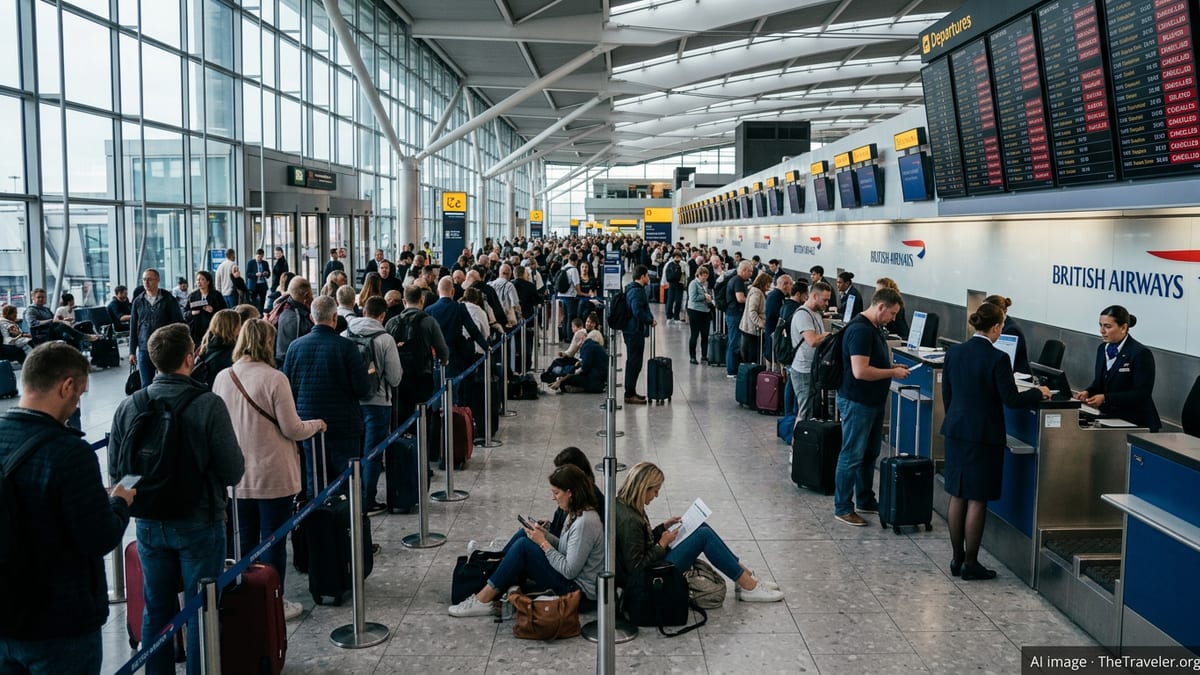
Hundreds of British Airways passengers have been left stranded at UK airports and overseas as the carrier cancels a growing number of flights in response to Middle East airspace closures, strike action and an escalating regional conflict that is sending shockwaves through global travel.
Get the latest news straight to your inbox!
Middle East Airspace Shutdown Triggers Wave of Cancellations
British Airways has been forced to scrap much of its schedule to and from the Gulf and wider Middle East after Iran, Iraq, Israel, Qatar and several Gulf states either closed or sharply restricted their airspace in late February and early March. The shutdown followed a rapid escalation in the conflict involving the United States, Israel and Iran, with missile and drone strikes prompting authorities to halt normal commercial traffic across key corridors.
Industry data and airline advisories indicate that British Airways has suspended flights on high profile routes including Dubai, Doha, Abu Dhabi and Amman, while operating limited rescue services where security and airspace conditions allow. The airline’s parent group, IAG, has warned investors of significant operational and financial impact as aircraft are grounded or forced into lengthy detours on remaining long haul services.
The closures have effectively severed one of the world’s most important aviation crossroads, with hubs in the United Arab Emirates and Qatar normally funnelling passengers between Europe, Asia, Africa and Australasia. For British Airways, which relies on these destinations both as endpoints and as vital connection points for UK travellers, the sudden loss of access has triggered a chain reaction of schedule cuts and rolling disruption.
Travel analysts say the impact has been magnified by the timing, coming just as airlines head into the busy spring holiday period. With many flights fully booked weeks in advance, rebooking options for affected British Airways customers have quickly dwindled, leaving growing numbers of passengers stuck at departure points with little clarity on when they can move.
Passengers Face Long Queues, Limited Information and Hotel Scramble
At London Heathrow, where British Airways operates the bulk of its long haul network, departure boards this week have shown clusters of cancelled services to Middle Eastern destinations alongside knock on cancellations to Asia and Africa that relied on overflying the region. Travellers have reported long queues at customer service desks, congested call centres and repeated advice to manage changes via the airline’s website or app.
Some stranded passengers returning to the UK from the Gulf have found themselves unexpectedly routed through alternative European hubs or on multi stop itineraries via Central Asia or Africa, journeys that in some cases are taking many hours longer than originally planned. Others whose destinations remain off limits report being offered travel vouchers or refunds, but no clear timeframe for when direct links will resume.
For holidaymakers and business travellers stuck overseas, securing accommodation has become an added challenge. Hotels near major airports in the Middle East and in London are reporting strong last minute demand from disrupted passengers facing overnight waits or multi day delays. While British Airways is providing rooms and meals where legally required, capacity constraints and the sheer scale of the disruption mean some travellers are having to arrange and later claim back their own expenses.
Families with young children and elderly travellers appear to be among the hardest hit, with priority given to those with confirmed bookings on limited relief flights out of affected hubs. Travel agents in the UK say they are fielding urgent calls from customers desperate to get relatives home, often with few available alternatives at reasonable prices.
Strikes and Staffing Disputes Add Pressure to an Overstretched Network
The conflict related airspace closures have collided with ongoing labour tensions at British Airways and across parts of the European aviation sector. Cabin crew and ground staff unions have been threatening or staging industrial action over pay, rosters and working conditions as airlines push to rebuild profitability after several difficult years.
While some of the strike dates have been short and targeted, they have further reduced scheduling flexibility at a time when the airline is already juggling complex reroutings and last minute operational changes. Even limited walkouts among security staff, baggage handlers or air traffic controllers at key European hubs can ripple outward, causing additional cancellations or missed connections for British Airways passengers bound for or returning from the Middle East.
The result is a fragile operating environment in which any new disruption, whether weather related or technical, risks tipping individual days into wider chaos. Aviation unions argue that chronic understaffing and aggressive cost cutting have left airlines ill prepared to absorb external shocks on this scale, while passenger advocates say travellers are paying the price in the form of cancellations, delays and confusing communication.
British Airways insists it is working closely with unions and airport partners to minimise the impact on customers, but with the war in the Middle East showing no immediate sign of easing, the airline has warned that its schedule will remain subject to short notice changes in the days ahead.
Global Itineraries Unravel as Rerouting Adds Time and Cost
The disruption extends far beyond point to point routes between the UK and the Middle East. With large sections of regional airspace effectively off limits, British Airways and other European carriers are having to thread their way along narrower corridors over Saudi Arabia or further north via Turkey and Central Asia. These detours add significant flying time and fuel burn, which in turn strain crew duty limits and fleet availability.
Some UK bound passengers originating in Asia or Australasia who would normally connect through Gulf hubs are now being rerouted via alternative European gateways or forced to piece together multi ticket journeys. Travel managers for corporate clients say they are rethinking routings for essential business trips, often at higher fares and with longer layovers, while postponing non urgent travel altogether.
Tour operators report a spike in itinerary changes as travellers abandon complex multi country trips that relied on transiting Dubai, Doha or Abu Dhabi. Instead, many are opting for more direct links between Europe and Asia where possible, or switching destinations entirely to avoid the region while the conflict continues.
Insurers are also bracing for a surge in claims related to cancelled flights, missed connections and extended hotel stays. Policy wording varies, but many standard leisure travel policies treat war and armed conflict as exclusions, leaving some British Airways customers uncertain about what costs they can realistically recover beyond the airline’s statutory obligations.
What British Airways Passengers Should Do Now
Consumer advocates and travel industry groups are urging British Airways passengers to stay informed and act quickly if their travel touches the Middle East or relies on long haul connections that might overfly the region. The first step, they say, is to monitor booking status closely and avoid heading to the airport unless a flight is confirmed as operating.
Where flights have been cancelled, passengers are generally entitled to a choice between rebooking at the earliest opportunity, travelling at a later date, or receiving a refund. However, with seats on remaining services extremely limited, those who can be flexible on dates, routes and even departure airports stand the best chance of securing alternatives.
Travel agents recommend documenting all additional costs, from meals to accommodation and ground transport, in case they can be reclaimed from the airline or via insurance. They also suggest allowing far longer than usual for connections on complex itineraries that could be affected by rerouting or knock on delays, and considering backup plans if travelling for time sensitive events.
For now, the scale and unpredictability of the Middle East conflict mean British Airways customers may face a prolonged period of uncertainty. With hundreds already stranded and thousands more journeys likely to be reshaped in the coming days, the disruption is emerging as one of the most serious tests of the UK flag carrier’s resilience in years.