

More news on this day
A British Airways flight diversion to St. John’s, Newfoundland last week left hundreds of passengers stranded for several days without their checked luggage, drawing scrutiny of the airline’s handling of the disruption and renewed attention to how remote airports absorb large-scale, unplanned arrivals.
Get the latest news straight to your inbox!
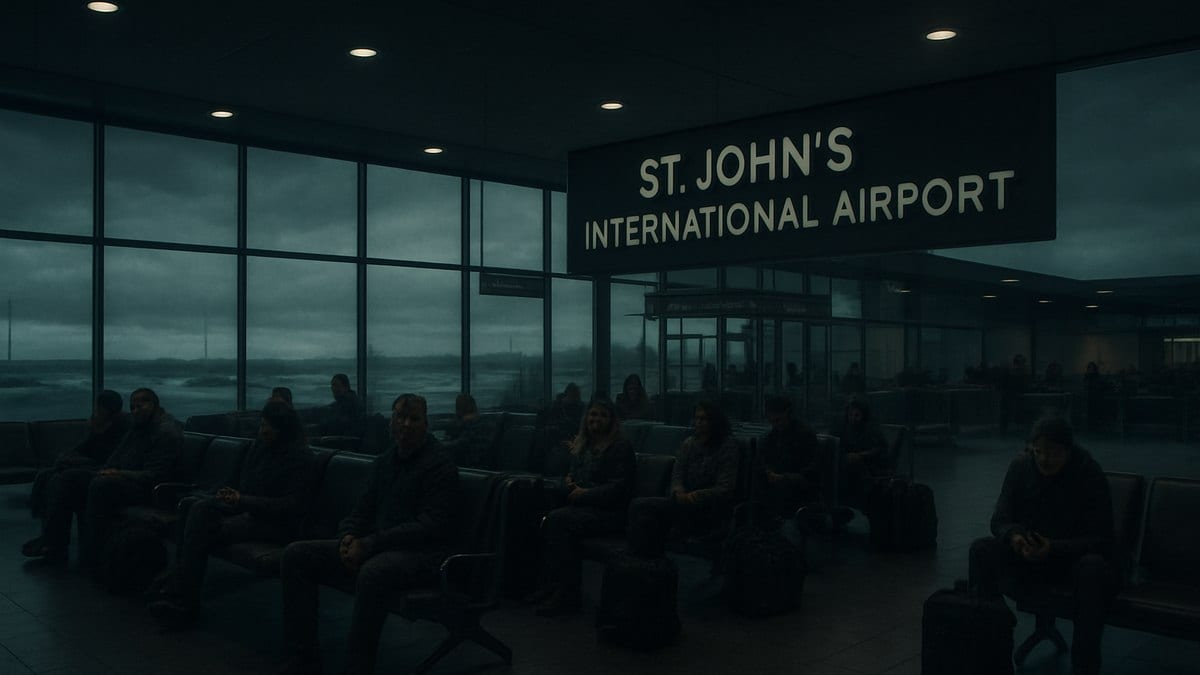
Medical Emergency Turns Transatlantic Flight into Unexpected Stopover
According to published coverage, the British Airways service was operating from Europe to the United States when a medical issue on board prompted a diversion to St. John’s International Airport in Newfoundland and Labrador. Flight-tracking data referenced in news reports shows the aircraft touching down in St. John’s instead of continuing to its scheduled destination, converting a routine transatlantic crossing into an unscheduled layover for roughly 250 passengers.
Publicly available information indicates that the diversion itself followed standard aviation protocol, with the crew opting to land at the nearest suitable airport so the affected traveler could receive medical care. Once on the ground, however, the operational disruption spiraled into a multi-day stay for many on board, as onward travel arrangements and aircraft availability lagged behind demand.
Reports indicate that passengers were eventually transported to local hotels, primarily in and around downtown St. John’s. For many travelers, the abrupt change meant missed connections, events, and work obligations back in the United States and beyond, amplifying frustration as the delay stretched from hours into days.
Coverage across multiple outlets notes that while safety considerations justified the initial diversion, the length of the subsequent disruption and the lack of timely rebooking options underscored how vulnerable long-haul passengers can be when irregular operations occur away from major hubs.
Passengers Report Days Without Luggage and Patchy Information
News stories and first-person accounts shared publicly describe a particularly sore point for many travelers: limited or no access to checked luggage for much of their stay in Newfoundland. Families with young children reported having no ready access to diapers, winter clothing, or basic toiletries, despite overnight temperatures and wind chills that reinforced the island’s early-spring chill.
Passengers quoted in various reports describe confusion over why bags could not be released more quickly once it became clear that onward flights were not imminent. Some accounts claim that travelers spent multiple nights in hotels wearing the same clothes they had boarded in, while relying on small amenity kits for essentials such as toothbrushes and socks.
According to publicly available reporting, communication from the airline was another major source of complaint. Several accounts describe long queues at service desks, difficulty reaching call centers, and limited real-time updates about rebooked itineraries. Others highlight uncertainty over compensation, duty-of-care obligations, and the timeline for getting out of St. John’s, particularly as successive departure estimates appeared to shift.
Consumer advocates cited in recent coverage note that such scenarios illustrate longstanding gaps in how airlines manage care obligations when disruptions occur outside their primary operating bases. Passengers, they argue, often lack clear, consistent information about what they can expect in terms of hotel accommodation, meals, and reimbursement for essential purchases during prolonged delays.
“Freezing Island” Narrative Meets Newfoundland Hospitality
The incident also ignited a broader conversation about Newfoundland’s public image. Headlines in some international coverage referred to passengers being stranded on a “freezing” or “remote” Canadian island, language that quickly circulated on social media and drew pointed, often humorous pushback from Newfoundlanders.
Commentary and posts shared online highlight local frustration with portrayals of the province as a barren outpost, especially given St. John’s status as a provincial capital with a well-developed tourism sector. Social media users responded with tongue-in-cheek videos, weather statistics, and references to the hospitality historically shown to diverted passengers, most famously during the 2001 Operation Yellow Ribbon diversions that inspired the stage musical “Come From Away.”
Reports indicate that hotel staff in St. John’s worked extended hours to accommodate the influx of travelers. Some accounts describe local employees arranging buffet-style meals in conference spaces and helping passengers secure clothing and supplies in the nearby city, even as they managed full or near-full occupancy.
For many visitors, the unplanned stop produced a mixed impression: deep frustration with the disruption and airline communication, coupled with appreciation for the efforts of front-line staff at the airport and in local hotels who became the primary point of contact during the ordeal.
Questions Raised Over Airline Irregular-Operations Planning
The diversion has renewed debate over how major carriers plan for irregular operations at smaller airports that may not be central to their networks but sit along busy transatlantic corridors. Industry analysts quoted in recent media reports note that St. John’s and Gander have long served as emergency diversion points for flights linking Europe and North America, yet relatively few scheduled services operate there for British Airways.
When a diversion of this scale occurs, airlines must arrange hotel rooms, ground transportation, catering, crew rest, and replacement aircraft or rebooking options, all while complying with local regulations and international consumer-protection rules. Publicly available commentary suggests that, in this case, the scale and duration of the disruption exposed weaknesses in contingency planning for a high-capacity wide-body aircraft landing unexpectedly at a secondary airport.
Reports also point to wider strain across global aviation in recent months, with weather events, air traffic control issues, and staffing challenges all contributing to a higher baseline of delays and cancellations. In such an environment, freeing up spare aircraft and flight crews to recover a single disrupted route can be difficult, especially when it requires repositioning long-haul jets across the Atlantic.
Consumer-rights organizations following the case are drawing attention to existing rules governing compensation and care obligations for passengers delayed or rerouted under different jurisdictions. While safety-related diversions often fall into complex regulatory grey areas, advocates argue that the practical experience for travelers hinges less on legal nuance and more on how quickly an airline can restore reliable, predictable itineraries.
Stranded Travelers Weigh Legal Rights and Future Travel Choices
As passengers continue to share their stories online, attention is turning to what recourse may be available for those who experienced lost time, missed events, and additional expenses during the days spent in Newfoundland. Legal commentary cited in media coverage notes that eligibility for compensation can depend on factors such as the cause of the diversion, the airline’s home jurisdiction, and where each ticket was purchased.
Some travelers have described compiling receipts for clothing, toiletries, and local transport, anticipating reimbursement claims through the airline’s standard customer-relations process. Others are exploring whether broader compensation may apply, while acknowledging that a medically motivated diversion typically carries different obligations than disruptions tied to operational or staffing issues.
The incident is also shaping perceptions of airline reliability among frequent travelers. In online forums and travel communities, participants are already discussing how they weigh nonstop routes against connections, the value of comprehensive travel insurance, and the importance of packing medication and a change of clothes in carry-on bags on long-haul flights.
For Newfoundland and Labrador, the episode has once again highlighted the province’s unusual role in modern aviation: a place that can, at a moment’s notice, become a temporary home for hundreds of unplanned guests. For British Airways and other global carriers, it adds another high-profile case study to the growing list of disruptions that will likely inform how irregular-operations playbooks are written in the months ahead.