

More news on this day
Buenos Aires is set to host Sofitel’s first branded residences in Argentina, a landmark project in Puerto Madero that underscores renewed confidence in the city’s high-end real estate and luxury tourism appeal.
Get the latest news straight to your inbox!
A New Chapter for Sofitel in Argentina
The upcoming Sofitel Residences Buenos Aires Madero marks a strategic evolution for the French luxury brand, extending its footprint beyond traditional hotels into long-stay urban living. Publicly available information on Accor’s branded residence portfolio highlights the Puerto Madero project as one of the brand’s earliest standalone residential ventures in the world and the first under the Sofitel flag in Argentina.
The development follows years of Sofitel’s presence in the Argentine market through properties such as Sofitel Buenos Aires Recoleta, and reflects a broader move by major hotel groups into residential offerings that pair hospitality services with private ownership. Industry reports indicate that branded residences have become a key growth segment for global operators seeking to diversify income streams and deepen their relationship with affluent travelers.
Positioning Buenos Aires as the launchpad for Sofitel’s first branded residences in the country suggests a vote of confidence in the capital’s long-term prospects. While Argentina has weathered significant macroeconomic volatility, premium segments of the property market, particularly in coveted waterfront districts, continue to attract local and international buyers looking for assets backed by globally recognized brands.
Puerto Madero’s Waterfront Becomes a Global Luxury Showcase
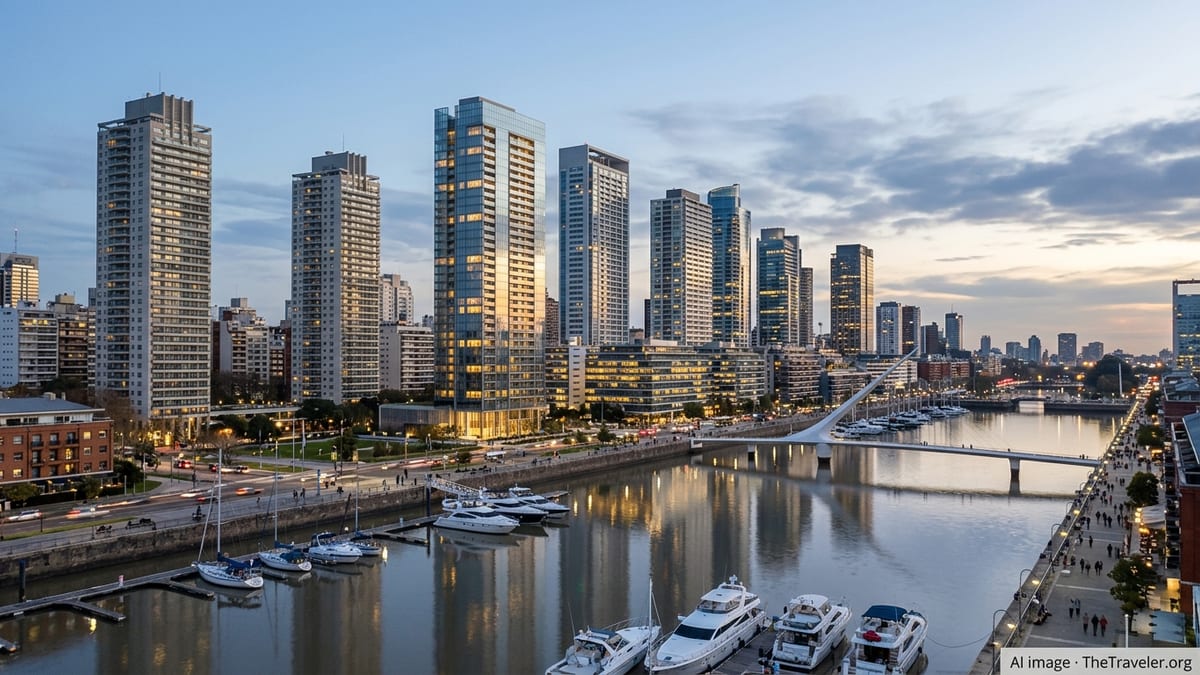
The new Sofitel residences will rise in Puerto Madero, a redeveloped docklands district that has become Buenos Aires’s showcase for contemporary architecture, high-rise living, and upscale hospitality. Reports on the project describe a 43-story tower with around 188 residences, situated in Dique 4, one of the neighborhood’s most sought-after basins for its open river views and proximity to the city’s historic core.
Puerto Madero has undergone a radical transformation over the past three decades, evolving from disused port infrastructure into a dense cluster of glass towers, corporate offices, luxury hotels, and high-end residential complexes. Existing landmarks such as Alvear Tower and other premium residences have helped define a new skyline along the Río de la Plata, and the Sofitel-branded tower is expected to further consolidate the area’s reputation as the capital’s preeminent luxury corridor.
Urban design analysis of the neighborhood notes its wide boulevards, pedestrian promenades, and relative separation from the congestion of downtown streets as key attractions for high-net-worth residents. The arrival of Sofitel’s branded residences reinforces Puerto Madero’s role as a laboratory for global hotel brands experimenting with mixed-use and residential formats in Latin America.
Inside Sofitel Residences Buenos Aires Madero
Preliminary project details describe a vertical community combining private residences with a curated suite of hotel-inspired amenities. According to promotional materials for Sofitel Residences Buenos Aires Madero, the tower will blend local Argentine design cues with references to French “art de vivre,” a hallmark of the Sofitel brand. The residences are expected to offer expansive views toward the city skyline, the ecological reserve, and the river, capitalizing on the site’s corner position in Puerto Madero.
The building program is projected to include serviced apartments, guest suites, wellness and fitness facilities, lounges, and curated public areas designed to mirror the atmosphere of an upscale urban resort. Owners are anticipated to have access to services such as 24-hour reception, security, housekeeping options, and concierge-style support, positioning the property as a hybrid between private home and full-service hotel.
Architectural commentary on the scheme highlights its intent to act as a new urban landmark in Buenos Aires, with a height and silhouette designed to stand out within an already competitive skyline. The tower is targeted for completion around 2030, aligning with a development cycle that anticipates a gradual strengthening of the city’s luxury real estate and tourism markets over the coming years.
Branded Residences Gain Ground in Latin America
The Buenos Aires project joins a growing pipeline of branded residences across Latin America, where international operators are responding to demand from globally mobile buyers seeking managed, turnkey homes in major urban and resort destinations. Market overviews on the segment show an expanding roster of hotel brands, including several within the Accor portfolio, that are attaching their names to high-rise apartments, villas, and mixed-use complexes.
In this context, Sofitel Residences Buenos Aires Madero stands out as both a first for the brand in Argentina and a signal of its ambitions in the regional luxury residential arena. Industry analyses describe branded residences as typically commanding price premiums over comparable non-branded units, supported by perceived quality, service standards, and access to loyalty programs and global networks.
Latin American capitals such as Mexico City, Santiago, and São Paulo have already attracted interest from international hotel-led residential developers. Observers note that Buenos Aires, with its combination of cultural capital, architectural heritage, and favorable price positioning for some foreign buyers, is now beginning to appear more frequently on the radar of global hospitality groups exploring residential formats.
Implications for Investors and the Local Market
The arrival of Sofitel’s first branded residences in Argentina is expected to have ripple effects across the local luxury property market. Real estate commentators suggest that the presence of a globally recognized hospitality brand can help anchor investor confidence, particularly in a context where currency fluctuations and economic uncertainty remain part of the operating environment.
Branded residential projects are often marketed as relatively secure havens within volatile markets, due to standardized governance, professional management, and the potential for rental programs tied to established hotel distribution channels. In Buenos Aires, where premium new-build inventory is limited to a handful of prime districts, the Sofitel tower may help set new benchmarks for pricing and service levels.
The project is also likely to intensify competition among developers and rival brands looking to differentiate their offerings in Puerto Madero and beyond. Analysts of the hospitality sector point to a broader global trend in which top-tier hotel groups leverage their names not only on hotel doors but on residential entryways, private clubs, and branded communities. With Sofitel’s first residences in Argentina now moving forward, Buenos Aires is poised to play a visible role in this evolving intersection of luxury living and hospitality.