

More news on this day
Bulgaria has taken a decisive step in modernising its aging passenger rail fleet with the arrival of its first RegioPanter electric multiple units, a milestone that transport officials say will boost reliability, comfort and regional connectivity across the country’s core corridors.
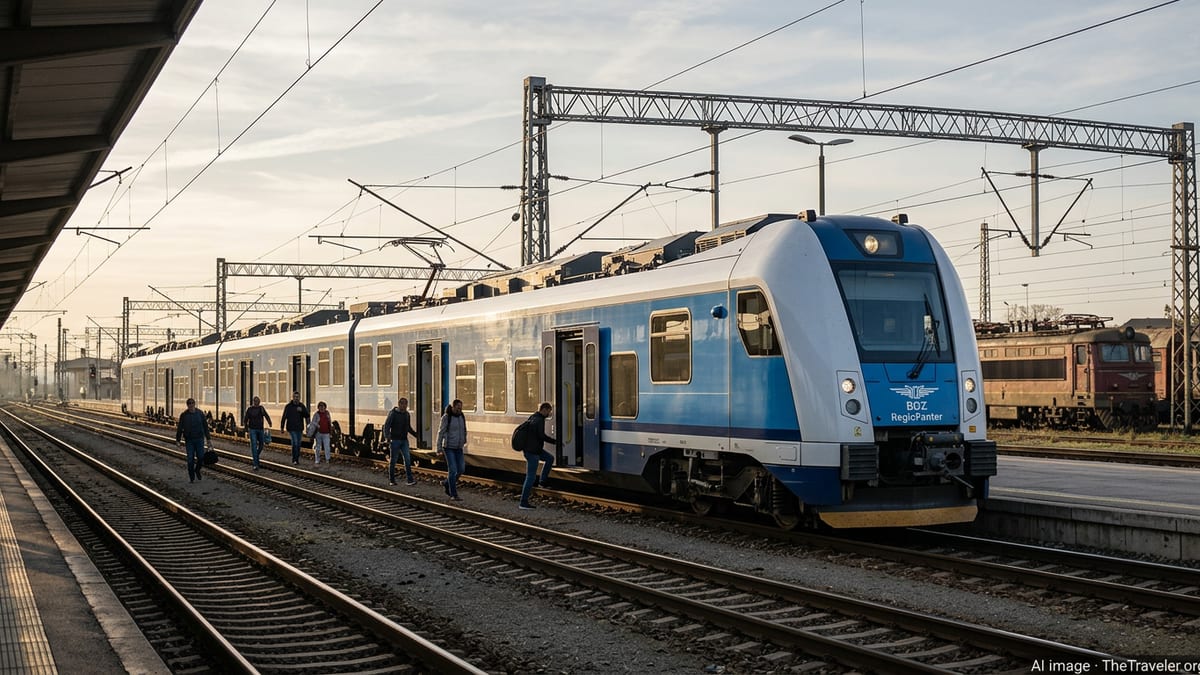
First RegioPanter Units Signal New Era for BDZ
The new trains, supplied by Czech manufacturer Škoda Group, are part of a broader national programme to renew rolling stock after decades of underinvestment. The first completed RegioPanter unit for Bulgaria was unveiled at Škoda’s Pilsen plant in late 2025, kicking off a delivery schedule that will see multiple sets enter service on electrified routes over the next few years.
Built to European interoperability and safety standards, the RegioPanter units are designed for regional and interurban services, with operating speeds tailored to the upgraded sections of Bulgaria’s rail network. Their entry into the Bulgarian State Railways (BDZ) fleet marks the country’s first large-scale deployment of modern electric regional trains, aligning its passenger offer more closely with central European norms.
Transport officials have framed the arrival of the first units as a tangible sign that long-promised fleet upgrades are finally materialising. After years in which locomotive failures and aging coaches routinely disrupted timetables, the new trains are expected to significantly reduce breakdowns and improve punctuality once they are in regular operation.
Part of a Multi-Billion-Lev Modernisation Program
The RegioPanter delivery comes alongside a series of contracts worth hundreds of millions of euro aimed at renewing Bulgaria’s rail fleet. In parallel to the Škoda regional units, the government has ordered 35 Coradia Stream interregional electric trains from Alstom under the National Recovery and Resilience Plan, with test runs already under way and commercial deliveries due to start from 2026.
Separately, BDZ has expanded its fleet of Smartron electric locomotives to 25 units, completing a contract launched in 2021. The locomotives, capable of speeds up to 160 km/h, have been deployed on key intercity routes and are credited with improving energy efficiency and service reliability, particularly on long-distance corridors linking Sofia with major regional centres.
Officials say this layered approach, combining modern locomotives, regional multiple units and new interregional trains, is essential to tackling chronic rolling stock shortages. BDZ’s executive leadership recently underlined that the wave of new multiple-unit trains arriving under the recovery plan should finally overcome capacity bottlenecks that have forced service reductions and stand-in bus replacements in recent years.
Improved Passenger Experience on Bulgaria’s Core Corridors
For passengers, the RegioPanter units promise a noticeable step up in comfort and accessibility. The trains feature low-floor entrances for level boarding at modernised platforms, wide doors for faster passenger flows, and interiors equipped with air conditioning, passenger information systems and power outlets suited to long regional journeys.
The units are expected to be deployed first on busy electrified corridors radiating from Sofia and Plovdiv, including services linking major cities with regional hubs that currently rely on older locomotives and refurbished coaches. Transport planners say the new trains will cut journey times modestly where infrastructure allows higher speeds, but the most immediate gains will be in comfort, reliability and the perceived quality of service.
The modern interiors are also part of a broader drive to make rail travel more attractive in a market where passengers have steadily shifted to private cars and long-distance buses. With rail’s share of passenger land transport in Bulgaria significantly below the European Union average, the government is banking on better rolling stock to win back travellers, especially on medium-distance routes where rail can compete on time and convenience.
Greener Operations and Alignment with EU Standards
Beyond passenger comfort, the RegioPanter trains and other new electric fleets are central to Bulgaria’s environmental and climate objectives. The new units consume significantly less energy than the locomotives and coaches they replace, helped by modern traction systems and regenerative braking that feeds power back into the grid on suitable infrastructure.
Replacing diesel-hauled services with electric multiple units on additional routes will reduce local air pollution and greenhouse gas emissions, supporting national commitments under EU climate frameworks. Officials also highlight that the new trains are equipped to work seamlessly with European train control systems, an important factor as Bulgaria upgrades key corridors to meet EU interoperability requirements.
The focus on cleaner, more efficient trains mirrors wider European trends, where regional EMUs such as the RegioPanter and Coradia families have become the backbone of passenger services. For Bulgaria, aligning its fleet with mainstream European platforms is expected to simplify maintenance, training and the sourcing of spare parts over the long term.
Challenges Ahead as Network Upgrades Lag Demand
Despite the positive momentum, experts warn that modern rolling stock alone will not reverse decades of decline in rail usage. Much of Bulgaria’s track infrastructure remains in need of renewal, with speed restrictions, aging signalling and bottlenecks limiting the full potential of the new trains. Industry figures emphasise that sustained investment in tracks, electrification and stations must accompany the fleet overhaul.
There are also operational challenges in integrating different generations of vehicles, from new EMUs and locomotives to older coaches that will remain in use for years. BDZ faces the task of optimising maintenance regimes, training staff on new technologies and coordinating schedules so that the most modern trains are concentrated where they can deliver the greatest impact for passengers.
Even so, the arrival of the first RegioPanter trains is widely viewed as a turning point. For travellers who have grown accustomed to delays, outdated interiors and crowded peak-hour services, the sight of new, quietly accelerating electric units on Bulgarian tracks will be a visible signal that the country’s passenger railways are finally beginning to catch up with their European neighbours.