

More news on this day
Burundi has joined a widening group of African countries and global partners preparing to converge on Nairobi from 25 to 27 March 2026 for the Kenya International Investment Conference (KIICO 2026), a three-day investment showcase held alongside the COMESA Investment Forum and the Africa Green Industrialisation Initiative Forum.
Get the latest news straight to your inbox!
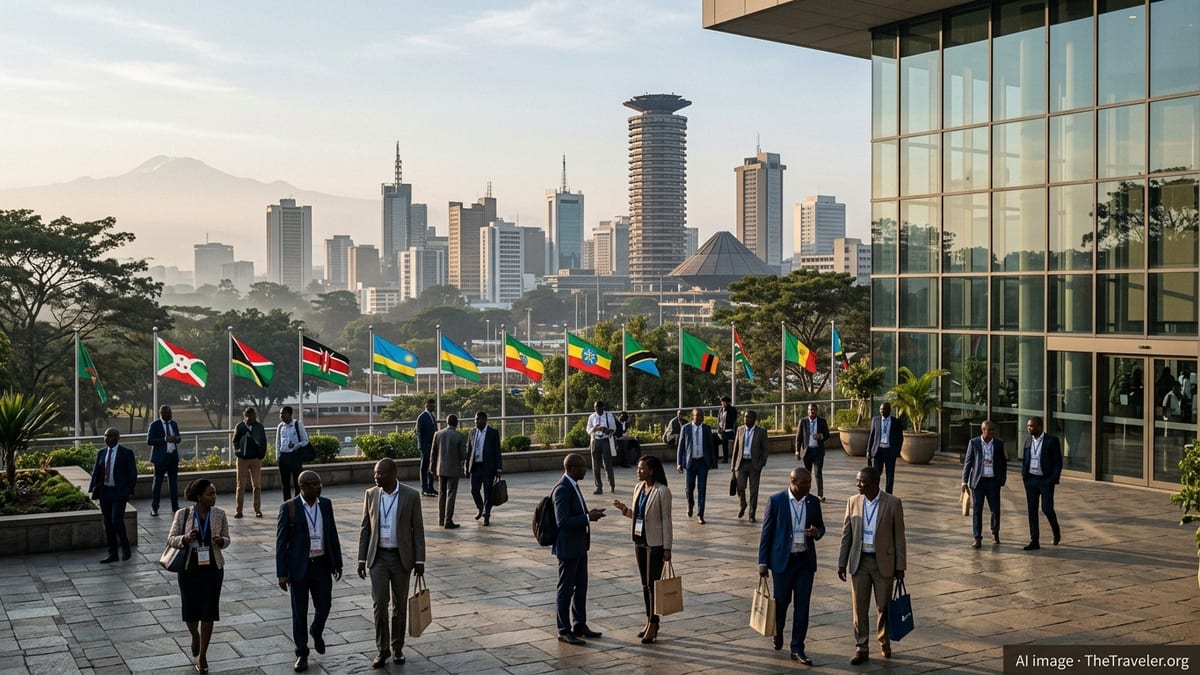
What Is KIICO 2026 and When Will It Take Place?
KIICO 2026 is described in publicly available material as Kenya’s flagship international investment forum, designed to position the country and its regional partners as a hub for capital flows into Eastern and Southern Africa. The event is scheduled to run in Nairobi from 25 to 27 March 2026, combining national and regional investment platforms under one umbrella. According to published conference information, the three days will feature the Kenya International Investment Conference on 25 March, the second COMESA Investment Forum on 26 March, and the Africa Green Industrialisation Initiative Forum on 27 March.
Reports indicate that Kenya is targeting more than 260 billion shillings in new investment commitments, equivalent to over 2 billion dollars, from KIICO 2026. Organisers frame the conference as a deal-focused platform, bringing together investors, development finance institutions, multinational corporations and reform-focused public institutions. The timing alongside the COMESA Investment Forum and the green industrialisation forum is presented as a way to consolidate agendas around trade integration, climate-aligned growth and large-scale project finance.
The conference will take place in Nairobi, with further venue details expected to be shared directly with registered delegates. Publicly available schedules show plenary sessions, sector-focused breakouts, investor roundtables and structured business-to-business meetings spread across the three days, designed to move projects from early-stage pitch to concrete term-sheet discussions.
A Growing African Coalition: Burundi and Regional Partners
Burundi’s inclusion adds to a diverse list of African states aligning themselves with KIICO 2026 and its associated forums. Countries cited in conference and regional investment coverage include Eritrea, Sudan, Uganda, Somalia, Ethiopia, Kenya, Zimbabwe, Madagascar, Rwanda, Malawi, Mauritius, Seychelles, Comoros, Djibouti, the Democratic Republic of Congo, Egypt, Eswatini, Libya, Tunisia and Zambia, among others. Many of these states are members of the Common Market for Eastern and Southern Africa, giving the Nairobi gathering a distinctly COMESA-focused character.
For Burundi, participation signals an effort to plug more directly into regional investment pipelines and to leverage Nairobi’s role as a financial and logistics hub. Public information on COMESA and regional integration trends highlights cross-border initiatives in energy, transport corridors, agribusiness and digital connectivity, where smaller economies such as Burundi seek partners and capital. By joining the KIICO 2026 coalition, Burundi is expected to present investment-ready projects and reforms in sectors like agriculture processing, renewable energy and services.
The broader African line-up reflects overlapping regional blocs and priorities. Countries such as Ethiopia, Kenya, Rwanda and Egypt have been positioning themselves as gateways for capital into large domestic and neighbouring markets. Others, including Madagascar, Seychelles, Mauritius and Comoros, are emphasising blue economy, tourism and financial services opportunities. Resource-rich states such as the Democratic Republic of Congo and Zambia are central to conversations around critical minerals, energy transitions and regional value chains.
Within this context, Burundi’s presence is part of a wider pattern of smaller and landlocked economies seeking visibility at high-profile investment gatherings. KIICO 2026 offers a shared stage where they can align national pitches with regional infrastructure plans, climate finance initiatives and private-sector partnerships spanning multiple jurisdictions.
Sectors in Focus: From Green Industry to Digital and Creative Economies
Conference documentation highlights a broad set of priority sectors expected to be showcased in Nairobi. Agriculture and agribusiness remain central, reflecting both Kenya’s and its neighbours’ focus on value addition, agro-processing and climate-resilient food systems. Investment promotion material also cites finance and economic zones, textiles and apparel, information and communications technology, business process outsourcing, mining and the creative economy among key areas of interest.
The integration of the Africa Green Industrialisation Initiative Forum into the KIICO 2026 programme brings additional emphasis on clean energy, e-mobility, clean cooking solutions, waste management and low-carbon manufacturing. The initiative was launched as a pan-African framework to accelerate climate-aligned industrial investment, and Nairobi 2026 is being positioned as an early milestone for translating that vision into transactions and partnerships. This aligns with many participating countries’ stated goals of leveraging renewable resources while creating jobs in new industrial segments.
The digital and services economy is also expected to feature prominently. Kenya’s established reputation in mobile money, fintech and digital innovation provides a backdrop for discussions on scaling ICT hubs and outsourcing centres across the region. Countries such as Rwanda and Ethiopia have signalled similar ambitions in technology and innovation, while islands including Mauritius and Seychelles are promoting themselves as regional platforms for financial services, data and high-value tourism experiences.
For Burundi and other smaller markets, KIICO 2026 presents an opportunity to position niche strengths within these sectoral themes. Publicly available profiles of the country point to agriculture, hydropower potential and strategic location within the Great Lakes region as areas where targeted investments could have outsized impact if connected to cross-border logistics, power pools and regional value chains.
Global Investors, Deal-Making and Regional Integration
Investment promotion agencies and regional bodies are framing KIICO 2026 as a high-intensity deal-making environment rather than a purely symbolic summit. Conference outlines reference curated project pipelines, data rooms, one-on-one investor meetings and matchmaking sessions aimed at shortening the path from initial engagement to signed agreements. This approach mirrors wider trends in African investment conferences, where organisers seek to demonstrate tangible outcomes in the form of memoranda of understanding, joint ventures and funding commitments.
The presence of multiple African countries alongside global partners underscores the dual focus on domestic and cross-border projects. Infrastructure corridors linking ports in Kenya and Egypt to hinterland economies such as Uganda, Rwanda, Burundi, the Democratic Republic of Congo and Zambia are frequently cited in regional planning documents. Power interconnectors, logistics hubs, industrial parks and digital backbone projects cut across national boundaries, making regional coordination and pooled financing essential.
According to recent economic and trade reports, KIICO 2026 is timed to build on Nairobi’s mounting calendar of international business events and impact investment dialogues. The city is increasingly marketed as a convening point where institutional investors, development banks, private equity funds and corporate leaders can explore African opportunities in a single location. By clustering KIICO, the COMESA Investment Forum and the green industrialisation forum within the same week, organisers aim to attract a critical mass of participants whose interests span policy, sustainability and commercial returns.
For countries like Burundi, whose domestic markets are smaller but strategically located, the regional integration dimension may be as significant as individual investment deals. Successful participation could mean embedding national projects into wider supply chains and transport networks, benefiting from economies of scale in power, logistics and technology infrastructure that no single country could achieve alone.
What Travelers and Business Visitors Can Expect in Nairobi
For delegates and business travelers heading to KIICO 2026, Nairobi will serve as both a conference hub and a regional gateway. The Kenyan capital is already a major air transport node for East and Central Africa, with frequent connections to cities across the continent, the Middle East, Europe and parts of Asia. Conference-focused reports highlight the city’s expanding hotel inventory, from global chains to locally owned properties, as well as a growing ecosystem of serviced apartments and business-friendly accommodation.
The main business districts of the city host modern conference centres, office towers and co-working spaces, supported by improving road infrastructure and urban expressways. Travelers can expect congestion at peak hours, but also a wide range of transport options, including regulated taxi services, app-based ride-hailing platforms and scheduled shuttles tied to major events. Safety guidance from travel advisories typically recommends using registered operators and pre-arranged transfers for late-night movements.
Beyond formal sessions, many delegates are likely to explore Nairobi’s cultural and leisure offerings. The city’s culinary scene spans regional African cuisines and international dining, while nearby attractions such as Nairobi National Park, the Karura Forest and various museums and galleries offer opportunities for short excursions before or after conference days. For visitors from participating countries such as Burundi, Rwanda, Uganda and Ethiopia, Nairobi’s role as a commercial and lifestyle hub is already familiar, but KIICO 2026 is expected to further elevate its profile as a regional meeting point.
With Burundi now part of the expanding roster of African and global partners linked to KIICO 2026, attention will focus on how effectively the Nairobi gathering can translate regional ambition into concrete investments. For travelers and investors alike, the conference offers a front-row view of how Eastern and Southern African economies are seeking to reshape their growth paths through coordinated, climate-conscious and private sector-driven development.