

More news on this day
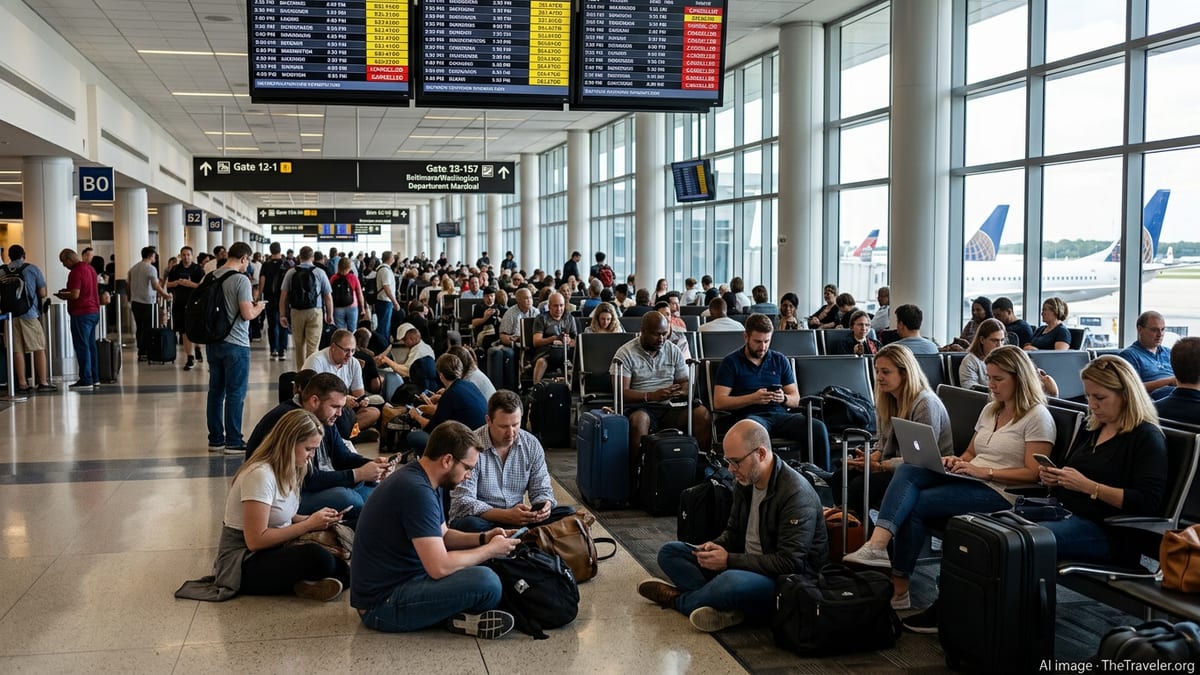
Travelers at Baltimore/Washington International Thurgood Marshall Airport faced major disruption as roughly 230 flights were delayed and about 30 were cancelled, stranding hundreds of passengers and upsetting tightly timed connections to major U.S. destinations such as New York, Atlanta, Orlando, and Chicago.
Get the latest news straight to your inbox!
Wide Ripple Effects Across a Key Mid-Atlantic Hub
The high volume of delayed and cancelled flights at Baltimore/Washington International Thurgood Marshall Airport, a major gateway for the Baltimore and Washington metropolitan areas, created a cascade of knock-on effects throughout the domestic network. Publicly available tracking data showed a concentration of schedule problems on routes linking BWI with large connecting hubs, magnifying the impact for travelers with onward journeys.
Services to New York area airports, Atlanta, Orlando, and Chicago were among those most affected, reflecting the role of these cities as key transfer points. Delays on those corridors quickly translated into missed connections and extended layovers for passengers heading to secondary destinations across the United States.
Reports from airline status pages and flight-tracking platforms indicated that while some delays were limited to 60 to 90 minutes, others stretched to several hours, effectively wiping out same-day travel plans for many passengers. The imbalance between delayed operations and available spare aircraft also made it more difficult for airlines to re-accommodate customers on alternative services.
As aircraft and crews fell out of position, the disruption spread beyond the immediate BWI corridor, with downstream flights later in the day operating out of sequence or being removed from the schedule entirely. This pattern is consistent with broader national data, which show that once delays reach into the hundreds at a busy airport, cancellations typically increase as operators attempt to stabilize their networks.
Hundreds of Passengers Stranded and Rebooking Options Tighten
With approximately 30 cancellations on top of a heavy slate of delays, hundreds of passengers at BWI found themselves stranded, in some cases with limited same-day options. According to published coverage and airline advisories reviewed on Friday, rebooking was particularly challenging for travelers on popular routes to major hubs, where remaining seats filled quickly as disruption grew.
Families heading to leisure destinations such as Orlando reported facing overnight stays or forced itinerary changes to less convenient routing, including flights through secondary hubs or less direct connections. Business travelers bound for New York, Atlanta, and Chicago also faced missed meetings and events as morning and early afternoon departures slipped into the evening or dropped off schedules entirely.
Airlines operating from BWI encouraged travelers through online channels to use digital self-service tools for rebooking, but many passengers still faced long waits for the next available seat on heavily trafficked routes. For some, particularly those on the last flights of the day to affected cities, the only realistic option became rescheduling for the following day.
Travel insurance and credit-card trip interruption benefits, where applicable, offered a partial safety net for a subset of passengers, covering some out-of-pocket costs such as hotel stays and meals. However, many travelers without such coverage were left to arrange and finance last-minute accommodations on their own as they waited for replacement flights.
Impact on Major Routes: New York, Atlanta, Orlando, Chicago
The disruption at BWI was most visible on busy domestic links that serve as lifelines for both leisure and business travelers. New York-area airports are core gateways for national and international connectivity, and extended delays between Baltimore/Washington and New York increased the risk of missed onward flights to Europe and other long-haul destinations.
Atlanta and Chicago, among the largest U.S. connecting hubs, saw their own departure boards affected as delayed inbound aircraft from BWI arrived late or, in some cases, not at all. This constrained capacity for travelers attempting to move through those hubs, further tightening seat availability for those trying to rebook away from BWI.
Orlando, one of the country’s most popular leisure destinations, was a flashpoint for frustration among families and tourists. According to airline status updates, several flights along the BWI–Orlando corridor experienced multi-hour delays, and at least one service was cancelled, requiring travelers to accept alternate routings through other cities or postpone plans altogether.
Operationally, such concentrated disruption on a handful of high-frequency routes can linger beyond a single day. Once fleets and crews drift out of optimal alignment, schedules often require adjustment into subsequent rotations, and residual delays on these core city pairs may appear in timetables even after the initial incident is addressed.
Context: BWI’s Role and Broader U.S. Delay Trends
Baltimore/Washington International Thurgood Marshall Airport typically handles tens of thousands of passengers per day and serves as a key low-cost and full-service operating base in the Mid-Atlantic. Federal transportation data show that BWI has historically recorded several thousand annual cancellations, a figure influenced by weather patterns, equipment issues, and air traffic constraints.
National aviation statistics indicate that clusters of delays and cancellations similar in scale to the current event often stem from a mix of factors, including storms in busy air corridors, ground system glitches, or staffing and equipment challenges. BWI’s location in a dense East Coast airspace, close to Washington and other major airports, can amplify the effects of regional slowdowns when they occur.
Recent analyses of U.S. air traffic performance by transportation agencies highlight that the post-pandemic recovery has brought strong demand back to domestic routes, but with periodic strain on resources, particularly during peak travel periods. When one major airport experiences a surge of delayed departures and arrivals, network resilience is tested across multiple carriers and hubs.
The current wave of disruption at BWI fits into that broader picture, illustrating how an adverse operational day in Baltimore and Washington airspace can quickly translate into missed connections and altered plans in cities as far away as the West Coast or the Mountain West, once passengers’ itineraries rely on onward flights through New York, Atlanta, Orlando, or Chicago.
Advice for Travelers Navigating Ongoing Disruptions
For passengers with upcoming departures or arrivals at BWI, aviation and consumer travel guidance consistently recommends monitoring flight status closely through airline apps and flight-tracking tools before heading to the airport. Same-day schedule changes, gate swaps, and rolling delays are common when operations have already been disrupted earlier in the day.
Travel experts also emphasize the value of building extra connection time into itineraries when routing through busy hubs, especially during periods with heightened risk of delays. Longer layovers can offer a buffer against missed connections if an initial leg from BWI departs late, particularly on routes to New York, Atlanta, Orlando, or Chicago where aircraft utilization is tight.
Passengers who experience cancellations or extended delays are generally encouraged to explore multiple rebooking channels, including airline mobile apps, websites, and customer-service phone lines, rather than relying solely on service counters at the airport. This can improve the chances of securing scarce seats on alternate flights while standing in physical lines for assistance.
As operations at BWI gradually normalize, residual delays may still appear in schedules while airlines reposition aircraft and crews. Travelers scheduled to pass through the airport over the next day or two may therefore benefit from checking flight status repeatedly, even after receiving initial confirmation, and considering flexible arrangements for ground transportation and lodging should further disruption occur.