


For many travelers, the real shock of renting a car abroad is not the daily rate you see online, but the final bill loaded with deposits, fees, and unexpected insurance costs. QEEQ, a fast-growing global car rental platform, promises to tame that chaos with lower prices and clearer policies across more than 200 countries. But can it genuinely help you save money on international car rentals, or do the risks and fine print cancel out the gains? This guide looks at how QEEQ works in the real world, what its tools actually do for your wallet, and where you need to tread carefully to come out ahead.
Get the latest updates straight to your inbox!
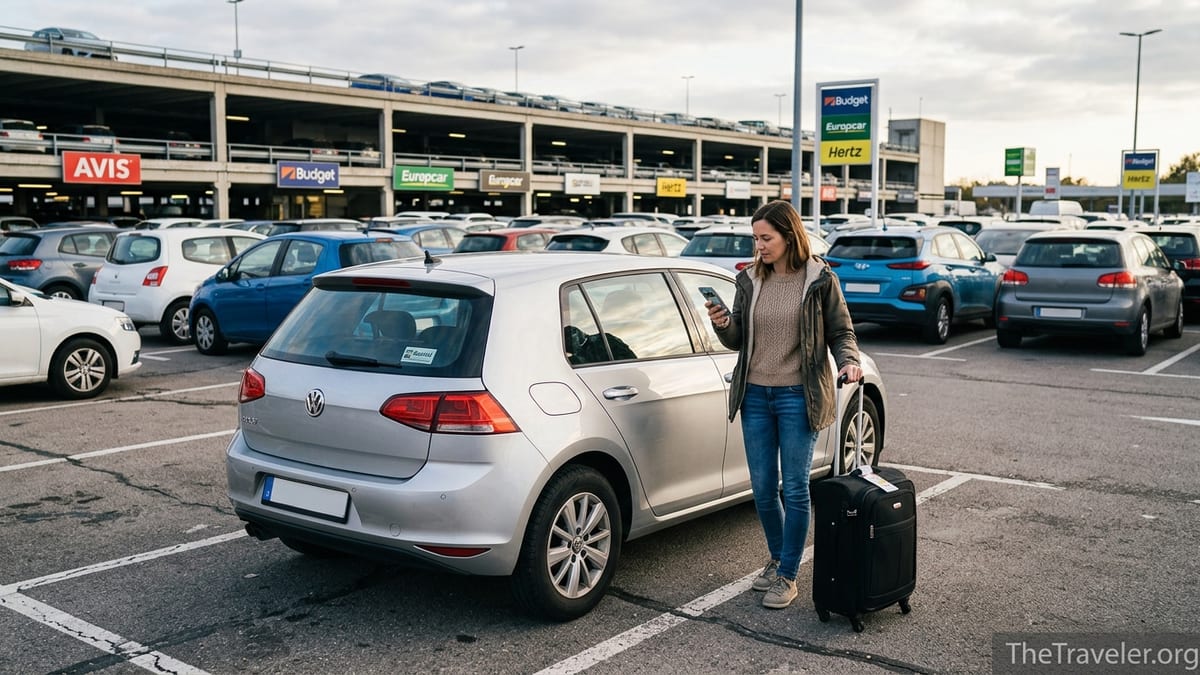
How QEEQ Works and Why It Often Looks Cheaper
QEEQ is not a rental company with its own fleet. It is a booking platform that partners with more than a thousand suppliers worldwide, from big brands like Avis, Hertz, Budget and Sixt to smaller regional operators. In practice, it functions much like better-known aggregators: you search by destination and dates, then compare cars, prices, and policies from multiple companies in one place. Since its launch in 2017, the company has expanded to cover over 200 countries and tens of thousands of pickup locations, including major airports, city centers, and resort towns.
Where QEEQ stands out is price. Travelers regularly report that the same compact car in places like Milan, Lisbon, or Dubai appears 10 to 30 percent cheaper on QEEQ compared with booking directly with a global brand. For example, a traveler pricing a one-week rental of an economy car at Lisbon Airport in shoulder season might see around 230 US dollars with a major brand’s own website, versus closer to 170 to 190 dollars for similar vehicles and mileage limits through QEEQ with a local partner. The discount is not magic: QEEQ negotiates deals with suppliers and bundles them into member discounts or limited-time offers.
However, the lower headline price only matters if the total cost after insurance, deposits, and local fees remains competitive. Reviews show a split picture. Many customers praise QEEQ for “fantastic” or “best available” prices and smooth handovers of cars at airports from Cincinnati to Dublin. Others report arriving at a desk overseas and discovering stricter credit card rules, surprise fees, or the need to pay extra insurance in order to pick up the vehicle at all. To truly save, you must look beyond the search results into what is and is not included for that tempting low rate.
Price Drop Tools, Membership, and Real Savings
QEEQ promotes several tools designed to cut your effective rental cost, especially if you book in advance. The most talked-about is Price Drop Protector. The idea is simple: you lock in a car today, and if QEEQ later finds the same or a similar car from the same supplier at a lower rate, it automatically rebooks you at the better price and refunds the difference. In practice, travelers using this feature on routes like Los Angeles to Las Vegas road trips or summer rentals in Spain report additional savings ranging from about 20 to over 100 US dollars on a single booking when prices softened closer to departure.
Another feature, sometimes called One Dollar Freeze or similar, lets you reserve a deal by paying a very small upfront amount, often around one US dollar, and then settle the balance later. This can be useful if you are watching airfares or hotel prices and are not ready to commit fully, but you want to lock in a good car rate before demand jumps. For instance, a family planning an August trip to Sicily might freeze an SUV deal in March, then pay the rest once their flights are confirmed in April. If prices surge for the busy month, that early locked-in rate can represent a meaningful saving.
QEEQ also pushes a membership program, typically an annual plan that unlocks extra discounts, priority support, and more aggressive price tracking. Some frequent renters say that by using the platform for multiple international trips in a year, such as a spring drive along Ireland’s Wild Atlantic Way, a summer loop through Croatian coastal towns, and an autumn city break in Tokyo, the added savings on each booking outweighed the membership fee by several hundred dollars. Casual travelers taking a single one-week rental abroad every couple of years may not see enough benefit to justify the subscription.
It is important to stress that these tools amplify savings mostly when you are flexible and book early. If you are renting a car at short notice for Christmas in Quebec or during a major festival like Oktoberfest in Munich, inventory can be tight and prices may only climb. In those scenarios, the platform’s discount structure might narrow the gap versus other brokers, but you should not expect miracles.
Insurance, Full Coverage, and the “No Deposit” Question
One of the biggest sources of confusion and cost for international rentals is insurance. QEEQ typically shows two layers of protection: the basic coverage that comes from the underlying rental company, and optional “full coverage” products sold by QEEQ itself through insurance partners. Full coverage is usually framed as reimbursing your deductible if the car is damaged or stolen, and sometimes includes extras like towing, locksmith services, or coverage for certain roadside incidents.
For example, a traveler renting in Marrakech might see a base rate that includes only minimal collision coverage with a deductible of around 900 to 1,500 US dollars. QEEQ may then offer a full coverage package at roughly 8 to 15 US dollars per day that promises reimbursement of that deductible if damage occurs, provided you follow the claims process correctly. Similarly, guides produced for destinations like the Dutch Caribbean urge customers to check the “Price Includes” section to see whether taxes, basic insurance, and airport surcharges are included, and to understand what out-of-hours fees or young driver charges could still appear on arrival.
Another selling point is QEEQ’s growing range of “no deposit” or low-deposit rentals. Normally, a rental desk abroad may block 600 to 2,000 US dollars or more on your credit card as a security deposit, especially in destinations with higher risk or looser roads, such as parts of Thailand, Iceland, or South Africa. With QEEQ’s no-deposit arrangements, the platform’s own insurance or guarantee can replace that high hold for certain cars and suppliers. That can make a real difference if you travel with a lower credit limit or prefer not to tie up funds during a multi-city trip that also involves hotel charges and flight incidentals.
However, the fine print matters. Even when QEEQ sells you full coverage and advertises no deposit, the local rental company might still require some form of hold or proof of financial capacity, particularly if you decline their in-house insurance. There are recorded cases of travelers arriving at a counter overseas with a prepaid QEEQ voucher and full coverage through QEEQ, only to be refused the car because they paid with a debit card instead of a credit card, or because the supplier demanded extra documents that were not obvious in the booking flow. In the worst situations, the local company marks the renter as a “no-show,” keeps the prepaid amount, and leaves the traveler scrambling to find an alternative car at walk-up prices.
Hidden Fees Abroad: Where QEEQ Helps and Where It Cannot
Hidden fees plague car rentals worldwide, whether you book with QEEQ, another broker, or directly. Typical traps include airport surcharges, local taxes, cross-border fees, out-of-hours pick-up or drop-off charges, extra cleaning for sand or pets, and hefty penalties for returning the tank less than full. QEEQ attempts to clarify many of these by listing them under “Price Includes” and “Rental Conditions” for each offer. Their own editorial guides about places like Marrakech or the Dutch Caribbean explicitly warn about after-hours fees that can run 30 to 50 US dollars per incident, and about the importance of documenting every scratch with photos and video at pick-up.
In practical terms, travelers report both positive and negative experiences. On the positive side, someone renting in Dublin through QEEQ may find a clear breakdown of unlimited mileage, airport surcharge included, and a transparent fuel policy that matches what they see at the desk, leading to a final bill that matches expectations. In another case, a week-long compact rental in Athens booked via QEEQ might come out significantly cheaper than a direct booking because a local supplier offers a competitive rate with reasonable insurance and no surprise fees for adding a second driver.
On the negative side, reviews also describe situations where the small local partner uses aggressive up-selling tactics, pushing their own “super CDW” coverage at 30 to 40 US dollars per day despite the traveler already having full coverage via QEEQ or a premium credit card. Others mention long waits at counters in southern European airports or tourist hotspots, during which staff warn that without buying the rental company’s own product, the customer must accept a very high deposit or risk being refused a vehicle. Those tactics are not unique to QEEQ, but arise because the underlying supplier is the one actually handing over the keys.
This is where QEEQ’s 24/7 support and in-trip assistance can sometimes rescue a situation. There are documented examples of QEEQ stepping in when a local rental company refused a booking due to its own extra documentation rules. In one such case, QEEQ helped the traveler secure another car with a different supplier the same day and refunded the difference in price after follow-up. That kind of intervention can turn a potentially expensive mess into a manageable inconvenience, but it is not guaranteed and may require persistence and detailed evidence from the traveler.
Real-World Case Studies: When Travelers Save and When They Do Not
To understand whether QEEQ genuinely saves money, it helps to look at typical trip scenarios. Consider a two-week self-drive holiday through southern Italy in May. A traveler compares prices for a compact manual car, picking up at Naples Airport and returning in Bari. On a major brand’s official site, the total with basic insurance and one-way fee might be quoted around 650 to 750 US dollars. On QEEQ, the same traveler might find local suppliers offering similar cars with free cancellation and the same mileage for 480 to 550 dollars, with an optional full coverage add-on of about 110 to 160 dollars for the whole period. Even after adding that protection, the QEEQ route could save roughly 100 to 150 dollars.
Now imagine a long holiday in Australia, where someone wants an SUV for three weeks starting in Sydney. Direct bookings with a top global brand could approach 1,600 to 1,900 US dollars in high season. QEEQ might surface a mix of international and local companies offering equivalent vehicles for around 1,300 to 1,500 dollars. If the traveler uses Price Drop Protector and books several months ahead, meaningful extra savings are possible if rates fall. Over a three-week period, that difference could comfortably cover a domestic flight within Australia or several nights in mid-range accommodation.
On the opposite side, there are cautionary tales. One traveler prepaid through QEEQ for an overseas rental with a well-known brand, assuming a debit card would be fine because QEEQ’s booking flow emphasized prepaid status. At the counter, the rental company insisted on a major credit card in the principal driver’s name to release the car. Unable to meet that requirement, the traveler left without a vehicle, and initially struggled to secure a refund. Another traveler, attracted by a particularly low rate from a little-known local supplier at a Middle Eastern airport, reported fine print involving a very high deposit and charges for minor cosmetic damage that were difficult to contest afterward.
These cases show that QEEQ can indeed deliver sizeable savings when you pick reputable partners, read the conditions closely, and travel with the right cards and documents. Conversely, it can end up costing more if you only chase the lowest price, ignore deposit and card rules, or rely on assumptions about what “full coverage” means at the local desk.
How QEEQ Compares With Other Rental Platforms
Travelers often weigh QEEQ against other aggregators such as Rentalcars.com or DiscoverCars. Across public reviews, QEEQ generally earns a strong overall satisfaction rating, with many thousands of customers describing the booking process as easy, prices as competitive, and support as responsive. The platform’s emphasis on tools like price drop tracking and its variety of full coverage products give it a modern, tech-forward feel compared with some traditional brokers.
In a practical comparison, you might search for a one-week automatic compact rental in Barcelona in October across three platforms and the rental company’s own site. You may see QEEQ list options starting around 140 to 160 US dollars with local partners, while other brokers come in closer to 160 to 180 dollars for similar cars and conditions, and the brand-direct site quotes 190 dollars or more. The gap will fluctuate by city, season, and supplier mix, but it is common to find QEEQ either at the bottom of the price range or within a few dollars of the cheapest competitor.
Where differences become more pronounced is in transparency and support. Some travelers appreciate that QEEQ surfaces detailed rental conditions, often translated into clear language, including which credit cards are accepted, how much deposit will be blocked, and when out-of-hours fees apply. Others argue that these summaries still occasionally miss crucial local rules, particularly in markets with fragmented regulation or volatile small suppliers. Meanwhile, competing platforms may have their own strengths, such as broader loyalty integrations with airlines or more established relationships with specific international brands.
From a money-saving perspective, the smart move is not to rely on a single platform. Many experienced travelers treat QEEQ as one input in a broader comparison routine that includes at least one other broker and one or two major brands directly. If QEEQ is consistently 50 to 100 US dollars cheaper for equivalent conditions on multiple searches, that is a strong signal it can help with savings. If it only beats other options by a few dollars, some travelers may decide that the perceived simplicity of booking directly with a global brand is worth a small premium.
Practical Strategies to Maximize Savings With QEEQ
If you decide to use QEEQ for an overseas rental, a few habits can help ensure that the savings are real. First, always click through to the detailed rental conditions for each car you consider. Pay attention to the deposit or pre-authorization amount, the fuel policy, mileage limits, and the types of payment cards accepted. For example, if a compact in Montenegro is 40 dollars cheaper with a local supplier but requires a 1,800 dollar deposit on a credit card you do not have, it may not be the bargain it appears.
Second, compare QEEQ’s full coverage cost with alternatives. Many premium travel credit cards used by US travelers, such as certain Visa, Mastercard, or American Express products, include rental car damage protection when you pay in full with the card, though coverage rules vary by country and vehicle type. If your card already provides primary coverage in, say, Italy or Japan, the extra daily fee for QEEQ’s full coverage might be redundant. On the other hand, in destinations where card coverage is weak or excludes local companies, QEEQ’s full protection could be a worthwhile hedge against large out-of-pocket repair bills.
Third, time your booking. For popular summer itineraries like Iceland’s Ring Road or coastal Portugal, booking through QEEQ several months out, then letting Price Drop Protector watch for lower fares, can secure strong deals. In contrast, if you are traveling at a quiet time and local demand is unpredictable, you might find better last-minute promotions directly with regional companies that do not list on major platforms. Checking QEEQ’s rate against at least one local firm before committing allows you to benchmark its real value in a given market.
Finally, document everything. When you pick up a car booked via QEEQ, take timestamped photos and short video clips of the bodywork, wheels, interior, and fuel gauge. Make sure any existing damage is noted on the rental company’s form before you drive away. If a dispute arises over scratches or fuel levels on return, those images can be vital both for dealing with the local supplier and for any subsequent claim under QEEQ’s full coverage or support channels.
The Takeaway
QEEQ can absolutely help travelers save money on car rentals abroad, but the savings are not automatic or risk-free. The platform’s competitive rates, price drop tools, and optional full coverage can reduce the overall cost of renting in destinations from Italy and Spain to Australia and Morocco. For travelers who rent multiple times a year or plan road-heavy trips, the membership program and price tracking can add meaningful value.
At the same time, the factors that make international car rentals tricky in general still apply. Local suppliers may push aggressive insurance sales, enforce strict credit card rules, or surprise you with sizeable deposits or fees if you overlook the details. QEEQ’s role is to connect you with those suppliers and help clarify conditions, but it cannot fully control how each partner behaves at the counter.
If you are willing to read the fine print, compare offers across platforms, travel with the right cards and documents, and use QEEQ’s tools thoughtfully, you stand a good chance of paying less overall for the same or better rental experience. If you value simplicity above all and prefer to deal with a single global brand regardless of price, then QEEQ’s potential savings may be less compelling. As with most travel tools, it is most powerful in the hands of informed, detail-oriented travelers.
FAQ
Q1. Is QEEQ a legitimate option for renting cars abroad, or is it risky to use?
QEEQ is a legitimate car rental platform that has been operating since 2017 and works with both major international brands and smaller local suppliers. The main risk is not the platform itself, but the behavior and policies of individual rental companies, which can vary widely by country and location.
Q2. How much money can I realistically save by using QEEQ instead of booking directly?
In many real-world comparisons, travelers see savings of roughly 10 to 30 percent on similar vehicles and conditions, especially in Europe and popular vacation destinations. On a one or two-week rental, that can translate to anywhere from about 50 to more than 150 US dollars, depending on season and vehicle type.
Q3. Does QEEQ’s full coverage insurance mean I will not pay anything if the car is damaged?
QEEQ’s full coverage is typically a reimbursement product that repays you for eligible charges such as damage or theft deductibles, towing, or certain roadside costs. You may still need to pay the local rental company first and then submit documents and photos to claim a refund, so it is not the same as the rental company waiving all responsibility upfront.
Q4. Are QEEQ’s no-deposit or low-deposit rentals really free of credit card holds?
Some QEEQ deals genuinely reduce or remove the large security holds that many overseas rental desks apply, but this depends on the specific supplier and offer. Even with a no-deposit label, the local company may still place a smaller authorization or require a valid credit card, so you should always read the rental conditions carefully.
Q5. What are the most common hidden fees I should watch for when booking through QEEQ?
Typical extra costs include after-hours pick-up and drop-off fees, young or senior driver surcharges, additional driver charges, cleaning fees, and high prices for refueling or cross-border travel. QEEQ often lists these in the rental conditions, but you should double-check them before confirming and again at the counter.
Q6. How does QEEQ’s Price Drop Protector actually work in practice?
After you book an eligible car, Price Drop Protector monitors the same or similar vehicles from the same supplier for lower rates. If it finds a better price, QEEQ automatically rebooks at the lower rate and refunds you the difference, which can shave an extra chunk off your total cost without you needing to constantly re-check prices.
Q7. Is it better to buy QEEQ’s full coverage or rely on my credit card’s rental insurance?
It depends on your destination, your card’s coverage rules, and your tolerance for handling claims. If your credit card offers strong primary coverage in the country where you are renting, you may not need QEEQ’s add-on. If your card coverage is weak, excludes certain locations or vehicle types, or you prefer a dedicated rental policy with roadside benefits, QEEQ’s full coverage can be a sensible extra layer.
Q8. What should I do if the rental company at the counter refuses my prepaid QEEQ booking?
If a supplier refuses to honor your booking, ask for a written explanation or have them note the reason on a document, keep all receipts, and contact QEEQ support immediately through the app or hotline. Clear evidence about why you were refused, such as a dispute over payment cards or documentation, will help QEEQ negotiate with the supplier and pursue a refund or alternative car for you.
Q9. Can I trust the reviews I see about QEEQ and its partner companies?
Customer reviews on major platforms are useful but not perfect, and fake or unrepresentative feedback can appear anywhere. The best approach is to look for patterns across many reviews, pay attention to recent experiences in the specific country or city you are visiting, and combine that with your own checks on the rental company’s reputation.
Q10. Who is QEEQ best suited for, and who might be better off booking directly?
QEEQ tends to work best for travelers who want to compare multiple suppliers quickly, are willing to read the fine print, and may rent cars abroad several times a year. People who prioritize absolute simplicity, have elite status with a particular global brand, or strongly prefer dealing with a single company for support may feel more comfortable booking directly even if the upfront price is a bit higher.