


More news on this day
Canada’s far northeastern Torngat Mountains, among the country’s most remote protected landscapes, are entering a tightly defined 2026 travel window as operators finalize short summer seasons, limited charter capacity and Inuit-guided expeditions across this Arctic homeland.
Get the latest news straight to your inbox!
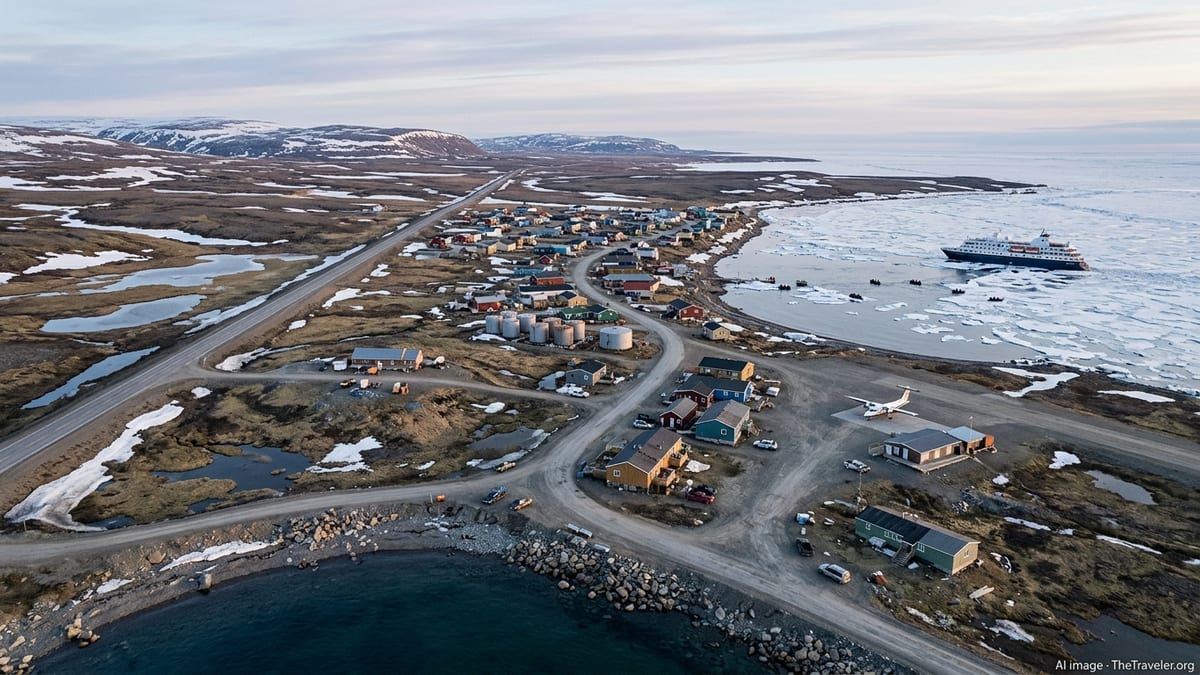
A Short Arctic Summer Sets the Clock for 2026
Publicly available information on Torngat Mountains National Park indicates that visitor access hinges on a narrow summer season when sea ice retreats and charter flights can reliably reach Labrador’s northern coast. In practical terms, this gives travelers only a brief window between late July and early September to reach fjords, peaks and Inuit homelands that remain inaccessible for most of the year.
Planning documents outline how weather, sea ice and daylight conditions combine to compress both research and visitor activity into a few weeks. The emphasis on early submission of permits and logistics for the 2026 field season highlights how demand for aircraft, boats and guides must be concentrated within this period, intensifying competition for limited seats and berths.
While the park is legally open year-round, travel reports and operator information show that independent access outside this short summer period is highly constrained by sea ice, storm systems, polar bears and a lack of infrastructure. The practical result is that the “Torngat travel window” is far narrower than the park’s official calendar, and 2026 is shaping up as one of the most tightly managed seasons yet.
Charter Flights and Base Camp Capacity Define Access
Getting into the Torngat region remains the primary barrier for most travelers. Parks Canada guidance and operator materials describe a multi-step journey that typically begins with commercial flights to Goose Bay in Labrador, followed by chartered flights north to the Saglek airstrip. From there, boat or helicopter transfers carry visitors into Torngat Mountains National Park and associated base camp facilities.
Recent updates from the Torngat Mountains Base Camp and Research Station, along with aviation partners, underline that charter schedules for 2025 are already structured and that inquiries for 2026 are being funneled through a small group of carriers and Inuit-owned tourism companies. This indicates that capacity in 2026 will remain tightly controlled, with only a modest number of rotations serving the park during the peak weeks of the season.
Travel planners note that logistical constraints go beyond aircraft seats. Every visitor must be supported with bear guards, guides, camp staff, safety teams and marine transport, all of which draw from small northern communities. With those human resources finite, operators appear to be calibrating 2026 itineraries carefully to balance safety, community capacity and visitor demand.
Inuit-Led Experiences Anchor Emerging Itineraries
Across Labrador and adjacent Nunavik, publicly available itineraries for 2026 point to a growing emphasis on Inuit-guided travel in the Torngat region. Nunavik Parks outlines multi-day treks that cross into the Torngat Mountains and neighboring protected areas, with dates slated for the 2026 season and itineraries focused on walking traditional routes, learning from local guides and traveling lightly through the landscape.
The Torngat Mountains Base Camp promotes experiences that pair geological and wildlife viewing with time spent alongside Inuit hosts. Descriptions highlight outings by boat into fjords, interpretive walks, and potential visits to historic sites like Hebron, reinforcing the role of Indigenous stewardship and storytelling in shaping how visitors encounter the park.
Small-ship expedition operators are also building Torngat landings into Arctic cruise routes for 2026. Promotional material for itineraries marketed as “Torngat Mountains adventures” describes several days of zodiac excursions, shore hikes and cultural programming led in collaboration with Inuit partners. These products broaden access beyond hikers and paddlers, but they are available only on a handful of departures within the same tight late-summer window.
Expedition Cruises Push Toward a Final 2026 Window
Expedition cruise brochures for 2026 show the Torngat Mountains positioned as a central highlight on combined Greenland and Labrador sailings scheduled from late August into mid-September. These programs typically use small ice-strengthened ships to approach deep fjords and then rely on zodiacs to land passengers at selected coves and valleys.
Sample itineraries outline specific 2026 dates for routes that include multiple days inside Torngat Mountains National Park, framing this period as prime time for relatively stable weather, navigable seas and wildlife viewing. Operators stress that landings remain contingent on conditions, and that even during the peak window, fog, swell or ice can alter plans at short notice.
The clustering of cruise departures toward the end of the 2026 Arctic season underscores how these voyages effectively mark the final chapter of that year’s Torngat access. Once ships exit the region in mid-September, formal tourism activity tapers quickly, and attention turns back to scientific work, local travel and preparation for the following year’s brief opening.
Rising Interest Meets Strict Safety and Environmental Limits
Travel media coverage and online trip-planning discussions suggest that interest in the Torngat Mountains is rising among adventure travelers, photographers and hikers seeking remote, low-volume destinations. At the same time, official park information stresses a strict safety framework built around polar bear risk, rapidly changing weather and the absence of road access or nearby emergency facilities.
Guidelines recommend that visitors travel only with experienced Inuit guides or organized groups, carry robust safety gear and be prepared for itinerary changes or delays. This conservative stance shapes how 2026 access is being designed, with operators building in time buffers, mandatory orientation sessions and mandatory bear-guard support on nearly all land activities.
Environmental protection priorities are also influencing how the 2026 window is being managed. The Torngat Mountains are home to sensitive Arctic ecosystems and cultural sites, and publicly available policies emphasize minimal-impact travel, tight control of camping locations and careful routing of cruise landings. These measures are intended to ensure that, even as awareness grows and more travelers target the region, the overall footprint of human presence during the brief 2026 access window remains limited.