

More news on this day
Canada has quietly elevated its travel advisory language for the Netherlands, grouping the country with a widening roster of destinations including China, Italy, Mexico, Germany, Denmark, Sweden and Spain where Canadians are urged to exercise a high degree of caution amid tighter border controls, shifting visa rules, political tensions and mounting security threats.
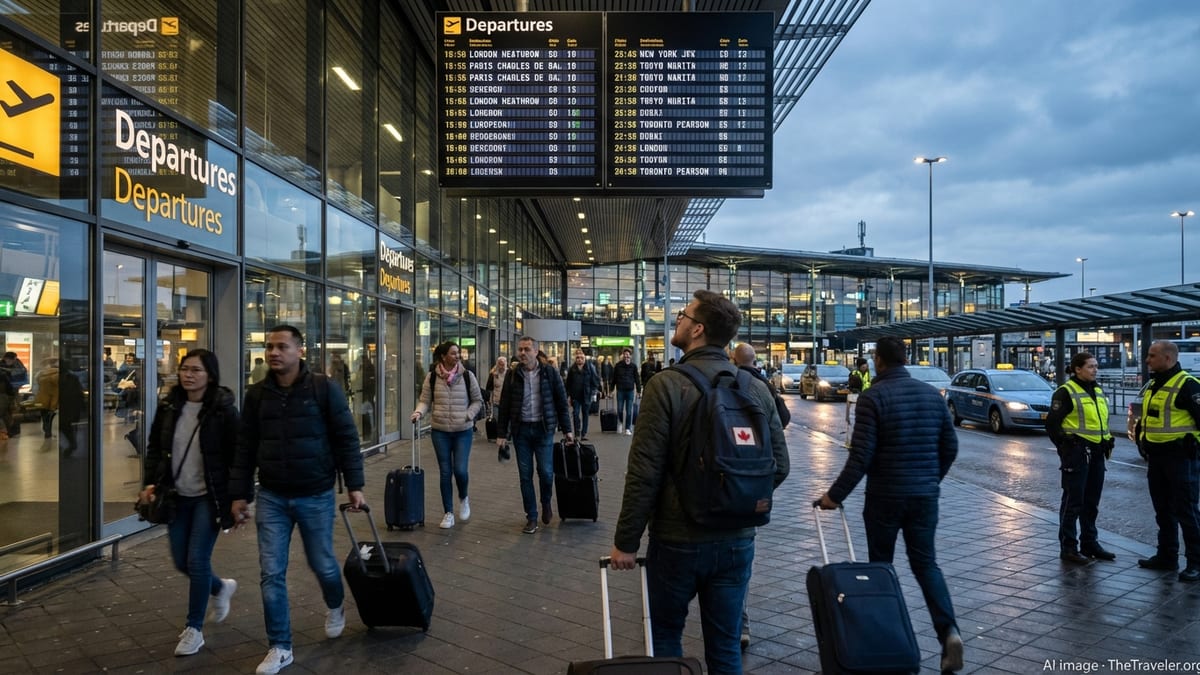
Netherlands Becomes Latest Addition to Canada’s High-Caution List
Global Affairs Canada has updated its guidance for travel to the Netherlands, aligning its tone with advisories already in place for several major destinations in Europe, Latin America and Asia. While the Netherlands remains open to Canadian tourists and business visitors, federal officials now frame trips there as requiring an elevated level of vigilance, citing a mix of terrorism concerns, protests linked to regional politics and ripple effects from broader European border policy changes. This places the Dutch entry on Canada’s advisory map in the same high‑caution orbit as countries such as Italy and Mexico, which have already seen their risk wording stiffened in recent months.
The move comes against the backdrop of a busier, more fractious security environment across Europe. The Netherlands national terrorism threat level has been set at “substantial,” the fourth tier on its five‑point scale, reflecting what Dutch authorities describe as a realistic possibility of an attack. Neighbouring governments and partners including Australia and the United States flag similar concerns for the country, warning that crowded public spaces, transport hubs and major events could be targeted.
Canadian risk assessors also appear to be taking into account the Netherlands’ outsized role in transatlantic diplomacy and security. The country hosted an expansive NATO summit in The Hague in June 2025, an event described domestically as one of the largest security operations in Dutch history. That experience, and the infrastructure built around it, has bolstered Dutch preparedness but also underlined the potential for demonstrations and disruption around high‑profile political gatherings, a factor Canadian officials now weave into their own outward‑facing travel language.
Stricter Visa and Passport Rules Reshape Canadian Travel
Canada’s recalibrated advisory for the Netherlands lands at a time when entry rules across multiple regions are shifting rapidly for Canadian passport holders. In Europe, the phased rollout of the EU’s Entry/Exit System means non‑EU nationals, including Canadians, are now subject to biometric registration and more intensive checks at Schengen borders. Officials in the Netherlands have warned travelers to expect longer queues and occasional technical disruptions as the new system settles in, with fingerprints and photographs taken on arrival and departure.
At the same time, other major destinations on Canada’s caution list are tightening their own documentation demands. Italy, for instance, is under closer Canadian scrutiny ahead of the Milano‑Cortina 2026 Winter Games, with authorities in Rome deploying expanded policing and crowd‑control measures in Olympic host cities. Canadian officials have warned that spontaneous protests and pre‑screening around venues and transport lines may mean travelers face additional identity checks and more questions about their itineraries and accommodation, especially in and around Turin, where violent demonstrations flared at the start of February.
In North America, Mexican authorities continue to enforce strict entry rules on visitors who arrive without proof of onward travel, accommodation bookings or sufficient funds. Canadian travel advisories already caution that some tourists have been turned back or briefly detained over incomplete documentation or confusion about visa‑free entry rules that vary depending on arrival mode and immigration history. This patchwork of policies, layered onto Europe’s new border regime, means even routine trips now require more careful document preparation than before the pandemic.
Overlaying these international measures are changes within Canada’s own passport and immigration systems that reverberate abroad. Border agencies in partner countries, notably the United States, have tightened compliance checks, and Canadian citizens with dual nationality, complex immigration histories or recent overstays in third countries are encountering more scrutiny at check‑in desks and arrival halls. Global Affairs Canada, in step with other Western foreign ministries, is explicitly telling travelers that visa waivers are not guarantees of entry and that airlines and immigration officers have broad discretion to deny boarding or refuse admission.
Political Tensions Fuel a New Wave of Cross-Border Warnings
Beyond paperwork and border technology, politics is increasingly driving the travel map that Canadians must navigate. Global Affairs Canada’s advisory system has shifted toward more forthright language over the past year, particularly with respect to countries such as Iran and Venezuela, where citizens have been warned to avoid all travel due to fears of arbitrary detention, civil unrest and potential military escalation. A similar assertiveness is now evident in advisories for ostensibly stable democracies, where the focus is less on war and more on polarized politics spilling into the streets.
Italy offers a case in point. Protest movements around economic reforms, migration and the cost of staging the 2026 Winter Olympics have converged in cities like Turin and Milan, leading to violent clashes with police and sporadic vandalism in tourist districts. Canadian officials have responded by reinforcing language about the risk of being caught up in demonstrations and about possible curfews or temporary transport shutdowns around event days. While the baseline advice remains to “exercise a high degree of caution,” the narrative surrounding that risk level has grown more urgent.
In North America, Canadian authorities have also joined European partners in warning their own citizens about travel to the United States under a sharpened enforcement posture. Over the past year, countries including the Netherlands, Denmark and Germany have updated their guidance to note incidents in which visitors were detained or deported over alleged visa irregularities. The Netherlands’ own advisory for the US specifically highlights tighter US entry regulations and urges Dutch citizens to double‑check requirements, a tone mirrored in Canada’s counsel to travelers in the other direction who may face secondary screening or questioning upon arrival.
Broader geopolitical strains also filter into Canada’s assessments of European destinations such as the Netherlands, Germany, Sweden and Spain. These states host large diaspora communities, embassies and consulates for countries at the heart of current conflicts, from the Middle East to Eastern Europe. Their cities have become staging grounds for high‑stakes diplomacy, sanctions enforcement and energetic protest movements, all of which raise the possibility of targeted threats or opportunistic violence that could affect bystanders, including visiting Canadians.
Terrorism Threat Levels and Security Alerts Across Europe
Security officials in Ottawa are paying particularly close attention to the alignment of terrorism threat scales across Europe. The Netherlands has maintained its national threat level at “substantial,” and similar language appears in Belgian and French assessments, reflecting a consistent judgment that attack plots are plausible amid a backdrop of lone‑actor radicalization and online extremist networks. Canada’s newly tougher wording around the Netherlands explicitly references this spectrum of risk, urging travelers to stay alert in areas popular with foreign visitors and expatriate communities.
Denmark and Sweden, both now grouped with the Netherlands in Canada’s high‑caution band, have weathered their own series of security scares linked to Quran‑burning protests and retaliatory threats. Domestic intelligence services in both countries have warned that such incidents have increased their profile among extremist actors, while also fueling disinformation campaigns from state and non‑state rivals abroad. These dynamics, though largely managed by local authorities, translate into heightened background risk around embassies, diplomatic quarters and religious sites.
Germany and Spain, two of the most popular European destinations for Canadian tourists, also sit at the intersection of domestic politics and transnational security concerns. Recent years have seen German authorities conduct raids on far‑right networks and dismantle suspected terror cells, while Spanish security forces continue to monitor separatist and jihadist threats alongside more routine crime in major cities and resort areas. Canadian advisories for both countries urge travelers to follow local media, comply with police cordons and expect sudden security operations in transport hubs or public squares.
In practice, the elevated language does not equate to blanket discouragement of travel to Western Europe. Instead, it reflects a Canadian risk model that assumes a baseline of sporadic plots, copycat attacks and unpredictable lone‑actor violence, particularly in nations that play prominent roles in NATO and European Union decision‑making. The Netherlands’ entry into this cluster underscores that political prominence and perceived openness can themselves be risk factors when adversaries seek symbolic, high‑visibility targets.
China, Mexico and the Complexities of Canada’s Advisory Map
While Canada’s revised stance on the Netherlands reflects growing concern about European security, developments in Asia and the Americas show how fluid the advisory landscape has become. China, for example, has moved in the opposite direction on paper, announcing that Canadian passport holders will be allowed to enter visa‑free for stays of up to 30 days through the end of 2026 as part of a broader effort to revive inbound tourism and repair relations. Chinese officials have cast the move as a goodwill gesture, coming after a period of strained ties marked by detentions and tit‑for‑tat trade measures.
Even so, Canadian advisories remain cautious about legal and political risks in China, particularly around national security legislation and the potential for exit bans or arbitrary enforcement actions. Travelers are advised to weigh the convenience of visa‑free entry against a legal framework that grants authorities wide discretion in matters touching on state security, technology transfer and public order. In effect, China is both more accessible and more opaque at the same time, a duality that Ottawa tries to capture in carefully balanced language.
Mexico, by contrast, has long featured on Canada’s high‑caution list for reasons that are more straightforwardly linked to organized crime. Federal warnings highlight elevated rates of violent crime, kidnapping and extortion in certain regions, while also flagging cartel‑related clashes near resorts and along key highways. Canadians are encouraged to stay within well‑policed tourist corridors, avoid travel after dark in high‑risk states and use only reputable transport providers, advice that has become more pointed as reports of highway robberies and targeted carjackings continue.
The pairing of destinations as different as the Netherlands, China and Mexico under a similar advisory headline speaks to the breadth of risks that now fall under the umbrella of “exercise a high degree of caution.” For some countries, the core concern is geopolitics and protest; for others, it is crime, corruption or legal opacity. Canada’s message to its citizens is that risk can take many forms and that a familiar name on the map is no guarantee of a low‑risk experience on the ground.
What the Higher-Level Warnings Mean for Travelers and Industry
For individual travelers, Canada’s decision to highlight the Netherlands and a growing list of other destinations at a higher risk tier does not translate into outright bans. Travel advisories are not legally binding, and Ottawa does not prohibit its citizens from visiting countries, with the exception of rare sanctions‑related restrictions. Instead, the language is designed to influence behavior and planning. A “high degree of caution” label may prompt travelers to take out more comprehensive insurance, register their itineraries with consular services or reconsider participation in large gatherings and protests abroad.
In the travel industry, the ripple effects are more concrete. Tour operators and airlines closely track Canadian advisories alongside those issued by the United States, the United Kingdom and key European partners when calibrating their offerings and liability exposure. Some insurers may attach special conditions or exclusions to policies for countries flagged with heightened risk, particularly when it comes to terrorism or civil unrest. In past cycles of warnings, certain cruise lines and group‑tour companies have quietly adjusted routes or schedules to avoid hotspots during politically sensitive periods.
The Netherlands’ inclusion in Canada’s roster of high‑caution destinations is unlikely to trigger mass cancellations for Amsterdam city breaks or visits to Dutch cultural landmarks. However, it may nudge corporate travel managers to conduct more rigorous risk assessments for staff assigned to conferences, trade fairs or diplomatic events there. Likewise, study‑abroad programs and university exchanges may refresh their safety briefings and require students to sign updated code‑of‑conduct and emergency‑contact forms before departure.
For Canada’s foreign service, the broader tightening of advisories underscores a shift from reactive to more anticipatory warning. Officials now routinely update country pages in response to rolling developments such as protests, cyber incidents and diplomatic tit‑for‑tat between rival states. The effect is a more dynamic but also more crowded warning environment in which travelers must read beyond the headline risk level to understand the specific mix of terrorism alerts, visa rules, political tensions and local threats that shape conditions in destinations as diverse as the Netherlands, China, Italy, Mexico, Germany, Denmark, Sweden and Spain.