

More news on this day
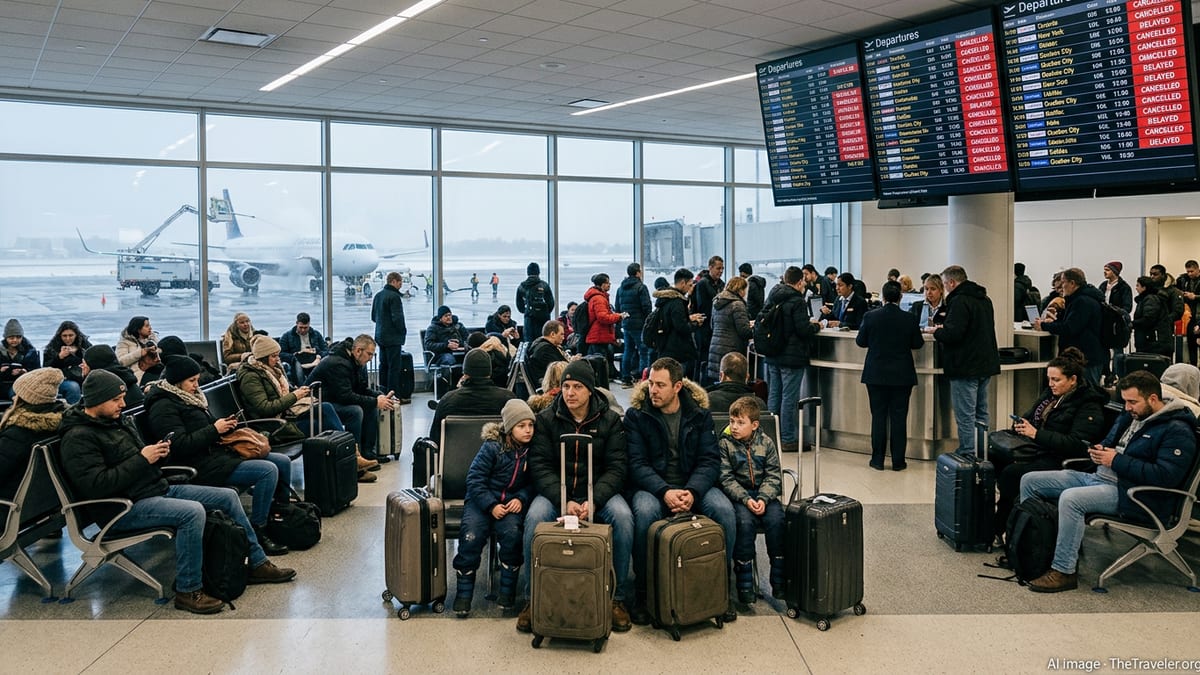
Hundreds of travelers were left stranded across Canada this week as a wave of winter weather and operational disruptions forced the cancellation of 55 flights and delays to 92 more at major hubs including Montreal, Toronto, Ottawa, Quebec City and Halifax, sending shockwaves through air connections to Washington, D.C., New York, Chicago, Boston and Los Angeles.
Get the latest news straight to your inbox!
Weather Systems Trigger Fresh Disruptions Across Eastern Canada
The latest bout of travel chaos unfolded as forecasters warned of freezing rain, ice pellets and lingering winter systems sweeping through Quebec and eastern Ontario on March 11 and 12, 2026. Environment Canada advisories highlighted Montreal, Ottawa, Quebec City and surrounding regions as particular trouble spots, prompting airlines to thin schedules and brace for cascading delays.
Carriers including Air Canada and WestJet had already issued travel alerts and flexible rebooking policies for passengers flying through impacted airports, anticipating that icy conditions would complicate de-icing operations and runway management. In Quebec, schools closed preemptively while information boards at Montreal–Trudeau Airport quickly began to fill with cancellations as the system moved in and intensified.
Industry analysts say the current disruption is part of a difficult winter for Canadian aviation, following an Arctic deep freeze in January and a powerful blizzard in February that both led to extensive cancellations and delays across the country. Each new storm is hitting an already stretched system, where staffing, aircraft rotation and airport resources have little margin for recovery before the next weather event arrives.
On Tuesday and Wednesday, that pressure translated into 55 flights scrubbed outright and 92 delayed across Montreal, Toronto, Ottawa, Quebec City and Halifax, according to aggregated operational data from airport authorities and flight-tracking services. While modest compared with the worst storms of the season, the timing and concentration of these disruptions proved especially troublesome for transborder traffic.
Canadian Hubs Snarl Links to Washington, New York and Chicago
The impact was felt quickly on some of the busiest cross-border corridors linking Canada to major U.S. cities. Montreal–Trudeau and Toronto Pearson serve as critical gateways for passengers heading to Washington, D.C., New York and Chicago, with frequent daily departures operated by Air Canada alongside U.S. carriers on codeshare and alliance routes. When departures were cancelled or pushed back in eastern Canada, knock-on effects reached hubs along the U.S. East Coast and Midwest.
Travel agents in both countries reported a surge in last-minute itinerary changes as travelers scrambled to secure new routings that bypassed the most affected Canadian airports. Common alternatives included rerouting via less-impacted hubs such as Vancouver or Calgary, or switching to itineraries entirely within the United States for those originating or connecting south of the border.
For U.S. cities such as Washington and New York, which rely heavily on business and government travelers from Ottawa and Montreal, the disruption came at a particularly sensitive time in the corporate travel calendar. Meetings, conferences and trade visits scheduled around the mid-March period were suddenly in flux as delegates struggled to leave Canada or faced significant delays en route.
Chicago, another key destination for Canadian corporate and connecting traffic, also saw arrival and departure boards tighten as late-running aircraft from Toronto and Montreal struggled to make scheduled slots. Even when flights did depart, lengthy de-icing procedures and air-traffic flow controls translated into missed connections for onward passengers throughout the United States.
Tourism Itineraries Upended in Boston and Along the U.S. Northeast
The disruption is not confined to the corporate market. Boston and other Northeast U.S. destinations that market heavily to Canadian leisure travelers have also been caught up in the wave of cancellations and delays. Families heading south for late-winter city breaks, sporting events or university visits found themselves stuck in terminals in Montreal, Ottawa and Halifax as departure times slipped or flights disappeared from schedules altogether.
Tourism boards in New England have increasingly targeted visitors from Quebec and Ontario, capitalizing on short flight times and strong cultural and economic ties. However, this winter’s unsettled weather and recurrent operational difficulties in Canada have made those quick-hop getaways less predictable. Travel advisers in Montreal and Quebec City reported having to rebook clients onto later flights or shift short trips by several days, effectively shortening vacations and cutting into planned spending at hotels, restaurants and attractions in Boston.
Some travelers opted to abandon air travel altogether, choosing instead to drive into the United States where possible. Car rental agencies reported elevated demand for one-way rentals from Canadian cities near the border as stranded passengers sought to salvage their plans in Boston, New York or other East Coast destinations. While that offered relief for some, it also shifted pressure onto land border crossings already coping with winter driving conditions.
For tourism stakeholders in the U.S. Northeast, the latest episode is another reminder of how tightly their visitor numbers are tied to operational stability in Canadian airspace. Even a relatively contained wave of 55 cancellations and 92 delays can erase hundreds of high-value visitor nights when those flights are concentrated on short-haul cross-border routes.
Ripple Effects Reach Los Angeles and Long-Haul U.S. Markets
Although the brunt of the latest disruption has fallen on the transborder shuttle routes, long-haul itineraries to and from cities like Los Angeles have not been spared. Many West Coast journeys for Canadian travelers, particularly from secondary markets such as Ottawa and Quebec City, rely on connections through Montreal, Toronto or Halifax. When those first legs are cancelled or significantly delayed, the entire trip can unravel.
At Toronto Pearson, where operations were strained but not paralysed, delays in the 30 to 90 minute range were often enough to push passengers beyond the minimum connecting times for onward flights to Los Angeles and other distant U.S. gateways. Airlines attempted to re-accommodate affected travelers on later departures, but heavily booked spring schedules left limited spare capacity.
Inbound tourism to Canada from the United States has likewise felt the strain. American visitors heading to Montreal or Halifax via Toronto, or routing through Canadian hubs on their way to Europe and beyond, found themselves waiting on aircraft that were late to arrive from weather-hit regions. In several cases, crews ran up against duty-time limits, prompting additional last-minute cancellations even after conditions had marginally improved on the ground.
These ripple effects underline how sensitive North American aviation remains to localized weather events, particularly in winter. A storm cell or freezing rain band centred over Quebec can, within hours, delay or cancel flights in sunny Los Angeles simply by blocking key aircraft and crew from moving through the network on time.
Airlines Offer Waivers as Travellers Call for More Resilience
In response to the unfolding disruption, major carriers serving Canadian hubs introduced or expanded travel waivers allowing passengers to change dates without penalty, subject to fare differences and seat availability. Air Canada, WestJet and several U.S. airlines serving Montreal, Toronto, Ottawa, Quebec City and Halifax urged customers to check flight status frequently and, where possible, move trips outside the peak of the storm window.
For travelers already at airports, the experience was a familiar one after a turbulent winter. Long lines formed at customer service counters as people sought hotel vouchers, meal credits or alternative routings. While Canadian passenger rights regulations and U.S. Department of Transportation rules define compensation frameworks, many of the latest disruptions fall into the category of weather-related events, limiting entitlement to financial redress and fuelling frustration among those stuck overnight or forced to cut trips short.
Travel industry observers say repeated episodes of cancellations and delays have begun to erode confidence among frequent cross-border travelers, who increasingly build extra buffer days into their plans or favor nonstop itineraries that avoid tight connections in weather-prone hubs. Corporate travel managers are also reassessing routing strategies for key markets such as Washington, New York and Chicago, sometimes opting for rail or driving for shorter regional journeys when feasible.
As winter slowly gives way to spring, both airlines and tourism partners on both sides of the border will be under pressure to restore reliability and reassure travelers that Canada’s key hubs can withstand another season of weather volatility without crippling the vital tourism and business links to major U.S. cities.