

More news on this day
Hundreds of travelers across Canada are facing extensive disruptions as a cluster of delays and cancellations involving PAL Airlines, Air Canada, Jazz Aviation, Air Inuit and other carriers ripples through major hubs such as Montreal, Toronto and Halifax, while also isolating smaller communities in Nunavik and Atlantic Canada.
Get the latest news straight to your inbox!
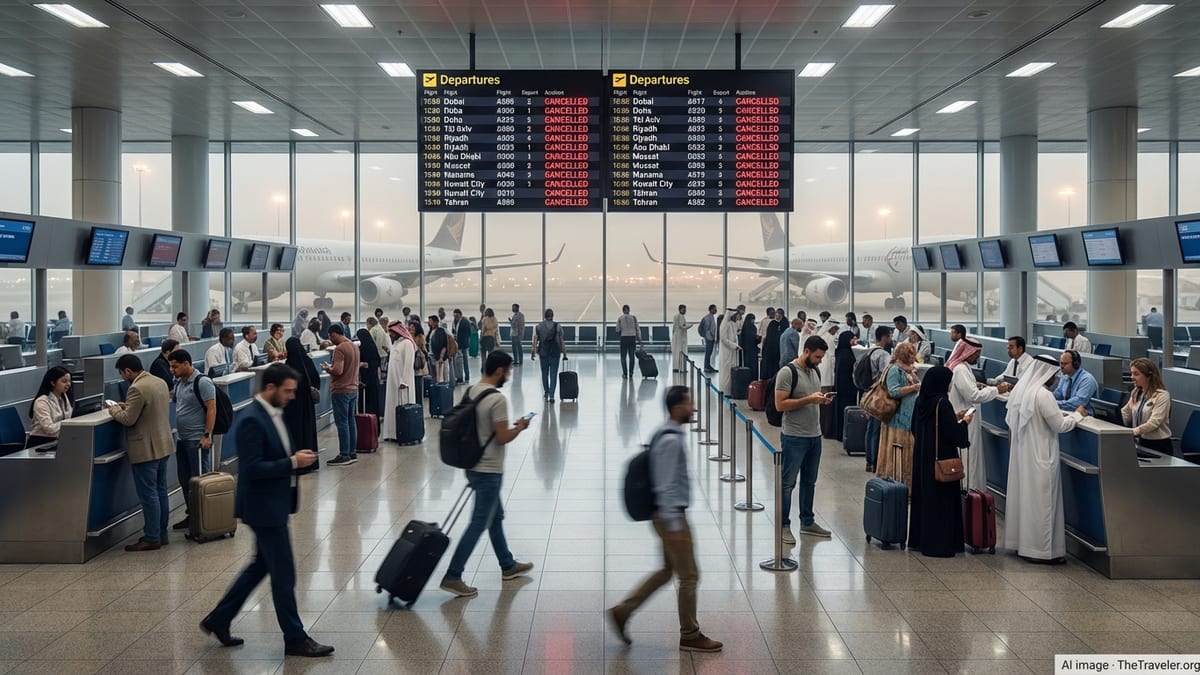
Network Turbulence Across Major Canadian Airports
Publicly available flight status data and industry monitoring reports on April 12 indicate that Canadian airports are once again grappling with widespread irregular operations. Across the country, as many as 183 flights have been delayed and at least 28 cancelled on a single day, affecting a mix of mainline and regional services. Air Canada and its regional partners, including Jazz Aviation and PAL Airlines, appear prominently among the disrupted operators, alongside northern carrier Air Inuit and several smaller airlines.
Toronto Pearson and Montréal Trudeau, Canada’s two largest hubs, are absorbing much of the strain. Monitoring summaries show triple digit delay counts at Toronto and dozens more at Montreal, as knock on effects from weather, congestion and aircraft repositioning cascade through domestic, transborder and international networks. For travelers, that has translated into hours long waits in crowded terminals, missed connections and a scramble for scarce rebooking options.
Halifax Stanfield and St. John’s International are experiencing their own bottlenecks as regional links into Atlantic Canada falter. PAL Airlines and Air Canada operations in these markets are closely intertwined, which amplifies the impact when schedules slip. Delays on a handful of key rotations can quickly spread to multiple spokes across Newfoundland and Labrador, Nova Scotia and New Brunswick, reducing options for time sensitive travelers and leaving some communities dependent on a shrinking set of departures.
While some of the affected flights are concentrated at Canada’s largest hubs, the pattern of disruption is not limited to big city routes. Regional itineraries that tie into Toronto and Montreal are also heavily impacted, leaving passengers in smaller markets facing longer layovers, extra overnight stays or multi leg reroutes to reach their destinations.
Remote Communities in Nunavik and the North Feel the Strain
Beyond the country’s busiest terminals, the latest wave of disruptions is being felt acutely in northern and remote communities. Air Inuit and related regional services connect Montréal and other southern hubs to Nunavik communities such as Ivujivik and Umiujaq, where air links often provide the only year round transportation option. When those flights are delayed or cancelled, travelers can be effectively isolated for days.
Reports compiled from published coverage and flight tracking platforms highlight clusters of delays on northern routes that rely on a tight rotation of aircraft and crew. A cancelled morning departure from Montreal to a remote community, for example, can cascade into missed onward sectors, leaving aircraft and passengers out of position. With limited backup capacity, it is often not possible to simply add another flight later in the day.
For residents and visitors in communities like Ivujivik, the consequences extend well beyond inconvenience. Essential travel for medical appointments, schooling, government services and family obligations can be thrown into uncertainty when flights fail to operate as planned. Unlike travelers at large hubs, passengers in these regions may face very few same day alternatives and can be forced to wait until the next scheduled service operates.
This latest disruption follows a period of particular sensitivity for northern networks. Previous incidents and weather related shutdowns at major hubs have already strained regional fleets and crew availability, making it harder for carriers to absorb fresh operational shocks without impacts spilling over into remote routes.
Regional Partnerships Under Pressure
The web of commercial arrangements that underpins Canadian air travel is also shaping how these disruptions unfold. Air Canada relies on both Jazz Aviation and PAL Airlines to operate many of its regional and connector flights under capacity purchase agreements. Industry releases earlier this year highlighted plans to expand collaboration with PAL in Eastern Canada, underscoring the importance of these partnerships for maintaining connectivity in smaller markets.
When irregular operations strike, this integrated model can be a double edged sword. On the one hand, shared networks allow airlines to reassign aircraft and crew across different routes to restore schedules more quickly. On the other, a shortage of available capacity at one partner can ripple through the broader system, limiting the options available to rebook passengers or protect onward connections.
Today’s pattern of 183 delays and 28 cancellations reflects that complexity. Regional operators such as Jazz and PAL are responsible for many of the short haul links feeding into Toronto, Montreal, Halifax and St. John’s. Disruptions in those regional banks can strand travelers far from the main hubs, even when long haul flights continue to operate. Passengers booked on through itineraries marketed by Air Canada but operated by partners may also encounter different rules and procedures when seeking care, compensation or rebooking.
Published analyses of recent Canadian disruptions have pointed to ongoing challenges in staffing, fleet utilization and the recovery of regional networks after years of pandemic era restructuring. While airlines emphasize operational resilience, the recurrence of large single day disruption clusters suggests that system margins remain thin, particularly during peak demand periods and in complex weather conditions.
Passenger Rights and Limited Options During Disruptions
The scale of the latest disruption has renewed attention on traveler rights under Canada’s Air Passenger Protection Regulations. Consumer advocates and travel rights organizations regularly stress that eligibility for compensation depends heavily on whether a delay or cancellation is deemed within an airline’s control. Mechanical issues and certain crew related problems can trigger obligations for meal vouchers, hotel accommodation or financial compensation, while weather and air traffic control constraints typically do not.
Public guidance from the Canadian Transportation Agency and airlines themselves advises passengers to document every stage of their disruption, including boarding passes, receipts, and screenshots of flight status updates. Such records can be crucial when submitting claims after travel is complete, particularly in situations where a flight is later recorded as having “no disruption” despite a significant delay on the day of travel.
In practice, travelers affected in Montreal, Toronto, Halifax, St. John’s and remote northern communities are often left with limited real time options. High call volumes can make it difficult to reach airline contact centers, while airport service desks may be overwhelmed during major irregular operations. Some passengers resort to managing rebookings via airline apps, though availability on alternative flights is constrained when an entire day’s schedule is under pressure.
With hundreds of travelers effectively isolated as flights fail to depart on time, the current episode reinforces a familiar message within Canada’s aviation landscape. Even as carriers work to stabilize schedules and expand regional connectivity, the combination of complex networks, harsh weather and tight capacity means that disruption risk remains a defining feature of air travel, particularly for those who depend on a single daily flight to stay connected.