

More news on this day
Canada is emerging among a group of major economies experiencing only modest tourism disruption from the latest global energy shock, as a widening Middle East conflict constrains oil flows but diversified fuel supplies and robust travel demand cushion the blow.
Get the latest news straight to your inbox!
Middle East Conflict Triggers Fresh Energy Jolt
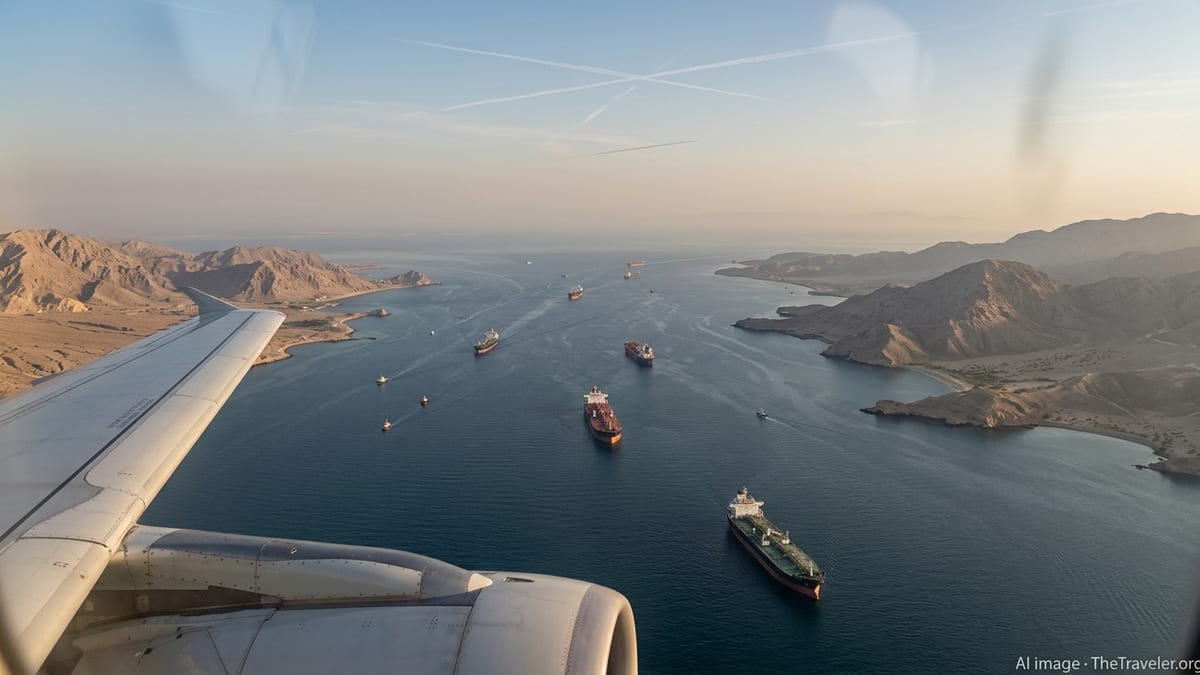
The renewed conflict around the Strait of Hormuz has revived fears of a severe oil crunch, with key shipping lanes facing intermittent disruption and insurers repricing risk on tanker routes. Publicly available assessments describe the closure and partial reopening of the strait as one of the most significant shocks to global energy security in decades, adding to volatility that began with earlier tensions in the region.
The latest escalation follows years of strain in energy markets from the war in Ukraine and earlier supply disruptions. Oil prices have swung higher on headlines, but analysts cited in recent international coverage argue that the global economy is structurally better prepared than during past crises, as more countries have expanded strategic reserves, added non‑OPEC suppliers and accelerated investment in renewables.
Tourism, a sector highly sensitive to fuel prices and geopolitical risk, is again on the frontline of uncertainty. Routes over or near the Gulf have seen higher costs and scheduling changes, and some long‑haul travelers are opting for itineraries that avoid conflict‑adjacent hubs. Yet the worst of the immediate tourism damage remains concentrated in the Middle East itself, with organizations such as the World Travel & Tourism Council estimating sharp declines in regional arrivals compared with pre‑crisis expectations.
For destinations far from the conflict zone, the main transmission channel is energy costs rather than direct security concerns. This dynamic is shaping how countries such as Canada, Mexico, the United States, the United Kingdom, Germany, Russia and France are experiencing the shock compared with Middle Eastern and eastern Mediterranean tourism markets.
Major Economies Buffer Tourism From Energy Price Spike
Recent tourism data and economic commentary indicate that large, diversified economies are absorbing the energy shock with less impact on visitor numbers than many analysts feared. International bodies tracking tourism performance report that global arrivals and tourism spending fully recovered to pre‑pandemic levels by 2023 and remained robust through 2024, despite elevated fuel costs and broader inflation pressures.
Reports from organizations such as UN Tourism and the OECD highlight that transport and accommodation prices rose in part due to volatile oil markets, but consumer appetite for travel has so far proven resilient. Households in advanced economies are adjusting budgets rather than cancelling trips altogether, often trading distance and length of stay instead of abandoning holidays.
In the United States and parts of Europe, publicly available economic forecasts suggest that higher oil prices are adding only a modest increment to inflation, in some cases described as a few tenths of a percentage point. Analysts attribute this to factors including improved energy efficiency, larger shares of renewable power and, in the US, domestic oil and gas production that reduces exposure to imported crude.
For tourism, this translates into what some research notes characterize as a “bare minimum” impact from the current energy turbulence in many advanced markets. Airlines and hospitality operators are facing higher input costs, but widespread cancellations or abrupt collapses in demand outside the immediate conflict region have not materialized on the scale seen during previous energy shocks.
Canada Joins Diversified Energy Club
Canada is being grouped with countries such as Mexico, the US, the UK, Germany, Russia and France as relatively insulated from the most disruptive consequences of the Middle East conflict for tourism. Public policy documents from Natural Resources Canada and Global Affairs Canada emphasize an ongoing strategy to deepen the country’s role as a reliable supplier within global energy and critical minerals chains, while also expanding clean‑energy capacity.
Canada remains a net energy exporter, particularly of crude oil and natural gas, which significantly reduces its vulnerability to external supply cuts. Government trade reporting for 2024 shows that pipeline expansions and marine export capacity have broadened markets beyond the United States, with early data indicating a rising share of Canadian crude heading to Europe and Asia. This diversification of buyers, combined with long‑term contracts and strategic reserves, gives Canada more flexibility when specific regions face turmoil.
On the import side, Canada’s refined products and other fuel inputs are sourced from a range of partners across North and South America, Europe and, to a more limited extent, the Middle East. While the exact number of supplying states fluctuates, analysts of Canada’s trade statistics describe a portfolio that taps dozens of producer and transit countries rather than relying on a narrow group of Gulf exporters. This multi‑country sourcing strategy mirrors efforts seen in European Union members like Germany, which accelerated diversification away from single‑supplier dependence after the invasion of Ukraine.
For tourism, these energy arrangements mean that Canada is contending more with price shifts than with outright shortages. Airlines serving Canadian gateways are paying higher fuel bills, but major service cuts linked directly to fuel availability have not been widely reported. Industry data indicate that Canada’s international arrivals continued to climb in 2024 and early 2025, supported by strong demand from the United States and Europe, even as some travelers redirected trips from conflict‑affected Middle Eastern destinations to North American and European alternatives.
Global Fuel Diversification Dilutes Single‑Region Risk
The current crisis has underscored how far the global energy system has moved away from reliance on a small cluster of producers. Research from institutions such as the International Energy Agency, the World Bank and the World Economic Forum over recent years describes a steady expansion of liquefied natural gas trade, new pipeline routes, and growth in renewables that collectively reduce the leverage of any one region over global supply.
Crude and refined products now move from an increasingly varied set of exporters in North America, Latin America, Africa, the North Sea and Asia, supplementing output from the Middle East. While the Gulf region still represents a crucial share of seaborne oil shipments, the share of global energy demand met by other producers and by non‑fossil sources continues to rise. Analysts point to this dispersion as a key reason why even a major disruption to traditional chokepoints translates more into price volatility than into systemic shortages in many importing nations.
For tourism, this diversification acts as a shock absorber. Carriers can sometimes reconfigure routes to load fuel at alternative hubs, while governments with diverse supplier relationships are better positioned to tap backup contracts or draw down reserves. As a result, the worst travel disruptions have so far been concentrated around the immediate conflict zone and certain highly import‑dependent states, rather than spreading evenly across all markets.
Industry surveys show that travelers remain sensitive to ticket prices, yet many are prioritizing trips after years of pandemic restrictions. This willingness to absorb somewhat higher costs, combined with diversified energy sourcing, has helped keep overall international travel volumes on a growth trajectory even as the energy system weathers one of its most serious security tests in decades.
Winners, Losers and the Road Ahead for Tourism
The uneven impact of the energy shock is already reshaping tourism flows. Middle Eastern hubs that previously marketed themselves as safe, high‑end stopover destinations have seen steep declines in arrivals, according to estimates cited in recent industry and media reports. Some of this business is being redirected to European and North American cities, including Canadian gateways, as travelers choose routes perceived as more stable.
At the same time, higher fuel costs are squeezing airlines worldwide, particularly low‑cost carriers that compete on thin margins. Analysts warn that if elevated oil prices persist well into 2026, fare increases could eventually weigh more heavily on demand, especially for price‑sensitive long‑haul leisure travel. That risk is most acute for emerging markets that depend heavily on imported fuel from the Middle East and have limited fiscal space to shield consumers.
For now, Canada and peers such as Mexico, the US, the UK, Germany, Russia and France are benefiting from both energy diversification and strong underlying travel demand. Their tourism sectors face headwinds in the form of higher operating costs and lingering geopolitical uncertainty, but have not experienced the severe collapse in arrivals seen in frontline states near the conflict.
How long this relative resilience lasts will depend on the duration and geographic spread of the Middle East crisis, the effectiveness of global efforts to further diversify fuel supplies, and the pace of the broader energy transition. For the moment, publicly available data suggest that a more geographically diverse energy system is translating into a more uneven and, in many advanced economies, more manageable tourism impact than during earlier oil shocks.