


More news on this day
Canada has updated its travel advice for France after weeks of large demonstrations, scattered violence and localized curfews across major cities, prompting fresh concern for travelers planning autumn and winter trips to one of Europe’s busiest destinations.
Get the latest news straight to your inbox!
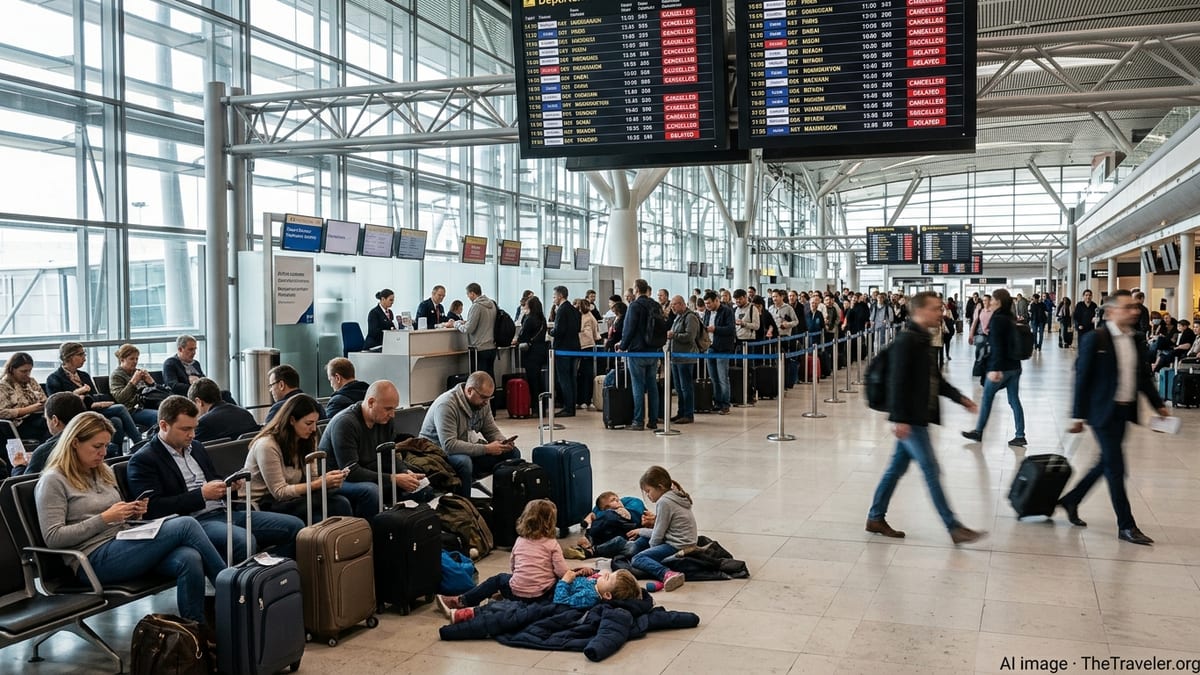
Advisory Updated After Weeks of Nationwide Unrest
Publicly available guidance on the Government of Canada’s travel portal shows that advice for France was revised on October 28, 2026, with new details in the safety and security section highlighting mass demonstrations and related disruption. The overall risk level for France remains “exercise a high degree of caution,” but the narrative now places greater emphasis on unrest and the possibility of rapid changes on the ground.
According to the updated advisory, large scale demonstrations have been taking place across France since late September 2026, with further protests announced for October 31 and November 5 in several cities. The notice warns that security measures, including partial or localized curfews, may be imposed at short notice and that security forces may employ crowd control tactics such as tear gas to disperse gatherings.
The French language version of the advisory echoes the same concerns, underlining that even peaceful demonstrations can quickly become violent and that public services and transport networks may be disrupted before, during and after protest days. Canada’s advice urges travelers to avoid demonstration areas, monitor local media and prepare to adjust itineraries if conditions deteriorate.
France’s risk rating on Canada’s global list of destinations was also refreshed on October 28, placing it among several countries where travelers are asked to show a high degree of caution because of security concerns, even though large parts of each country remain open to visitors.
Mass Protests Reshape the Atmosphere in French Cities
Reports from international media describe crowds in the hundreds of thousands joining marches and rallies around France in recent weeks, driven by anger over the cost of living, school funding and broader social and economic grievances. Coverage from Paris on October 24 noted that the capital saw clashes between some demonstrators and police as a mass march wound down, while other cities such as Orléans hosted additional gatherings focused on political issues.
Further reporting indicates that the protests have been sustained rather than limited to a single weekend, with students and young people playing a visible role in mobilizing support. In response to weeks of student-led demonstrations, the French government has publicly pledged changes to the national university admissions platform in an effort to address some of the concerns, but gatherings have continued with new dates announced.
European travel trade publications note that the unrest is having a mixed impact on tourism demand. Some travel advisors report postponements or cancellations for trips scheduled as far ahead as next summer, while others state that clients are monitoring the situation but continuing with existing plans. The overall picture presented is one of caution rather than a wholesale collapse in travel to France.
French tourism industry representatives quoted in national media warn that images of violence and arson in a limited number of locations risk damaging the country’s broader appeal. Industry voices highlight the scale of recent damage to businesses and civic buildings, while also emphasizing that many tourist areas remain calm and operational.
How the New Guidance Affects Canadian Travelers
Canada’s revised advisory for France does not advise against travel, nor does it introduce regional “avoid non-essential travel” warnings at this time. Instead, it provides more granular information on demonstrations, curfews and the potential for sudden disruption, effectively asking travelers to plan with greater flexibility and situational awareness.
The notice points out that demonstrations can interfere with public services and transportation, including local metro and bus systems and intercity rail. Travelers may encounter temporary station closures, diverted routes or longer travel times on days when marches or rallies are announced. The advisory encourages visitors to monitor local media and municipal announcements for updates on protest routes and restricted zones.
Travelers are also advised to be prepared for visible security measures in urban centers, including an increased police presence around government buildings, transport hubs and popular tourist sites. The advisory reiterates standing guidance on the risk of terrorism in France and Europe more broadly, listing typical potential targets such as transportation networks, public spaces, places of worship and major events.
In practical terms, the updated language means Canadian visitors should build extra time into daily plans, especially when moving through central districts of cities like Paris, Lyon or Marseille, where marches tend to concentrate. Flexible, fully refundable tickets for intercity journeys and attractions may offer additional peace of mind should plans need to change at short notice.
Protests, Curfews and What Travelers Are Seeing on the Ground
Travel-focused outlets describe a patchwork of experiences for visitors currently in France. Some travelers in Paris report seeing evidence of protests close to their hotels, including graffiti, boarded-up storefronts and a heavier police presence, while still being able to visit key sights and dine out in many neighborhoods. Others describe relatively normal city life away from protest routes, with museums and attractions operating on standard schedules.
Several French cities, including parts of Paris, have introduced short-term overnight curfews in specific districts following episodes of violence and looting, according to advisories and foreign government alerts. These measures are often limited to particular neighborhoods and set for defined hours, and they have been adjusted as authorities respond to new developments.
International coverage quoting representatives of the French tourism board stresses that the violence in some areas does not reflect day-to-day life throughout the country. The tourism sector points to 2025 arrival statistics and revenue figures showing record performance to underline France’s ongoing appeal, while acknowledging that transportation adjustments and temporary restrictions are possible in certain zones during protest days.
Other foreign ministries, such as the United States and Ireland, have updated their own travel advice in recent days. The United States renewed a Level 2 “exercise increased caution” advisory for France on October 21, citing terrorism and unrest, while Ireland’s Department of Foreign Affairs keeps its overall security status at “normal precautions” but has issued a separate alert about protests and curfews. For Canadian travelers, these parallel advisories provide additional sources to cross-check when assessing personal risk tolerance.
Planning France Trips Through Late 2026
For those with near-term departures from Canada to France, the revised advisory suggests a more careful approach to itinerary design rather than a blanket decision to cancel. Travelers may wish to prioritize flexible bookings, consider travel insurance that explicitly covers civil unrest-related disruption and stay in regular contact with airlines or rail operators for schedule changes.
Those planning to move between cities by train should pay attention to possible strikes and protest-related disruptions that can affect services run by operators such as SNCF. While core long-distance routes generally continue to function during periods of tension, timetables and staffing can be affected on short notice, and station access can be restricted when marches pass nearby.
In larger cities, travelers may find it helpful to identify alternative routes that avoid typical protest corridors, such as main boulevards and central squares where rallies are often authorized. Booking accommodation slightly away from these focal areas can reduce the likelihood of being directly impacted by noise, traffic closures or police operations, particularly on announced protest days.
With France remaining one of the most visited countries in the world, Canada’s updated advisory frames the current unrest as a serious but manageable factor for well-prepared visitors. As conditions evolve into November, travelers are encouraged to follow official travel advice, monitor trusted news outlets and remain ready to adapt plans in response to new protest announcements or localized security measures.