

More news on this day
Canada is confronting an unprecedented convergence of winter storms, transport strikes and cross-border tensions that is crippling travel links with the United States, Mexico, Japan and other key markets, raising urgent questions for tourists with trips booked in the coming weeks.
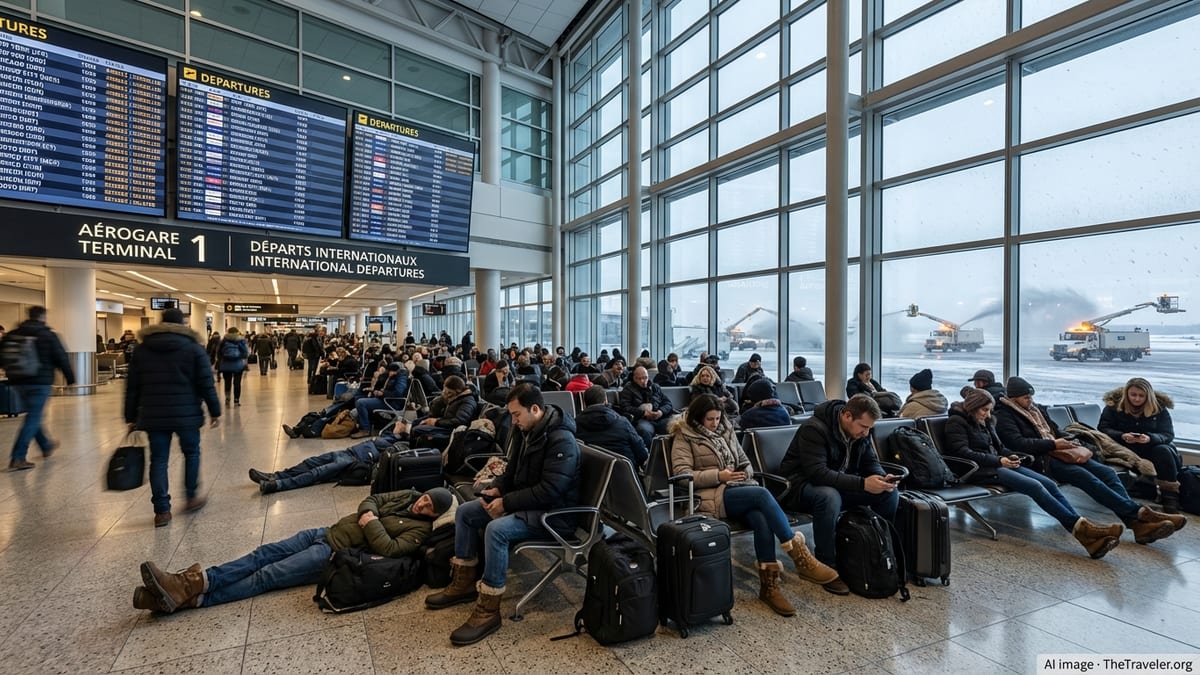
Record Snowfall Hammers Airports and Highways
A succession of powerful winter systems through January and February 2026 has left Canada’s air and ground networks struggling to cope, with major hubs from Toronto to Halifax repeatedly forced into emergency operations. A late-January storm brought the largest single-day snowfall on record to Toronto Pearson International Airport, triggering more than 560 cancellations there alone and prompting the city to activate its major snow response plan as police reported scores of collisions on treacherous roads.
The disruptions have rolled straight into another historic blizzard now battering Atlantic Canada as the broader Northeast of North America weathers what forecasters are calling the Blizzard of 2026. Environment and Climate Change Canada has issued multiple winter storm and blowing snow warnings across the Maritimes and Newfoundland, with winds forecast to exceed 80 km/h in coastal areas and municipalities closing schools, libraries and public facilities. Halifax Stanfield International has already reported clusters of cancellations as airlines preemptively trim schedules.
These storms come on top of an earlier bomb cyclone that swept up the Eastern Seaboard at the start of the month before lashing Atlantic Canada with whiteout conditions, power outages and airport shutdowns. For travelers, the cumulative effect is a network running with little slack: each new storm compounds existing backlogs, making it harder for airlines and rail operators to reposition aircraft, crews and rolling stock in time for the next wave of weather.
On key corridors linking Canada to the United States and beyond, this has translated into days of delays and missed connections, particularly for passengers transiting via northeastern U.S. hubs. With more than 600,000 customers losing power at points across the wider region and thousands of flights scrubbed, officials are urging travelers to build extra time into itineraries or consider deferring nonessential trips.
Airline Cutbacks and Strike Fallout Squeeze International Routes
Even when the skies are clear, Canada’s international air network is under strain from capacity cuts and lingering labor unrest. Air Canada only recently emerged from a high-profile dispute with more than 10,000 unionized flight attendants that saw a full work stoppage in August 2025, halting mainline and Rouge operations and disrupting an estimated 130,000 passengers per day at the height of the walkout. Although a tentative deal allowed flights to resume, union members later rejected key wage terms, keeping the risk of further job action on the table.
Other Canadian carriers are now reshaping their cross-border portfolios, tightening the spigot on flights to the United States just as demand patterns shift. Montreal-based leisure airline Air Transat has confirmed it will phase out all remaining U.S. services by June 2026, ending seasonal routes from Quebec to Florida that have long been popular with winter sun-seekers. WestJet, meanwhile, has already suspended multiple routes to U.S. cities, citing soft southbound demand and the broader economic context.
In recent days, Air Canada has joined its rivals in cancelling planned seasonal U.S. routes, including a nonstop link between Montreal and Seattle that was due to operate on Airbus A220 jets from May. Aviation analysts say the combined effect of these decisions is a notable thinning of Canada–U.S. connectivity, especially on secondary city pairs that once relied on a handful of direct services. For travelers headed onward to Mexico, Japan or Europe via American hubs, the loss of these feeders can mean more connections, longer travel times and higher fares.
The squeeze is particularly acute for snowbird travelers and business passengers who had counted on predictable schedules to Florida, the U.S. West Coast and major transpacific gateways. With capacity scaled back and weather disruptions rippling through the remaining network, rebooking options are more limited than usual, and some passengers are being pushed onto indirect routings through third countries or entirely different alliances.
Border Tensions and Policy Shifts Chill Cross-Border Travel
Overlaying the operational chaos is a geopolitical chill that has already dented travel flows between Canada, the United States and Mexico. Since early 2025, a deepening trade dispute and tariff regime has weighed on bilateral relations, contributing to a sharp fall in leisure trips south of the border. Industry data for 2025 showed nearly half a million fewer Canadians crossing into the United States by land in February alone compared with a year earlier, a decline not seen since the immediate post-pandemic period.
The political backdrop has spurred a broader boycott movement in Canada, with surveys indicating that a significant share of would-be travelers have cancelled or postponed U.S. vacations in response to heightened tensions. Tourism economists warn that the trend is now colliding with the latest wave of weather- and strike-related disruptions, amplifying the shock to airlines, hotels and cross-border retail on both sides of the 49th parallel.
For travelers connecting beyond North America, the knock-on effects show up in longer queues and more frequent secondary inspections at busy land crossings and preclearance airports, as border agencies adjust staffing and screening protocols in a more charged environment. Travel agents report that some clients are opting to bypass U.S. hubs altogether by choosing non-stop services from Canada to Mexico, the Caribbean or Europe where available, while others are rerouting via Asian or European hubs when flying between Canada and Japan.
Tourism boards in all three countries are scrambling to reassure visitors that they remain open for business, but acknowledge that the mix of policy risk and operational unpredictability is complicating recovery plans. For international travelers whose itineraries thread together multiple North American stops, the prospect of last-minute changes at both the border and the airport has become an unwelcome new normal.
What Travelers Need to Know Now
For those with imminent trips involving Canada, the United States or Mexico, travel experts say preparation and flexibility are essential. With winter storm warnings still in force across parts of Atlantic Canada and the northeastern United States, schedules remain highly vulnerable to rapid changes. Airlines are frequently issuing weather waivers that allow passengers to change dates or routes without standard fees, but seat availability can be tight once mass cancellations begin.
Passengers are being advised to monitor their flight status repeatedly in the 24 hours before departure and to keep a close eye on departure and arrival airport operations, as some terminals have been intermittently closing security lines or limiting ground transport during the heaviest snow and high winds. Where rail or intercity bus alternatives exist, they may also be affected by the same storms, so travelers should not assume that switching modes will guarantee a smoother journey.
On the labor front, while there is no active nationwide airline strike at the moment, the unresolved undercurrents from last year’s disputes mean that contract talks at major carriers will be watched closely throughout 2026. Any escalation could quickly remove capacity from an already fragile system, with ripple effects for connecting itineraries to Japan and other long-haul destinations that rely on tightly timed domestic feed.
Finally, travelers should factor in additional time at land borders and transborder airport checkpoints, particularly when connecting from Canada through U.S. hubs en route to Mexico, Japan or elsewhere. Staffing shortages, evolving screening policies and weather-related slowdowns have all contributed to unpredictable wait times. Travel planners say that building in longer connection windows and purchasing flexible or refundable tickets, where budgets allow, can provide a crucial margin of safety in a season where snowstorms, strikes and border frictions are combining to test the resilience of North America’s travel system.