

More news on this day
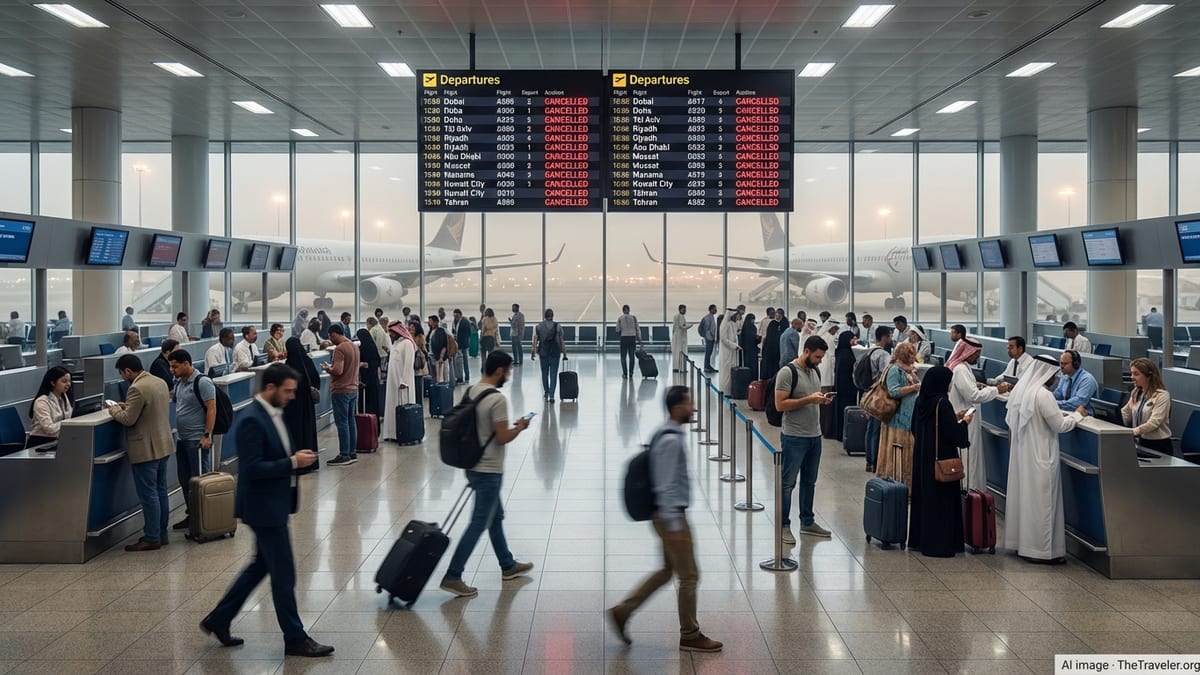
Canada’s decision to classify India as an “avoid non-essential travel” destination is reshaping transcontinental travel patterns, with publicly available information indicating mounting flight cancellations, schedule changes, and uncertainty for passengers booked on Air Canada, British Airways, and United Airlines.
Get the latest news straight to your inbox!
Advisory Raises India to Higher-Risk Category
According to recent updates on Canada’s official travel advice framework, India is now listed under the “avoid non-essential travel” category, a level that typically reflects heightened security, safety, or operational risks for travelers. This status places India among destinations where government guidance urges Canadians to defer discretionary trips such as tourism and non-urgent business travel.
Published coverage of Canada’s advisory system explains that “avoid non-essential travel” is the second-highest warning level, below only “avoid all travel.” It signals that conditions in the destination may change quickly and that a significant disruption to local services, including transportation, consular access, or medical care, is possible. Travelers who still choose to go are generally advised to ensure they have robust insurance, contingency plans, and flexible bookings.
While the advisory does not amount to a ban on travel, it has immediate implications for how airlines, tour operators, and corporate travel managers assess risk. Many large organizations and universities have policies that restrict staff or student travel to countries placed under a higher-level warning, which can lead to a rapid fall in demand for air seats and tour packages.
Travel industry analysts indicate that advisories of this magnitude often serve as a leading indicator of airline capacity adjustments, particularly on long-haul routes where profitability depends heavily on advance bookings and premium-cabin traffic.
Air Canada Adjusts Capacity and Rebooking Policies
Publicly available airline documentation shows that Air Canada maintains a detailed travel advisory policy, allowing for rebooking or itinerary changes when specific destinations are affected by events such as civil unrest or other serious disruptions. Under these frameworks, a formal advisory often triggers so-called goodwill policies, permitting passengers to postpone travel, modify routes, or receive credits for future journeys.
In the wake of Canada’s latest stance on India, travel-watch sites and booking platforms are reporting a noticeable uptick in schedule changes and cancellations on Air Canada’s India-linked services. While some flights continue to operate, the pattern reflects a combination of reduced demand from Canadian travelers and operational caution as the carrier evaluates route profitability and crew logistics under the new risk backdrop.
Passengers with near-term departures are encountering reissued itineraries, altered routings through alternate hubs, and in some cases, outright cancellations. Industry guidance emphasizes that travelers should monitor their bookings frequently through airline apps and email notifications, as day-of-departure changes can occur with limited notice when load factors shift or when additional operational constraints emerge.
For Air Canada, which has previously relied on India routes to feed both leisure and visiting-friends-and-relatives traffic, the advisory increases pressure to balance commercial needs with traveler confidence. The carrier’s established procedures for hard alerts and travel advisories are likely to shape how quickly schedules are trimmed or restored in coming weeks.
British Airways and United Airlines Face Parallel Disruptions
Canada’s warning is also reverberating through the broader transatlantic and transpacific networks operated by British Airways and United Airlines. Both carriers serve India from their home markets and carry connecting Canadian passengers via hubs in London and major U.S. cities, meaning shifts in Canadian demand can indirectly affect their seat planning and route economics.
Industry bulletins and travel management advisories list British Airways, United Airlines, and Air Canada among major carriers linking North America and Europe to Indian gateways. As travel demand from Canada softens, some of the first visible effects are reductions in fare classes available for sale, subtle timetable adjustments, and an increase in involuntary rebookings, particularly for passengers traveling on multi-leg itineraries originating in Canadian cities.
Reports indicate that British Airways and United are leaning on existing flexibility policies that were originally refined during earlier waves of global disruption. These policies typically offer date changes or credits for passengers whose journeys are affected by government advisories or airline-initiated schedule changes, though the exact options vary by fare type and point of sale.
For travelers, one of the most immediate practical consequences is a higher risk of missed connections, overnight layovers, or rerouting through alternative hubs. Travel specialists advise allowing wider connection windows and verifying check-in requirements, as some transit points may have their own documentation or health-related rules linked to India-bound traffic.
Travelers Face Insurance, Itinerary, and Visa Uncertainty
The advisory shift has also raised questions about insurance coverage and cancellation rights for Canadian travelers heading to India. Travel-protection documentation from Canadian tour operators and airlines shows that many policies treat government advisories as a key trigger for coverage, particularly when a destination moves into an “avoid non-essential travel” category after a booking has been made.
Travel insurance products that include “cancel for covered reason” or “cancel for any reason” benefits may respond differently. Some plans may allow partial reimbursement if a traveler decides that the elevated risk profile is unacceptable, while others may only apply if the airline cancels the flight outright. Industry observers recommend that travelers review the specific wording in their policies regarding advisories, epidemics, or political unrest before making decisions.
At the same time, the advisory interacts with India’s own entry and quarantine rules, which have evolved repeatedly in recent years. Consolidated travel matrices circulated by corporate travel managers list multiple airlines serving India, including Air Canada, British Airways, United Airlines, and several European and Middle Eastern carriers, with varying quarantine and testing requirements. Any renewed tightening of on-arrival protocols, paired with Canada’s higher warning level, could further dampen appetite for non-essential trips.
Visa processing times, appointment availability at consular centers, and changing documentation requirements can compound the uncertainty. Even travelers who proceed despite the advisory are increasingly building additional time into their plans to account for delayed approvals or last-minute bureaucratic hurdles.
What Passengers Should Watch in the Weeks Ahead
Travel observers note that government advisories do not always translate into uniform airline responses. Some carriers may hold schedules steady to preserve critical connectivity for business travelers and diaspora communities, while others rapidly trim underperforming routes. In the current environment, capacity between Canada, Europe, the United States, and India is expected to remain in flux.
In the near term, travelers with tickets on Air Canada, British Airways, or United Airlines are being urged by travel agencies and corporate travel departments to prioritize flexibility. This includes monitoring for free date-change windows, considering refundable fares when planning new trips, and ensuring that contact details in reservations are accurate so that airlines can issue timely disruption notifications.
On a strategic level, Canada’s elevated advisory for India may accelerate a broader shift toward regional travel and alternative long-haul destinations perceived as lower risk. Travel data providers have already documented periods where advisories correlate with declines in search volumes and bookings for the affected country, even when flights continue to operate.
For now, the combination of a strong Canadian warning, complex on-the-ground conditions in India, and evolving airline responses from Air Canada, British Airways, and United Airlines creates an unusually volatile landscape for long-haul itineraries. Travelers weighing essential versus non-essential reasons for visiting India will likely continue to reassess their plans as fresh schedule changes and policy updates emerge.