

More news on this day
Canadian vacationers, including dozens from British Columbia, remain stranded in Puerto Vallarta after a wave of WestJet flight cancellations and schedule changes linked to cartel-related violence in Mexico’s Jalisco state disrupted routes back to Canada.
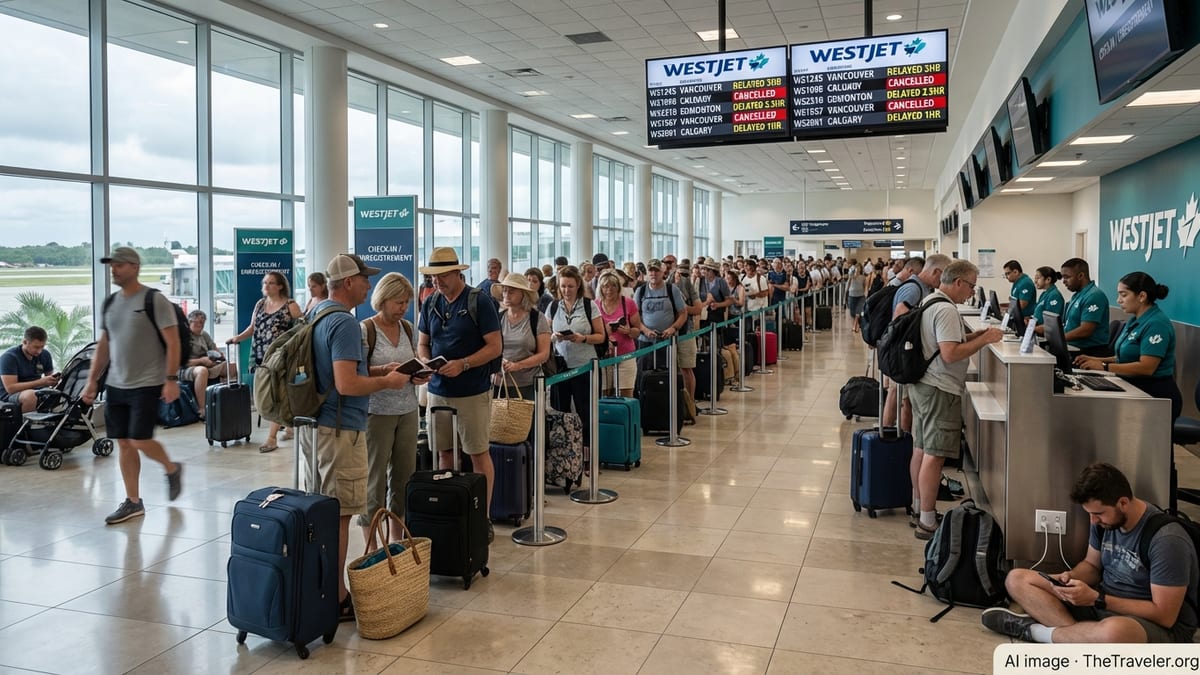
Violence in Jalisco Triggers Sudden Flight Cancellations
The disruption began on February 22, 2026, when a Mexican military operation that killed alleged cartel leader Nemesio “El Mencho” Oseguera Cervantes set off arson attacks, highway blockades and gunfire across parts of Jalisco, the state that includes Puerto Vallarta. Authorities urged residents and tourists to shelter in place as burning vehicles and improvised roadblocks cut off key access routes to the airport.
Although Puerto Vallarta’s Gustavo Díaz Ordaz International Airport technically remained open, airlines sharply curtailed operations due to security concerns and difficulty getting crews and passengers safely to and from the terminal. Data from flight-tracking services show dozens of cancellations and diversions over February 22 and 23, with Canadian routes bearing a disproportionate share of the impact and WestJet recording one of the highest cancellation tallies among carriers serving the resort city.
For WestJet, the turbulence meant scrubbing multiple departures and arrivals between Puerto Vallarta and Canadian hubs including Vancouver, Edmonton, Calgary, Winnipeg and smaller Western cities. Some flights from Calgary reportedly turned back mid-journey as the situation on the ground deteriorated, adding to the operational tangle that left aircraft and crews out of position across the network.
By February 24, Canadian airlines such as Air Canada, Air Transat, Porter and WestJet announced they were gradually resuming service to Puerto Vallarta following assurances from local authorities that road blockages had eased and security had been reinforced. However, the restart of regular schedules has done little to help many travelers whose original flights simply vanished from booking systems during the peak of the crisis.
B.C. Travelers Describe Being “Ghosted” by Their Airline
Among those caught up in the disruption are families and couples from British Columbia who say they have been left in limbo for days with limited direct communication from WestJet. In one widely shared account, a traveler from Kamloops who flew to Puerto Vallarta on February 16 said his February 23 return flight was cancelled, then listed as being rebooked, only for all details to disappear without any follow-up message or confirmed itinerary.
Other B.C. vacationers told local media outlets that their WestJet trips no longer appeared in the airline’s app and that attempts to reach customer service resulted in long holds, dropped calls or generic advice to check the website. Some guests reported being told there were no dedicated rescue flights for those whose Sunday and Monday departures were cancelled, despite observing a number of WestJet departures operating from Puerto Vallarta later in the week.
On social platforms and travel forums, stranded passengers described waking up each morning to extend hotel stays day by day while scanning for any sign of a confirmed flight home. Several noted the emotional strain of trying to manage work commitments, school schedules and caregiving responsibilities back in Canada while facing open-ended delays in Mexico.
For travelers from Vancouver Island and the B.C. Interior, the uncertainty has been compounded by additional travel they must arrange once they finally land in Canada, whether connecting through Vancouver or Calgary. With winter weather also disrupting flights across parts of North America this week, rebooking suitable connections has become an additional challenge.
Rising Costs and Patchwork Support on the Ground
Extended hotel stays, meals and transportation have quickly added up for those forced to remain in Puerto Vallarta beyond their planned departure dates. While some all-inclusive resorts have allowed affected guests to stay on until flights are restored, others have reported limited food options and rationing of bottled water as supply chains adjust to the security situation and fluctuating occupancy levels.
Several stranded Canadians say they have received little concrete guidance about reimbursement or compensation, beyond being told that security-related cancellations fall under “extraordinary circumstances.” Travelers have also reported that rooms at nearby properties filled rapidly as news of the cancellations spread, leaving some to scramble for affordable accommodation or share rooms with friends and relatives.
Local tourism workers in Puerto Vallarta, heavily reliant on Canadian and American visitors, have tried to reassure guests even as they grapple with their own concerns about safety and employment. Hotel staff have circulated memos encouraging guests to remain on resort grounds, avoid nonessential trips into town and monitor local news, even as visible signs of tension in the city eased somewhat after the first 48 hours.
For budget-conscious travelers from British Columbia, particularly families and students, the unexpected expenses have been especially difficult. Some have turned to social media for advice on cheaper alternatives, including the possibility of traveling overland to other airports such as Guadalajara or Tepic, though such options raise their own security and logistical risks.
Airlines Resume Service but Recovery Remains Uneven
As security conditions stabilized, Canadian carriers began scaling operations back up, with Air Canada and Air Transat announcing a return to regular flying between Puerto Vallarta and major Canadian cities by February 24. A low-cost competitor, Flair Airlines, has even added extra “recovery flights” to help clear backlogs, saying that seats are being quickly snapped up by passengers rebooked from earlier cancellations as well as new customers looking for a way out.
WestJet has likewise resumed scheduled service to Puerto Vallarta, Guadalajara and Manzanillo and introduced a flexible change policy allowing affected guests to alter their travel plans without paying a change fee through late February. The airline says it conducted a thorough review of the situation before restoring service and continues to monitor conditions in coordination with local authorities.
Despite the resumed schedule, many of those stranded earlier in the week say they have yet to receive clear guidance on when they will fly home. Some Canadians have opted to purchase new tickets on other airlines to speed up their return, hoping to recover at least part of the cost later. Others, particularly larger families facing steep last-minute fares, feel they have little choice but to wait for WestJet to confirm new flights.
The patchwork nature of recovery has also led to frustration among travelers who see seats available on WestJet flights departing Puerto Vallarta yet cannot secure a spot using disrupted tickets. Airline agents have told some customers that any open seats visible on the website represent the only inventory available and that there are no separate rescue flights reserved exclusively for those displaced by the cancellations.
Questions Over Passenger Rights and Future Travel Confidence
The turmoil has renewed scrutiny of Canada’s air passenger protection rules and what airlines owe customers when flights are cancelled for security or safety reasons. Consumer advocates have noted that while airlines can be exempt from paying standard compensation for events outside their control, they are still required to provide prompt rebooking on the next available flight and clear communication about options.
Travelers stuck in Puerto Vallarta say that transparency and timely information have been in short supply. Several report being told different things by different agents, while others say they learned more from online forums and news reports than from official channels. This perceived communication gap has left many British Columbia residents questioning whether they will book with the same carrier for future vacations.
In British Columbia, where winter escapes to Mexico are a seasonal ritual, the episode is already prompting some travel agents to advise clients to consider backup plans, such as buying more comprehensive insurance, registering itineraries with the federal government and closely monitoring travel advisories before and during trips. The events in Puerto Vallarta follow other high-profile disruption episodes in recent years that have eroded public confidence in carriers’ ability to handle crises.
For now, most stranded travelers appear focused on one immediate goal: getting home. As flights gradually normalize and backlogs clear, their stories of uncertainty and mounting costs are likely to feed into a broader conversation in Canada about how airlines, regulators and governments can better protect passengers caught at the intersection of security crises and fragile air travel systems.