

More news on this day
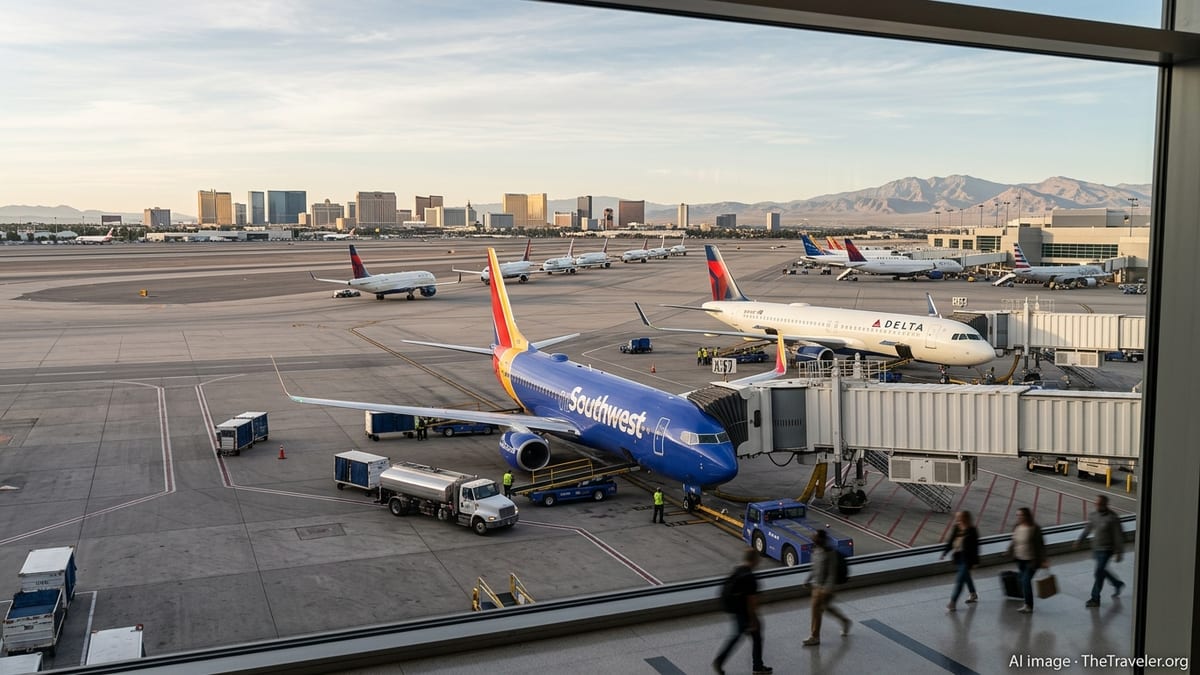
Travelers at Las Vegas’s Harry Reid International Airport faced a frustrating day on Wednesday as a pocket of six flight cancellations and dozens of delays involving Southwest Airlines and Delta Air Lines disrupted connections to key domestic and international destinations.
Get the latest news straight to your inbox!
Localized Disruption Spreads Across Major Routes
Publicly available flight-tracking data for Wednesday indicates that Harry Reid International Airport experienced a concentrated disruption affecting both Southwest Airlines and Delta Air Lines, with a total of six cancellations and a larger number of delayed departures and arrivals. While the figures are modest compared with the worst nationwide meltdowns seen in recent years, the timing and routing of the affected flights created outsized headaches for passengers connecting through Las Vegas and other hubs.
Schedules show that impacted flights linked Las Vegas with several high-traffic cities, including Phoenix, Minneapolis and Burbank, as well as longer-haul services tied into broader domestic and transatlantic networks. At least one affected itinerary touched Frankfurt through Delta’s partnership network, underscoring how a relatively small cluster of cancellations at a single airport can reverberate across continents.
Operational data and traveler reports suggest that the disruption was compounded by a strained national aviation system still working through weather-related backlogs from a powerful winter pattern in the northern United States. As a result, even when Las Vegas skies were relatively stable, crews, aircraft positioning and connecting passengers were all vulnerable to knock-on delays.
Weather and Network Strain Add to Airline Challenges
According to recent meteorological summaries, a series of late-winter storms across the Upper Midwest and other regions during March brought heavy snow, strong winds and difficult operating conditions to major hubs, particularly Minneapolis. That wider weather picture led to thousands of cancellations and delays over several days, leaving airlines with aircraft and crews out of position just as midweek travel demand remained solid.
Published coverage of the March storm complex notes that Minneapolis, a key hub in Delta’s network, saw numerous flight cancellations in advance of the worst conditions, a strategy commonly used by airlines to reduce the risk of passengers being stranded on aircraft or at smaller outstations. As operations attempted to reset, even flights operating under clear skies in cities such as Las Vegas and Phoenix were exposed to staffing, aircraft rotation and air traffic control constraints.
Harry Reid International serves as a significant node in this system, with both Southwest and Delta using Las Vegas to connect flows of leisure and convention travelers. When weather further afield interrupts the cadence of arrivals and departures, airports like Las Vegas can quickly feel the impact, especially at peak times when gates, ground crews and taxiways are already heavily utilized.
Southwest and Delta Customers Face Missed Connections
For Southwest customers, the issues at Harry Reid translated into late departures on popular short-haul routes such as Las Vegas to Phoenix and Las Vegas to Burbank. These flights feed into broader networks serving the Southwest, California and beyond, meaning relatively brief initial delays could escalate into missed connections and extended rebookings as aircraft cycled through the day’s schedule.
Delta passengers encountered similar challenges on services linking Las Vegas with Minneapolis and other hub cities. Recent traveler accounts from Delta’s network describe long waits, changing departure times and, in some cases, late-stage cancellations after boarding, highlighting how quickly a workable delay can tip into a full cancellation when crew duty limits and air traffic flow programs converge.
In practical terms, Wednesday’s situation at Harry Reid meant that some travelers bound for destinations as far afield as Frankfurt, via Delta and its transatlantic partners, faced re-routings through alternative hubs or overnight stays to reconnect with long-haul services. For international passengers, the stakes were higher, as missed connections can trigger passport control complications, missed rail links and changes to time-sensitive plans at the destination.
Impact Felt in Las Vegas, Phoenix, Minneapolis and Beyond
The cluster of six cancellations and broader pattern of delays at Harry Reid reverberated across multiple cities. In Las Vegas, passengers reported crowded departure areas, extended waits at customer service counters and long lines at self-service kiosks as travelers attempted to secure new itineraries or confirm connections. The airport’s role as a major leisure gateway added to the strain, with many passengers traveling in groups for vacations, events or conferences.
In Phoenix and Burbank, the effect was visible in late-arriving flights and compressed connection times. Even modest schedule adjustments can prove challenging at busy regional airports where gate space is at a premium and turnaround times are tightly planned, so delays on Las Vegas feeders tended to propagate into subsequent departures.
Minneapolis, already dealing with the aftermath of recent snow and wind, remained a particular pressure point. With Delta operating one of its largest hubs there, any additional disruption associated with aircraft coming from or heading to Las Vegas risked compounding an already delicate recovery phase. Travelers connecting onward to cities across the Midwest and East Coast from Minneapolis faced heightened uncertainty as airlines worked to rebuild normal operations.
On the transatlantic side, connections involving Frankfurt highlighted how North American weather and operational constraints can quickly ripple into long-haul markets. A missed or heavily delayed feeder flight from Las Vegas to a hub can translate into a full-day delay for a Europe-bound traveler, with limited alternative options once overnight departures have closed out.
Advice for Travelers Navigating Continuing Disruptions
While Wednesday’s disruption at Harry Reid International did not reach the scale of a full nationwide breakdown, it serves as a reminder of the sensitivity of modern airline networks. Even a handful of cancellations and a wave of delays at one airport can significantly impact passengers across multiple regions, particularly when severe weather and high demand converge.
Industry data and recent commentary from travel analysts suggest that travelers transiting through Las Vegas and other key hubs in the coming days may continue to see some residual delays as airlines reposition aircraft and crew. Passengers with tight connections, especially those heading to or from weather-affected regions such as the Upper Midwest, are being encouraged by consumer advocates to allow extra buffer time between flights where possible.
Publicly available guidance from aviation and passenger rights organizations also emphasizes the importance of monitoring flight status frequently on travel days, using both airline apps and airport information boards. Same-day adjustments, including voluntary reroutes through less congested hubs, can sometimes reduce the risk of becoming caught in a cascading delay.
For Las Vegas specifically, observers note that Harry Reid International’s heavy concentration of leisure traffic often leads to compressed peak periods, making it particularly vulnerable when wider system stresses arise. As airlines work through Wednesday’s setbacks and look ahead to the next wave of spring travel, passengers are likely to keep a close eye on how quickly operations at Harry Reid and across the broader network stabilize.