

More news on this day
Passengers across Asia are facing another day of disrupted travel as 65 flights were cancelled and 651 delayed at Shenzhen Bao’an, Jakarta’s Soekarno-Hatta and Beijing Daxing International Airports, straining already fragile airline schedules at the start of the busy April travel period.
Get the latest news straight to your inbox!
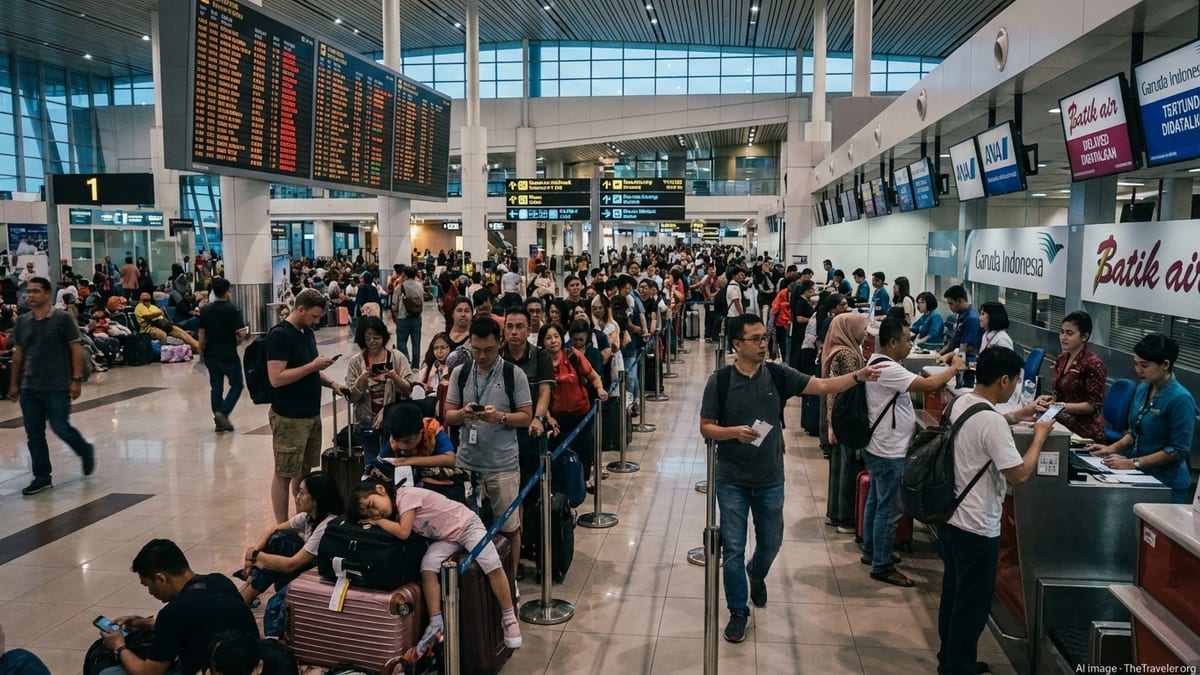
Wave of Disruptions Hits Key Asian Gateways
Publicly available flight tracking and airport-status data indicate that traffic at Shenzhen Bao’an, Jakarta’s Soekarno-Hatta and Beijing Daxing International Airports has been severely affected, with a combined 65 cancellations and 651 delays recorded over a short window. The disruption has rippled through domestic and international networks that depend on these hubs as critical connection points.
The three airports serve as major transfer platforms for routes linking China, Southeast Asia and long haul destinations in Europe and the Middle East. When large numbers of flights at such nodes are cancelled or delayed, aircraft and crew quickly fall out of position, triggering schedule changes that can reach far beyond the original problem airports.
Travel industry analyses of recent disruption patterns in the wider Asia Pacific region suggest that even a single day with elevated cancellation and delay numbers can generate knock-on effects lasting several days, particularly during peak seasons when load factors are high and spare capacity is limited.
The latest figures at Shenzhen, Jakarta and Beijing come on the heels of a broader spike in Asia Pacific operational issues reported in late March, when hundreds of flights were cancelled and thousands delayed across multiple regional hubs.
Shenzhen Bao’an: Chronic Weather and Airspace Constraints
Shenzhen Bao’an International Airport in southern China has long been associated with frequent delay episodes, with passengers and aviation observers often pointing to a combination of “bad weather” advisories and tight airspace corridors as recurring factors. Commentaries and historical flight data show that operations in the region are particularly sensitive to convective weather, coastal fog and air-traffic flow restrictions.
The latest cluster of disruptions at Shenzhen appears to fit that pattern, with local conditions and wider traffic management constraints cited in operational bulletins and airport information feeds. While only a portion of the 65 cancellations is understood to have originated at Shenzhen, the airport’s role as a dense domestic and regional hub means that delays there can rapidly propagate across multiple airline networks.
Shenzhen’s heavy reliance on short- and medium-haul connections also increases the potential for missed onward links when schedules slip. Passengers connecting from smaller Chinese cities or regional destinations into long haul services via other hubs may find themselves stranded when inbound flights arrive too late to make onward departures.
Past analyses of traffic at Shenzhen suggest that delay-prone days can lead to aircraft being out of position for early-morning departures on subsequent days, extending the disruption for travelers whose journeys are scheduled well after the initial problems have passed.
Jakarta Soekarno-Hatta Feels the Strain of Regional Turbulence
Jakarta’s Soekarno-Hatta International Airport, Indonesia’s main international gateway, has also been caught in the latest wave of operational disruption. The airport handles a mix of dense domestic traffic and growing regional and intercontinental services, leaving it vulnerable when schedules tighten across the wider Asia Pacific and Middle East.
Published aviation coverage in recent weeks has highlighted how route suspensions and airspace restrictions in parts of the Middle East have placed additional pressure on alternative routings and on carriers using Southeast Asian hubs. This has contributed to more congested traffic flows and increased sensitivity to even minor local disruptions in Jakarta.
Today’s elevated number of delays at Soekarno-Hatta illustrates how quickly conditions can deteriorate when aircraft rotations are interrupted. Late-arriving planes from regional or long haul sectors shorten ground time available for maintenance, cleaning and crew changes, increasing the likelihood that subsequent departures will push back late or be cancelled altogether.
The disruptions are particularly challenging for Indonesia’s extensive domestic network, which depends on tight turnarounds and high aircraft utilization. Passengers connecting through Jakarta from secondary cities may encounter rebookings, overnight stays or significant schedule changes as airlines work through bottlenecks.
Beijing Daxing’s Hub Operations Put to the Test
Beijing Daxing International Airport, the newer of the Chinese capital’s two major airports, was designed to ease congestion and provide additional capacity for both domestic and international services. The latest wave of cancellations and delays has put those hub operations under renewed pressure, demonstrating that even modern, purpose-built facilities are not immune to regional and global shocks.
Flight status data and timetable adjustments show that a portion of Daxing’s disruption is linked to broader network realignments involving China’s large state-owned carriers, which have been adapting to shifting demand patterns, airspace constraints and changes on overseas routes. In such an environment, any operational setback can result in last-minute schedule revisions.
As a critical node for connections between northern China, Southeast Asia and Europe, Daxing’s performance has a direct impact on passengers seeking efficient one-stop itineraries across the region. When delays accumulate, minimum connection times become harder to meet, raising the risk of missed flights and forced rebooking.
Industry observers note that disruptions at large Beijing-area hubs can also affect cargo flows, as passenger aircraft carry significant volumes of belly freight. Prolonged irregular operations can therefore have knock-on effects on supply chains that depend on just-in-time deliveries.
Knock-On Effects for Travelers Across Asia
The combined impact of 65 cancellations and 651 delays at three of Asia’s major airports underscores the fragility of airline networks during periods of high demand and constrained capacity. Even travelers whose itineraries do not touch Shenzhen, Jakarta or Beijing Daxing may feel the effects through aircraft and crew imbalances that cascade across interconnected routes.
Travel advisories from consumer outlets and aviation-focused publications consistently emphasize the importance of monitoring airline apps and airport information screens closely during periods of elevated disruption. Data from recent events in the region show that schedules can change repeatedly within a single day, with flights moving from “on time” to “delayed” or “cancelled” with little warning.
The latest disruption wave also highlights the value of building additional margin into itineraries, particularly for travelers booking separate tickets on different carriers or relying on tight self-transfer windows. Reports from previous Asia Pacific disruption episodes indicate that longer layovers and single-ticket connections tend to provide more protection when operations become irregular.
With April and May traditionally marking a busy period for both business and leisure travel in Asia, the situation at Shenzhen Bao’an, Soekarno-Hatta and Beijing Daxing will be closely watched by airlines, airports and passengers alike. The scale and duration of the current disruptions are likely to influence how carriers adjust schedules, deploy spare capacity and handle passenger reaccommodation in the weeks ahead.