

More news on this day
A sudden surge of cartel-related violence centered in western Mexico is rippling across some of the country’s best-known vacation hotspots, forcing tourists to shelter in place in Puerto Vallarta and Guadalajara, disrupting flights to Mazatlan and other coastal cities, and raising fresh questions about safety in traditionally popular destinations such as Cancun, Cozumel and Playa del Carmen.
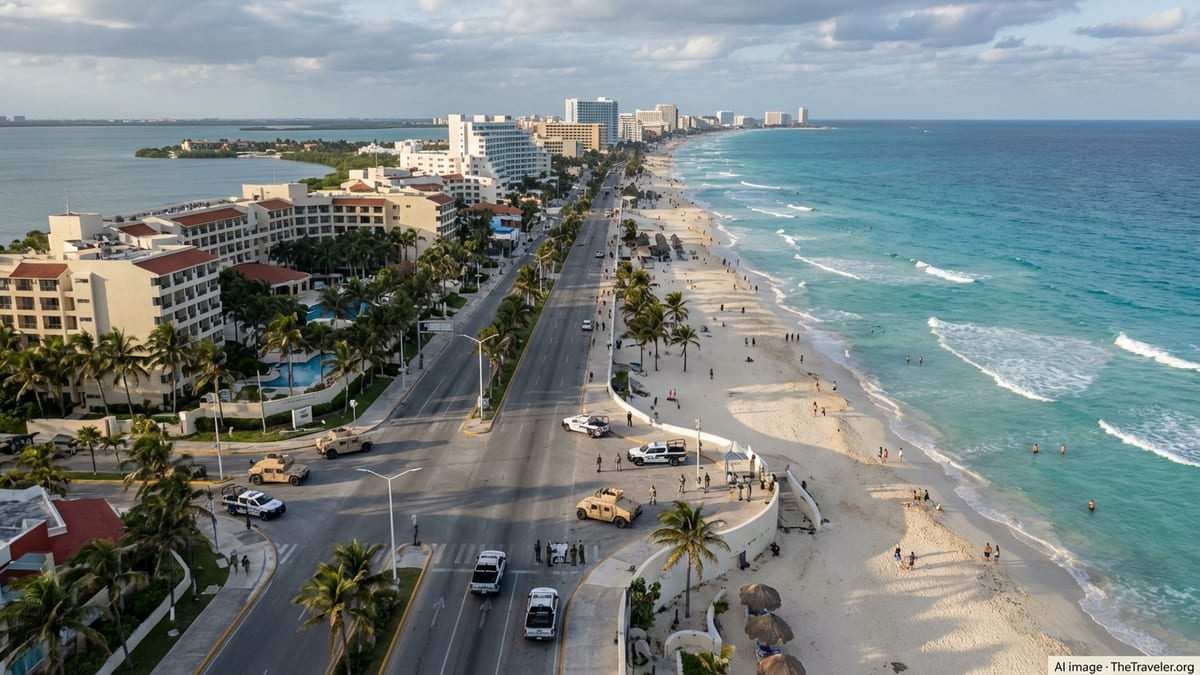
Violence After Cartel Leader’s Death Sends Shockwaves Through Resort Belt
The latest unrest was triggered by a high-profile Mexican military operation in Jalisco that authorities say killed Nemesio Oseguera Cervantes, the powerful leader of the Jalisco New Generation Cartel, one of the country’s most feared criminal organizations. In the hours that followed, retaliatory attacks spread across the state and into neighboring regions, snarling transport networks that serve millions of tourists each year.
In Guadalajara and the Pacific resort city of Puerto Vallarta, reports describe burning vehicles, impromptu roadblocks and gunfire in several neighborhoods. Local officials activated a so-called code red security protocol, suspended in-person classes and canceled major public events as troops and National Guard units flooded key intersections and airport access roads.
Security alerts from both Mexican authorities and foreign embassies urged residents and visitors alike to remain indoors, avoid crowds and stay away from areas where security forces were operating. For vacationers who had arrived expecting sun and nightlife on the Pacific coast, the sudden shift to lockdown conditions underscored how quickly Mexico’s security situation can change, even in cities that rely heavily on tourism.
Although the most intense violence is concentrated in Jalisco and several other western states, the fallout is being closely watched in other world-famous destinations, from Cancun and Playa del Carmen on the Caribbean to Mazatlan on the Pacific and border cities such as Tijuana that serve as gateways for short-break travel from the United States.
Puerto Vallarta and Guadalajara: From Beach Escape to Shelter in Place
Few cities embody Mexico’s international tourism appeal like Puerto Vallarta. The cobblestoned malecón, all-inclusive resorts and whale-watching cruises have helped the city draw millions of visitors annually. Over the weekend, however, holidaymakers found themselves confined to hotel rooms and lobbies as the U.S. Embassy and other foreign missions ordered citizens in Jalisco to shelter in place.
Authorities and local media reported that criminal groups torched vehicles and erected barricades on highways and key thoroughfares, including some of the roads leading to Puerto Vallarta’s international airport. Videos shared by travelers showed plumes of black smoke near airport facilities and armed security forces patrolling surrounding streets, while local transport operators suspended taxi and rideshare services.
The disruptions quickly cascaded through the aviation system. Airlines in the United States and Canada announced multiple cancellations and delays on routes linking Puerto Vallarta and Guadalajara to major hubs, leaving many tourists stranded or scrambling to adjust itineraries. Carriers issued travel waivers that allow free changes within certain dates, but hotel and excursion plans have been harder to salvage.
Inside the resort zone, most large properties remained calm and continued operating pools, restaurants and entertainment programs, while curtailing off-site excursions and nightlife transfers. Hotel managers said their primary focus was keeping guests informed, reassuring them about on-property security and coordinating with airlines and consulates on the evolving situation.
Cancun, Cozumel and Playa del Carmen: Disruptions at a Distance
On the opposite side of the country, Cancun and the wider Riviera Maya region have so far been spared the direct clashes seen in Jalisco, but the impact of the western violence is still being felt. Airlines managing limited capacity and crew resources have warned that knock-on delays could affect flights into Cancun International Airport and the nearby island of Cozumel, especially for passengers connecting through hubs in affected states.
Travel and aviation analysts note that Cancun’s status as Mexico’s busiest international gateway means any reduction in nationwide connectivity reverberates quickly. Even when there is no violence near the Caribbean coast, widespread security incidents elsewhere in Mexico can strain airline schedules, complicate baggage transfers and create longer lines at immigration and security checkpoints.
Local authorities and tourism boards in Quintana Roo have been anxious to emphasize that beach resorts from Cancun to Playa del Carmen and Tulum remain open and are operating under reinforced security protocols. In Playa del Carmen, a pre-planned deployment of hundreds of military, federal and municipal security personnel for Carnival celebrations this month has doubled as a visible reassurance campaign aimed at nervous visitors.
For travelers on the ground, the most tangible changes in Cancun and neighboring Caribbean towns are likely to be heightened police and National Guard presence around hotel zones, bus terminals and nightlife districts, and a renewed push by hotels to discourage guests from wandering far off property late at night or booking informal excursions without vetted operators.
Mazatlan, Tijuana and Other Hotspots Face Heightened Scrutiny
Beyond Jalisco and Quintana Roo, several other Mexican destinations popular with foreign tourists have been pulled into the latest security crisis. In Mazatlan, a Pacific resort city favored by Canadian sunseekers and cruise passengers, airlines suspended some flights after reports of cartel activity and blocked highways into the city. The U.S. Embassy has advised its staff to avoid nonessential travel there, signaling that risk levels may be elevated for the foreseeable future.
Farther north, the border cities of Tijuana, Ensenada and Tecate in Baja California, long marketed as convenient weekend escapes from Southern California, have also seen increased tension linked to criminal conflicts. Localized road blockages, sporadic shootings and temporary shelter-in-place orders for consular staff have periodically disrupted cross-border traffic, particularly at the busy airport complex that connects with San Diego via the privately run cross-border terminal.
In each of these cities, officials insist that violence remains largely confined to specific neighborhoods and that tourist zones continue to function. Yet even short-lived incidents can have an outsized impact on perception. Images of burning vehicles near airports and military convoys on coastal highways quickly circulate on social media, feeding a narrative that Mexico’s most beloved seaside towns are under constant threat.
For the tourism industry, which contributes heavily to local economies in Sinaloa, Baja California and beyond, maintaining a sense of normalcy while responding to genuine security concerns has become a delicate balancing act, one that is being tested again as this latest wave of cartel unrest unfolds.
Government Crackdowns Meet Longstanding Crime Concerns
The dramatic security operation against the Jalisco New Generation Cartel highlights a tension that has defined Mexico’s approach to organized crime for years. High-impact arrests and takedowns are intended to weaken powerful cartels, but they also risk unleashing short-term chaos as fragmented groups lash out with roadblocks, arson attacks and assaults on security forces.
For residents of Guadalajara, Puerto Vallarta and surrounding towns, these crackdowns are a familiar pattern. Yet for international visitors, especially those who do not follow Mexican politics closely, the sudden appearance of heavily armed soldiers outside resort entrances can be disorienting. Officials stress that the goal of these deployments is to protect civilians and reassure travelers, but images of armored vehicles along palm-lined boulevards can undercut marketing messages about carefree beach holidays.
At the same time, the latest violence intersects with broader concerns about crime in tourist regions that predate this week’s events. Federal and state statistics over recent years have documented spikes in homicides and extortion attempts in parts of Quintana Roo, home to Cancun, Playa del Carmen, Cozumel and Tulum, driven by rival criminal groups vying for control of drug sales and local protection rackets.
While most of that violence occurs away from resort grounds and is not aimed at foreign tourists, occasional bystander casualties in bars, beach clubs or downtown streets have fueled pressure on authorities to deliver visible security improvements in areas of heavy visitor traffic.
Security Upgrades in the Caribbean: From Cameras to New Patrols
In response to those concerns, local governments along Mexico’s Caribbean coast have spent the past two seasons rolling out layers of new security measures. In Cancun and the Riviera Maya, visitors now routinely encounter more roadside checkpoints, biometric-equipped surveillance cameras and mixed patrols of local police, National Guard troops and naval personnel along main hotel corridors and public beaches.
In Playa del Carmen, officials recently highlighted a security strategy that brings together municipal officers, state police, the National Guard and elements of the army and navy for large-scale tourist events. The city has promoted a drop in intentional homicides and boasted that its ratio of police officers to residents now exceeds international benchmarks, branding itself one of the safest spots in the Riviera Maya despite wider regional concerns.
Tulum, which saw its reputation shaken by reports of violent crimes and aggressive pricing practices during the last travel cycle, is also undergoing a security makeover. New monitoring centers, expanded protected areas around the Jaguar National Park and crackdowns on overcharging at beachfront establishments are intended to rebuild trust with visitors and signal that the destination is serious about both safety and consumer protection.
These measures have not eliminated risk, and isolated incidents still make headlines. Yet tourism authorities argue that the strengthened security posture in Quintana Roo, combined with the relative distance from the current flashpoints in western Mexico, makes the Caribbean coast a comparatively stable option during periods of unrest elsewhere in the country.
What Travelers Need to Know Right Now
For travelers with imminent trips to Mexico, the most urgent task is to clarify where exactly they are headed and how closely those destinations are linked to the areas experiencing unrest. Vacationers booked to Puerto Vallarta or Guadalajara in the coming days should monitor airline notifications continuously, verify the status of local shelter-in-place guidance and be prepared to adjust travel dates or reroute through other cities if necessary.
Those en route to Mazatlan, Tijuana or other western and northern destinations should expect a more fluid situation, with the possibility of sudden road closures or temporary suspensions of airport access. Travel experts recommend keeping hotel reservations flexible where possible and building extra time into itineraries to account for security checkpoints or unexpected detours.
Visitors heading to Cancun, Cozumel, Playa del Carmen, Tulum or Los Cabos will likely encounter tighter security but relatively normal vacation conditions, as long as current patterns hold. Standard precautions are strongly advised: use registered taxis or hotel-arranged transport, avoid flashing valuables, stay within well-lit, populated areas at night and consult hotel staff before venturing far beyond tourist corridors.
Above all, analysts stress the importance of reviewing official travel advisories from home governments, enrolling in alert systems that can push emergency updates to mobile phones and maintaining regular contact with family or friends at home. In a fast-moving situation, accurate, timely information is critical to making safe decisions.
Tourism Industry Braces for Reputation Test
The latest wave of unrest comes at a moment when Mexico’s tourism sector is still capitalizing on its strong rebound from the pandemic years. International arrivals to beach destinations such as Cancun, Puerto Vallarta and Los Cabos have surged, helped by expanded air links, new luxury hotel openings and aggressive marketing in key markets across North America and Europe.
Industry leaders worry that repeated images of violence around marquee destinations could begin to erode that momentum. Tour operators report an uptick in calls from anxious clients seeking reassurance or looking to switch from western Mexico to alternative destinations on the Caribbean coast or abroad. Some cruise lines are reviewing port calls in cities perceived as higher risk, while airlines are weighing whether temporary flight suspensions might need to be extended if security tensions persist.
Local businesses, from independent tour guides to small beachside restaurants, are especially vulnerable to sudden drops in visitor numbers. Many are still rebuilding financial buffers after the pandemic and say they have little capacity to absorb a prolonged downturn linked to safety fears. Municipal governments, meanwhile, depend heavily on tourism-related tax revenues to fund the very security and infrastructure upgrades that visitors now demand.
Despite those challenges, tourism officials point out that Mexico has weathered similar shocks before, from previous cartel conflicts to natural disasters, and has repeatedly managed to restore traveler confidence. Whether it can do so again will depend on how quickly authorities contain the current violence, keep key travel corridors functioning and communicate clearly with both residents and the millions of visitors who continue to see the country as one of the world’s leading vacation escapes.