

More news on this day
Caribbean Airlines has cancelled 17 flights and reported 16 significant delays as a fast-developing nor’easter barrels up the US East Coast, bringing heavy snow, gale-force winds and severe disruption to operations at New York’s John F. Kennedy International Airport and cascading across its Caribbean network.
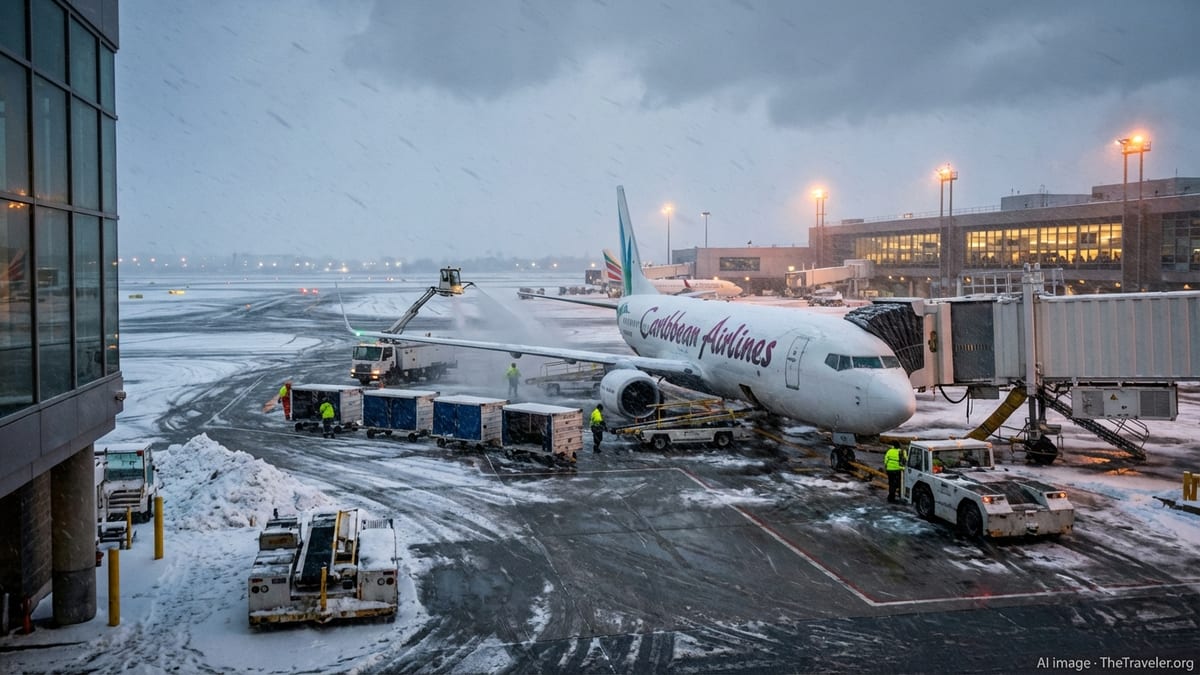
Winter Storm Hernando Slams Key US Gateways
The latest nor’easter, informally dubbed Winter Storm Hernando by forecasters, is bearing down on the densely populated Northeast corridor from Sunday, February 22, through Monday, February 23, with meteorologists warning of blizzard conditions across major hubs. New York City, Boston and surrounding states are under blizzard warnings as forecasters project up to two feet of snow in some areas, driven by wind gusts that could top 60 to 70 miles per hour. The National Weather Service has cautioned that whiteout conditions, drifting snow and coastal flooding are likely, making travel by air and road extremely hazardous.
At New York’s JFK, one of the primary North American gateways for Caribbean carriers, the storm’s impact is already being felt. Airport authorities and airlines are preemptively thinning schedules, de-icing operations are running at full tilt and ground handlers are facing periods where high crosswinds and poor visibility may temporarily halt takeoffs and landings. With thousands of flights across the United States already cancelled or delayed as the system intensifies, smaller international operators such as Caribbean Airlines are being forced to trim their schedules and reroute aircraft in an effort to keep crews and passengers out of the worst of the conditions.
Weather models suggest that while the most intense snowfall will ease by late Monday, residual gusty winds and ongoing runway clearing will continue to affect operations for at least another 24 to 36 hours. That prolonged recovery window means airlines are planning for a multiday disruption rather than a short, sharp shock to the network, building additional slack into their schedules and positioning aircraft and crews away from the storm’s narrow but severe core.
Caribbean Airlines Cuts 17 Flights And Flags 16 Major Delays
Within that fast deteriorating backdrop, Caribbean Airlines has moved to cancel 17 flights and report 16 substantial delays on services touching the United States and Jamaica, with the most pronounced disruption centered on New York JFK and Kingston’s Norman Manley International Airport. The Trinidad and Tobago based carrier uses JFK as a critical long haul point for its Trinidad, Guyana and Jamaica markets, meaning operational decisions in New York ripple quickly across its regional network.
According to the airline’s latest advisory, several services between JFK and Caribbean gateways have been cancelled outright for Sunday and Monday, including rotations to Kingston and Port of Spain, while other flights are operating with extended delays as they navigate congestion and weather related air traffic control restrictions. Inbound aircraft have been held on the ground in the Caribbean to avoid long tarmac waits at JFK, while some outbound services from New York have been pushed into later time slots outside the forecast peak of the storm.
In Jamaica, knock-on disruption is being felt most strongly at Norman Manley International, where New York bound departures and connecting flights to regional destinations are being re-timed to match aircraft and crew availability. Passengers on some Kingston services have been offered same day rebooking on alternate routings via Caribbean hubs, but the tight connection windows and widespread disruption across North American airports mean options are limited. The airline has described the moves as necessary to maintain safety and operational integrity during what is shaping up to be one of the most challenging winter weather episodes of the season.
Impact Spreads Across Jamaica, Trinidad And Guyana
Although the worst of the weather is unfolding more than a thousand miles north of the Caribbean, the effects are being felt across the region. Jamaican travelers heading to and from New York, Boston and other Northeast cities face the highest risk of disruption, with Kingston and Montego Bay experiencing rolling schedule changes as aircraft that would normally cycle through JFK are held back or reassigned. Ground staff at Norman Manley International report fuller than expected departure lounges, as passengers respond to travel advisories by arriving early and seeking standby options on remaining flights.
In Trinidad and Tobago, Port of Spain’s Piarco International Airport has also seen its schedule reshuffled. While direct flights to New York are affected, the storm is also complicating onward connections for travelers heading to US Midwest and West Coast cities via the Northeast. Some itineraries that normally connect through JFK or Newark are being rerouted through Miami or other southern hubs where conditions remain more stable, though that strategy is limited by the broader capacity crunch created by the storm.
Guyana, another key market for Caribbean Airlines, is not immune. Flights from Cheddi Jagan International Airport to JFK are among those reshaped by the disruption, leaving passengers bound for family visits, medical appointments or business trips uncertain about when they will reach their final destinations. The cascading nature of airline operations means that a single cancelled leg between New York and the Caribbean can affect multiple downstream rotations, magnifying the impact well beyond the immediate storm zone.
Passengers Face Long Queues, Rebooking Scramble And Communication Strain
For travelers caught up in the latest wave of winter disruption, the experience is a familiar but no less stressful one. At JFK, long check in lines formed early Sunday morning as airlines, including Caribbean Airlines, worked through manual rebooking for passengers whose flights were cancelled overnight. With so many carriers trimming schedules at once, same day alternatives were often scarce, forcing some passengers to accept overnight stays or multi stop routings through less affected hubs.
In Kingston and Port of Spain, customer service desks were busy throughout the day handling reissue requests, explaining revised itineraries and managing expectations. Although Caribbean Airlines has activated its weather waiver policy, allowing affected customers to change travel dates without additional penalties, call centers and digital channels have at times struggled to keep pace with demand. Some passengers reported long hold times on phone lines and delays in receiving email or app notifications confirming schedule changes.
Travel agents across the region are also working overtime, trying to piece together workable itineraries from a shrinking pool of available seats. For passengers with time sensitive plans, such as cruising out of Florida or attending major events in the United States, even a short postponement can have significant knock on effects. The airline has urged customers to monitor their bookings closely, use its online tools where possible and avoid unnecessary trips to the airport until they receive confirmation that their flight is operating.
Safety First As Airlines Navigate Ferocious Winds And Low Visibility
Aviation experts note that in the face of a high impact winter storm, the priority for airlines is safety rather than schedule preservation. Heavy, wet snow combined with strong crosswinds can significantly reduce braking performance on runways, while low visibility during blizzard conditions complicates both takeoffs and landings. At airports like JFK, which handle a dense mix of widebody international traffic and domestic operations, the margin for error is slim, prompting airport authorities and carriers to embrace a conservative approach.
For Caribbean Airlines, whose fleet composition and crew rosters are optimized for a relatively compact regional network, the decision to cancel 17 flights and delay 16 more represents a substantial operational sacrifice. However, the alternative of attempting to operate through periods of rapidly deteriorating conditions could result in aircraft and crews being stranded at outstations, triggering even more disruption in the days ahead. By proactively trimming its schedule, the airline aims to preserve predictability and enable a faster recovery once weather and runway conditions improve.
Flight operations teams are closely monitoring runway friction reports, wind shear alerts and real time guidance from air traffic control. De icing procedures, which add significant time to each departure during heavy snowfall, are being factored into revised schedules. While passengers may be frustrated by cancellations and rolling delays, industry analysts stress that in severe winter weather, the safest flight is often the one that does not depart.
How The Nor’easter Is Reshaping Wider Airline Operations
The disruption faced by Caribbean Airlines is part of a much larger pattern across the North American aviation system. Major US carriers have already cancelled thousands of flights ahead of the storm’s peak, with some, such as Delta Air Lines, publicly warning of extended suspensions at key hubs including New York JFK, LaGuardia and Boston. International airlines serving the Northeast, including European and Middle Eastern carriers, have announced their own cancellations and reroutings as they attempt to keep long haul operations running around the most intense weather window.
Industry observers say this coordinated pullback is a reflection of lessons learned from previous winter storms, where attempts to maintain normal schedules in the face of heavy snow and high winds led to gridlock on tarmacs and in terminal buildings. By proactively scaling down operations, airlines are trying to reduce the number of passengers stranded at airports and allow ground crews to focus on safely handling a smaller number of flights. Caribbean Airlines, with a relatively modest footprint in the US compared with the big legacy carriers, nonetheless relies heavily on smooth operations at JFK to feed its Caribbean network.
The storm also underscores how tightly interconnected global aviation networks have become. A nor’easter forming off the US East Coast can send shockwaves through flight schedules in the Caribbean, Latin America, Europe and beyond. As aircraft and crews miss their planned rotations, airlines must rapidly redraw their operating plans, sometimes day by day, until conditions stabilize. For smaller carriers, this can stretch resources thin and highlight the importance of robust contingency planning.
Advice For Affected Travelers In The Caribbean And Beyond
With forecasts indicating that heavy snow and ferocious winds will continue to buffet the Northeast through at least Monday, travel advisors are urging passengers due to fly on Caribbean Airlines to or from New York, Kingston or other connected airports to stay flexible. The most important step, they say, is to verify flight status directly with the airline before leaving for the airport, either via its website, mobile app or customer service channels. Given the possibility of last minute changes, travelers are advised to keep contact details up to date in their bookings so that notifications can reach them quickly.
Passengers whose flights have been cancelled under the weather waiver policy should be prepared with alternative travel date options, as rebooking windows may be tight. Those with connections to other North American cities should pay close attention to minimum connection times, since ongoing delays at JFK and other hubs could make originally planned itineraries unrealistic. Travel insurance policies that cover weather related disruption may offer some financial relief for additional accommodation or meal costs incurred while waiting for new flights.
For would be travelers who have not yet started their journeys, experts recommend considering whether nonessential trips can be postponed until after the storm has cleared and operations have had time to normalize. While the desire to keep plans intact is understandable, the combination of widespread cancellations, full alternative flights and challenging ground conditions in affected US cities means that a delay of a day or two could ultimately deliver a smoother and safer travel experience.
Looking Ahead As The Storm Moves On
As Winter Storm Hernando pushes off the Atlantic coast and the cleanup begins, Caribbean Airlines will face the complex task of repositioning aircraft, restoring normal rotations and working through the backlog of displaced passengers. Experience from previous major storms suggests that, even after weather related restrictions lift, it can take several days for smaller international carriers to fully restore their schedules, particularly when they share congested hubs with large domestic airlines racing to catch up.
For now, the carrier’s focus remains on weathering the immediate impact, maintaining safety standards and providing clear, timely information to customers across its network. The storm has once again highlighted the vulnerability of Caribbean air links to extreme weather events occurring far to the north, as well as the importance of resilient infrastructure and contingency planning. As climate scientists point to a trend toward more volatile and intense winter systems in the Northern Hemisphere, regional airlines like Caribbean Airlines may need to build even more flexibility into their planning for future seasons.
Passengers, meanwhile, are left to navigate the familiar but unwelcome maze of cancelled flights, rebooked itineraries and crowded terminals that accompany any major storm. For those traveling between the Caribbean and the United States this week, patience and preparation will be just as essential as passports and boarding passes.