

More news on this day
The Caribbean is entering 2026 at the center of a powerful cruise boom, as new fuel-efficient ships, upgraded ports and aggressive sustainability targets combine with strong global demand to deliver record visitor numbers and rising profits for major cruise operators.
Get the latest news straight to your inbox!
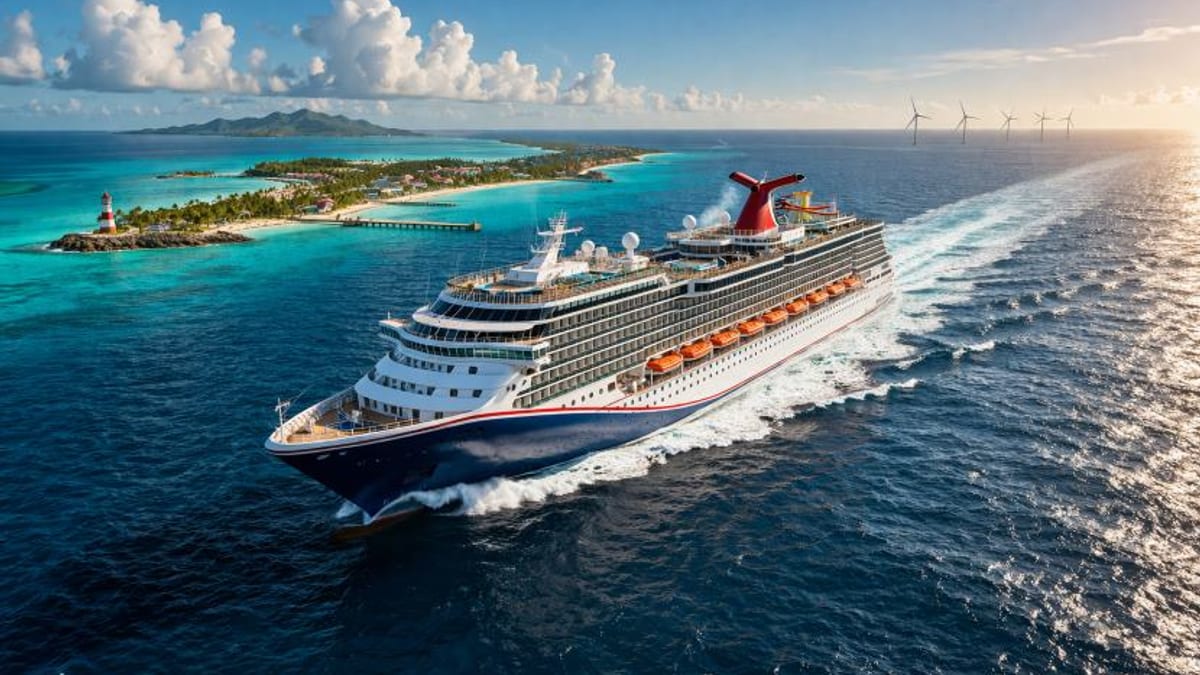
Image by International Cruise News: Latest Cruise Line & Cruise Ship News
Caribbean Retains Its Lead as Cruise Demand Surges
Industry data compiled by the Cruise Lines International Association shows that cruising has moved beyond post-pandemic recovery into a new expansion phase, with global passenger volumes surpassing pre 2019 levels and the Caribbean retaining its position as the world’s largest cruise region by market share through 2025. Projections referenced in several recent outlooks indicate that worldwide cruise passenger counts could approach 40 million within the next two years, with the Caribbean accounting for a substantial share of that growth.
Regional statistics cited by the Caribbean Tourism Organization and trade publications point to steady increases in both cruise calls and overnight stays. One recent analysis of Caribbean cruise and duty free trends reported that cruise deployments in the region were up around 10 percent heading into 2026, while stayover arrivals also rose compared with 2024, underscoring the Caribbean’s role as a combined cruise and land based tourism hub.
Individual destinations are reporting landmark seasons. Coverage of port performance shows that islands such as Saint Maarten recorded some of their highest cruise passenger totals since 2019, with ship occupancy on many sailings near 100 percent and hundreds of thousands of visitors transiting key ports in 2025 alone. New private island destinations in the Bahamas and elsewhere, developed by the largest cruise groups, are further anchoring seven night and short break itineraries that loop through multiple Caribbean countries.
Forecasts compiled from CLIA reporting and regional tourism briefings suggest that the Caribbean’s share of global cruise deployment will remain above 40 percent in the near term, supported by year round itineraries, strong demand from North American homeports and a steady flow of new, larger ships designed to operate efficiently in warm water regions.
Efficiency, New Vessels and Record Cruise Line Earnings
The financial picture for the largest cruise corporations has improved sharply as capacity has returned and newer, more efficient ships have entered service. Investor presentations and earnings reports from late 2025 highlight record or near record net income for several major groups, with strong booking curves already in place for sailings through 2026, particularly in the Caribbean.
Carnival Corporation, the industry’s largest player by capacity, reported its strongest full year results on record for 2025, with trade media noting that the company signaled an expectation of even higher adjusted net income in 2026. Similar momentum is evident at Royal Caribbean Group, where second quarter 2025 filings indicated quarterly net income above 1.2 billion dollars and guidance increases tied to higher yields, robust pricing and demand strength across core brands sailing the Caribbean.
Analysts writing for maritime and financial outlets point out that much of this profitability is being driven by a combination of disciplined capacity growth and efficiency gains. A new generation of large ships entering the market through 2026 is designed to carry more passengers per sailing while consuming less fuel per berth, supported by improved hull designs, air lubrication systems and advanced energy management. Orderbook data compiled by cruise trade platforms shows multiple 2026 deliveries for Caribbean focused fleets, including LNG powered megaships and premium vessels that can command higher ticket and onboard spending.
Higher occupancy levels are also playing a role. Research cited in recent investment notes indicates that booked load factors for 2025 and 2026 are at or above historical norms for leading brands, while per passenger spending on specialty dining, shore excursions and branded experiences continues to rise. These trends are especially pronounced on Caribbean itineraries that include private destinations, where operators can capture a larger share of guest spending in controlled environments.
Cleaner Fuel and Shore Power Move From Experiment to Standard
Environmental performance is becoming a defining feature of the Caribbean cruise boom, as global pressure to decarbonize shipping accelerates technology adoption. The International Maritime Organization has laid out a pathway to reduce greenhouse gas emissions from international shipping in line with net zero objectives around mid century, prompting cruise operators to invest heavily in low carbon fuels, emissions abatement and energy efficiency.
Industry reports and technical case studies show that LNG fueled cruise ships, once experimental, are now a mainstream feature of Caribbean deployment schedules. Several of the world’s largest cruise vessels already sailing in or scheduled for delivery into Caribbean fleets through 2026 are equipped to run primarily on LNG, cutting local air pollutants and lowering carbon emissions per passenger compared with conventional marine fuels. Hybrid configurations that combine LNG with fuel cells and battery systems are beginning to appear in the luxury segment, with at least one vessel designed to operate on stored energy while in port to minimize local emissions.
Ports are also starting to adapt. Regional sustainability briefings highlight PortMiami as an early shore power leader, offering connections at multiple berths so that equipped ships can shut down their engines while alongside. In the wider Caribbean, individual ports such as Nassau have announced plans to move their terminals toward far higher shares of renewable electricity, including large scale solar installations dedicated to cruise infrastructure. Consulting studies focused on the Caribbean maritime sector describe these initiatives as first steps toward a broader network of shore power and clean energy hubs across the region.
Despite this progress, assessments by regional maritime think tanks note that the Caribbean still lags behind some European ports in the rollout of shore power and alternative fuels. Analysts warn that meeting long term climate objectives will require accelerated investment in grid upgrades, standardized connection systems and incentives for ships to plug in, along with the scaling of bio LNG, methanol and other lower carbon fuel supplies that are compatible with existing or planned ship engines.
Ports Race to Upgrade Infrastructure and Capture More Value
The profitability of the current boom is not limited to ship operators. Caribbean ports and terminal operators are reporting significant revenue growth as passenger volumes increase and new commercial spaces open inside cruise districts. Financial disclosures from entities managing major Caribbean cruise ports show rising income from passenger fees, real estate leases and retail concessions, with some ports also emphasizing the cost savings and reputational benefits associated with sustainability investments.
Nassau Cruise Port in the Bahamas, managed by a specialist global ports operator, has been highlighted in regional business coverage as an example of this trend. Publicly available financial summaries for the facility have pointed to multimillion dollar annual profits and a pipeline of additional spending on environmental upgrades, including plans to supply a large share of the port’s own energy needs from solar power and expanded waste management initiatives in the harbor.
Elsewhere in the region, island governments and private operators are funding terminal expansions to handle larger ships and more complex itineraries. Project announcements compiled in cruise trade publications detail pier lengthening, dredging and the construction of multi use waterfront districts that combine duty free retail, entertainment and cultural attractions designed to keep visitors in port longer. Some destinations are also investing in digital systems for crowd management and scheduling, aiming to reduce congestion in historic city centers when multiple mega ships visit on the same day.
Analysts caution that this expansion must be carefully managed to avoid over tourism and strain on local infrastructure. Environmental and community impact assessments are increasingly required as part of new terminal or private island projects, and there is growing interest among Caribbean destinations in setting daily passenger caps or spacing arrivals to spread visitor flows more evenly throughout the week and season.
Balancing Growth With Community and Climate Concerns
While 2026 is shaping up as another record year for Caribbean cruising, debates around the sector’s environmental and social footprint are intensifying. Academic research on shipping decarbonization emphasizes that even with efficiency gains, cruise ships remain energy intensive assets that must transition toward much lower carbon fuels to align with global climate targets. Regional stakeholders also point to concerns about waste management, marine ecosystems and the distribution of economic benefits between port operators, cruise lines and local communities.
In response, many cruise brands are foregrounding environmental reporting and pilot initiatives in the Caribbean, such as partnerships on coral restoration, beach cleanup programs and the use of advanced wastewater treatment systems designed to meet or exceed international standards. Destination authorities are meanwhile exploring ways to capture more economic value per passenger through local sourcing, community based excursions and incentives that encourage guests to spend more time and money beyond controlled terminal areas.
Market analysts argue that sustainability and efficiency are now commercially intertwined for the Caribbean cruise sector. Ships that consume less fuel per berth, call at ports with modern shore power and offer visible environmental initiatives can reduce operating costs, appeal to increasingly climate conscious travelers and support premium pricing. Ports that invest in clean energy and thoughtful visitor management can strengthen their competitive position as deployment decisions are made for the second half of the decade.
With dozens of new ships scheduled for delivery through the early 2030s and the Caribbean projected to remain the cruise industry’s largest regional market, the balance struck in the next few years between growth, emissions and local impact is likely to shape both the sustainability narrative and the profitability of Caribbean cruising well beyond 2026.