

More news on this day
Carnival Corporation has reported record first quarter 2026 results and introduced a new PROPEL strategy that links profitability, operational efficiency and environmental goals, signaling a new phase of disciplined but sustained cruise tourism growth worldwide.
Get the latest news straight to your inbox!
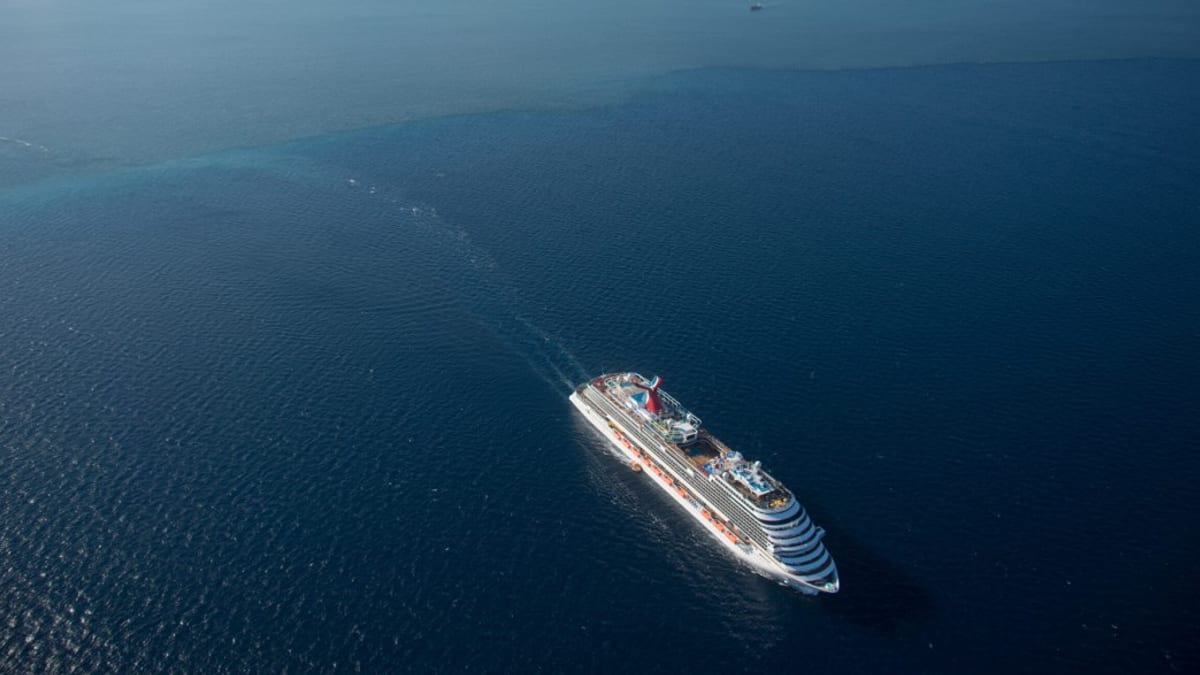
Image by International Cruise News: Latest Cruise Line & Cruise Ship News
Record Q1 2026 Results Underscore Post-Pandemic Rebound
Carnival Corporation’s latest quarterly filing for the first three months of 2026 points to a business that has moved decisively beyond the pandemic recovery phase and into a period of structurally higher earnings. Publicly available information indicates that revenue, net income and operating margins all improved from strong 2025 levels, with net yields advancing on a same ship basis.
Reports on the quarter show that booking volumes remained elevated across North American and European source markets, supporting continued pricing gains even as capacity growth moderated. The company’s cumulative advanced booked position for the remainder of 2026 is described as being in line with or above prior record levels, with prices at or near historical highs in constant currency terms.
The quarter also continued a multiyear trend of improving cost efficiency. Earlier disclosures showed cruise costs per available lower berth day edging lower and adjusted cruise costs excluding fuel rising more modestly than yields, a pattern that appears to have persisted into 2026. That spread between pricing and underlying costs has been central to Carnival’s ability to convert robust demand into record quarterly profitability.
Financial reports further highlight progress on balance sheet repair, with net debt to EBITDA trending down toward longer term targets. Lower average interest costs are beginning to contribute meaningfully to earnings, giving Carnival additional flexibility to reinvest in its fleet, destinations and onboard offerings while still targeting improved credit metrics.
Inside the New PROPEL Strategy
Alongside its first quarter 2026 results, Carnival has outlined a PROPEL strategy designed to frame the next stage of the group’s evolution. While the company has previously communicated its SEA Change financial roadmap, PROPEL is being positioned as a broader operating playbook that links revenue quality, operating discipline and environmental performance.
Based on investor presentations and commentary in recent filings, PROPEL emphasizes several recurring themes. The first is a continued focus on same ship yield improvement rather than aggressive capacity additions. Management materials stress the opportunity to close what they describe as a substantial price to value gap between cruising and land based vacations, by refining deployment, enhancing onboard experiences and improving revenue management.
Another PROPEL element is portfolio optimization across Carnival’s family of brands. The realignment of P&O Cruises Australia into Carnival Cruise Line and the focus on distinctive propositions for brands such as AIDA, Princess, Holland America and Costa illustrate a strategy of sharpening each label’s identity and target customer. The aim is to reduce overlap, concentrate marketing resources and convert more first time cruisers into repeat guests within the broader portfolio.
PROPEL also appears to formalize the company’s ongoing investments in exclusive and enhanced destinations, including private islands and purpose built ports that can support premium pricing. These locations are presented in filings as key differentiators that can drive both higher ticket yields and stronger onboard spending, while also helping to manage crowding in popular ports of call.
Long-Term Targets and What They Mean for Cruise Capacity
Carnival’s long term financial targets, first articulated under the SEA Change framework and now embedded within PROPEL, continue to shape how quickly the company plans to grow its global fleet. Recent disclosures indicate that management has already met or surpassed several 2026 targets for EBITDA per available berth and return on invested capital ahead of schedule, largely without relying on major capacity additions.
That outperformance has allowed the group to signal a more measured capacity trajectory through 2026 and beyond. Previous guidance pointed to very limited net capacity growth in 2026, with no new ships scheduled for delivery that year after a wave of deliveries in 2023 and 2024. This restrained approach suggests that Carnival intends to prioritize yield and return metrics over market share gains driven purely by ship count.
For global cruise tourism, the implications are significant. A slower rate of new ship deliveries from one of the world’s largest operators reduces the risk of oversupply in key markets, supporting firmer pricing across the sector. At the same time, the company continues to refresh its fleet mix by retiring older, less efficient vessels and introducing larger, more efficient ships in earlier years, effectively adding capacity through higher berth density and improved deployment rather than headline vessel numbers.
Analyst coverage notes that this disciplined stance has contributed to sustained pricing power and record customer deposits, with bookings stretching further into future years than at any point in the company’s history. For ports, tourism boards and destination partners, it points to growth that is steadier and more predictable, anchored in higher value guests and longer booking windows rather than rapid swings in capacity.
Sustainability, Efficiency and the Future Cruise Experience
The long term targets embedded in Carnival’s strategy go beyond pure financial metrics. Corporate reports detail progress toward a 20 percent reduction in greenhouse gas emissions intensity by the end of 2026 compared with 2019, a goal that was accelerated by four years. By late 2024 the company indicated it had already reduced emissions intensity by roughly 17.5 percent, while absolute emissions had fallen despite capacity growth.
These gains reflect a combination of newbuild efficiency, shore power investments, itinerary optimization and continuous improvements in energy use onboard. Fuel consumption per available lower berth day has been trending lower year over year, reinforcing the company’s message that its growth will be underpinned by a lower environmental footprint per guest.
For travelers, the sustainability dimension is gradually reshaping the onboard and onshore experience. Newer vessels delivering step change fuel efficiency are also being positioned as flagships for upgraded cabins, entertainment, dining and digital services. Enhanced proprietary destinations are marketed around controlled guest volumes, improved infrastructure and curated excursions, aligning guest satisfaction goals with pressure to manage environmental and community impacts.
Industry observers note that this combination of efficiency and experience is central to Carnival’s effort to attract new to cruise customers who might otherwise choose land based resorts. If the company continues to meet its emissions and return targets while holding capacity growth in check, it may help the wider sector respond to regulatory and public scrutiny over the environmental cost of cruising.
Impact on Global Cruise Tourism Growth
The record first quarter of 2026 and the rollout of the PROPEL framework arrive at a time when global tourism flows are normalizing and many destinations are reassessing how much cruise traffic they can accommodate. Carnival’s strategy signals that the next phase of cruise growth is likely to be more value focused than volume focused, with greater emphasis on yield, spend per guest and destination partnerships.
Tourism planners can draw several early signals from the company’s updated targets. First, high levels of advance bookings for 2026 and beyond suggest that cruise travel is consolidating its appeal among both returning and first time guests, particularly in North America and Europe. Second, the tilt toward exclusive or enhanced destinations indicates that ports able to support infrastructure investment and joint planning may capture a disproportionate share of future calls.
Third, Carnival’s emphasis on emissions intensity reductions and energy efficiency points to a regulatory environment in which access to certain regions, especially in Europe and sensitive ecosystems, may increasingly hinge on the environmental performance of visiting fleets. Operators that meet or exceed such thresholds could find themselves better positioned to maintain desirable itineraries and secure premium pricing.
As 2026 progresses, the interaction between Carnival’s record financial performance, its PROPEL strategy and its long term targets will likely serve as a benchmark for the broader cruise industry. For destinations and travel partners, the message is that growth is still firmly on the agenda, but it will be driven by higher quality demand, longer planning horizons and closer alignment between commercial and sustainability objectives.