

More news on this day
Carnival Corporation is turning fuel efficiency into a strategic advantage, with publicly available financial and sustainability disclosures indicating that energy-saving technologies and cleaner fuels are now delivering hundreds of millions of dollars in annual savings while sharply reducing the carbon footprint of the world’s largest cruise operator.
Get the latest news straight to your inbox!
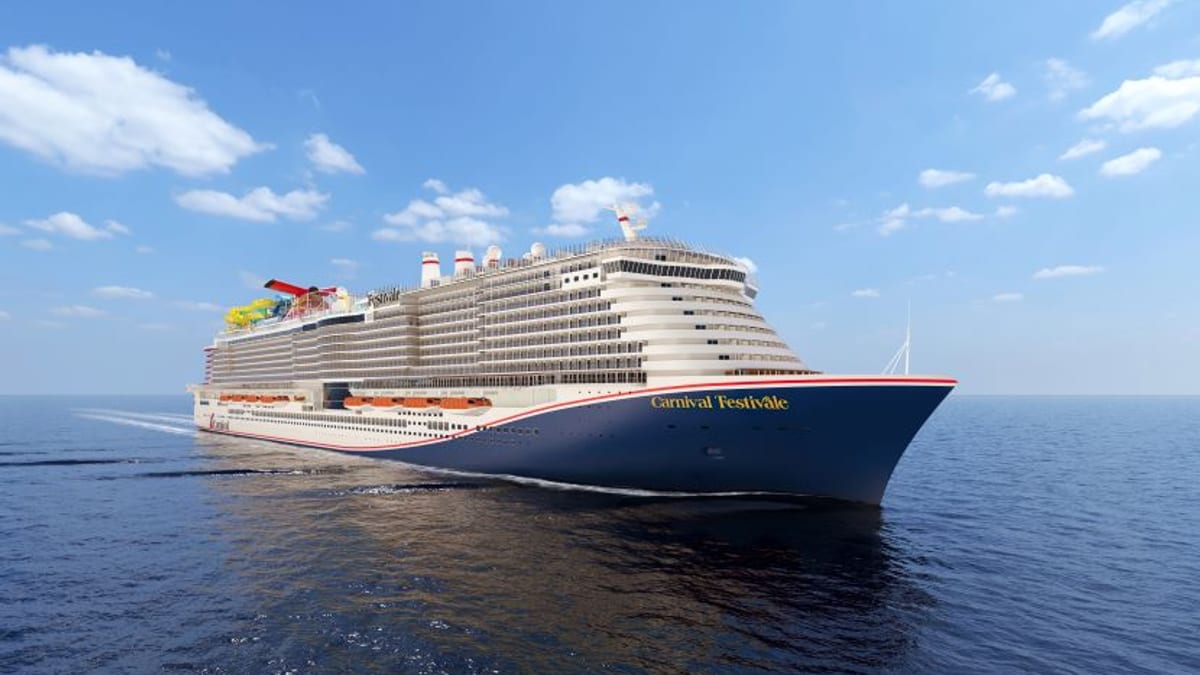
Image by International Cruise News: Latest Cruise Line & Cruise Ship News
Efficiency Investments Add Up to Hundreds of Millions in Savings
Carnival’s recent filings and sustainability reports describe a multiyear program of energy-efficiency upgrades, retrofits and newbuild designs that is now paying off at scale. The company has invested hundreds of millions of dollars in measures such as advanced hull coatings, optimized propellers, air lubrication systems and smarter hotel operations, all aimed at cutting the amount of fuel required per available lower berth day, a key industry metric.
Across a fleet of nearly 90 ships, even small percentage gains in efficiency translate into large absolute savings. Analyst commentary on recent earnings, combined with data in company disclosures, suggests that fuel-efficiency initiatives and fuel procurement strategies are together helping Carnival avoid fuel and emissions allowance costs that can be measured in the hundreds of millions of dollars annually. When aggregated across efficiency retrofits, new ship designs and operational improvements, the avoided fuel spend is approaching an estimated 650 million dollars per year compared with a less efficient fleet profile.
These financial gains arrive at a time when regulatory and market pressures are increasing the cost of carbon-intensive operations. The expansion of the European Union Emissions Trading System to cover maritime voyages and the introduction of new fuel-intensity rules have raised the stakes for cruise operators. By using less fuel per passenger and per mile sailed, Carnival effectively shields a portion of its earnings from volatility in bunker prices and carbon costs.
Company data shows a steady downward trend in fuel consumption per unit of capacity since before the pandemic, with reductions accelerating as newer ships enter service and as more vessels complete efficiency-focused dry-dock programs. Reports indicate that Carnival has already achieved double-digit percentage cuts in greenhouse gas intensity relative to pre-2019 levels, with further reductions expected by the middle of the decade.
LNG-Powered Ships and Advanced Tech Reshape the Fleet
A cornerstone of Carnival’s strategy is the rapid introduction of liquefied natural gas capable ships, particularly within its Excel and Sphere class vessels. Industry coverage notes that by late 2025 the company was operating one of the largest LNG-powered cruise fleets, with additional ships entering service through 2026 and beyond. These vessels are designed to burn LNG as their primary fuel, which can deliver lower carbon dioxide emissions per unit of energy than traditional marine fuel oils when measured over the full life cycle.
In parallel, Carnival has expanded the use of air lubrication systems, which create a carpet of bubbles along the hull to reduce friction between the ship and the surrounding water. Technical fact sheets and partner announcements describe typical fuel savings of around 5 to 10 percent per ship once these systems are installed and optimized. Combined with refinements in hull form design, modern propulsion units and waste heat recovery, these technologies contribute significantly to the company’s targeted efficiency gains.
Newbuilds such as larger Excel class ships and LNG-powered vessels for brands including Carnival Cruise Line and Princess Cruises are being delivered with these technologies integrated from the design stage. This allows the company to lock in efficiency benefits for decades of operation, rather than relying solely on retrofits. Public information on upcoming deliveries indicates that Carnival views these next-generation ships as both growth drivers and central tools in meeting its greenhouse gas intensity targets.
Retrofits remain a major element of the strategy. Older ships are being upgraded with LED lighting, advanced heating and cooling systems and improved automation so that onboard energy demand is matched more closely to real-time conditions. The result is lower fuel consumption not only when ships are underway, but also while they are in port or operating at reduced speeds.
Operational Changes Support Lower Fuel Burn and Emissions
Alongside technology upgrades, Carnival has been reshaping day to day operations to support fuel savings. Publicly available information highlights itinerary optimization, slower average cruising speeds on certain routes and more efficient port rotations as key levers to reduce fuel consumption per voyage. By carefully planning distances and schedules, the company can cut the need for high-speed transits, which are particularly fuel intensive.
Onboard, digital tools and remote monitoring centers allow engineers to adjust engine loads, hotel systems and other energy-consuming functions in real time. Industry coverage describes how data analytics are used to track performance across the fleet, identifying ships that deviate from expected efficiency benchmarks and quickly addressing issues such as hull fouling or mechanical inefficiencies.
Food waste reduction, water production optimization and smarter air conditioning management also play a role. Carnival has reported meaningful declines in food waste per person compared with pre-2019 levels, a change that reduces both the energy required for storage and preparation and the emissions associated with waste handling. Similarly, more efficient desalination and climate control systems reduce demand on shipboard power plants, translating directly into lower fuel burn.
Collectively, these operational steps help lock in the gains from physical upgrades. While a single itinerary change or system tweak may yield only modest savings, replicating these measures across scores of ships and thousands of sailings each year compounds their impact on both fuel budgets and emissions totals.
Meeting Tougher Climate Targets Ahead of Schedule
Carnival has framed its fuel-efficiency drive within a broader climate strategy that includes specific greenhouse gas intensity reduction goals. Company sustainability reports indicate that the group is targeting a 40 percent cut in carbon intensity by 2030 compared with a 2008 baseline, and that it has already moved the expected achievement of some interim goals forward to 2026 based on recent progress.
Recent disclosures show that, by 2023, Carnival had already delivered substantial reductions in greenhouse gas emissions per available lower berth day relative to both 2008 and 2019. Subsequent guidance for 2024 and 2025 points to further intensity declines, supported by the delivery of additional efficient ships and the expansion of shore power connections, which allow vessels to draw electricity from the grid while in port instead of running their engines.
These achievements are unfolding against a backdrop of tightening international rules on maritime emissions. The International Maritime Organization is moving toward more stringent carbon intensity requirements through 2030, while regional frameworks such as the European Union’s FuelEU Maritime initiative will increasingly reward operators that can demonstrate lower greenhouse gas footprints. By front-loading its efficiency investments, Carnival positions itself to comply with these rules at potentially lower incremental cost than if it had delayed action.
Environmental groups continue to scrutinize the cruise sector’s overall climate impact, noting that decarbonization trajectories remain dependent on the future availability of zero-carbon fuels and scalable carbon capture technologies. Nonetheless, Carnival’s reported reductions in fuel consumption per passenger and its early progress on intensity targets indicate that operational and technological steps can deliver substantial near-term emissions cuts while longer-term solutions are developed.
Economic Cushion in a Volatile Energy and Carbon Market
The financial implications of these fuel-efficiency gains extend beyond headline savings estimates. With fuel costs and carbon prices both subject to volatility, using less fuel per unit of cruise capacity acts as a buffer for earnings. Public quarterly results for Carnival show improving profitability and cash generation in recent periods, supported in part by lower fuel consumption per available berth and by efficiency-driven cost controls.
Analysts tracking the company note that incremental savings from new technologies, more efficient itineraries and LNG-powered ships accumulate year after year. When combined with procurement strategies and hedging, these measures help the company manage exposure to sharp swings in oil markets and to the rising cost of emissions allowances in jurisdictions where maritime transport is covered by carbon pricing schemes.
As the cruise industry continues to recover from the pandemic era downturn and capacity grows, the scale of Carnival’s fleet makes these savings particularly significant. With each additional ship designed or retrofitted for higher efficiency, the contribution to the estimated 650 million dollars in avoided annual fuel and emissions-related costs is expected to rise, reinforcing the strategic link between environmental performance and financial resilience.
For travelers, the shift is largely invisible, unfolding through hull designs, power systems and data-driven operations below deck. For Carnival’s balance sheet and climate footprint, however, the cumulative effect of this fuel-efficiency revolution is increasingly visible in both lower emissions metrics and a more robust financial outlook.