

More news on this day
Castletown, the former capital of the Isle of Man, is weighing a new coach parking strategy as a surge in cruise ship visitors intensifies pressure on its narrow streets and compact historic centre.
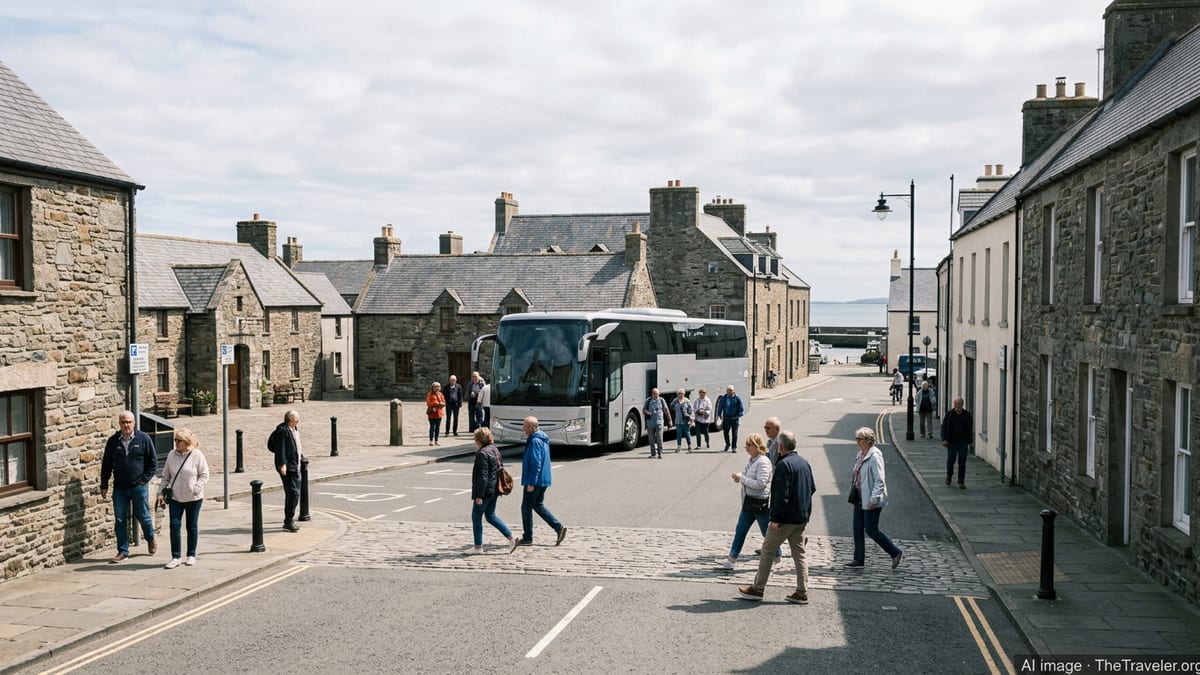
Cruise Arrivals Push A Historic Town to Capacity
Castletown has long been a magnet for day-trippers drawn to Castle Rushen, the Old House of Keys and the town’s intact medieval street pattern. In recent seasons, however, rising numbers of cruise calls to the Isle of Man have dramatically altered visitor flows, concentrating large groups into short windows of time and testing the town’s infrastructure.
On busy cruise days, several full-size coaches can arrive within minutes of each other at Farrants Way, the main coach drop off point behind the market square. Local businesses welcome the footfall, but commissioners and traders say congestion, limited turning space and pressure on nearby public parking are increasingly hard to ignore.
Tourism operators report that Castletown now features prominently on shore-excursion itineraries, thanks to its walkable layout and cluster of heritage attractions. That success has sharpened the debate over how to move hundreds of visitors at once without undermining the very character those visitors come to experience.
New Coach Parking Concept Aims to Reshape Visitor Flow
In response, Castletown Commissioners and transport officials are examining options for a revised coach parking plan that would decouple long-stay coach parking from the heart of the old town. Under proposals being explored, coaches would set down and pick up close to Market Square but wait elsewhere, freeing central streets from idling vehicles.
One model under discussion would see Farrants Way retained as the principal set-down zone, with drivers then directed to dedicated bays further from the core, potentially making use of existing car parks or suitably wide approach roads. Timed return slots could be used to avoid multiple coaches competing for space at once.
Officials are also looking at clearer preferred routes into Castletown for large vehicles, in line with island-wide guidance that warns against relying on satellite navigation on narrow roads. A formalised pattern for arrivals and departures is seen as key to avoiding bottle-necks at peak times while keeping access open for residents and deliveries.
Balancing Pedestrian Spaces and Coach Access
The coach review coincides with a broader rethink of how people move around Castletown’s centre. Recent summers have seen seasonal traffic restrictions and partial pedestrianisation around Market Square, reinforcing the town’s café culture and creating more space for outdoor seating and events.
Businesses say the quieter, more walkable square has proved popular with visitors, particularly on dry days when cruise passengers spill out from guided tours to explore side streets and the harbourfront. At the same time, traders and residents stress that service vehicles and coaches must still be able to reach key loading areas and accessible parking bays.
Any new coach parking framework is expected to dovetail with evolving seasonal traffic orders, separating the brief arrival of tour groups from longer-term parking needs. Local representatives have signalled that they want to avoid simply displacing congestion from one street to another, instead using clear markings, signage and time controls to keep pedestrian routes inviting.
Heritage Sites Seek Smoother Group Arrivals
Manx National Heritage and other attraction operators in Castletown have a direct stake in how coaches are managed. Group visit guidance already encourages tour organisers to book ahead for sites including Castle Rushen, the Old House of Keys and the Nautical Museum, particularly on days when multiple ships are in port.
Staff say well-planned staggered arrivals make it easier to maintain visitor experience standards inside historic buildings that were never designed for large crowds. Better coordination with coach operators, they argue, would allow tickets, tours and café capacity to be aligned with precise drop-off times.
The emerging coach parking plan is likely to formalise that coordination, encouraging operators to liaise with heritage sites and the town’s tourism point before finalising shore-excursion schedules. For attractions that rely heavily on the cruise market, smoother logistics could translate directly into higher spending and more time on the ground.
Business Community Hopes for Growth Without Gridlock
Local cafés, shops and accommodation providers are watching the discussions closely, hopeful that a more structured coach system will help extend the benefits of rising visitor numbers while limiting disruption. Many report that cruise passengers often have only a few hours ashore and value clear, simple wayfinding between coach stops, attractions and places to eat.
Some in the business community are pressing for improvements to signage from coach set-down points into the square and towards the harbour, as well as better information on walking times to outlying sites such as the Scarlett Nature Discovery Centre. They argue that a consistent route from coach door to castle gate, supported by clear maps, would encourage visitors to explore more widely.
For Castletown, the challenge now is to turn a surge in cruise interest into sustainable, year-round benefit. If agreed and implemented, a revised coach parking plan could quietly redefine how thousands of visitors first encounter the town, shaping not only traffic patterns but the way its history is experienced on the ground.