

More news on this day
Cathay Pacific is preparing to raise fuel surcharges on passenger tickets by about 34 percent from April, as surging jet fuel prices linked to the escalating conflict in the Middle East ripple through global airfares.
Get the latest news straight to your inbox!
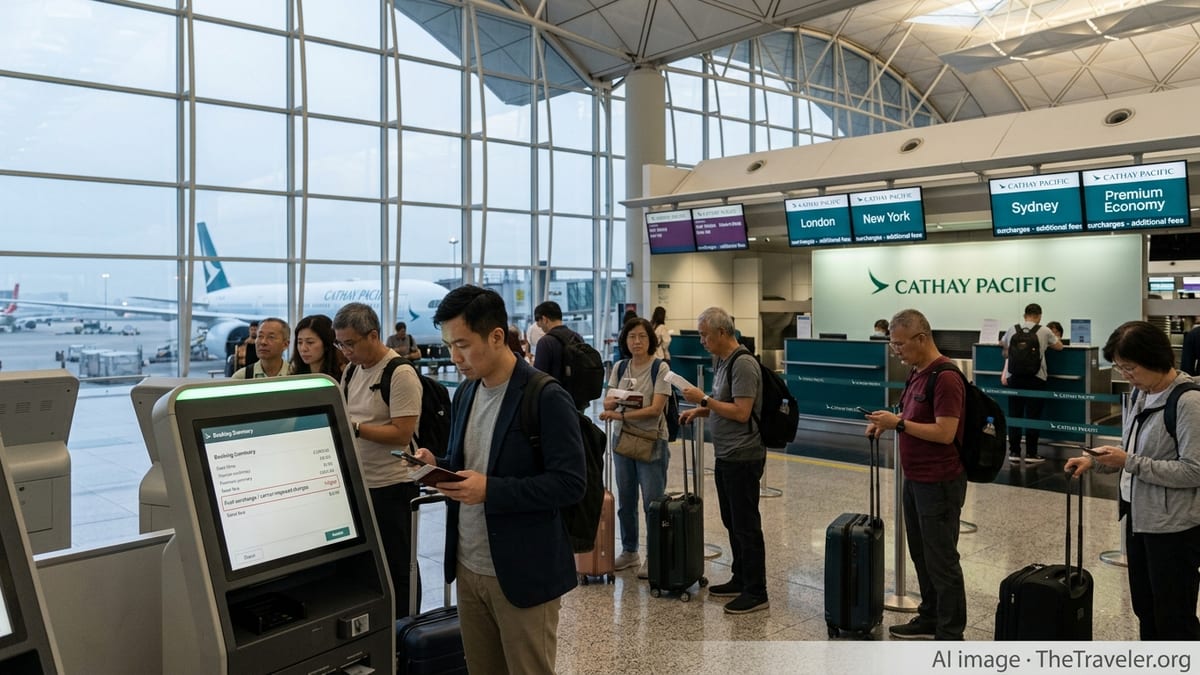
Sharp Surcharge Hike Hits Passengers From April
The upcoming increase will apply to new bookings made from early April, according to reports circulating in Hong Kong travel and aviation circles that reference carrier documentation shared with agents. The revised levy represents Cathay Pacific’s second fuel surcharge adjustment in a matter of weeks and is described in local coverage as a response to rapidly rising fuel bills that have outpaced earlier assumptions.
Publicly available fare examples indicate that the higher surcharge could add the equivalent of tens or even hundreds of US dollars to long haul round trips, depending on cabin and routing. For many itineraries, the fuel surcharge is itemized separately from the base fare and taxes, meaning travelers may see a conspicuous jump in the line labeled “fuel” or “carrier-imposed charges” even when headline promotional fares appear similar.
The airline has not announced a long term schedule for further changes, but industry reports suggest that the surcharge will be reviewed on a rolling basis, likely monthly, as jet fuel benchmarks react to developments in the Middle East. That approach mirrors how many Asia Pacific carriers have historically adjusted surcharges in volatile fuel markets.
For travelers who booked and ticketed their journeys before the effective date in April, current information indicates that existing surcharges will generally be honored, while new levels will apply to tickets issued from the adjustment date onward, regardless of when the flight takes place.
Middle East Conflict Pushes Jet Fuel Toward Crisis Levels
The backdrop to Cathay Pacific’s move is a dramatic spike in jet fuel prices tied to the widening war in the Middle East, including fighting that has affected key oil production and export routes. Market analyses published over the past two weeks describe jet fuel trading at levels comparable to 150 to 200 US dollars per barrel in some regional benchmarks, far above pre crisis ranges that clustered around 85 to 90 dollars.
Disruptions around the Strait of Hormuz and other chokepoints have tightened supply of refined products and raised shipping and insurance costs, which filter directly into the “into plane” price airlines pay to refuel at airports. Sector commentary notes that fuel can account for roughly a quarter to a third of an airline’s operating costs, making even relatively small price swings financially significant.
Recent investor presentations from Cathay Pacific show fuel expenditure already trending higher in 2025, even before the latest escalation in the Middle East. While the carrier uses hedging to smooth some of the volatility, analysts point out that hedges typically cover only a portion of future consumption and often exclude the refining margin that has surged in recent weeks.
Global financial institutions tracking jet fuel and kerosene prices project that elevated costs will persist at least through the second quarter of 2026, even under scenarios where the conflict begins to cool. That outlook suggests that surcharges and broader fare pressure could remain in place through the busy northern summer travel season.
Part of a Wider Wave of Airline Price Increases
Cathay Pacific’s 34 percent fuel surcharge jump is unfolding against a broader pattern of price adjustments across the aviation industry. European and Middle Eastern carriers have already introduced higher fares, additional surcharges, or capacity cuts in response to the jet fuel shock, according to recent coverage from travel and financial news outlets.
Greek flag carrier Aegean Airlines, for example, recently outlined limited fare increases on new bookings, citing the same surge in jet fuel costs tied to the conflict and the rerouting of flights away from certain Middle East airspaces. Other European airlines have trimmed frequencies or temporarily suspended services to affected destinations, a move that can further concentrate demand on remaining routes and keep prices elevated.
North American carriers are also feeling the strain. Recent earnings commentary from major US airlines highlights jet fuel as a key headwind for margins in 2026, even as travel demand remains relatively robust. Some have signaled that a combination of fare increases, ancillary fee adjustments, and capacity discipline will be needed to offset higher fuel bills.
The pressure is not limited to passenger flights. Cargo operations, particularly those reliant on long haul widebody aircraft, are facing similar cost dynamics. Trade and logistics bulletins in Asia point to a parallel rise in airfreight fuel surcharges, while container shipping lines are preparing additional bunker surcharges as the energy shock reverberates across transport modes.
What the 34 Percent Jump Means for Hong Kong and Transit Travelers
For travelers based in Hong Kong or using the city as a connecting hub, the higher fuel surcharge is likely to be most visible on long haul itineraries to Europe, North America, and Australia, where flight length and fuel burn are greatest. Travel agency price displays suggest that the impact will be less pronounced on short regional hops but still noticeable when combined with other fees and taxes.
The timing is sensitive. The surcharge increase is set to coincide with a period when Hong Kong’s outbound travel market has been rebuilding, supported by reopened borders and rising demand for leisure and business trips. Higher all in ticket costs could temper some of that momentum, particularly among price sensitive travelers weighing alternative carriers or routing options.
At the same time, analysts note that many competing airlines serving Hong Kong are also facing higher fuel bills and may introduce or expand their own surcharges. In that context, Cathay Pacific’s move could be seen as part of a market wide recalibration rather than a unilateral departure from prevailing price levels, although individual routes and fare classes will vary.
Travel forums and consumer advocates are already advising passengers to pay close attention to the breakdown of their tickets, comparing not just base fares but also fuel and carrier imposed charges across airlines. In some cases, alternative routings or travel dates may help soften the impact, while frequent flyer redemptions that minimize cash surcharges could become more attractive for long haul trips.
Uncertain Outlook Keeps Pressure on Ticket Prices
The trajectory of Cathay Pacific’s fuel surcharges beyond this 34 percent increase will ultimately depend on how the Middle East conflict and global energy markets evolve in the coming months. Analysts tracking oil and jet fuel futures currently outline a wide range of scenarios, from a gradual easing of prices if supply routes stabilize to further spikes if hostilities expand or new sanctions disrupt exports.
For airlines, that uncertainty complicates financial planning. Carriers must balance the need to recover sharply higher fuel costs with the risk of dampening demand through aggressive fare increases. Many are responding by layering surcharges that can be adjusted more quickly than base fares, offering a degree of flexibility as conditions change.
For travelers, the message from recent developments is that the cost of flying is likely to remain elevated in the near term. Prospective passengers looking at Cathay Pacific and its competitors may find that booking earlier, monitoring fare and surcharge changes closely, and remaining flexible on dates and routes can help navigate a landscape where jet fuel prices and airline pricing strategies are both moving targets.