

More news on this day
Long-haul travelers booking with Cathay Pacific are bracing for sharply higher bills as the Hong Kong carrier moves to almost double its fuel surcharge, a stark response to a sudden spike in jet fuel prices triggered by escalating conflict in the Middle East.
Get the latest news straight to your inbox!
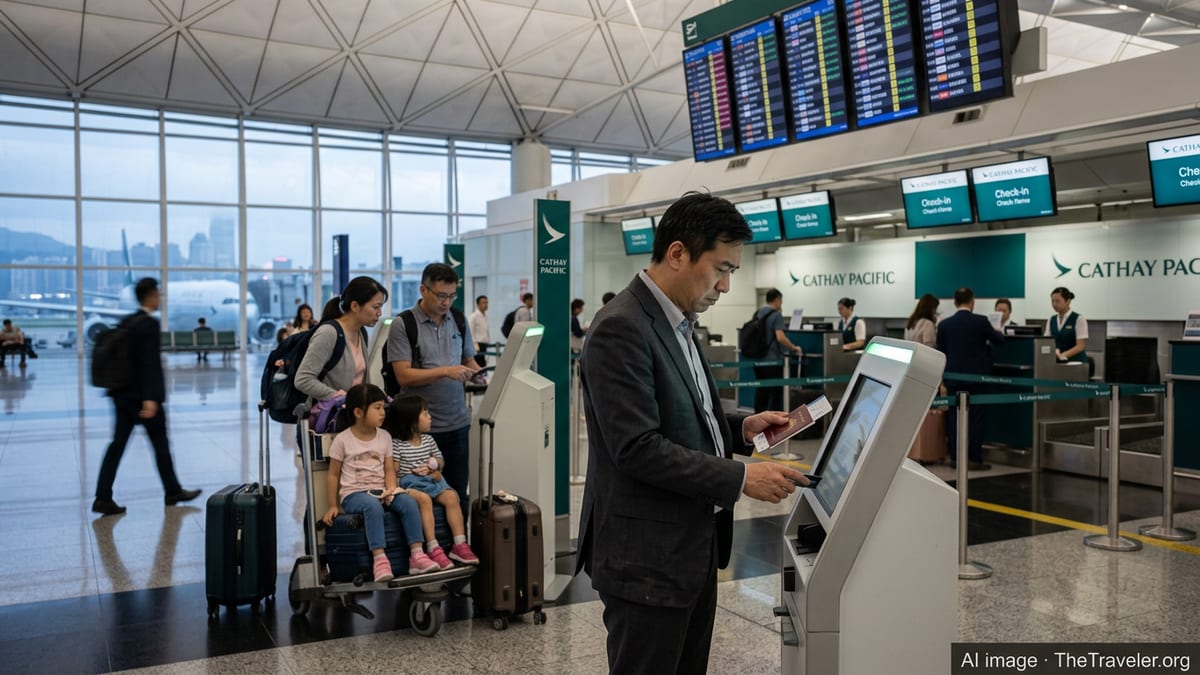
Cathay Moves to Protect Margins as Fuel Costs Soar
Cathay Pacific signaled this week that it will substantially raise fuel surcharges on passenger tickets, just as global jet fuel prices have almost doubled since January. Speaking in Hong Kong on March 11, chief executive Ronald Lam said the cost of aviation fuel so far in March is about twice the average level seen in the previous two months, describing the surge as a direct consequence of the latest Middle East war and related supply disruptions.
The carrier has not yet published the full new surcharge table, but people tracking the airline’s pricing say increases for many long haul routes will amount to a triple digit percentage jump compared with surcharges levied at the start of the year. Industry chatter among travel agents and frequent flyer communities points to effective rises in the region of 90 to 105 percent on certain intercontinental itineraries once the new levels take effect.
Cathay already reviews its fuel surcharge each month under a formal mechanism that links adjustments to jet fuel prices and operational factors. Until now, however, changes had been incremental. The anticipated hike represents the sharpest single step up since the immediate aftermath of the 2022 energy shock and marks a clear shift from gradual fine tuning to urgent cost recovery.
On its website, Cathay’s most recent published table still shows modest per sector surcharges, such as 569 Hong Kong dollars for tickets issued in Hong Kong and the equivalent of about 73 US dollars from other markets for long haul journeys. Those figures are now widely expected to be replaced within days by much steeper amounts, particularly on flights between Hong Kong and North America, Europe, the Middle East and Africa.
From War Zone to Wallet: How Geopolitics Drove the Spike
The looming surcharge shock is the downstream result of a rapid and unexpected escalation in the Middle East that has rattled global energy markets. Joint US and Israeli strikes on Iranian targets in late February, followed by retaliatory action in the Gulf, disrupted key shipping lanes and raised fresh doubts over the reliability of crude exports from the region.
Refiners and traders have scrambled to secure supplies of refined aviation fuel, a niche product derived from crude oil but dependent on adequate refining capacity and stable logistics. As a result, aviation fuel prices in Asia have jumped to around 174 US dollars a barrel in recent days, almost double their levels in early January and significantly above benchmark crude prices. Airlines that had only partially hedged their exposure are now rushing to reprice tickets to avoid flying loss making routes.
For Cathay Pacific, the shock has come on top of an already complex operating backdrop. The airline reported a 9.5 percent rise in profit for 2025 on the back of strong passenger demand and resilient cargo volumes, but it has also had to suspend services to Dubai and Riyadh for March, cutting off lucrative flows between Hong Kong and the Gulf just as costs are spiking.
Executives insist that raising fuel surcharges is preferable to across the board fare hikes because it keeps the underlying ticket price structure intact while explicitly reflecting the volatile fuel component. For passengers, however, the distinction is academic: the all in amount they pay is set to rise sharply regardless of how the increase is labeled.
Travelers Face 100 Percent Plus Jumps on Key Routes
For many passengers, the most jarring aspect of Cathay’s move is the scale of the increase relative to the surcharge level they had grown accustomed to in recent months. On some popular long haul routes, the surcharge embedded in a return economy ticket issued in January represented a modest slice of the overall bill. Under the new structure, travel consultants say that slice could more than double.
Consider a typical Hong Kong to London itinerary. While base fares fluctuate with demand, the fuel surcharge portion on a return economy ticket has recently hovered in the low hundreds of US dollars. Industry sources now expect Cathay to lift that component by close to or slightly above 100 percent, pushing the surcharge line on a single long haul round trip into the high hundreds for premium cabins and to levels that budget conscious leisure travelers will immediately feel.
Similar jumps are expected on routes connecting Hong Kong with North America and continental Europe, where long sectors magnify the impact of per segment charges. Families planning summer holidays and small businesses reliant on face to face meetings are likely to be hit hardest, especially those who delayed booking and now find that taxes and fees have ballooned in the space of a few weeks.
While surcharges are technically separate from base fares, they are not optional. For most customers the change will surface only as a sharply higher “taxes and fees” line at the checkout page, a detail that can easily be overlooked during quick online searches but becomes painfully clear when the final total appears.
Loyalty Redemptions and Corporate Travel Also Take a Hit
The fallout is not limited to cash tickets. Frequent flyers redeeming miles for long haul seats on Cathay and its partners will also feel the pinch because fuel surcharges are usually payable in cash, even when the underlying fare is covered by loyalty points. That means an award seat booked next week on a popular transpacific or Europe bound route could suddenly cost hundreds of dollars more in out of pocket surcharges than the same seat secured earlier in March.
Corporate travel buyers, who often negotiate inclusive contracts with airlines, are reviewing budgets as they brace for higher all in costs. Many of those agreements allow carriers to pass through extraordinary fuel increases, and some companies may now face difficult choices between tightening travel policies, cutting back on nonessential trips or swallowing the extra cost.
Travel management firms report a noticeable uptick in client inquiries this week as news of Cathay’s pending hike circulates through the market and on social media. Several have advised corporate customers with flexible travel dates to ticket near term long haul trips immediately where possible, before the new surcharge table is formally loaded into reservation systems.
For Cathay’s own loyalty program, the move comes after an earlier phase of award chart adjustments that already made many long haul redemptions more expensive in miles terms. The combination of higher mileage requirements and surging cash surcharges risks eroding some of the goodwill the airline rebuilt with frequent travelers during its post pandemic recovery.
A Region Wide Trend as Airlines Scramble to Reprice
Cathay’s planned jump in fuel surcharges does not exist in isolation. Across Asia, airlines are moving quickly to recoup ballooning fuel bills. Hong Kong Airlines has just announced increases of up to about 35 percent on some routes originating in Hong Kong, including popular leisure destinations in South Asia and Southeast Asia, while other regional carriers are raising either base fares, surcharges or both.
In parallel, independent fare trackers report that typical economy class prices on certain Asia to Europe routes have surged by double or even triple digit percentages compared with earlier in the year, driven in part by capacity constraints and in part by the rapid repricing of fuel exposure. For travelers shopping across multiple airlines, Cathay’s new surcharges will land in a market that is already markedly more expensive than it was just a few weeks ago.
Industry analysts note that fuel surcharges are likely to remain elevated as long as energy markets stay tight and geopolitical risk hangs over supply routes. If jet fuel prices stabilize or retreat, airlines can in theory trim the surcharge component more quickly than they might lower base fares. For now, though, the direction of travel is clear, and passengers are being urged to budget for materially higher long haul ticket costs through at least the northern summer.
For Cathay Pacific, the balancing act will be delicate. The airline still aims to grow passenger capacity by around 10 percent this year as it restores routes and frequencies cut during the pandemic. Pushing through a near doubling of fuel surcharges risks dampening some of that demand, but executives appear convinced that absorbing the fuel shock without passing it on would be even more damaging. For travelers, the result is simple: flying long haul via Hong Kong just became a significantly more expensive proposition.