

More news on this day
International travelers planning trips from April 2026 onward are being urged to review their polio vaccination status as updated guidance highlights ongoing poliovirus circulation in dozens of destinations across Europe, Africa, the Middle East and Asia.
Get the latest news straight to your inbox!
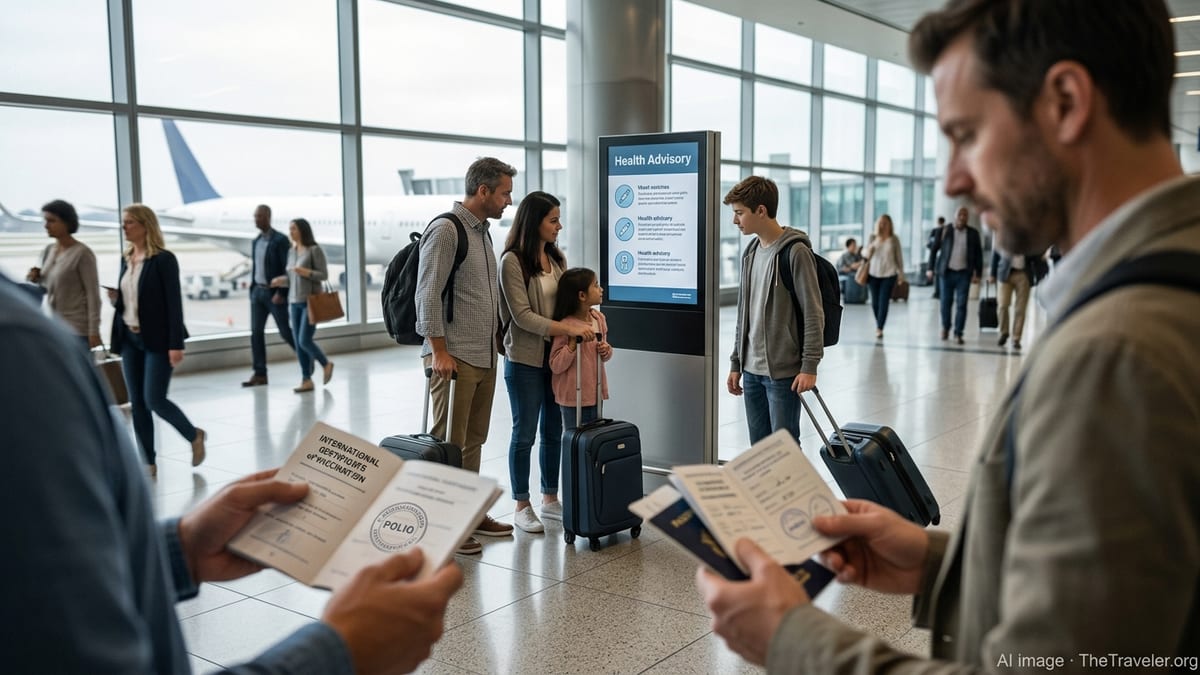
Updated Global Polio Notice Targets 32 Countries
Publicly available information from the CDC’s Travelers’ Health portal shows that a global polio travel notice was updated in early March 2026, covering 32 countries where poliovirus has been detected in recent months. The advisory, categorized as a Level 2 notice, encourages travelers to practice enhanced precautions rather than avoid travel, but it places a renewed emphasis on vaccination ahead of trips beginning in April 2026.
Media coverage of the update reports that the list spans a broad geographic range, including parts of Europe, North and West Africa, the Middle East and South Asia. Countries such as the United Kingdom, Spain and Germany are included alongside destinations where polio has been an intermittent concern for years, such as Afghanistan and Pakistan. The advisory reflects both wild poliovirus detections and circulating vaccine-derived poliovirus identified in environmental surveillance and clinical cases.
The decision to sustain and broaden the advisory comes as health agencies note that poliovirus can spread silently, with many infections causing no symptoms while still contributing to transmission. The updated notice is timed ahead of the heavy summer travel period from April into the second half of 2026, when transatlantic tourism and pilgrimage traffic typically increase.
According to CDC background materials, the Level 2 classification signals that travelers should pay particular attention to routine immunizations and destination-specific vaccine recommendations. It also highlights that requirements set by individual countries, such as proof of recent polio vaccination for long stays or outbound travel, may be enforced at border crossings.
What the April 2026 Advisory Means for Travelers
For most travelers, the new advisory does not prevent trips but adds an extra layer of preparation. The CDC recommends that all travelers, regardless of destination, ensure they are up to date with the standard childhood inactivated polio vaccine schedule before leaving the United States. For adults who completed a childhood series, the current guidance allows for a single lifetime booster dose if they are heading to destinations with documented poliovirus circulation.
Reports summarizing the advisory explain that adult travelers are considered eligible for that booster if they have completed their routine polio vaccine series, have not already received an adult booster, and are visiting one of the countries on the current polio notice list. The booster can be administered at primary care practices, public health clinics and many travel medicine services, often alongside other recommended travel vaccines.
The timing of vaccination is also important. Travel medicine references note that some countries following World Health Organization recommendations may require documentation of a polio vaccine dose given between 4 weeks and 12 months before international departure for residents and long-term visitors leaving polio-affected areas. While short-stay tourists are less likely to be checked, travelers planning extended visits or overland journeys between affected countries may be asked for proof of vaccination.
Travelers are being encouraged to build a visit to a health provider into their itinerary planning at least 4 to 6 weeks before departure. This window allows time to administer any needed polio dose, update other vaccines and, where necessary, obtain an International Certificate of Vaccination or Prophylaxis documenting their status.
Countries and Regions Drawing Added Attention
The March 2026 update is notable because it includes several high-profile tourism destinations in Europe, according to news and public-health summaries of the CDC notice. Spain, the United Kingdom and Germany are among the countries listed, reflecting detections of poliovirus in wastewater or isolated cases linked to imported or vaccine-derived strains rather than large-scale outbreaks.
At the same time, the advisory continues to highlight long-standing areas of concern in parts of Africa and Asia. Afghanistan and Pakistan remain the two countries where wild poliovirus transmission has not been fully interrupted, and recurring reports of vaccine-derived poliovirus cases in several African nations underscore the fragility of progress toward eradication. Environmental and clinical surveillance in parts of the Middle East, including conflict-affected areas and settings with displaced populations, has also detected vaccine-derived strains.
Public reporting by international health organizations indicates that the countries on the list do not all face the same level of risk. In some places, detections have been limited to sewage sampling, with no confirmed cases of paralysis, while others have recorded small numbers of paralytic infections. The CDC advisory groups these settings under a single notice to simplify guidance and reinforce the message that any documented circulation is enough to justify enhanced precautions for travelers.
For trip planners, the practical effect is that itineraries spanning multiple continents may cross several polio-notice countries even if the primary purpose of travel is leisure, study abroad or business meetings rather than health or humanitarian work.
Vaccine Guidance Across Age Groups
The CDC’s technical recommendations, outlined in its polio vaccination guidance for international travelers and the 2026 Yellow Book, stress that infants and children should receive the full four-dose inactivated polio vaccine series on schedule whenever possible. In certain travel situations, doses can be accelerated so that young children have as much protection as possible before departure.
For adolescents and adults with incomplete or uncertain vaccination histories, clinicians are advised to start or complete an IPV series before travel to any destination with poliovirus circulation. The updated advisory reiterates that an unvaccinated adult traveling to a higher-risk country should receive a primary three-dose IPV series, with the first dose ideally given at least four weeks before the trip and subsequent doses scheduled as time allows.
Travelers who are immunocompromised, pregnant, or traveling for long periods to settings with limited health infrastructure may warrant additional consultation, because even a low likelihood of poliovirus exposure can carry greater consequences in these groups. Current professional guidance emphasizes risk-based decision-making, balancing the traveler’s itinerary, medical history and access to medical care abroad.
Because polio vaccination for U.S.-based travelers uses only inactivated vaccine, the risk of vaccine-associated paralytic polio is not a concern in this context. The main objective of the travel-specific guidance is to close immunity gaps that could allow the virus to spread or re-establish transmission in under-immunized communities.
Practical Steps for Travelers Before Departure
As the April 2026 travel season approaches, health bulletins and state-level safe-travel publications are encouraging residents to treat polio vaccination as part of a broader pre-trip health checklist. Travelers are being advised to locate their childhood immunization records, verify that they completed a full polio series, and discuss the potential need for a one-time booster if their plans include any of the countries mentioned in the CDC notice.
Experts contributing to public travel-health resources also recommend that travelers check individual destination pages on national public health sites for any entry or exit requirements specific to polio, especially for stays longer than four weeks. In some cases, proof of vaccination may be requested when leaving a polio-affected country rather than upon arrival, so overland travelers and long-term visitors should plan ahead to avoid last-minute complications.
Travel clinics and primary care providers can typically administer an IPV dose during a single visit, but appointment availability can tighten during peak travel months. Reports from travel-medicine practices suggest that booking consultations several weeks in advance helps ensure enough time not only for polio vaccination, if indicated, but also for other considerations such as routine boosters, destination-specific vaccines and prescriptions for malaria prophylaxis where needed.
For travelers, the updated polio advisory serves as a reminder that even as global eradication efforts make progress, historic diseases can still influence border rules and pre-travel planning. Ensuring that polio vaccination is current is emerging as a standard part of preparing for international trips in 2026, alongside passports, visas and travel insurance.